Machado de Assis
Chapters (32)
- Cover
- Title
- Foreword by Michael Wood
- Introduction
- Augusta’s Secret
- Luís Duarte’s Wedding
- The Alienist
- How to Be a Bigwig
- Dona Benedita
- The Loan
- The Most Serene Republic
- The Mirror
- A Visit from Alcibiades
- The Devil’s Church
- Final Chapter
- Posthumous Picture Gallery
- The Chapter on Hats
- Ex Cathedra
- The Academies of Siam
- Fame
- The Gentleman’s Companion
- Mr. Diplomat
- Life!
- The Canon, or the Metaphysics of Style
- The Cane
- Midnight Mass
- Canary Thoughts
- Father Against Mother
- Maria Cora
- The Tale of the Cabriolet
- About The Author
- About The Translators
Cover
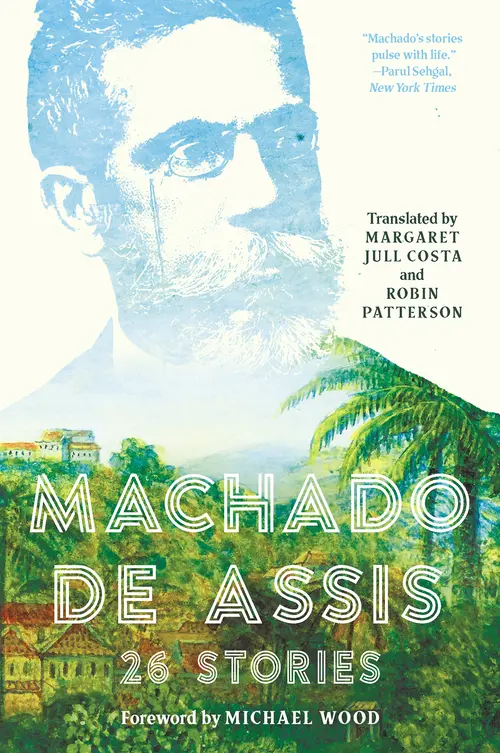
Title
MACHADO DE ASSIS
26 STORIES

Joaquim Maria Machado de Assis
Translated by
MARGARET JULL COSTA
AND
ROBIN PATTERSON

LIVERIGHT PUBLISHING CORPORATION
A division of W. W. Norton & Company
Independent Publishers Since 1923
NEW YORK | LONDON
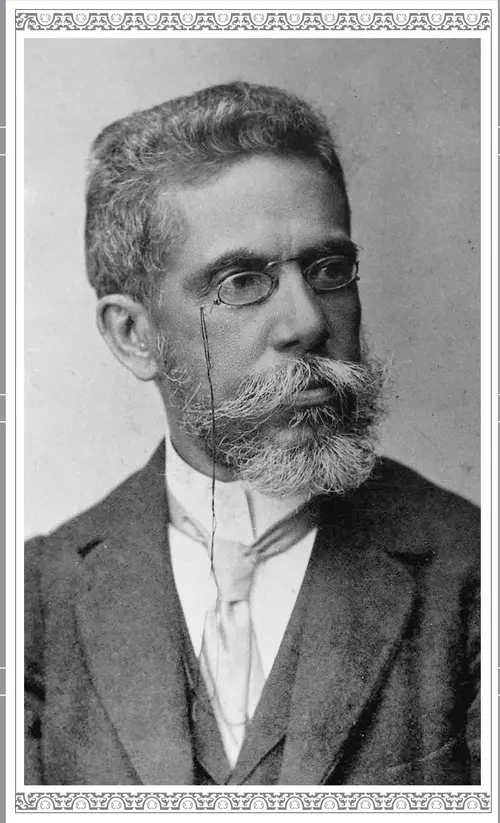
Foreword by Michael Wood
FOREWORD
JOAQUIM MARIA MACHADO DE ASSIS wrote short stories throughout his career, publishing seven collections between 1870 and 1906, interspersed with his nine novels. Critics like to divide the novels into two sets, seeing the first four as slender and “romantic” (the author’s own term) and the last five as complex, ironic masterpieces. We can’t do anything like this with these stories, although we may say that with the years the continuing lightness of touch is applied to darker subjects. We move from young love and shallow social ambition to suicide and slavery, from portraits of manners to deep philosophical questions. But even this impression calls out for some correction. There are dark early stories too, and light late ones. So perhaps the firmer truth is that if we read the stories in sequence we get better at registering the darkness, at seeing through the light, so to speak.
Machado’s short stories resemble those of Chekhov in their talent for saying too little (that is, just enough), but his closest literary companion, if we are looking for comparisons, is his almost exact contemporary Henry James, and especially in his longer pieces, where he appears as a great master of the form that James called “our ideal, the beautiful and blest nouvelle.”
But more than either of these writers, Machado constantly engages in an open playfulness with the reader. In the stories as in the novels, his style of wit belongs with that of Henry Fielding or Laurence Sterne, whose work he knew well. We could also cite the excellent company he could not know he would come to keep, that of Vladimir Nabokov and Italo Calvino.
Machado has generally been well served by translators, although many of his stories have not until now appeared in English versions. But no one has caught the ease and grace of his prose as Margaret Jull Costa and Robin Patterson have. This achievement is important not only because it allows us actually to see a style traveling from one language to another but because the apparently casual movement of Machado’s writing, so well rendered here, allows all kinds of implications to arise as if of their own accord.
In one story, a single narrator tells us both that “there are no mysteries for an author who can scrutinize every nook and cranny of the human heart” and that one of his characters “had a series of thoughts that remained hidden from the author of this story.” In others we meet imagined readers who are “less canny,” “less demanding,” or “more experienced.”