Late in the Day
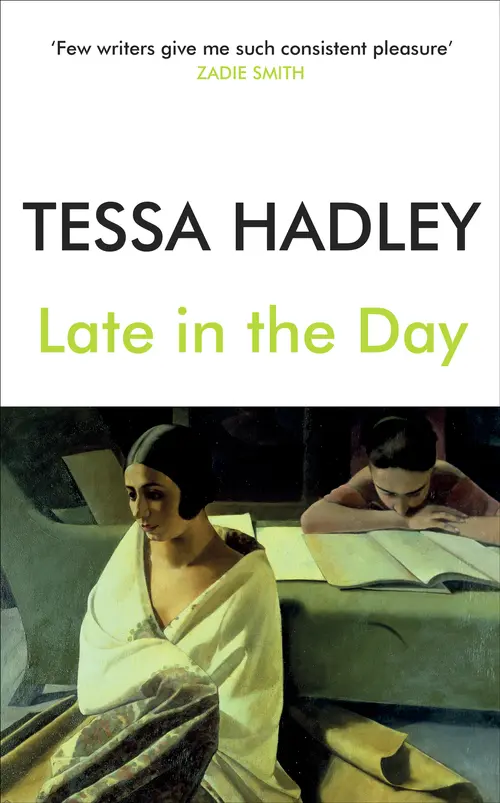
Cover

About the Author
Tessa Hadley is the author of six highly acclaimed novels, including Clever Girl and The Past, and three short-story collections, most recently Bad Dreams. Her stories appear regularly in The New Yorker. In 2016 she was awarded the Windham Campbell Prize and the Hawthornden Prize; in 2018 she was awarded the Edge Hill Short Story Prize for Bad Dreams.
Also by Tessa Hadley
Also by Tessa Hadley
ACCIDENTS IN THE HOME
EVERYTHING WILL BE ALL RIGHT
SUNSTROKE AND OTHER STORIES
THE MASTER BEDROOM
THE LONDON TRAIN
MARRIED LOVE
CLEVER GIRL
THE PAST
BAD DREAMS AND OTHER STORIES
Dedication
For Mum and Dad
One
THEY WERE LISTENING to music when the telephone rang. It was a summer’s evening, nine o’clock. They had finished supper and Christine was listening with intensity, sitting with her feet tucked under her in the armchair; she recognised the music although she didn’t know what it was. Alex had chosen it, he hadn’t consulted her and now she stubbornly wouldn’t ask – he took too much pleasure in knowing what she didn’t know. He lay on the sofa in the bay window with a book open in his hand, not reading it, the book dropped across his chest; he was watching the sky outside. Their flat was on the first floor and the sitting-room window looked out over a wide street lined with plane trees. A gang of parakeets zipped across from the park, and the purple-brown darkness of the copper beech next door fumed against the turquoise sky, swallowing the last light. A blackbird silhouetted with open beak on a branch must be singing, but the recorded music overrode it.
It was the landline ringing. Christine was dragged away from the music; she stood up and looked around her, to see where they’d put the handset down when they last finished with it – probably somewhere here, among the piles of books and papers. Or in the kitchen with the washing-up? Alex ignored the ringing, or only showed he was aware of it by a little irritable tension in his face – always liquidly expressive, foreign, because the eyes were so dark, outlined as if they were painted. This effect was more striking as he was growing older and brightness was leaching out of his hair, which used to be the colour of tarnished dark gold.