Chapters (34)
“It was kind of a game we played,” August said, replaying in his mind some of their more lively discussions. “We both loved books, so it was like a contest to see who loved them more.”
“Sounds exciting,” Xandria droned. “Now tell me about this Faerie Queene.”
“Spenser served with the English forces in Ireland in the mid-1500s. He wrote The Faerie Queene in an effort to secure his place in the royal court. But he angered the queen’s secretary, Lord Burghley, and as a result, was paid practically nothing for his epic work. To rectify the situation, the queen ordered a payment of one hundred pounds—an incredible sum at the time—to be given to Spenser. When Lord Burghley heard about the payment, he was quoted as saying: What, all this for a song! ”
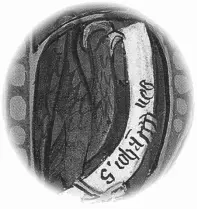
The corners of Xandria’s mouth lifted a fraction of an inch. “My aunt used to say that every time she opened a present. I had no idea where it came from,” Xandria said. “But what about the eagle?”
“Spenser’s Faerie Queene contained a legendary tale about the rebirth of the eagle, which is similar to stories of the ancient phoenix. The story went something like this: When the eagle gets old, it flies toward the sun until its wings are burned. It then dives toward the sea, and after emerging from the water three times, is born new again.”
“So the eagle is a Christ figure,” Xandria said.
“Yes, not unlike the symbol of the hare,” August said. “But the banner the eagle holds puts a twist on the meaning.”
August took out his notebook and wrote down the two words printed on the banner: REX ROMANORUM. “Latin was never my strong suit, but this one is pretty easy. It means King of the Romans.”
“Another reference to the Holy Roman Empire?”
“One and the same,” August said. “You remember the illumination of Emperor Sigismund?”
“Yes.”
“There’s something I didn’t think to show you about the painting,” August said. “It didn’t seem to matter at the time, but you only saw half of the original image.” August called up the painting of Sigismund on the computer screen, then grabbed the margin of the window with the cursor and dragged it out, revealing an entirely new figure.
“This is Charlemagne,” August said, pointing to the majestic character opposite Sigismund. Charlemagne was easily a foot taller and appeared elevated and regal in comparison with the hunched figure of Sigismund. To add further to his dominance, Charlemagne held an impressive sword, while Sigismund gripped a dainty scepter.
“I thought Sigismund looked impressive earlier,” Xandria said. “But now he just looks pathetic.”