Chapters (40)
- Cover Page
- Title Page
- Dedication
- Prologue A Brief History of Banting
- Part One
- Chapter 1
- Chapter 2
- Chapter 3
- Chapter 4
- Part Two
- Chapter 5
- Chapter 6
- Chapter 7
- Chapter 8
- Chapter 9
- Chapter 10
- Chapter 11
- Chapter 12
- Chapter 13
- Part Three
- Chapter 14
- Chapter 15
- Chapter 16
- Chapter 17
- Chapter 18
- Chapter 19
- Chapter 20
- Chapter 21
- Chapter 22
- Chapter 23
- Chapter 24
- Epilogue
- Notes
- Bibliography
- Acknowledgments
- Illustration Credits
- A Note About the Author
- Also by Gary Taubes
- Footnotes
- Copyright
Pete Ahrens called this extrapolation from a drug study to a diet “unwarranted, unscientific and wishful thinking.” Thomas Chalmers, an expert on clinical trials who would later become president of the Mt. Sinai School of Medicine in New York, described it to Science as an “unconscionable exaggeration of all the data.” In fact, the LRC investigators acknowledged in their JAMA article that their attempt to ascertain a benefit from diet alone had failed.
Rifkind later explained the exaggerated claims. For twenty years, he said, those who believed in Keys’s hypothesis had argued that lowering cholesterol would prevent heart attacks. They had spent hundreds of millions of dollars trying to prove it, in the face of extreme skepticism. Now they had demonstrated that lowering cholesterol had reduced heart-disease risk and maybe even saved lives. They could never prove that cholesterol-lowering diets would do the same—that would be too expensive, and MRFIT, which might have implied such a conclusion, had failed—but now they had established a fundamental link in the causal chain from lower cholesterol to cardiovascular health. With that, they could take the leap of faith from cholesterol-lowering drugs to cholesterol-lowering diets. “It’s an imperfect world,” Rifkind said. “The data that would be definitive is ungettable, so you do your best with what is available.”
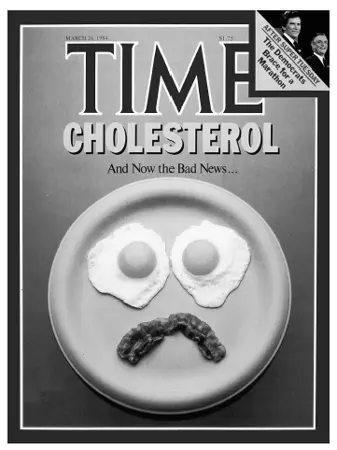
With publication of the LRC results, the National Heart, Lung, and Blood Institute launched what Robert Levy called “a massive health campaign” to convince the public of the benefits of lowering cholesterol, whether by diet or drug, and the media went along. Time reported the LRC findings in a story headlined “Sorry, It’s True. Cholesterol Really Is a Killer.” The article about a drug trial began, “No whole milk. No butter. No fatty meats. Fewer eggs…” In March, Time ran a follow-up cover story quoting Rifkind as saying that the LRC results “strongly indicate that the more you lower cholesterol and fat in your diet, the more you reduce your risk of heart disease.” Anthony Gotto, president of the American Heart Association, told Time that if everyone went along with a cholesterol-lowering program, “we will have [atherosclerosis] conquered” by the year 2000.
The following December, the National Institutes of Health hosted a “consensus conference” and effectively put an end to thirty years of debate. Ideally, in a consensus conference an unbiased expert panel listens to testimony and arrives at conclusions on which everyone agrees. In this case, Rifkind chaired the planning committee, of which Steinberg was a member. Steinberg was then chosen to head the expert panel that would draft the consensus. The twenty speakers did include three skeptics—Ahrens, Robert Olson, and Michael Oliver, a cardiologist with the Medical Research Council in London—who argued that the wisdom of a cholesterol-lowering diet could not be established on the strength of a drug experiment, let alone one with such borderline results. A month after the conference, the NHLBI epidemiologist Salim Yusuf described the controversy to Science as remaining as polarized as ever: “Many people have already made up their minds that cholesterol-lowering helps, and they don’t need any evidence. Many others have decided that cholesterol-lowering is not helpful, and they don’t need any evidence either.”