Chapters (10)
‘You came back.’ She says this in a tone of marvelment, as if it were the last thing she had expected. As if my return were somehow miraculous. She kicks off her blanket and crawls onto my lap and I hold her against me, my arms around her, my lips against her hair.
‘Me and Nicholas made you dinner,’ Flora says. ‘We made it for you.’
Acknowledgements
W.G. Sebald once wrote that he had always tried, in his own work, to mark his respect for those writers with whom he felt an affinity. He wanted to raise his hat to his great heroes, so to speak, he said. In the same spirit, some of the lines spoken by Max in the novel are taken from Sebald’s own work, or his interviews or speeches. Faithless, however, is a work of invention; though one in which I have raised my own hat to Sebald.
The lines from Anne Michaels’ poem ‘Blue Vigour’ from Miner’s Pond in the epigraph are used with permission of The Wylie Agency.
The line from Barbara Ras’s poem ‘Washing the Elephant’ from The Last Skin is used with permission of Penguin Books US.
The lines from T. S. Eliot’s The Waste Land are used with permission of Faber & Faber.
About the Author

© Nicole Boenig-McGrade
Alice Nelson is an Australian novelist who lived for many years in New York. She was named the Sydney Morning Herald Best Young Australian Novelist for her first novel, The Last Sky, which also won the TAG Hungerford Award. Her second novel, The Children’s House, was published to critical acclaim in Australia, France and Germany, and was long-listed for several awards. Alice’s short fiction, essays and reviews have appeared in a range of international publications. Alice now lives in the south of France.
Praise for The Children’s House
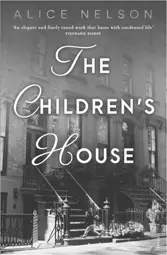
‘An outstanding novel, written with exquisite lyricism, multiple metaphorical threads, sophisticated structuring and deep empathy for the world’s discarded and forgotten people . . . this talented Australian writer deserves high recognition when our literary award season dawns next year.’
Australian
‘This is a beautiful work.’
Sydney Morning Herald
‘Alice Nelson has written that rare kind of novel that sets off sparks in the mind long after finishing. A book of unwavering intelligence that probes the most haunted parts of the psyche . . . an elegant and finely tuned work that hums with condensed life.’
Stephanie Bishop
‘The novel is studded with poetic observations of domestic life . . . Nelson skilfully evokes the textures of a gentrifying Harlem, and probes Marina’s presence as yet another interloper changing the face of the historically black neighbourhood.’
Australian Book Review
‘This is a novel of tragedy, love and belonging. The lives of these characters will be indelibly stamped on readers’ minds.’
Herald Sun
‘This is a powerful meditation on motherhood, grief, religion and divided families. It is unflinching in its observations of the emotional lives of women and children, and yet it is never bleak.’