Cocoon
Chapters (10)
Cover
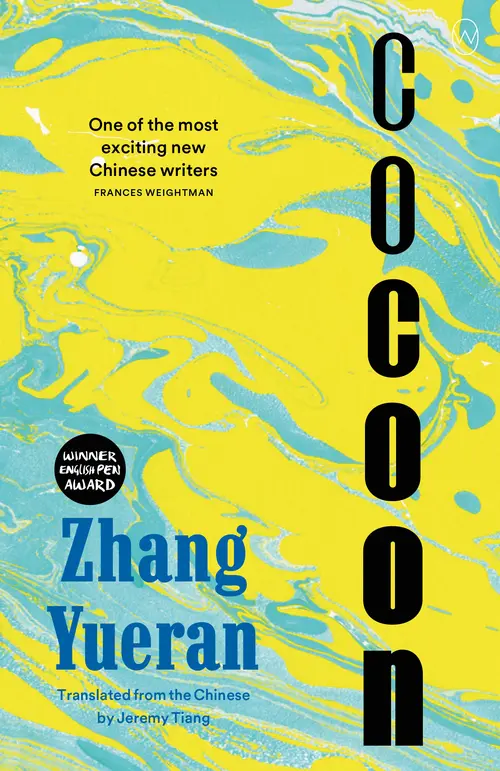
Title Page
Zhang Yueran
cocoon
Translated from the Chinese
by Jeremy Tiang
WORLD EDITIONS
New York, London, Amsterdam
Translator’s Note
Zhang Yueran has long been a leading voice of China’s “post-’80s” generation (that is, born after 1980). While her earlier work—such as The Promise Bird, a fantasy about a blind woman going in search of her lost memories—has been compared to “a magical bottled garden,” Cocoon takes place in a more realistic vein, looking through millennial eyes at the Cultural Revolution. This decade-long trauma has had no shortage of literary exploration; the entire genre of “scar literature” is dedicated to excavating this world, usually by those who lived through it. But what of writers such as Zhang who were born a few years after the catastrophe ended, and who grew up amid its detritus?
Zhang’s cohort was destined by the one-child policy of 1980 to be a generation of only children—and indeed, the absence of siblings in Cocoon contributes to the younger characters’ sense of alienation. These “little emperors” grew up at a time of plenty, the sole recipients of their parents’ resources and attention. After such a rapid change in circumstances, it must have been hard to comprehend what these parents had lived through. All the adults in Cocoon are damaged in one way or another, while their society charges ahead, trying and failing to outrun its past.
This generation gap is perhaps the greatest in recent memory, and it is in this in-between space that Zhang situates herself, portraying both the violent ideological terror of the past and the alienated, sterile prosperity that her generation has grown up in. How can young people process the strife and suffering of those who went before them, when the country as a whole has not done so? Like strands of a cocoon unraveling, Zhang lays bare the many layers of her generation’s coming of age.
Jeremy Tiang
Cocoon
“My poor child, the best thing I can send you is a little misfortune.”
—William Makepeace Thackeray, The Rose and the Ring
Li Jiaqi
I came back last month and didn’t tell a soul. The night I arrived, the Central Gardens streetlights were busted, and all I could see were the inky shapes of trees, naked branches thrashing in the wind. Moonlight made the protruding goose-egg pebbles on the path gleam faintly. I’d forgotten the cluster of jagged rocks near the artificial lake, jutting unevenly as if the night were baring its teeth. From this distance, the white mansion on the opposite shore could have been a lone island.