Babylon Heights
Chapters (9)
Cover
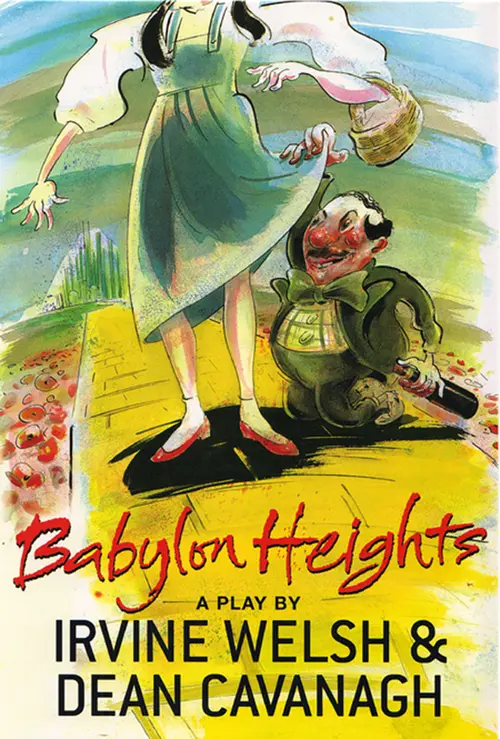
Title
IRVINE WELSH
AND
DEAN CAVANAGH
Babylon
Heights

W. W. Norton & Company
New York London
Introduction
Introduction
In 1935, in depression America, MGM studios in Hollywood embarked on a major film project: a movie adaptation of L. Frank Baum’s book The Wonderful Wizard of Oz. The resulting film not only lived up to the old cliché of becoming a timeless cinematic classic, it also propelled the first modern fable from America into the popular universal cultural heritage, putting Oz-lore alongside the likes of Lewis Carroll’s Alice’s Adventures in Wonderland.
The production was highly ambitious; among other things, it called for the casting of many dwarfs, who would play the little people of the mythical land of Oz, the Munchkins. The studio began the recruitment of the small persons, not just from all corners of the USA, but from all over the world.
This mass importation of dwarfs into Hollywood was not always the delightful, benevolent and painless process as suggested by the optimistic and uplifting movie. In keeping with the uninformed spirit of discrimination that prevailed against visibly different people back in those days, all the dwarf performers were billeted in the Culver Hotel, separate from the rest of the cast and crew.
Once settled, the small performers behaved in much the same way any other group of people leaving home to work on an exciting new project would. Rumours persisted of wild Munchkin parties and drunken behaviour. Judy Garland herself made reference to this in 1967, disparaging the dwarf performers as ‘little drunks’ on live television. The plethora of official and fan-based literature growing up around The Wizard of Oz has generally sought to play this down, usually dismissing the remark as ‘a joke’.
However, Garland’s hints of dwarf debauchery merely echoed comments made by the film’s producer Mervyn LeRoy. At the time of the motion picture’s release, he also ‘joked’ of Munchkin sex orgies and police regularly being called to the hotel. Interestingly, Judy Garland’s daughters would later echo their mother’s claims.
Clearly, given the nature of any Hollywood production, the time people spend away from their homes on demanding film sets and stuck in claustrophobic hotel rooms, the absence of the rowdy excesses often associated with the film industry would be rather peculiar.
More sinisterly, the macabre assertion that a Munchkin committed suicide by hanging himself on the set, during filming, has become a persistent Hollywood myth. This is said to be visible in the final print of the movie, supposedly at the Tin Man scene, where what certainly looks like a small human body is clearly visible hanging from a tree. Official sources have disparaged this contention, claiming that this figure was simply a bird. We’ll probably never find out what actually happened, but imagine that a Munchkin did indeed hang himself. What could have possibly driven him to such a desperate act?
Babylon Heights