Afternoon of a Faun
Cover
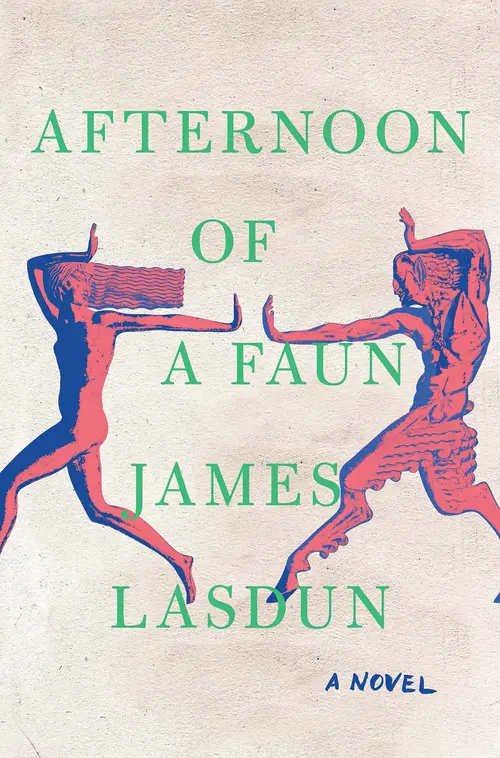
Title
Afternoon
of a Faun

A Novel
JAMES LASDUN

W. W. NORTON & COMPANY
INDEPENDENT PUBLISHERS SINCE 1923
NEW YORK LONDON
Part One
Part One

1
1
“WHAT HE APPEARS TO HAVE DONE, and I’ll admit I’m as astonished as everyone else, is turn this election into a referendum on whether it’s okay to objectify women and, frankly, assault them. I can’t help noticing how frighteningly well he illustrates a phenomenon many women who’ve been assaulted describe, which is the double nature of the attack. First there is the physical assault, and then there is what I would call the epistemological assault, by which I mean the brazen denial that anything untoward took place. It isn’t enough to violate the woman’s bodily autonomy. Her version of events must also be seized and subjugated. In many cases it is this secondary attack, the seizing of a woman’s reality, so to speak, that proves the most traumatic in the long term . . .”
The speaker, a woman in mauve tweed, was giving the lunchtime talk at the Irving Foundation, to which my friend Marco Rosedale had brought me. Her subject was rape, specifically the relationship between rape and memory. She herself had been raped thirty years earlier (she told us this in a tone of studied neutrality that seemed intended to spare us from having to react), and recently she’d curated a traveling exhibition consisting of several installations in which the circumstances of her own and other women’s assaults were reconstructed in whatever detail memory could supply, and with whatever distortions of scale memory lent those details.
The striking thing about most of these exhibits, judging from her slides, was their seeming innocuousness. No scary dungeons or sketchy back alleys, no vans with blacked-out windows; just ordinary domestic spaces. There was a student dorm room with ashtrays and plastic cups; a pool house with tiny people swimming in the pool outside; an office mail room with a frozen waterfall of huge envelopes spilling from a box. There was a comfortable-looking bedroom in which a man’s suit and shirt were folded neatly over a chair. The man was in bed asleep while the woman lay beside him with her eyes open, staring at a crack in the ceiling. The two had matching wedding bands on their ring fingers.
The speaker mentioned a trend reported by therapists in a recent newspaper article. “It’s purely anecdotal,” she told us, smiling pleasantly, “but it interests me greatly.” Large numbers of women patients had apparently begun talking to their therapists about long-ago episodes of harassment that they’d either forgotten or considered too insignificant to be worth discussing.
“It appears to be a kind of spontaneous collective impulse . . .”