Chapters (9)
Look in
and see him looking out.
He is not always
quiet, but there have been times
when happiness has come
to him, unasked,
like the stillness on the water
that holds the evening clear
while it subsides
—and he let go
what he was not.
His ancestor is the hill
that rises in the winter wind
beyond the blind wall
at his back.
It wears a patched robe
of some history that he knows
and some that he
does not: healed fields
where the woods comes back
after a time of crops,
human history
done with, a few
ragged, fences surviving
among the trees;
and on the ridges still
there are open fields
where the cattle look up
to watch him on his walks
with eyes patient as time.
The hill has known
too many days and men
grown quiet behind him.
But there are mornings
when his soul emerges
from darkness
as out of a hollow in a tree
high on the crest
and takes flight
with savage joy and harsh
outcry down the long slope
of the leaves. And nights
when he sleeps sweating
under the burden of the hill.
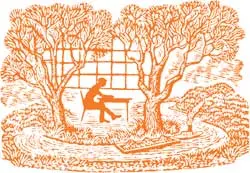
At the window
he sits and looks out,
musing on the river,
a little brown hen duck
paddling upstream
among the windwaves
close to the far bank.
What he has understood
lies behind him
like a road in the woods. He is
a wilderness looking out
at the wild.
6.
A warm day in December,
and the rain falling
steadily through the morning
as the man works
at his table, the window
staring into the valley
as though conscious
when he is not. The cold river
steams in the warm air.
It is rising. Already
the lowest willows
stand in the water
and the swift currents
fold round them.
The bare twigs of the elms
are beaded with bright drops
that grow slowly heavy
and fall, bigger
and slower than the rain.
A fox squirrel comes
through the trees, hurrying
someplace, but it seems
to be raining everywhere,
and he submits to wetness
and sits still, miserable
maybe, for an hour.
How sheltering and clear
the window seems, the dry fireheat
inside, and outside the gray
downpour. As the man works
the weather moves
upon his mind, its dreariness
a kind of comfort.
7.
Outside the window
is a roofed wooden tray
he fills with seeds for the birds.
They make a sort of dance
as they descend and light
and fly off at a slant
across the strictly divided
black sash. At first
they came fearfully, worried
by the man’s movements
inside the room. They watched
his eyes, and flew
when he looked. Now they expect
no harm from him
and forget he’s there.
They come into his vision,
unafraid. He keeps
a certain distance and quietness
in tribute to them.
That they ignore him
he takes in tribute to himself.
But they stay cautious
of each other, half afraid, unwilling
to be too close. They snatch
what they can carry and fly
into the trees. They flirt out
with tail or beak and waste
more sometimes than they eat.
And the man, knowing
the price of seed, wishes
they would take more care.
But they understand only
what is free, and he
can give only as they
will take. Thus they have
enlightened him. He buys
the seed, to make it free.
8.