When the Stars Go Dark

Epigraph
Here is the world.
Beautiful and terrible things will happen.
Don’t be afraid.
—Frederick Buechner
Maps
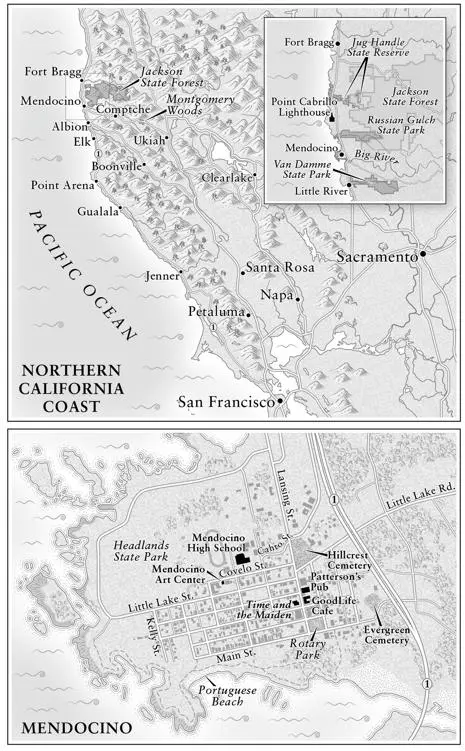
(prologue)
The mother who tore off her dress when the police came to her house with the news and then ran down the street in only her shoes, while her neighbors, even the ones who knew her well, hid behind their doors and windows, afraid of her grief.
The mother who clutched her daughter’s purse as the ambulance sped away. The purse pink and white, shaped like a poodle and smeared with blood.
The mother who began to cook for the detectives and her neighborhood priest while they were still trying to explain to her what had happened, her hands raw as she chopped a mountain of onions, washed dishes in scalding water. No one could get her to sit down. Sitting down meant she had to know it. Accept it.
The mother who left the mortuary after ID’ing her child’s body and walked in front of a live Muni, the jolt throwing her twenty feet straight backward, her fingertips smoking where the current blew through, her lips black. But she had lived.
The mother who used to be a famous actress, but now waited for news the way glaciers wait at the far tip of the globe, frozen and quiet, half alive.
—
The mother I was that day in July, on my knees as the EMT tried to get through to me with words, sentences, my name. I wouldn’t let go of my child’s body. “Detective Hart,” he said over and over as my mind gasped, plummeting. As if that person could still possibly exist.
Part 1: Signs and Vapors
(one)
The night feels shredded as I leave the city, through perforated mist, a crumbling September sky. Behind me, Potrero Hill is a stretch of dead beach, all of San Francisco unconscious or oblivious. Above the cloud line, an eerie yellow sphere is rising. It’s the moon, gigantic and overstuffed, the color of lemonade. I can’t stop watching it roll higher and higher, saturated with brightness, like a wound. Or like a door lit entirely by pain.
No one is coming to save me. No one can save anyone, though once I believed differently. I believed all sorts of things, but now I see the only way forward is to begin with nothing, or whatever is less than nothing. I have myself and no one else. I have the road and the snaking mist. I have this tortured moon.
—
I drive until I stop seeing familiar landmarks, stop looking in my rearview to see if someone is following me. In Santa Rosa, the Travelodge is tucked behind a superstore parking lot, the whole swath of it empty and overlit, like a swimming pool at night with no one in it. When I ring the bell, the night manager makes a noise from a back room and then comes out cheerfully, wiping her hands on her bright cotton dress.
“How are you?” she asks. The world’s most innocuous question, impossible to answer.
“Fine.”
She holds out the registration card and a purple pen, the dimpled flesh under her arm unfurling like a wing. I feel her looking at my face, my hair. She watches my hands, reading upside down. “Anna Louise Hart. That’s sure a pretty name.”
“What?”
“Don’t you think so, baby?” Her voice has the Caribbean in it, a rich, warm slant that makes me think she calls everyone “baby,” even me.
It’s hard work not to flinch at her kindness, to stand in the greenish cast of the fluorescent bulb and write down the number of my license plate. To talk to her as if we’re just any two people anywhere, carrying on without a single sorrow.
She finally gives me my key, and I go to my room, shutting the door behind me with relief. Inside there’s a bed and a lamp and one of those oddly placed chairs no one ever sits in. Bad lighting flattens everything into dull rectangles, the tasteless carpet and plastic-looking bedspread, the curtains missing their hooks.
I set down my duffel in the center of the bed, take out my Glock 19 and tuck it under the stiff pillow, feeling reassured to have it nearby, as if it’s an old friend of mine. I suppose it is. Then I grab a change of clothes, and start the shower, taking care to avoid the mirror as I undress, except to look at my breasts, which have hardened into stones. The right is hot to the touch, with a blistered red mound surrounding the nipple. I run the water in the shower as hot as it will go and stand there, being burned alive, with no relief at all.
When I climb out, dripping, I hold a washcloth under the faucet before microwaving it, sodden, until it smokes. The heat feels volcanic as I press it hard against myself, singeing my hands as I bend double over the toilet bowl, still naked. The loose flesh around my waist feels as rubbery and soft against my arms as a deflated life raft.
With wet hair, I walk to the all-night drugstore, buying ACE bandages and a breast pump, ziplock bags, and a forty-ounce bottle of Mexican beer. They only have a hand pump in stock, awkward and time-consuming. Back in my room, the heavy outmoded television throws splayed shadows on the bare wall. I pump with the sound off on a Spanish soap opera, trying to distract myself from the ache of the suction. The actors make exaggerated movements and faces, confessing things to one another while I labor on one breast and then the other, filling the reservoir twice and then emptying the milk into the baggies I label 9/21/93.
I know I should flush it all, but I can’t make myself do it. Instead, I hold the bags for a long minute, registering their meaning before tucking them into the freezer of the small convenience unit and closing the door, and thinking only briefly about the housekeeper who will find them, or some road-strung trucker looking for ice and feeling repulsed. The milk tells a whole sordid story, though I can’t imagine any stranger correctly guessing at the plot. I’m having a hard time understanding it myself, and I’m the main character; I’m writing it.
—
Just before dawn I wake feverish and take too many Advil, feeling my throat catch and burn around the capsules. A breaking-news banner is running across the bottom of the TV. Forty-seven confirmed dead in Big Bayou, Alabama. Deadliest crash in Amtrak history. Sometime in the middle of the night, a towboat on the Mobile River has gotten off course in heavy fog and driven a barge into the Big Bayou Canot Bridge, displacing the track by three feet. Eight minutes later, running right on schedule, the Amtrak Sunset Limited traveling from Los Angeles to Miami has slammed into the kink at seventy miles per hour, shearing off the first three cars, collapsing the bridge, and rupturing the fuel tank. Amtrak is citing negligence of the tugboat driver. Several crew members are missing, and recovery efforts are still underway. President Clinton is supposed to visit the site later today.
I click off the set, wishing that the rubbery red button on the remote could work to shut off everything, inside and out. Chaos and despair and senseless death. Trains hurtling toward kinks and gaps, everyone aboard sleeping and clueless. Tugboat captains on the wrong river at exactly the wrong moment.
Eight minutes, I want to scream. But who would hear me?
(two)
Once I worked a missing persons case, a boy we later found in pieces under his grandmother’s porch in Noe Valley, the grandmother on a creaking, peeling porch swing directly over his body when we pulled up. For months after, I couldn’t get her face out of my mind, the powdery folds of skin around her mouth, frosted pink lipstick painted just beyond her upper lip. The serenity in her watery blue eyes.
Her grandson, Jeremiah Price, was four. She had poisoned him first, so he wouldn’t remember the pain. “Remember” being her word, the first word in the story she was telling herself about what she’d felt she’d had to do. But the story had no center, not to anyone but her. When we took her confession, we asked her the same question over and over. Why did you kill him? She could never tell us why.
—
In my dim room at the Travelodge, a rotary phone sits on the cheap, scarred bedside table with instructions for dialing out and the rate of long-distance charges. Brendan picks up on the second ring, his voice slow and thick, as if it’s coming through concrete. I’ve woken him up. “Where are you?”
“Santa Rosa. I didn’t get far.”
“You should get some sleep. You sound awful.”
“Yeah.” I look down at my bare legs on the bedspread, feeling the Brillo pad scratchiness of the cheap fabric against my thighs. My T-shirt is damp and wadded, stuck with sweat to the back of my neck. I’ve wrapped my breasts in a tourniquet of bandages, and the pain, in spite of all the Advil, sends a pinging ache through me with each heartbeat, a ragged sort of echolocation. “I don’t know what to do. This is awful. Why are you punishing me?”
“I’m not, it’s just—” There’s a long, freighted pause as he weighs his words. “You have to figure some things out for yourself.”
“How am I supposed to do that?”
“I can’t help you.” He sounds defeated, stretched to the breaking point. I can picture him on the side of our bed in dawn light, his body hunched over the phone, one hand in his thick dark hair. “I’ve been trying, and I’m tired, you know?”
“Just let me come home. We can fix this.”
“How?” he asks breathily. “Some things aren’t fixable, Anna. Let’s just both take some time. This doesn’t have to be forever.”
Something in his tone makes me wonder, though. As if he’s cut the cord but is afraid to acknowledge it. Because he doesn’t know what I’ll do. “How much time are we talking? A week or a month? A year?”
“I don’t know.” His sigh is frayed. “I have a lot of thinking to do.”
On the bed next to me, my own hand looks waxy and stiff, like something that belongs on a mannequin in a shopping mall. I look away, fixing on a point on the wall. “Do you remember when we first got married? That trip we took?”
He’s quiet for a minute, and then says, “I remember.”
“We slept in the desert under that huge cactus with all the birds living inside. You said it was a condominium.”
Another pause. “Yeah.” He isn’t sure where this is going, isn’t sure I haven’t lost it completely.
I’m not so sure myself. “That was one of our best days. I was really happy.”
“Yeah.” Through the phone his breathing quickens. “The thing is, I haven’t seen that woman in a long time, Anna. You haven’t been here for us and you know it.”
“I can do better. Let me try.”
Silence spreads through the receiver, pools around me on the bed as I wait for his answer. Finally he says, “I don’t trust you. I can’t.” The clarity in his voice is devastating. The resolution. For weeks he’s been so angry, but this is worse. He’s made a decision I can’t fight, because I’ve given him every reason to feel precisely this way. “Take care of yourself, okay?”
I feel myself teetering on a dark edge. In other moments of our marriage, he would have thrown me a rope. “Brendan, please. I can’t lose everything.”
“I’m sorry,” he says, and disconnects before I can say another word.
—
Nearly two hundred people came to the memorial service, many of them in uniform. Colleagues and friends and well-meaning strangers who’d read the story in the Chronicle and thought, There but for the grace of God go I.
I zipped myself into a dress I couldn’t feel, so high on Ativan it could have been made of knives. I read lips through huge black sunglasses while Brendan said thank you over and over. Back at the house, I positioned myself in a corner of the kitchen, turned away from the aggressively placed flowers and condolence notes, the stricken faces around the table full of casseroles and cheese platters. My supervising officer, Frank Leary, found me there, a plate of food in his hands that he didn’t even pretend to want.
“What can I say, Anna? What can anyone say about something so awful?”
His voice was usually gruff, not soft like this. I wished I could freeze him where he stood, him and everyone else in a child’s game of statue, and walk away. Instead I only nodded. “Thanks.”
“You should take as much bereavement time as you need for yourself. Don’t worry about a thing, okay?”
The wall seemed to inch nearer as he spoke. “Actually I was thinking I’d come back next week. I need something else to focus on.”
“C’mon, Anna. You don’t mean that. It’s too soon. You should only be thinking about your family right now, and taking care of yourself.”
“You don’t understand, Frank.” I could hear my voice tightening around the words and tried to slow down, to sound less desperate. “I’ll go crazy here with nothing to do. Please.”
He raised his eyebrows and seemed just about to correct me as my husband walked up. Frank stood a little straighter and reached out his hand. “Brendan. Tough day. I’m so sorry, man. Let me know if there’s any way I can help.”
“Thanks, Frank.” Brendan’s gray knit tie hung loosely at the open collar of his shirt, but nothing in his body seemed remotely relaxed as he stood between Frank and me, glancing back and forth as if he was attempting to read a feeling in the air. “So what’s going on here?”
“Nothing,” I lied quickly. “We can talk about it later.”
“I heard you.” He blinked rapidly, his face growing pink. “You can’t seriously mean to go back to work right now.”
“Listen,” Frank said, stepping forward. “I just said the same thing. I’m on your side.”
“Who’s on my side?” Behind me the wall felt smooth and cool against my palm, and yet I felt caged suddenly. Trapped. “I’m just trying to get through this, okay? If I can’t distract myself—” I couldn’t finish the sentence.
“I can’t believe you!” Brendan clamped his lips together, his nostrils flaring. “How about us? How about focusing on your family? Don’t we deserve that from you? Especially after what happened?”
It was as if he’d slapped me. I froze in my body. “That’s not what I mean.” I could hear how stiff my answer sounded, how defensive.
“Yes, it is.”
Frank and I both watched him turn on his heel, then push his way through the room full of bodies with his head down.
“You should go after him. He’s just grieving. People say all kinds of things when they’re in pain.”
“People, Frank? What about my pain?” Inside my chest, everything felt airless, sealed in a vacuum. “You blame me too, don’t you? Just say it.”
(three)
The air temperature feels like bathwater as I leave Santa Rosa, and the sun glitters obscenely. Even the unkempt motel parking lot is a garden, half a dozen silk trees with feathery fuchsia drag-queen blooms. There are birds everywhere—in the branches, in the smudgeless sky, in the broken neon Jack in the Box drive-through kiosk, where three fuzzy chicks stare at me from a nest threaded with drinking-straw wrappers, their throats so pink and open it hurts to look at them.
I order a large coffee and an egg sandwich I can’t eat before cutting over to Route 116, which will thread me through the Russian River Valley to the coast. Jenner is the town there, a postcard more than an actual village. Far below, Goat Rock looks like a giant’s crude toy ball against the dizzying blue of the Pacific, the sort of magic trick Northern California seems to do in its sleep.
In thirty-five years, I’ve never left the state or lived anywhere south of Oakland, and yet the beauty still guts me. Stupid, effortless, ridiculous beauty that goes on and on and on—the roller coaster of the Pacific Coast Highway, the sea like a slap of wild color.
I pull over and park on a hard little oval of dirt just off the side of the highway, crossing both lanes to stand on a bald place above snarled brush and black saw-toothed rocks and bursts of spiky foam. The plunge is dramatic. Dizzying. The wind comes at me, clawing under every layer of clothing so that I have to hug myself, shaking. Then my face is wet, suddenly, tears coming for the first time in weeks. Not about what I’ve done or not done. Not about what I’ve lost and can never get back, but because there’s only one place I can go from here, I realize, one road on the map that means anything to me now. The way back home.
For seventeen years, I’ve stayed away from Mendocino, locking up the place inside myself like something too precious to even look at. Right now, though, on the edge of this cliff, it feels like the only thing keeping me alive, the only thing that’s ever been mine.
If you think about it, most of us have very little choice about what we’re going to become or who we’re going to love, or what place on earth chooses us, becoming home.
All we can do is go when we’re called, and pray we’ll still be taken in.
—
By the time I reach Albion a few hours later, coastal fog has blotted out the sun. It swirls ahead of my low beams, making everything vanish and reappear, the twisting coast road and clustered fir trees, and then the village, finally, like something out of a dark fable—Victorian houses floating white and anchorless over the headlands, the mist all around shuddering and releasing, seeming to breathe.
I feel a clamping sensation as each winding turn brings me closer to the past. The shapes of the trees seem to echo. The road signs too, and the long damp bridge. I’m almost on top of the stoplight by the time I register it and have to gun my way through, racing the yellow onto Little Lake Road. Then I’m out on the bluff, going on pure muscle memory.
Turning left on Lansing Street, I feel as if I’ve squeezed sideways through time. Above the roofline of the Masonic Hall and against a gauzy sky, the figures of Time and the Maiden stand sharp and white, the most iconic thing in the village. A bearded, elderly figure with wings and a scythe, braiding the hair of a girl standing before him. Her head bowed over a book resting on a broken column, an acacia branch in one of her hands, an urn in the other, and an hourglass near her feet—each object an enigmatic symbol in a larger puzzle. The whole carving like a mystery in plain sight.
Once, when I was ten, soon after I came to live in Mendocino, I asked Hap what the statue was supposed to mean. He smiled and told me the history instead. How a young millworker and carpenter named Erick Albertson had carved it from a single piece of redwood in the mid-1800s, working at night in his cottage on the beach. During that time he’d become the first master of Mendocino’s Masonic Order, but never stopped laboring on his masterpiece. It took him seven years in all and then, sometime after the carving was erected in 1866, he had died in a strange accident the history books couldn’t properly explain.
Hap had been a member of the Masonic Order for decades, longer even than he’d been a forest ranger. I assumed he knew everything, all there was to know. But when I asked him how Albertson’s passing was connected to the figures and what they meant, he gave me a sideways look.
“Albertson’s death doesn’t have anything to do with you. And anyway, it happened so long ago. The symbols wouldn’t make sense even if I explained them. They tell a story known only to Masons, never written down, only passed on by mouth as they take their Third Degree.”
I was even more intrigued. “What’s the Third Degree?”
“What you’re giving me now,” he said, and walked away before I even got the joke.
—
I park and pull on a baseball cap and sunglasses before stepping out into the chilly, fog-wet street. It’s hard to imagine any locals recognizing me as a grown woman, but the San Francisco papers are widely read up here, and occasionally my cases had landed me in the Chronicle. So had the accident, for that matter.
The Story Continues on BooksBarbecue!
Enjoyed this preview? ❤️ Do not stop here!
Read the complete book free online → 🔗
Continue reading now on BooksBarbecue and discover every page!
Love reading? Bookmark BooksBarbecue.com for more amazing books!
Happy Reading!