What I Never Told you
Cover
Also by Dawn Goodwin
The Accident
The Pupil
Best Friends Forever
The Pact
WHAT I NEVER TOLD YOU
Dawn Goodwin
An Aries book
Copyright
First published in the United Kingdom in 2021 by Aria, an imprint of Head of Zeus Ltd
Copyright © Dawn Goodwin, 2021
The moral right of Dawn Goodwin to be identified as the author of this work has been asserted in accordance with the Copyright, Designs and Patents Act of 1988.
All rights reserved. No part of this publication may be reproduced, stored in a retrieval system, or transmitted, in any form or by any means, electronic, mechanical, photocopying, recording, or otherwise, without the prior permission of both the copyright owner and the above publisher of this book.
This is a work of fiction. All characters, organizations, and events portrayed in this novel are either products of the author’s imagination or are used fictitiously.
A CIP catalogue record for this book is available from the British Library.
ISBN PB: 9781800246171
ISBN E: 9781800242180
Cover design © Nick Venables
Aria
c/o Head of Zeus
First Floor East
5–8 Hardwick Street
London EC1R 4RG
Contents
Welcome Page
Copyright
Dedication
Prologue
Chapter 1
Chapter 2
Chapter 3
Chapter 4
Chapter 5
Chapter 6
Chapter 7
Chapter 8
Chapter 9
Chapter 10
Chapter 11
Chapter 12
Chapter 13
Chapter 14
Chapter 15
Chapter 16
Chapter 17
Chapter 18
Chapter 19
Chapter 20
Chapter 21
Chapter 22
Chapter 23
Chapter 24
Chapter 25
Chapter 26
Chapter 27
Chapter 28
Chapter 29
Chapter 30
Chapter 31
Chapter 32
Chapter 33
Chapter 34
Chapter 35
Chapter 36
Chapter 37
Chapter 38
Chapter 39
Chapter 40
Chapter 41
Chapter 42
Chapter 43
Chapter 44
Chapter 45
Chapter 46
Acknowledgements
About the Author
An Invitation from the Publisher
Dedication
For my family
Prologue
“Tell your mother I saved your life.”
The words are like hailstones. Cold. Hard. Biting.
Hands shove against a zipped-up coat, quick as a flash. Feet slide in the dirt and sand, the soles of the worn trainers, smoothed by time, providing no traction.
Eyes widen as gravity pulls and awareness of what is happening taps on their shoulders.
Hands reach out again to grab onto something, anything. The coat, the zip, a sleeve. But the hands find only air. The coat is already out of reach, the body inside pulling it backwards over the cliff edge, gravity doing what it does best.
Mouths gape, but no sounds escape. Eyes plead. Seconds feel like hours.
Just the sounds of the sea far below and the raucous calling of the seagulls, like hysterical laughter. Then a guttural scream cuts through the bird call, raw and coarse, rising in urgency from below, followed by a thump, weighted, nauseating.
Silence.
There’s no need to lean over to see what is painfully true.
A twisted shape on the rocks below. Limbs at unnatural angles. A spreading pool of darkness, like spilled wine. Then the waves washing it clean, pulling at the splayed fingers, coaxing into the depths.
Two thin drag marks remain in the dirt where those feet lost their battle for grip.
A newer trainer, branded, the latest design, smooths over the dirt before walking away.
Nothing to see here.
1
NOW
The house was winking at her.
She knew it was just the sun casting a shadow over the glass, but even so, those windows had always looked like heavily lidded eyes to her. Below them a solid wooden door like a mouth, ready to breathe her in.
Helen Whitmore stood at the end of the gravel driveway and stared at the house. She shuddered, even though this had been her home for most of her life. The root of many an urban legend in the village, causing small children to shiver as they walked past the end of the driveway, their eyes looking anywhere but at the house.
Tall tales whispered into little ears.
This eccentric, unusually tall house, unimaginatively named “Cliffside”, was Helen’s childhood home and before her, that of her mother, grandmother and great-grandmother. Cliffside had belonged to the women in her family for generations, each one compelled to return to it with their husbands and raise their children there. Every generation that had lived there had added on another bit – an extension here, another floor there – until it stood in the present day, lopsided and gangly, but still with those eyes of glass, all seeing and yet revealing nothing. That gaping mouth.
It had always felt like a living, breathing entity. Helen had never wanted to come back here, but it had a way of pulling at you, tugging until you succumbed. The longer you spent here, the more you could feel its malevolence creeping into your bloodstream.
Nothing good had ever happened to her here. And yet, she couldn’t pull herself away. It was her home. As simple and as complicated as that.
She reached into the letterbox by the gate post and grabbed the handful of envelopes inside, picked up the shopping bags and headed up the gravel driveway, feet crunching, teeth grinding.
Arthur, the caretaker of the property, waved at her from where he was pruning the roses along the driveway, his grey hair tucked into a flat cap against the breeze, his gnarled hands in thick gardening gloves. Helen couldn’t fathom how old he was, but he had worked for her family for as long as she could remember, all the way back to when her parents had employed him. She waved back, swapping the bags of shopping into her other hand, but feeling like the weight of returning home from work was straining her shoulders more.
Helen owned a small, independent bookshop in Hamblemere, a little village on the Cornish coast not far from the more popular tourist area of Padstow. The house was situated on the cliff above the sea, as though it was looking down in judgement on the vast expanse of agitated water. In return, the waves inched closer to the cliff walls with every passing year, the sea reminding the house that it was there and that it could swallow it whole at any point. The coastal path weaved along the far edge of the property, acting as an ineffective mediator.
The bookshop was a picturesque fifteen-minute walk from the house. Located in the village square, it was tucked between a deli that smelled strongly of ripe Stilton cheese on a warm day and a bakery selling loaves of sourdough and goat’s cheese paninis. It was a pretty village, with brightly coloured hanging baskets adorning shop fronts, cobblestoned streets and not a McDonalds as far as the eye could see, which you would think would mean the shop was guaranteed footfall, but the village was slowly being suffocated by the bigger towns around it with their superstores and branded retailers. Once an area full of huge homes owned by the wealthy, the village and its surrounds were now characterised predominantly by holiday homes for those who could afford such luxury, summer rentals, and pensioners seeking a quieter way of life and a library card. Pastel-coloured bungalows with ramps and stair lifts juxtaposed with modern behemoths of glass and sharp edges.
As a result, the bookshop was always teetering on the edge of insolvency, but that didn’t matter to Helen. It had never been about earning money. She loved books. Reading them, writing them, inhaling them. She always had. It had been the one constant she could fully engage with when she was younger and it became her saving grace as a teenager. A way to shut everything out with the turn of a page or the click and clack of her typewriter. It was still her therapy now, even as a married woman with a daughter, two stepchildren, a husband of seven years and a geriatric rescue dog.
So when the bookshop was in the midst of one of its usual downturns, she supplemented the shop’s coffers with the meagre income generated from renting the tiny flat above the shop and the even more meagre royalties from the books she wrote under a pseudonym.
At the end of the day, she would lock up the shop and head home, back to the weirdly gothic house at the top of the hill overlooking the Cornish sea, that wild, rugged narrator of many a tale of stolen treasure and scandalous adventures.
The keeper of many secrets.
She opened the heavy, wooden front door, her hands hurting from the handles of the shopping bags. Clive, her ageing British bulldog, shuffled over to greet her, his eyes alight and his bum dancing. Some days she took him with her to work where he loved to chat to the customers, greeting them eagerly with enthusiastic wiggles of his ample bottom, his presence as much a part of the fabric of the village now as the bookshop was, but today it had been drizzling when she left and he wasn’t one for outdoor excursions in inclement weather. He had looked at her witheringly when she’d brought out his lead this morning, before sloping back to bed without a second glance.
Helen headed straight for the kitchen and dumped the heavy bags on the kitchen table. A vase of freshly cut roses on the table caught her eye and she smiled. Arthur was the only man to bring her flowers these days.
She unpacked the shopping, most of it requests from the family. The sourdough that her husband liked from the bakery and some of his favourite cheese from the deli; her stepson’s protein powder as he pursued bigger muscles with the free weights he’d stashed in the garage; her stepdaughter’s tampons. The only thing she had bought for herself was a packet of extremely indulgent chocolate biscuits from the little M&S around the corner from the bookshop.
She hummed as she filled the kettle and sat at the table while it boiled, absently flicking through the mail. Her phone vibrated next to her and she smiled as she read a text from her friend Julie, thanking her for the birthday flowers. Thank goodness for online reminders and deliveries. She read through a letter from the local business association about a meeting to discuss the new retail park being constructed on the outskirts of the village. She made a mental note to put the date in her diary. She may not voice many opinions at such meetings, but it was important that her face was seen. The gas bill was an unnecessary reminder that this ageing house consumed energy greedily and that perhaps it was time to replace the noisy boiler in the basement.
At the bottom of the pile of post was a white envelope, addressed simply to HELEN, her name handwritten in blue capital letters. No address or stamp. She opened it while still humming the old Carpenters song that had been stuck in her head all day. She expected an invitation to a school function or a celebration of some sort. Her husband, Hugh, was now in the age bracket where such invitations were not to weddings and christenings any longer. Instead, they were thinly disguised attempts to make divorce and retirement parties look like joyous achievements rather than the depressing signposts of failure they actually were.
The kettle clicked off loudly.
The hum died in her throat.
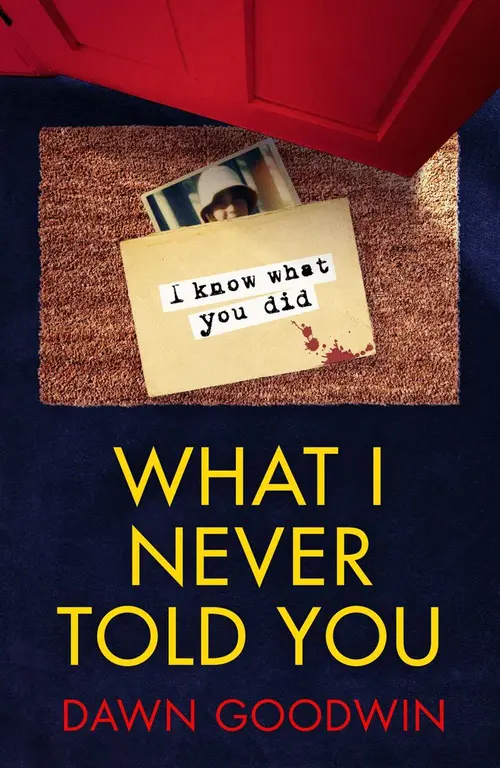
Inside the envelope was a Polaroid photograph.
Two girls, smiling into the camera.
One of those girls was Helen.
The other was dead.
2
THEN
“Have you seen the new girl?” Eloise says as she sits down next to me in the canteen. “Oh my god, I wouldn’t be caught dead in those shoes.”
The first day back at school is dragging on, but at least I’m not at home. I’ve had enough of my own company almost as much as listening to the constant bickering through the walls. There is only so much catalogue clothes shopping you can do before even spending money gets tedious.
I look over to where the new girl is standing, tray in hand, eyes wide.
“And the hair is a disaster.” Eloise is not making any effort to keep her voice down. “No one wears low ponytails. Although with hair like that, what else can she do, I suppose. Oh! Hi, Brian. Don’t think I haven’t noticed you checking me out all day.” Mouth pouting, eyelashes fluttering. I look away.
“Ah, El, I can’t take my eyes off you,” Brian Firth says as he saunters past. He jerks his fringe from his eyes like he has a twitch. Eloise giggles. I stir the plastic spoon through my yoghurt pot in slow, aimless circles.
“He is so into you, El,” Steph says, leaning forward excitedly. The end of her long plait drops into her own yoghurt.
“Steph, are you going to paint with that hair later or just use your fingers? Maybe Mummy will put it on the fridge for you,” I say, nodding at her hair.
She blushes, puts the end of her hair in her mouth and sucks on it. I look away, disgusted, and she blushes an even deeper shade.
“And who starts at a new school at the beginning of their last year anyway? Talk about making it hard for yourself,” El continues. “Unless she’s super bright or something. Although I can’t imagine she is.”
“I heard she lives on the farm on the outskirts of the village. You know, that one just past your house, Hels,” Emily says. “It looks like a right dump.”
I shrug. “I didn’t see her around over the summer.”
“If that’s so, how can they afford to send her here?” Eloise’s nose is elevated, making her neck look scrawny, her head like a lollipop on a stick. “Probably one of those scholarship kids.”
Eloise has a point. Seahaven School is elitist. Those that come here have bankers and lawyers and landed gentry for parents. The air is pungent with old money and entitlement. Many of the kids are dropped at school each day either by the hired help or by surgically enhanced mothers in pristine walking boots and shoulder pads, driving Range Rovers that never see a dirt road unless it’s the long, sweeping driveway up to their large houses. Even the bus that ferries around some of the more local kids like me is more fitting for a professional sports team than transporting a bunch of spoilt kids a few miles to school. Miles that could easily be walked.
I’ve attended the school since I was four years old, along with Eloise. Steph and Emily recently wormed their way into our social group, but we made it suitably hard for them. Nothing comes easy, certainly not our attention. You must earn your place. We are The Originals. The Queen Bees of our year. Eloise in particular works hard to maintain our reputation as such.
I look over at the new girl again. She has found a seat at an empty table and is reading a book while absent-mindedly eating fish fingers. I can’t make out what book it is, but she’s engrossed – or pretending to be.
I push my tray away. “Maybe standards at Seahaven are slipping.”
“I bloody hope not! My father will be furious. He is on the board of governors, after all. I should ask him – if I see him this week,” Steph says indignantly.
“She’s reading a book.” Emily is horrified at the idea.
“It’s ok to read books, Em. It might actually help you pass your exams,” I say. “You do know how to read, don’t you? I mean books without pictures?”
Eloise laughs loudly. I turn away from the hurt look that passes over Emily’s face.
“Come on, let’s go,” Eloise says abruptly and glides to her feet.
We follow like sheep, discarding our trays and trailing after our leader. Instead of taking the direct route from the canteen, she weaves towards the back, past the table where the new girl is sitting. Brian’s group is chatting loudly at the next table over. As we approach, the new girl keeps her eyes firmly on the page in front of her. I see the flash of annoyance on El’s face at being ignored, before she says loudly, “Hels, something stinks around here.” She sniffs the air. “Can you smell that?”
“Yeah, I can,” I say, wrinkling my nose.
“Ugh, smells like fish.” El looks pointedly at the new girl, sniffs again and says, “Yes, definitely fishy.”
The girl keeps her eyes low, but her skin flushes a darker shade.
“Ugh, disgusting!” Emily says, while Steph holds her nose dramatically.
“Brian, how can you stand sitting so close to it?” El says, fluttering her fake eyelashes.
He whistles at her and El sashays away with a flick of a smile over her shoulder.
When I look back as we leave the canteen, the girl is rigid, expressionless, still staring into her book, but I can guarantee she isn’t seeing the words on the page anymore.
3
NOW
Helen hated this room. The dark wood panelling, dim lighting and weighty maroon velvet curtains made it feel heavy and stifling. Hugh enjoyed the oppressive opulence of it, but she had always disliked it. It might appeal to Hugh’s delusions of grandeur, but reminded Helen of being banished from her parents’ endless dinner parties as a child, the air pungent with cigarette smoke and brandy fumes. Hugh insisted that they eat all their family meals here in the dining room, even though the long oak table in the kitchen, with its knobbled and dented wood, was much more of a welcoming, warming place to eat in Helen’s opinion.
Not that there was that much sharing going on.
Tonight she sat in this room, taking her usual place at one head of the table, her husband at the other, looking at the faces around her.
Her family.
She found herself wondering what they actually thought of her, once the obligations of blood and marriage were stripped away.
Whether they actually liked her.
And did she like them?
These were the kinds of thoughts that had been twisting around her brain since she had opened that envelope. A Pandora’s box of paranoia and anxiety.
She tracked a green bean through the gravy on her plate and looked at each of them in turn, their heads bowed to their plates, their mouths chewing silently. These were the people who should know her best. Her daughter, her stepchildren, her husband. But of course they only knew what she had chosen to let them see.
And Helen was not a huge fan of the truth.
She sipped at a glass of water, cold against her teeth.
Do we ever really know what people think of us, she wondered? Do we want to? Not the platitudes of you’re so lovely after they’ve opened your thoughtful gift or your hair looks amazing as you arrive at the party, the words said loud enough to be heard by those in close proximity and carrying enough weight to make the person vocalising them feel self-righteously proud of themselves in that moment, while on the inside they are judging you, hating you.
What about what they actually think of you when they spy you walk past the coffee shop window as they sip on a skinny latte, their eyes narrowed as they track your footsteps, inwardly smirking when you trip over that loose paving stone? Or when you bump into them in the supermarket and their eyes dip towards your trolley, taking in the organic vegetables, thick-cut fillet steaks and bottle of Tanqueray that they wish they could afford? When they say you look amazing in those jeans while running their eyes over the roll of fat bulging over your waistband, inwardly salivating at any visible sign of your weaknesses?
It’s all based on their perception of your reality. Assumptions about your level of happiness, self-image, financial standing. But they don’t let you see that. They just quietly judge, seething inside while smiling at you with tight lips. And you do your best to keep up appearances and play to your audience.
But being thin, pretty or rich won’t make you happy – and the only friend you can really count on is yourself. In Helen’s experience anyway.
She pushed the food around her plate half-heartedly, wondering what her family would say if they were allowed to be honest about her, what things they were quietly seething over as they sat around the table, pretending to play happy families.
“Helen, could you pass the gravy jug please?” Hugh said into the silence.
Hugh was the most mild-mannered man Helen had ever meet. Beloved history teacher by day and ancestry investigator by night, everyone who knew Hugh described him as nice and lovely. And that was true.
What they didn’t see was that he was also inconsiderate, lazy and occasionally extremely patronising. There, how’s that for honesty?
He could’ve asked one of the children sitting closer to him to pass the bloody gravy. Or could’ve got up himself.
Helen stood up and walked around to his end of the table to pass him the porcelain gravy jug, barely resisting the childish urge to snatch it back as he reached for it.
She returned to her seat and pulled in the heavy chair. The chair legs scraped, loud in the leaden room.
“Helen, what did you used to be like?”
At fourteen years old, Lydia was petite with blonde hair that would likely darken into mousey brown and blue eyes that always seemed to be cast down to the floor. She was Hugh’s daughter from his previous marriage to Francesca, a rotund HR executive who discovered more than just her love of almond milk when she signed up with personal trainer Todd. She left Hugh and ran away to Brighton with Todd to run a vegan café. Rumour had it she’d never looked or felt so good in her life, but the kids usually came home from their visits to Brighton begging for bacon sandwiches.
Helen paused, her fork hovering in front of her lips, chicken drooping from the end.
“When?” she replied.
“When you were our age?” Lydia said.
White envelopes and Polaroid snaps of moments in time flashed into her head once more. The heavy wooden panels took a step closer into the room.
Matt snorted in between shovelling food like he hadn’t eaten in weeks. Only a teenage boy could eat with such gluttony, as though his very survival depended on him getting through his meal as quickly as possible. “She can’t remember that far back,” he sneered without humour.
Matt was Lydia’s brother. Nineteen, boy-band handsome, with dark hair that reached down to the chip on his shoulder. He had inherited Francesca’s Italian genes. Lydia was more like her father – pale, uninteresting.
Helen glared at the top of Matt’s head. Sometimes her stepson could be a right prick.
Actually, most of the time. Who was she kidding?
Helen put down her fork and looked across at Lydia as she waited patiently for an answer. “What do you think I was like?”
The Story Continues on BooksBarbecue!
Enjoyed this preview? ❤️ Do not stop here!
Read the complete book free online → 🔗
Continue reading now on BooksBarbecue and discover every page!
Love reading? Bookmark BooksBarbecue.com for more amazing books!
Happy Reading!