Vauxhall
Cover
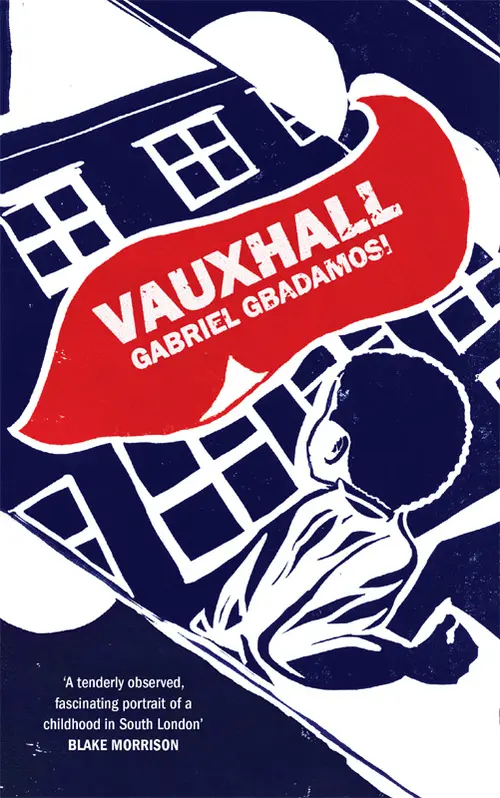
Title
Vauxhall
Gabriel Gbadamosi
TELEGRAM
Gabriel Gbadamosi is an Irish-Nigerian poet, playwright and essayist born in London. He was AHRC Creative and Performing Arts Fellow at the Pinter Centre, Goldsmiths, and a Judith E. Wilson Fellow for creative writing at Cambridge University. His plays include Shango, Hotel Orpheu and for radio The Long, Hot Summer of ’76 (BBC Radio 3), which won the Richard Imison Award. He has presented Night Waves on BBC Radio 3 and Art Beat on the World Service. Vauxhall is his first novel.
‘Only a poet could have written Vauxhall. I can hear Yeats and Joyce in it ... Gbadamosi paints a vivid portrait of 1970s multicultural London, giving that time in our recent history its own music, voice and clear light. Vauxhall is written in the way that English should be written – clean, swift and with flashes of lightning.’
Bonnie Greer, author of Hanging by her Teeth
‘A tenderly observed, fascinating portrait of a childhood in South London, as it moves from post-war darkness into an uncertain new era.’
Blake Morrison, author of South of the River
‘Immediately appealing, this is a quite an odyssey through the maelstrom that London was in the 1970s. A remarkable achievement.’
Brian Chikwava, author of Harare North
‘An impressive feat of memory and skill ... the streets, the fraught encounters, the sense of family and growing understandings of youth are winningly brought to life in a series of deft, artful vignettes.’
Diran Adebayo, author of Some Kind of Black
For my children
Ninu ilé Baba mi, ọpọlọpọ ibùgbé ni o wà
John 14.2
Part One
The Sari
Her forehead was crumpled on the pavement.
‘She made a grab for the wire as she fell,’ someone said.
I looked up at the telegraph pole, its wires reaching out in a spiral overhead to all the houses in the street.
Her mother stood crying into a fold of the sari she held across her mouth, to stop the truth leaking out. She was talking in another language. It was grief. She wanted the girl to get up out the puddle of blood. She wanted her to fly up to the hand-hold of the wire. To fly backwards in time, up to the windowsill on the top floor, and press her hands and face against the coldness of the glass. But she wouldn’t. She was out of reach – the girl whose name I didn’t know, who never went to school and never waved back.
The window was open and the curtain was hanging out, like she’d held on to it. I could feel her slipping. I grabbed hold of Manus’s sleeve, but he shook me off. I had to stand on my own. There was the feeling of when the ice-cream van came and I couldn’t walk away, when I’d stood there listening to the hum of the engine take over from the blare of the loudspeaker, and she’d thrown me down a sixpence – out of the blue, a flash of money, an arc of silver rolling in the gutter, just missing the drain. I looked up and caught a glimpse of her through the net curtain, closing in sunlight.
I liked it she’d seen me. She was like me, trying to be invisible and pretending not to look because I didn’t have the money to buy ice cream.
Now she was at my feet. She’d fallen through the air, and the sticky blood had footprints in it running madly around in the street.
‘Get an ambulance.’
‘Call the police.’
‘Get these children away.’
‘She made a grab.’
‘She changed her mind.’
We’d been playing in the street, building the wicket for tin-can-tacky and organising ourselves into runners and finders. Some of the girls were playing feet off London and sitting on Sky’s wall while we sorted it out. I ran inside to get more tin cans out the bins to build up and knock down for the start. Manus and Connor were squabbling over who should get the stone to fling at it and Danny over the road knocked it down with his own stone but everyone shouted they weren’t ready. I was building it up again with Yakubu and Thaddeus, with Paul Mersey standing over it, when someone said, ‘She’s fallen.’
I looked up and couldn’t see what they were talking about. Busola was biting her thumb, all the girls along the wall were looking up the street. No one had fallen – Theresa was it and still trying to get up. I couldn’t see why everyone had stopped, but there was a rush up to that end of the street and I had to stop people kicking over the wicket as they ran.
We were the first ones there, but everyone made a big circle to keep away. I pushed in past Paul Waller and Marcia’s little brother to get next to Manus but had to step back because the pool of blood was still spreading. The edge of it was curved and thick and shiny. It was moving out from her head and underneath her in a splash from her feet towards the kerb. We all watched it happening.
The door burst open and her mum came out. A man was behind her shouting and dragging her back. She was fighting him off, and screaming. A boy with a round face who we didn’t know was behind them. All the grown-ups started looking out their windows, opening doors and running out. Some of them were pulling children away. We hadn’t seen anyone dead before.
‘She jumped,’ Mandy said as her mum picked her up.
Soap suds spilled on to the pavement and ran along the gutter on our way to school. On the way back, the sky was brownish purple as the storm broke. The brick fronts and the windows of the houses shone in the rain. A car went past, lifting a skirt of brown water on to the pavement, rippling all the way along the street. I saw a lady get completely splashed under her umbrella and stop, speechless, as if she’d been crying and there was no way any more to get dry.
‘Clean clothes, everyone! School clothes off.’ My mum looked serious as she dried my hair in the towel, so I knew what was coming.
‘Michael? How was your teacher?’
‘Fine,’ I said. ‘She was sad, she said a man was killed today. She wrote his name out and told us to remember. What happened, Mum?’
‘Sh.’
Our dad called us all into the living room. He was back from Liverpool. ‘Who saw that girl fall?’
No one spoke.
‘Who was there yesterday?’
‘I wasn’t,’ I said.
‘...Anyone else?’
Everyone looked at me. Manus rolled his tongue up under his teeth. Busola pulled at her bottom lip. Connor pressed his lips together into a crooked line. They were all telling me the same thing, ‘Your big mouth.’
It was too late to go back.
‘I didn’t see her fall,’ I said.
A bang of thunder rumbled on the windowpanes. The sky looked bruised and dark over the rooftops. Rain came down again, like an open tap that couldn’t stop flooding.
‘I don’t want to see any of you leaning out of the window,’ he said.
After supper, we all rushed to look out at the storm, pressing our faces to the glass and leaving mist patches. The street was empty – a brown wash, the colour of clothes in the bathtub, the colour of mud. The terrace of houses opposite became a wall of water and brick. All the windows and curtains were closed.
‘Daddy’s going to sleep. Let’s be quiet,’ my mum said.
We switched off the light and sat up on chairs at the window with blankets over our knees, watching the storm change and the streetlights go orange. Gusts were whipping along the street, spreading in ripples where rain was flooding over on to the pavement. There were dark surges of water rushing into the drains. My mum told us a story about all the people who didn’t have a roof over their heads, who were lost and had to be out there in the rain, turning cold.
Manus was yawning and Busola was leaning back on my mum’s lap, her thumb in her mouth and her eyes closing.
‘How could anyone be out in that and not drown?’ Connor said.
My mum was rocking Busola to sleep. ‘Just spare a thought,’ she said. ‘Every one of them had a mother.’
I looked back at the water and imagined the people floating face up along the gutter and folding, like pieces of soggy paper, down into the drains.
The family were loading their things on to a lorry. We could see the women had these dresses Marie said were saris. She said her mum had some because her dad, Jimmy Singh, was West Indian.
‘They float, don’t they?’ Sandra said.
‘Maybe she thought it would work like a parachute,’ Danny said.
‘It didn’t though, did it?’ Connor didn’t even look up, and we all went quiet thinking about it. We were sitting on Sky’s wall after school because the streets felt different after all the rain and our dad was gone again to Liverpool so we could stay out.
Sky’s mum called her in, but she said her name in Portuguese so it sounded like Say Who! We all laughed and pointed at Sky, saying ‘Who? You!’ Her mum was nice and didn’t tell us to get off the wall, but she kept Sky away from us most of the time. ‘Boa noite,’she said firmly, and shut the door.
The only thing we had left to look at was the people moving out. ‘Look, there he is,’ Julie said. The boy with the round face came out with a bird cage and was getting into a car.
‘Why wasn’t he in school?’ Sandra said. We didn’t know. They hadn’t been there very long. Some people moved in and then didn’t feel they were in the right place and moved out again. But there were lots of people living in the houses and even more in the flats around the school, so it was just interesting to watch people come and go and not join in. Only this was different.
The boy turned round and looked up at the house. He saw us looking. For some reason we all waved. There was something wrong in the way he looked back. It was like we weren’t there, or if we were, why hadn’t the rain come and washed us away? He was bossing his mum into the back seat of the car and giving her the cage to hold. Another older woman got in beside her and he slammed the door. It caught on her dress blowing out, so he opened it and slammed it again. He looked up at us like we shouldn’t be watching, and got in the front seat beside a man with a beard we hadn’t seen before. The car started and drove off with his mum putting the bird cage up at the back window.
‘She’s looking at us,’ Danny said.
We watched them go.
‘He’s stuck up,’ said Julie.
Overcrowding
‘You’re in trouble,’ Manus said, ‘Daddy’s looking for you. Don’t say you’ve seen me.’ And off he went, round the bend, wherever he was going.
I was crouched down by the bonnet of a car up the top of the street, watching people coming and going, trying to get my nerve back to go home. Everyone had been sent out to look for me, and at first I thought it was because our dad was home from Liverpool and I was late coming back.
Busola found me in the playground and said, ‘I haven’t seen you. Dad wants you home.’ I didn’t believe her, because what was she still doing out? But she came up to me again on the swings, ‘You better go.’
‘I’m waiting for you,’ I said. ‘Why ain’t you going?’
‘He ain’t looking for me,’ she said, and laughed and ran off.
I did a few more kicks to get my swing up so it joggled on the chain, so I could look down at the ground, and up at the sky. She was on the roundabout. She looked round and round, and tilted her head. She looked puzzled.
‘You’re adopted, you are!’ she shouted when she saw me looking. She always said that.
‘No,’ I said, and gripped the chain tight to fling it back, ‘you are!’
I wasn’t going home because of her. Why should I listen to her? What did she know? Why was she so horrible to me? I kept my arms back behind me on the chain and swooped down. I kicked my legs up and swung in the air. It was getting late. As I came down she was showing me getting my throat cut with the side of her hand. And then she ignored me, going round and round, with her blank face on.
So I left her there.
On the way I saw Connor playing out with his mates. Everyone was out late. They were kicking a football up at the chain-link fence over the sloping roofs of the sheds by the flats.
‘What’ve you done? Everyone’s looking for ya!’ He wasn’t looking at me and went on keeping the ball up off the ground every time it fell back off the roof which was the game he was good at so it was always his turn.
‘Nothing!’ I said, trying to choke back all the feelings with my fists clenched, but I could feel myself crying.
‘Then keep your mouth shut,’ he said, and went on counting, ‘fifty-six ...fifty-seven ...fifty-eight ...’
I got as far as the lamp post and saw some people in suits coming out the house. They turned down the street towards the main road and the door slammed shut after them. I lost my nerve and ran back and ducked down behind the bonnet of the car to get it back.
I couldn’t think what I’d done wrong. That’s when Manus looked over the top of the bonnet at me.
‘You’re ridiculous, and you’re dirty,’ he said. ‘Look at you!’
I had some of the grease and the dirt off the tyre on my hands where I’d been leaning to peer over. I didn’t know what to do so I wiped my hands on my shirt, and used the back of my hand to wipe the tears off my face, and I wiped that on my shirt too.
Manus sighed, like he was gonna have to be clearing up after me again and he didn’t want to. So he told me to stand up, wipe off the snot and go home because I was in trouble, and off he went.
I could see what he was thinking. When I started school I had to put my hand up to go to the toilet. The teacher said I could go but I didn’t know where it was and I couldn’t get out the gate to go home because it was locked, so I went round behind the outside stairs to the sheds where there was a puddle of rain and tried to wash the poo off as it was coming down the backs of my legs into my socks. The bell rang and the juniors came out to the playground and saw me crouching in the puddle. I told them to go away but they got Manus because they knew he was my brother. He looked at me and didn’t say anything, he just yanked me up out the water by the arm and told the playground lady he was taking me home to clean up. I followed him all the way with my socks squelching and my pants sticky.
‘Don’t you ever learn?’ he said, and I knew it was my fault he was missing school.
This time I didn’t know what I’d done. Why would my dad be angry with me just because I wasn’t in when he got back from Liverpool? I leaned my back against the car and dug in the cracks between the paving stones with a pebble. Some ants came out and scurried off. I knew my dad wouldn’t just get angry at me for something I hadn’t done. It wasn’t like that, there was always a reason. It was just making it worse not going home, and everyone out looking for me, and wanting to blame me for playing out late.
I got up and felt calm. I could hear the brakes of lorries slowing on the main road before they turned the corner. There was the rattle of shutters closing down on the shops. It was all right, I hadn’t done anything. The light was going. I got to the front door and knocked.
My mum opened it. She frowned and shook her head at me. ‘You’re more trouble than you’re worth!’ she said.
‘No I’m not.’ I only muttered under my breath, but I wasn’t gonna be nice to her, because whatever it was she should have been looking after me.
‘Go on, go up!’
I gave her a look. I was angry, but mostly I was going to cry.
She bit her lip. ‘Ah, no,’ she said, ‘Don’t. Go on, your daddy’s waiting.’
‘Where have you been?’ He was lying propped up on his arm on one of the empty beds in the front room. He put his glasses on and I had the feeling he could see where I’d been hiding. All the beds had been made, but no one else was home.
‘Playing out,’ I said.
‘At what time do you call this?’ He looked at his watch and looked back at me. My mum came in and stood by the window. It was her fault, she was the one who should have been watching me. I looked across at her and burst into tears, the ones that flood you and can’t stop, and you struggle to get your breath back.
My mum threw her hands up and shook her head.
‘Come and sit down,’ my dad said, more softly than I could make sense of.
I sat on the edge of the bed, trying to stop sobbing. I was crying because I was confused. Because my dad was after the truth and I didn’t know what it was, my mum wasn’t telling me. And I was crying because I wasn’t in the wrong, and because I was stubborn. And because it was late.
‘This is serious,’ he said. And, after a pause, ‘What happened this morning?’ I looked at him, and up at my mum. ‘What did you tell those people?’
I told them there were eighteen of us living in the house.
They knocked and wanted to come in, but my mum leaned out and said she was busy. I was sitting behind her at the bottom of the stairs as she talked on the doorstep with one leg crossed behind the other, keeping the door with her shoulder.
‘How many people are living in the house?’ asked the woman who looked and spoke like a teacher. The man was wearing a suit and was asking for people’s names for the register.
I counted up the people on my fingers – us in the front room and my mum and dad in the bedroom on that middle floor, six. The three Carthys at the top, and Mr Babalola and Florence up there in the back room, that’s nine ... eleven. Nana who was staying with us in the front room, twelve, and Mr and Mrs Singh and Marie in the front room on the ground floor, fifteen ... then the two Nigerian students sharing the room towards the backyard with Mr Ajani.
‘Eighteen!’ I shouted, and put my hand up.
‘I was going to say we’d some guests staying from Nigeria,’ my mum was saying, ‘short-term, like, and family had come over from Ireland until they found a place, but he didn’t let me get a word out. I said, Ah, he’s only a child, but you should have seen them scribbling. I didn’t know where to put my face.’
My dad was shaking his head as she spoke. And then she laughed and they both looked at me.
‘He’ll be the death of me!’ she said. ‘So I told them to come back when you were in.’
They were looking at me, and I still didn’t know the answer. I counted up again in my head because sometimes I had the feeling there was one of us missing – it still came out wrong. Eighteen? But I knew that was the wrong answer, so I kept my mouth shut.
‘Do you know how serious this is?’ my dad said. I could feel it was but I couldn’t work it out, so I frowned. ‘Overcrowding? I could go to prison.’
I felt I was falling. Those people could put my dad in prison and I’d been showing off that I could count.
They moved out to the kitchen to let me get ready for bed. I heard them talking about the Carthys moving out as I put on my pyjamas, and stop when I went in to wash and brush my teeth in the sink. My mum came to fold me in to the sheets and give me a kiss on the cheek, and tell me not to worry.
The Story Continues on BooksBarbecue!
Enjoyed this preview? ❤️ Do not stop here!
Read the complete book free online → 🔗
Continue reading now on BooksBarbecue and discover every page!
Love reading? Bookmark BooksBarbecue.com for more amazing books!
Happy Reading!