Until We Meet
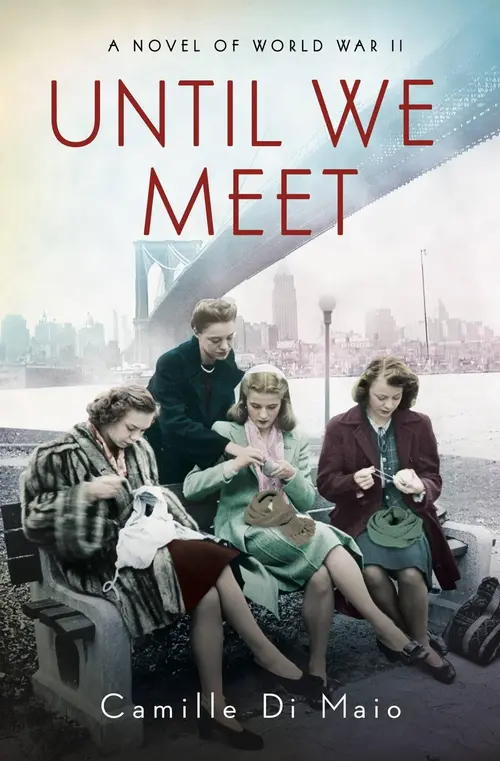
Cover
Title Page

Dedication
To the group of ladies whose Zoom visits uplifted every moment of a wacky year with their spirit and prayers: Kathryn Haydn, Lori Helms, Anita Hertford, Catherine Liberto, Mary Clare Sabol, Karen Tompkins, and Regina Yitbarek
And to my aunt Melissa Wittman, who, from book one, has told everyone she’s ever met that her niece is an author. That kind of love and support is a treasure, as is she.
Explore book giveaways, sneak peeks, deals, and more.
Tap here to learn more.

Acknowledgments
I wrote this book from the small house we’d bought as not-too-far-off empty nesters, only to have coffee shops and libraries close down with the rest of the world. My adult children came home for the duration, and solitude became an endangered species.
So first, I am thankful to my family for allowing me the space and grace to sometimes be an impersonable writer as I cranked out word counts and met deadlines. I know you’re rejoicing as much as I am that my usual hangouts have reopened.
Thank you to my agent, Jill Marsal, who first visited with me about this story and for being an unparalleled guide in my writing.
I so appreciate my editor, Madeleine Colavita, whose collaboration and visits were essential in the creation of this story. Someday we will meet in person and swap embroidery-nerd stories. For now, photos.
To the ladies of Megunticook Market, especially Rachel Green and Jaci Russ, who sustained me through several writing pushes with their creations. And to the ladies of Buttery Baking House in Virginia, who pivoted and persevered in trying times and kept me well-stocked in pastries. My waistline does not thank you, but I do.
Thank you to Valerie Arthur, Susan Schlimme, Elise Metzger, and Joyce Hoggard, whose sidewalk happy hours and other socially distanced get-togethers were such sustaining highlights to me.
To Ashley Peebles. An instant forever friend. Thank you for your garage and most especially for your dependably positive outlook. Someday I’m going to write a Southern book and dedicate it to you.
Thank you to my aunt Cheryl Remmert, who gave me a place of respite for a generous amount of time this year. It was bliss.
Thank you to Rochelle Weinstein, who embodies every dear quality that a beloved friend should have. Becoming a writer was worth it just to have you brought into my life. Together with Lisa Barr, we are Dots, Duds, and Goober.
I cannot possibly thank all of the amazing Bookstagrammers and book world friends who show their love and support all the time. But to name a very few—the women of My Book Friends (join us on Facebook!)—Andrea Katz, Suzy Leopold, Marisa Gothie, Terry Pearson, Jen Sherman, Travel With a Book, Bookapotamus, Ann Marie Nieves, Wonder Woman Bookish, Zibby Owens, Dell Gray, Joy Jordan Lake, Eileen Moskowitz Palma, and Ken and Judy Rodriguez.
Finally—bookstores have had a tough couple of years and yet they are irreplaceable supporters of authors. I hope to give back just a little here by encouraging readers to shop brick and mortar and I want to give a shout-out to a few of my favorites: Owl and Turtle (Camden, Maine), Sundog Books (Seaside, Florida), Fountain Bookstore (Richmond, Virginia), Tattered Cover (Denver, Colorado), The Last Bookstore (Los Angeles, California), Bookish (Malakoff, Texas), The Twig (San Antonio, Texas), Shakespeare and Company (New York City), Book People (Austin, Texas), Parnassus (Nashville, Tennessee), Page 158 Books (Wake Forest, North Carolina), Politics and Prose (Washington, DC), Blue Willow Bookshop (Houston, Texas), and Battery Park Books (Asheville, North Carolina).
Chapter One
Chapter One
September 1943
Margaret Beck closed the door of her family’s narrow Brooklyn row house and rested her head against the wood. The black paint had peeled enough to reveal the whorl-like curves of its grain, and its faded color matched her mood. She slipped her hand into her coat pocket and pulled out the key, inserting it into the lock and turning it until it made the robust thunk that assured her that the safety lock had engaged. The sun had not yet appeared over the chimneyed rooftops, and her parents would not wake for another half hour.
She was on the early shift at the Navy Yard today and she hadn’t gotten any sleep since last night. Worry was a poor bed companion.
What had begun as a normal evening had taken a turn that left a pit in her stomach.
Margaret had just sprinkled the dregs of their last box of Dreft powder into the water, watching as it fizzed into foam when she swished her hand around in it. There were no more to buy on scant grocers’ shelves, purchases limited to two boxes per household since the company’s equipment had been recommissioned for Uncle Sam’s use and others were following suit. From now on, her mother would be making a paste of lye flakes and vinegar, and Margaret could already imagine the havoc it would wreak on their hands.
Dottie had come in from the back entrance and Margaret knew from the slam of the screened door and frenetic pace of her movements that something was wrong. Her friend picked up a towel and started drying the dishes with such force that the enamel was in danger of rubbing off.
Margaret knew better than to ask what was wrong. Dottie would say so as soon as she was ready.
The sound of the radio blared from the overhead bedroom and the girls could hear Margaret’s parents laughing to The Great Gildersleeve.
It was good to hear them laugh. There had been too little of it lately. But the merriment it gave her wasn’t reflected in Dottie’s face, as it normally would be.
“Margaret,” Dottie said, glancing up, as if to make sure they couldn’t be heard. She took a deep breath and exhaled in a nervous stutter. “I’m…I’m just going to say this.”
Margaret set down the jadeite bowl she was holding. Dottie had been looking uncommonly tired lately and Margaret feared that her friend wasn’t getting enough to eat. Much like the rest of them. Dinner tonight had been watered-down tomato sauce over rice, hardly enough to keep anyone full overnight. They saved their chicken cards for Sundays.
“Say what?”
Dottie lowered her voice to a whisper. “I’m receiving a visit from the stork.”
Blood rushed from her head to her toes.
She immediately pictured the implications, much like how people’s lives were said to flash before their eyes before they died. This was not the joyous news it would have been in a different circumstance. Dottie’s devout parents would surely be livid and turn her out. She’d be let go from her position at the Navy Yard.
She’d be destitute.
Because John had been drafted before the wedding could take place.
Margaret grabbed Dottie’s hands, suds forming a bubbling cuff, and squeezed them to keep them from trembling. Though she couldn’t tell who was shaking harder. “Are you sure? Did you go to the doctor?”
Dottie shook her head, and her long, dark curls bounced from side to side. “Of course not. The rabbit test would be too expensive, and I’d be devastated for one to die on my behalf. But it explains my nausea. And my exhaustion. And why…why my monthly didn’t come.”
“The rabbit test?” Margaret asked. Dottie had been a nanny for an Upper East Side family last summer when the mother had become in the family way for a third time. So of course she would know the latest things like that.
“Yes. They make you”—she lowered her voice even more, looking around as if someone might come in—“go into a cup. And then they inject it into a female rabbit and cut it open to see if its ovaries reacted.”
Margaret was appalled, and the image of it distracted her for a moment from the weight of the news. “They really do that?”
Dottie nodded and her curls fell over the right side of her face at their part. “Well, I guess the doctors for rich women do.”
“That might be the only thing that makes me grateful I’m not rich.”
A thin smile spread across Dottie’s face. “Me too.”
“How do you know that’s even true?”
“The woman I nannied for was a showgirl before she became the second wife of a banker on Wall Street. The things she talked about would curl your hair.”
Margaret laughed. “Is that how you got this mop?” She ran a finger down a lock of Dottie’s hair and it bounced right back into position.
Dottie smiled, bigger this time. “We’ve been friends for more than half of my life. You know I come by these honestly.”
“Honestly with a little help from pomade.” But all joking aside, this was serious news. Margaret drew Dottie into a hug and could feel both of their heartbeats racing. Dottie’s slender frame was rigid at first, but at last she rested her head on Margaret’s shoulder, heaving staccato breaths as tears surfaced.
Margaret pulled away after some time and handed Dottie a handkerchief. She led her to the kitchen table and set a newly washed cushion on the wooden chair. Then she joined her on the other side. The tension of the situation was enough to steal the air they breathed.
“What are we going to do about it?” she whispered.
Dottie raised the handkerchief to her nose, reddened, perhaps, by the chill in the air. But more than likely, she’d shed some tears before even coming here. “What do you mean, we? This is my problem.”
“Dottie.” Margaret lifted her friend’s chin up with her hand and mustered a firm look that she hoped was more convincing than she felt inside. “This is our problem. And let’s not even call it a problem. That’s my little niece or nephew in there. Do you realize that? That’s John’s child! John’s going to come home and he’s going to marry you because he loves you and has loved you for as long as I can remember.”
“But my parents…”
“…are not going to find out until we figure out a plan.”
Dottie ran her hand along her waistband. “We’d better figure out something soon. I don’t know how long it will be before it will be obvious to everyone.”
“How far along are you? John left for basic training six weeks ago.”
Dottie nodded. “That long.”
Margaret bit her lip as she was thinking. Maybe Dottie could come live here and stay in John’s bedroom. She was sure her parents would rather do that than see Dottie turned out. Although, if word spread that they were harboring an unwed woman who’d gotten herself into trouble, people might take their business elsewhere and their shoe shop might suffer more than it already was.
But then—a solution. Or at least the fledgling hope of one.
“I know what we’ll do,” she said. “We’ll talk to Gladys.”
* * *
It had been impossible to get any rest after that. Dottie had stayed until The Great Gildersleeve gave way to Dreft Star Playhouse on NBC and it had occurred to Margaret that its host, Marvin Miller, had the unenviable task of promoting a product that was no longer available. Even the loss of something as otherwise insignificant as dish detergent was like another knife in her already worried heart. Each one took her by surprise—there was no solace to be found in everyday routines because they, too, had been altered.
Regular reminders that nothing was what it should be.
At last the radio turned silent as Margaret’s parents went to sleep. Dottie looked at her watch and apologized for the late hour and hurried home with Margaret’s promise that they would get through this together.
It was a night saturated with concern. For John. For Dottie. For the world. When Margaret’s alarm clock sounded in the dark early hours, she swung leaded feet onto the floor and pulled herself up by her bedpost, exhaustion weighing heavily on every bone in her body.
Margaret stood now, head to door, eyes closed and listening to the sounds of the morning as it mustered the energy to turn into day. Birds perched on electrical wires, the baker’s ovens hummed, car horns blared as drivers maneuvered their way down streets that fell into worse disrepair as each day passed. Resources were needed elsewhere.
She felt unraveled. It was the Word of the Day in yesterday’s New York Times and she thought it an ideal term for the circumstance. Like spiraled heaps of yarn laying waste after discovering a flaw in a knitting project.
Dreams were like that too. You imagined what your life would be like and it didn’t turn out to be so. She remembered sitting under red-and-white umbrellas at the shore the first summer she met Dottie and all the ones after that. Little girls with big plans who never could have imagined what a world at war might look like.
What having a baby under these circumstances would mean.
Indeed, Dottie’s news had left Margaret feeling tangled up inside. That her dearest friend was pregnant should have been something to celebrate. Their childhood full of dolls and dress-up and playing house was about to blossom into something real and wriggling.
It was all they’d ever wanted.
But one paramount step in the long-ago playacting had been bypassed: the wedding.
It’s not that Margaret held any religious opinions on the order in which things had happened. The joy she felt at the revelation was genuine—in seven months or so, a little niece or nephew would make an entrance into the world. Margaret’s brother, John, was the father and she had always known that he would make such a very, very good one.
It was the need for secrecy that unsettled her.
The worry over what Dottie’s family would do when they found out.
And the fear that John might never make it home.
That part, she couldn’t share with Dottie. Not in her condition. But every day, the local newspaper posted the names of the dead and missing from Brooklyn. How could they presume that their family would be spared the great tragedy that had befallen so many others? At least for now, John was safe, training in England, parachuting from the airplanes he loved so much. Out of danger as far as they could tell. But how long would it be before his unit was called up to the front and the real peril began?
War draped every breath in a cloak of uncertainty, and Margaret ached to tether herself to something dependable. The need to keep quiet about Dottie’s pregnancy only added to the many shadows that had been cast upon their lives.
She pulled herself away from the row house door, one beleaguered step at a time until she made it to the bus stop and the short journey passed by in a haze.
Twenty minutes later, they rolled up to the entrance of the Brooklyn Navy Yard, and Margaret’s spirits were raised by the pride that arose every time she saw the masts of the three unfinished ships through the dusty glass panes. The handiwork of tens of thousands of men. And more recently, a handful of women like herself. A flag stood outside the entrance, billowing in the morning breeze. Forty-eight stars reminding her that her troubles were mere droplets in the vast sea of sacrifices being made here and around the world.
Just two weeks ago, she’d stood in this spot along with thousands of civilians watching thousands of troops board the Samaria, bound for Liverpool. Once a grand passenger ship in the Cunard Line, it had been requisitioned by the Royal Navy for troop transport. Including her brother. He’d gone to basic training in Georgia and then jump school in North Carolina, and by some unexpected twist, his company in the 101st Airborne was departing from right here in Brooklyn. Right here in the Navy Yard, just a few miles from where he’d been born. She’d hoped to see him, but the soldiers had been given no leave time for visiting families since few of them were from this area. Instead, she and Dottie and her parents had stood in the bleachers hoping to catch a glimpse of that one face they loved so much.
It was to no avail, but John knew they’d be there in that crowd and she hoped that was enough to bolster him as the shores of his homeland disappeared from view. They’d watched with handkerchiefs pressed against their faces as the uniformed young men sailed off, about to learn that war was more than the playacting they’d done in their youth.
The memory brought tears to her eyes once again, a salty concoction of pride and fear, but she wiped them away as soon as they formed, leaving only their tannic burn behind. She had to stay strong. For John. For Dottie. For her parents. For all of them.
She wished she had someone who could be strong for her.
Margaret pulled her identification card from her bag and strung it around her neck before stepping off the bus, avoiding puddles from an overnight rain. The fumes from the exhaust and the fishy stench of the East River made for a nauseating combination, but seeing Gladys Sievers’s bright red hat near the fence brought a smile to her face.
“There you are, doll,” Gladys shouted through a haze of cigarette smoke. She smoked the unfiltered kind, preferring the gravelly, husky contour it gave to her voice. “Maybe if I sound more like a man, I’ll be treated as well as one,” she’d say with some sarcasm.
She dropped the butt onto the sidewalk and ground it down with her stiletto heel.
Entirely unsuitable footwear for this weather and this place—they had to walk over steel grates to get to their workroom—but she insisted it was all part of the picture she liked to paint about rights for women. “Men know deep down they couldn’t take two steps in these babies, though I’d like to see them try. Ha! That would show them what we’re made of.”
Every breath Gladys took was tinged with the burden of a father who’d left and a mother who had quite literally worked herself to death before the preponderance of unions and workers’ rights. So she never missed an opportunity to advance the causes that combated such injustices, in all ways large and small.
She didn’t have any more money than the rest of them, but Gladys was a whiz at embellishing old pieces and making them look snazzy. As Margaret approached, she could see that today’s heels were red with gold embroidery. She recognized the shoes as one of Gladys’s thrift-store purchases. One had a coffee stain on the toe, if she remembered correctly. But the way Gladys had used gold thread to create a flower pattern on them had made them look brand-new.
“Where’s your sidekick, sick again? Dare we hope she’s loosened up at last and given herself over to a night of debauchery?” Her thick gardenia perfume nearly masked the cigarette smell and it put a tickle in Margaret’s nose.
Margaret checked her wristwatch, relieved that she’d be able to clock in on time. She smiled at her friend. There were some things the war could never change. Gladys would always be a force unto herself, her words and ideas and sarcasms a perfect storm of originality that had earned her the nickname of Hurricane, at least between Margaret and Dottie.
“Yes—well, at least to your first question. She must have eaten something rancid. She hasn’t been able to keep anything down.”
Margaret winced at the untruth, but Dottie had begged her not to tell anyone about the baby yet. Not even Gladys, whom she wanted to tell in her own time. Not until she could think things through. If her mother got wind of her pregnancy before they made a plan, she’d be sent away to a home for unwed girls, where the child would be taken away as soon as it was born.
It had happened to Dottie’s older sister, and the poor girl had never been the same from the grief of it. She walked as if she were broken inside, and Margaret would give her life to prevent that for her best friend.
Gladys offered her usual advice. “Nothing a cup of brandy wouldn’t fix, but Dottie isn’t one to imbibe, is she?”
“She’s never had a liking for it.”
“Too bad. Brandy for Belly Aches. Vodka for Viruses. Whiskey for Woman Troubles. Dr. Gladys’s prescription for a long life.”
Margaret grinned and held up an imaginary cocktail glass. “Here’s to that.”
“Cheers, doll.”
They joined the long line of women who were reporting for the first shift at the Navy Yard. They were bright-eyed and chatty, incongruous given the early hour. But they were used to being awake before the light of the morning blanketed the city, and Margaret wondered if she would ever consider the soft-lit dawn as routine.
This shift paid an extra dollar per week, though, and Margaret was glad to have the opportunity to contribute to the family coffers in exchange for a few hours of sleep. She was hoping for a promotion out of the flag-sewing wing and was counting on her punctuality and her ability to adapt to be among her assets when an opening in the new mechanic section became available. The other would be her vocabulary. They accepted only the smartest girls—replacing the engineers and hard-hat workers who had been sent overseas—and though she’d been an average student, she read the Word of the Day every morning and maneuvered it into conversations to help her stand out.
Gladys had already made it into the ranks that most of the women just dreamed about and relished the chance to show the men that she was every bit as capable as they were.
So far, nothing had materialized for Margaret, but the foreman over there promised to put in a good word for her. George was John’s best friend and would do anything for the Beck family. And a promotion like that would mean an additional two dollars per week.
The Story Continues on BooksBarbecue!
Enjoyed this preview? ❤️ Do not stop here!
Read the complete book free online → 🔗
Continue reading now on BooksBarbecue and discover every page!
Love reading? Bookmark BooksBarbecue.com for more amazing books!
Happy Reading!