Unbearable Splendor
Cover

Also by Sun Yung Shin
Rough, and Savage
Skirt Full of Black
Title Page
The cyborg is resolutely committed to partiality, irony, intimacy, and perversity. It is oppositional, utopian, and completely without innocence. . . . Unlike the hopes of Frankenstein’s monster, the cyborg does not expect its father to save it through a restoration of the garden. . . . The cyborg would not recognize the Garden of Eden; it is not made of mud and cannot dream of returning to dust. . . . The main trouble with cyborgs, of course, is that they are the illegitimate offspring.
—Donna Haraway, “A Cyborg Manifesto”
I’ve seen things you people wouldn’t believe.
—Roy Batty, Nexus-6 Replicant, Blade Runner
Valley, Uncanny
Valley, Uncanny
Don’t let the name fool you: a black hole is anything but empty space.
—NASA’S website, Astrophysics page, Focus Areas, Black Holes
Where’s the hole’s end?
—  Kim Hyesoon, “A Hole”
A valley makes a kind of hole. A hole open on two sides. Korea—an island on three sides. South Korea—an island: water, water, water, DMZ, North Korea—water, water, DMZ, the People’s Republic of China.
I was a hole and I brought it, myself, to  mi guk “beautiful country,” America, the United States. I carried a train of holes—holes of smoke, holes of sky. Holes of water, holes of rice milk. I was an uncanny guest. Two years old. A week after arrival from Korea, a brother, born in America, asked, “When is she going back?” Like the heavenly maiden with too many children to carry, too many holes to go back t(w)here.
There is a limit to canniness, but not to being uncanny—it is infinite,  mu hand.
To many immigrants, exiles, and pseudo-exiles, back becomes a manifold; space and time—an asymmetrical nonevent. A hole surrounded by light that pours in and down like Niagara Falls. In my boat is my nameless two-year-old self and my nameless adult self. We approach the water; the air around us glitters. When my past self reaches out to touch the rushing white wall, like a dress she is wearing, I mimic her gesture. . .
Maybe I am a kind of star. Burning—sending you light to read by. A valley you might come upon gradually, not a hole to fall into.
When are we all going back? There is no back, there is no there there. Like the travel of light, upon arrival, the star may be dead. Time can be fragile. It can be a blossom, and when you peel away the petals, that hard, dark face remains.
“Most famously, black holes were predicted by Einstein’s theory of general relativity, which showed that when a massive star dies, it leaves behind a small, dense remnant core.”1
This quotation and those that follow in this section are from NASA Science, “Black Holes/” accessed February 19, 2016, http://science.nasa.gov/astrophysics/focus-areas/black-holes.
I lost my name and I stepped onto this corner, this half frame, the axis. It was empty in that moment. White space, cousin to the black hole. I had my face, my feet, my duration in time.

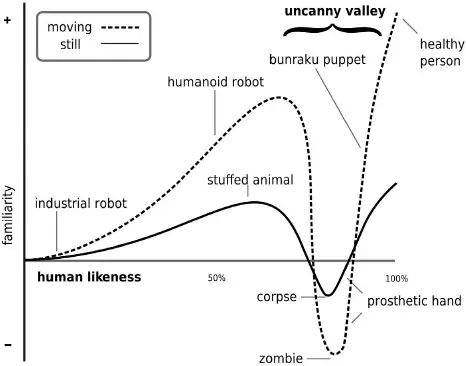
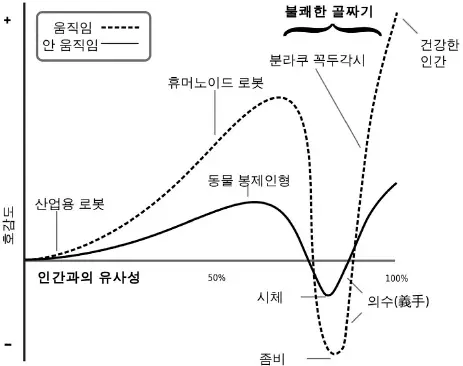
One small step onto vertical Y and horizontal X, at the crossroads between familiarity and human likeness. I could keep walking into this space, eating this time, and drawing it into me like thread through the hole of a needle. I could stitch it to me.
The positive rising into infinity—an arrow on which familiarity travels without limits. Rope to heaven. Fraying, frayed.
The negative descending not into infinity but into dusk, oblivion, the nihilism of Freud’s unheimlich. We have always known, we humans, about holes.
“Although the term [black hole] was not coined until 1967 by Princeton physicist John Wheeler, the idea of an object in space so massive and dense that light could not escape it has been around for centuries.”
The opposite of what is familiar is infinite possibilities of startling encounters.
One after another, after another.
How much of one’s life can one spend on the approach?
There is not always a name for what is [unheimlich].
Two lines, each like one train track, travel through space—to plunge into the valley.
Moving _ _ _ _ _ _ _ _ _ _ _ _ _ _ _ _ _ _ _
still ______________________________
My performance of childhood rode both rails. This machine of love. This language machine. This hole made for survival. The hole was like a shadow that changed at will. The spaces between moving and still widened and narrowed and rushed and plunged and lazed like a river.
Act natural, act natural.
My father built a robot,
a creature of industry,
a tool with a perfect face and perfect thoughts.
A memory made of magnets.
I crawled into its inner space.
My memories, now holes,
pooling above each temple.
My mother gave me a creature,
a toy, a “stuffed animal,”
one without a motor but with a string I could pull
to hear its voice
over and over again.
It was not difference, but repetition.
It could not dance or sing, but it could travel.
It could fall lightly into holes.
Others who pass too close to me may be subject to certain processes.
“If a black hole passes through a cloud of interstellar matter, for example, it will draw matter inward in a process known as accretion. A similar process can occur if a normal star passes close to a black hole. In this case, the black hole can tear the star apart as it pulls it toward itself.”
Two gorgeous words: toward itself

My dreams are the ivory gates, the bone gates, the accordion, a mouth, a mind, that same floret splitting away from its hard, dark face. Some bulbs are good for eating, some are good for sleeping, repairing, emitting time like a bomb. Radium.
Sometimes there are horns or hooves waiting to be fitted to my head and hands, feet. A tail swishing away the space-dust of any remaining light.
In my dreams I passed before the axis of human likeness, a black line that had to be contained on all sides, a pipeline.
A kind of dark traffic.
Men in uniform were posted all along its length.
Some had cameras, some had guns.
To slip down its invisible curtains.
Like sheets tied together and hung out of a hotel window.
Underneath, the ur-world, without measure or mark. Here I communed with each at its station:
Corpse
Zombie
Bunraku puppet
Prosthetic hand
Not holes but force. Electricity, instinct, momentum, the vigor of our “lives”—so many words for a progression, like chords, sine waves, lines:
Contract
Heaven
Paradise
Human (Likeness)
Moment
Lapse
Error
Mistake
Incident
Accident
Event
Episode
Emergency
Crisis
Disaster
Catastrophe
Dystopia
Apocalypse
Time
Expand
There is a code for every kind of duration. One must be careful to carry the right holes on one’s journey. Forth. Back. X. Y. Toward the familiar. . .
The bottom of the valley is the palm of time.
There, one finds rest.
All objects fall at the same rate.
No outside, no inside.
I spent sixteen years living with American parents.
They are inside me now, they are my guests.
They are my holes, like babies, like stones.
I have a thousand valleys inside me.
Descent upon descent.
The swallowed becomes the swallower.
Egg, star, event, time, hole, black, bound, devour, collapse.
Reaching for—
“However, as the star collapses, a strange thing occurs. As the surface of the star nears an imaginary surface called the ‘event horizon,’ time on the star slows relative to the time kept by observers far away. When the surface reaches the event horizon, time stands still, and the star can collapse no more—it is a frozen collapsing object.”
T h e r e i s n o e n d

1. This quotation and those that follow in this section are from NASA Science, “Black Holes/’ accessed February 19, 2016, http://science.nasa.gov/astrophysics/focus-areas/black-holes.
When I’m at home
people don’t ask me who I am
They know at once that it’s me
because I’m the only one who’s home
and so all kinds of things enter me.
— Kim Hyesoon, “Shadow Janitor”
The Hospitality of Strangers
The Hospitality of Strangers
OLD ENGLISH GÆST, GIEST (ANGLIAN GEST) “GUEST; ENEMY; STRANGER,” THE COMMON NOTION BEING “STRANGER,”
Consider all doors.
Opening of an ampoule, space, wind > light.
Animal its sere, stiff robe, canters in place, species against every epoch, flower-skull and the last kick far between. Velocity capillaried like water ringing a tree.
Still-limber, hunt-cut, child-bundled. Dark star and diurnal wash all the same soaking in.
Or doored as the boards of the ship that sent you. The vessel that brought you, the arms that pulled you. Vessel, your queer coffin, your name following your overboard.
All the shipwrecks sailing within us. I must disembark at every coast inside me. The docks grow open as mouths.
FROM PROTO-GERMANIC *GASTIZ (COGNATES: OLD FRISIAN JEST, DUTCH GAST, GERMAN GAST, GOTHIC GASTS “GUEST,” ORIGINALLY “STRANGER”),
FROM PROTO-INDO-EUROPEAN ROOT *GHOS-TI- “STRANGER, GUEST; HOST” (COGNATES: LATIN HOSTIS “ENEMY,” HOSPES “HOST,”
Hospital. Shelter for the needy.
Metal doors and bars. Tragic panthers inside for your own protection. Head down, animal. Acquaint the glossy side of your face with the cement floor. No competition here, no culling. You’re the last one. You’re the last sterile one.
Under bridges, cardboard castle, trash moat, hate moat. No meds no job no home. Something in your blood is bad. Your brain is in your blood. Drain, salvage, hide, blind.
Eight billion pine boxes today! Long-stemmed roses in a box from Mexico for everyone. There isn’t not room for everyone. Who was here first. Private property the work of God. Discipline and disobedience. My blank body: dim root with a thousand eyes. Splitting into the dark. They finger their way down. Eat dirt, spit dirt, be dirt.
But your body doused with oil; the wrong side of the ground, a sister digging a grave in the air.
Your body all in flames—witch, bleach, blanch, stitch, torch, clutch.
Library of bodies borrowed. Returned. Scholars to the last.
Strange deck of cards, pages in gorgeous disarray, the last book written.
Amnesty.
FROM *HOSTI-POTIS “HOST, GUEST,” ORIGINALLY “LORD OF STRANGERS;” GREEK XENOS “GUEST, HOST, STRANGER;”
OLD CHURCH SLAVONIC GOSTI “GUEST, FRIEND,” GOSPODI “LORD, MASTER”);
Waiting for white rope, become the unbraid. Raveled, ends burned closed, heavy as hair. One day we will all be sea.
Does my day stalk me or do I grow it within me. My first and final masterpiece. Breath, brush, breath, bath, last.
My enemy, my house, my horse, my hound.
Border, brother, bastard. Every eye a sorrow meter, every ear a room of private silence. Clouds of it. Storms moving through.
Feast, fast, guest, host.
Every room of this life; all of us guarding the wrong things.
One country of the living. This port.
Dickinson dared you to see a Soul at the White Heat.
Then, let us crouch within the door.
THE ROOT SENSE, ACCORDING TO WATKINS, PROBABLY IS “SOMEONE WITH WHOM ONE HAS RECIPROCAL DUTIES OF HOSPITALITY,”
REPRESENTING “A MUTUAL EXCHANGE RELATIONSHIP HIGHLY IMPORTANT TO ANCIENT INDO-EUROPEAN SOCIETY.”
Bend your good eyes toward the crashing ceiling of water. Everchanging door. You can’t open it. You are already in it. It is home and tomb. Womb and veil. Wall and wail.
A guest here. My dowry everywhere.
Come to the races. Lucky number. A thousand trousseaux. . .
Flag, gown, and shroud.
Loomed and unloomed. A woman with time in her hands. Bedded, unwedded. Inventory possessions: father, son, missing husband, servants, loom, bed made from an olive tree, drunk suitors, money, land, some beauty. . .
Magnetic field of the earth, yield your bombs. Spit them out. Regrow the limbs. Identification papers back in the jacket. Tanks reversed, tracking backward. Children tucked back into their beds.
BUT AS STRANGERS ARE POTENTIAL ENEMIES AS WELL AS GUESTS, THE WORD HAS A FORKED PATH.
One Hundred Days in the Cave
One Hundred Days in the Cave
The person looking for a fixed identity is often the same person looking for God (escape into emptiness).
—Fanny Howe, The Winter Sun
This empty (escape) room burns my (fixed) bonds.
*
According to radiocarbon dating, humans have been present on the Korean peninsula since about 40,000 BCE. It seems that art, or decoration at least, did not exist until 4,000 BCE when the inhabitants of the peninsula began making pottery with comb patterns scraped or scratched into the clay before it hardened.
Clans were absorbed into other clans. Fishing, farming, and hunting.
The introduction of metal from the Han civilization brought with it improved farming and an ability to make visible social hierarchies through the production of symbols of power such as dolmens (burial chambers).
And also through the production of more effective weapons.
*
Earl of Wind, Master of Rain, and Master of Clouds.
The Bear and the Tiger.
These were worshipped by the natives before being replaced by sun worship.
Metal equaled power.
Bronze daggers, iron mirrors.
Other forms of reverence were smashed and swept away.
With the Bronze Age came the Koreans’ foundation myth and, with it, a justification of theocracy.
*
Koreans, according to their creation myth, are descended from a male god and a female bear.
Korea’s only indigenous religion is Shamanism, [which] is connected to the beliefs of tribes in Siberia. Shamanism is the belief that everything in nature has a spirit. The human world and the spirit world must be in harmony. A shaman has the ability to communicate with the spirit world.
According to the [creation] myth, Tan-gun [the grandson of the King of Heaven and a bear-transformed-into-a-woman] founded Choson [known as Korea in English] in 2333 BCE. Interestingly, historians also use that date as the beginning of the nation. However, the first people to settle in the Korean peninsula were probably from the Ural Altaic region.
Archaeologists have discovered artifacts in Korea that reflect the beliefs of Siberian Shamanism. Numerous golden crowns that have been found in Asian tombs have artistic motifs like those worn by shamans. For example, Tan-gun was born under a birch tree. Some tribes in Siberia believe that the birch tree is like the sacred World Tree in Norse mythology. The marriage of Tan-gun’s parents may be interpreted as the union of two different tribes that ultimately create a new kingdom. Tan-gun’s father’s heavenly origin contrasts with his mother’s ancestry as bear. David A. Mason, author of Spirit of the Mountains, thinks this may be understood as a Heaven-worshipping tribe (invaders from Siberia?) absorbing a less-developed bear totem tribe (in ancient Manchuria).2
The Korea Society, “Exploring Korea’s Creation Myth/” accessed February 19, 2016, http://www.koreasociety.org/index2.php?option=com_docman&task=doc_view&gid=144.
I feel myself from a young age to be all bear, no god.
*
Some beginnings. Seoul, South Korea. Spring 1975.
The baby has stridor. Notes are made in thin black script on charts. Nurses bow, bend, take the bus home.
The baby exhibits abnormal breathing with a high-pitched sound, the neck and face swollen, blue lips, blue nail beds, bluish skin.
The medical records look like a musical score of the body: its excretions, its color, the temperature of the interior.
We have inside us a series of red rooms, lesser and slighter, minor and more secret.
Paper soaked in milk.
Made itself sick.
The stethoscope, its metal methodical ear cupped to the hot and hollow places of the body—sounding the depths.
Long poem as prescription. The doctor is memory. Thick as a rib.
Skin-paper.
Blood is water and iron. A million motes of oxygen. Bind, bound.
Slippery remembrance. Punishment and sentence.
Penance.
Absolute apology.
Absolute forgiveness.
2. The Korea Society, “Exploring Korea’s Creation Myth/’ accessed February 19, 2016, http://www.koreasociety.org/index2.php?option=com_docman&task=doc_view&gid=144.
The Other Asterion, or, The Minotaur’s Sacrifice (A Story)
The Other Asterion, or, The Minotaur’s Sacrifice (A Story)
The English word disaster is a combination of dis (bad) and astron (star). Bad star. An event caused by an unfavorable alignment of the sky-bodies. A calamity.
But of all the games, I prefer the one about the other Asterion. I pretend that he comes to visit me and that I show him my house. With great obeisance I say to him “Now we shall return to the first intersection” or “Now we shall come out into another courtyard” or “I knew you would like the drain” or “Now you will see a pool that was filled with sand” or “You will soon see how the cellar branches out.” Sometimes I make a mistake and the two of us laugh heartily.
—Jorge Luis Borges, “The House of Asterion”
“It’s a remarkable piece of apparatus,” said the officer to the explorer and surveyed with a certain air of admiration the apparatus which was after all quite familiar to him.
—Franz Kafka, “In the Penal Colony”
Prologue: The Cosmos Births the Prisoner
An empty symphony of velocity. In the beginning of the world there was nothing. If you listened very closely, with your ear tilted toward the void, you could hear it breathing like a great silent bellows, and all you could hear was the sound of nothing expanding and nothing contracting. The invisible lungs of the universe. No color and nothing to see or taste with. Within the breath coiled something like a tensed muscle, something readying itself to spring. Patient as a trophied hunter or a benevolent mother.
After a nearly infinite number of years of this unhurried inhalation and exhalation, a scintilla of dust entered nothing.
Nothing swallowed this particle and a mote-sized convulsion, a miniscule choking, an imperceptible gagging on this speck, this impurity, this idea. Like a proto-Jonah it was engulfed but not digested, swam inside the vast nil, blinded by its darkness. Its inner absence. It became an untouchable inner navel within the black hole. That pinprick of mental noise deep within a quiet mind. A bit of grit inside the oyster of the protocosmos. The first queen of the first beehive, her perfect hormone-weather waking the drones and workers into sensibility.
Some might say that this was the origin of our conscience. What might grow into a moral reckoning. The itch of guilt or the deeper burn of shame. A pebble dropped into the deep end of the pool.
A tremendous force began bending the nothing within itself, a spring or a bow being drawn inward further and further, tighter and tighter to the point of breaking. When the bow was as thin as nothing itself, when the strap was as thin as sound, there was a great release. And from this violent freeing of energy hurtled a billion pieces of light with a thick protective halo of space around each of them.
Each dense portion of space unfurled and expanded like a lustrous flower opening toward the sun. Something opaque and endless thinned a nearly imperceptible amount. Somewhere else, a sheet of darkness began cracking, moving inward from its unseeable edges.
Eventually, through a series of violent clashes, Earth was born and glistened blue and green, and life began its cycles of formation, competition, adaptation, evolution, and extinction. There was and there shall be no escape from this great wheel, this inescapable machine. The land choked with lava, hot then hard. The evolution of the eye. Fearsome creatures from nightmares and dreams.
Unfathomable oceans of ice scraped their way across the surface of the planet, trapping and grinding everything to frozen dust and carving out vast scars and bowls.
Handprints on the walls of caves and spears sharpened. Primates walking upright. What we call hominids. Afarensis, africanus, habilis, erectus, and others. Axes. Necklaces and earrings.
Theft. Abandonment. The first murder.
Gods invented, feared, and prayed to. Sacrifices of all kinds. Animals roped and yoked. Virginity named and fetishized. Priestesses. The first kings and queens. Altars and the first permanent structures built. Architects and slaves. Grave goods buried with their illustrious owners for use in the unending afterworld. Copper, bronze, iron, silver, gold. Sword and shield. Horses and soldiers. Money and its malcontents. Seductions and infidelities.
The idea of crime. The invention of the criminal. Banishment and exiles. Other punishments to the mind and body.
Architects and inventors.
Churches and temples and altars.
Mazes and labyrinths.
The first prison.
Prisoners.

Part One: Asterion and a Peculiar Apparatus
I am a guard at an unusual prison. In fact, it is the only prison in the world, or the universe, for that matter. Actually, I will admit to you, reader, that this prison is indeed the universe itself. But it has many tricks and uncanny ways, and one of them is that it is a real prison on the real planet and houses real people, who, the moment they enter the prison under guard and their cells under lock and key, become something other than people. They become prisoners, they are defined by the structure that keeps them within it. Many metaphors may come to mind: a baby within its mother, a snail within its shell, a hand within its glove, a corpse within its coffin.
Like music captured and trapped in a parallel, one-dimensional world of black lateral ovals (some empty, some filled in) and vertical lines on lined paper, the prison comes alive when it is expressed through the actions of its prisoners. The prisoners, in this way, are like musicians in an orchestra. There are an infinite number of them, and there is an infinite combination of notes that can be played. Yes, these sounds are purely imaginary, but they are nevertheless an endless game of high elegance.
Our time is recursive and forking. Our time is a garden in which all realities are simultaneously possible. All paths are truly one path. From the time of birth to the time of death, every word you utter is part of one long sentence. This sentence is utterly, heartbreakingly unique. Never before and never again. Yet they, in ensemble, create One Sentence. It holds and houses us. Announces and defends us. Blesses and confesses us. Curses and condemns.
As I tend to them, the prisoners, I must pay attention to and interact with the physical structure; I don’t know if I am more like an instrument tuner or a minor conductor. An orchestra may not be the most fitting analogy, but it allows me to think of my vocation as somewhat elegant, rarefied, with the potential for beauty, if even the beauty has a hint of violence, like a piece from the romantic period that evokes emotions both sublime and savage.
The Story Continues on BooksBarbecue!
Enjoyed this preview? ❤️ Do not stop here!
Read the complete book free online → 🔗
Continue reading now on BooksBarbecue and discover every page!
Love reading? Bookmark BooksBarbecue.com for more amazing books!
Happy Reading!