This Son of York
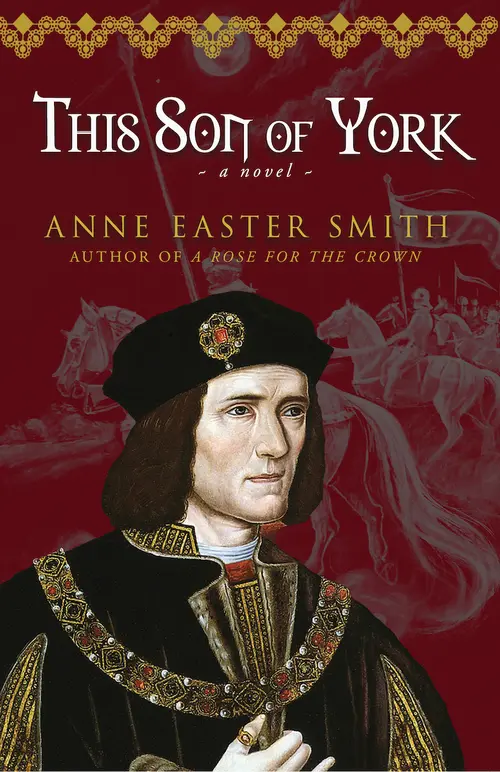
THIS SON OF YORK

This Son of York
Anne Easter Smith

About the Author
About the Author
Award-winning author Anne Easter Smith’s books “…grab you, sweep you along with the story, and make you fall in love with the characters…” (Historical Novels Review) and Kirkus Reviews called her best-selling debut A ROSE FOR THE CROWN “Remarkably assured…a delightful, confident novel…a strong new voice in the field of historical romance.”
THE KING’S GRACE won the 2009 Romantic Times Best Historical Biography award, and QUEEN BY RIGHT was nominated in the same category in 2011.
Romance Reviews Today gave ROYAL MISTRESS “A perfect 10! Entertaining, informative, and impeccably researched. I highly recommend this wonderful book.”
Anne is a native of England who has resided in US for fifty years. She lives in Newburyport MA with her husband, and when not writing can be found directing or acting in community theater.
Visit Anne at:
Twitter: @anneastersmith
Instagram: anneeastersmith
Books by Anne Easter Smith
Books about the Wars of the Roses by
Anne Easter Smith:
A Rose for the Crown
Daughter of York
The King’s Grace
Queen by Right
Royal Mistress
Copyright
Bellastoria Press
P.O. Box 60341 Longmeadow, MA 01106
bellastoriapress.com
Copyright © 2019 by Anne Easter Smith
All rights reserved, including the reproduction in whole or in part in any form without the written permission of the publisher, Bellastoria Press, P.O. Box 60341, Longmeadow, MA 01116.
This Son of York is a work of fiction. Names, characters, places, and incidents are products of the author’s imagination or are used fictitiously. Any resemblance to actual events, locations, organizations, or persons, living or dead, is entirely coincidental.
Cover Design by Sanford Farrier
Cover Illustration by Frances Quinn
Inside Boar Illustration by Kirsten Moorhead
First Edition
ISBN-13: 978-1-942209-64-5
Dedication
Dedication
For Scott,
whose patience with my passion for Richard enabled this book.
Genealogy Chart
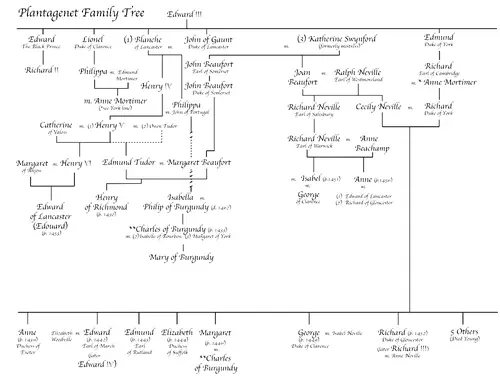
Dramatis Personae
Dramatis Personae
York family
Richard Plantagenet, duke of York
Cecily Neville, duchess of York, his wife
Edward (Ned), earl of March, later Edward IV, their oldest son
Edmund, earl of Rutland, their son
Margaret (Meg), their daughter
George, duke of Clarence, their son
Richard, duke of Gloucester, their youngest son
Edward of Middleham (Ned), Richard III and Anne’s son
Young Edward, Edward IV’s heir
Young Richard, Edward IV’s younger son
Lancaster family (descended from John of Gaunt and Blanche of Lancaster)
Henry VI, only child of Henry V
Margaret of Anjou, his wife
Edouard of Lancaster, prince of Wales, his only child
Neville Family
Richard Neville, earl of Salisbury, Cecily of York’s brother
Richard, earl of Warwick (“The Kingmaker”), Salisbury’s oldest son
Anne Beauchamp, countess of Warwick, Warwick’s wife
Isabel Neville, later duchess of Clarence, Warwick’s daughter and heir
Anne Neville, later duchess of Gloucester, Warwick’s daughter
The court
Margaret Beaufort, countess of Derby, descended from John of Gaunt and Katherine Swynford
Henry Tudor, earl of Richmond, Margaret’s son
Thomas Stanley, earl of Derby, Margaret’s third husband
Henry Stafford, duke of Buckingham, Richard’s cousin
Elizabeth Woodville, Edward IV’s queen
Jacquetta Woodville, duchess of Bedford, Elizabeth’s mother
Anthony Woodville, Elizabeth’s brother
William Hastings, Edward IV’s councilor/chamberlain
John (Jack) Howard, later duke of Norfolk, councilor
Margaret Howard, his wife
Thomas Howard, later earl of Surrey, Howard’s son
Francis, Lord Lovell, Richard’s friend
Sir Robert Percy of Scotton, Richard’s friend
Sir Richard Ratcliffe, Richard’s friend and councilor
William Catesby, lawyer and Richard’s councilor
John Kendall, Richard’s secretary
John Parr, Richard’s squire
Miscellaneous (*fictional character)
*Kate Haute, Richard’s mistress
Katherine, Richard and Kate’s daughter (later countess of Pembroke)
John, Richard and Kate’s son (known as John of Gloucester)
Dickon, Richard and Kate’s son (known as Richard of Eastwell)
Anne of Caux, the York family nursemaid
*Constance LeMaitre, Cecily’s attendant and physician
*Piers Taggett, Richard of York’s falconer
Gresilde Boyvile, Cecily of York’s attendant
*John Lacey, master of the Middleham henchmen
*Geoffrey Bywood, Kate Haute’s brother
Prologue
Now is the winter of our discontent
Made glorious summer by this son of York…
—Richard the Third, William Shakespeare
Prologue
Bosworth, August 21, 1485
The night before a battle affected men in various ways. Some spent it drinking and carousing with the camp followers; some spent it hiding in the woods and nervously emptying their bowels; others passed the time playing dice; others in prayer; and still more, like Richard, in contemplating the insignificance of their earthly lives. “No matter what the priests tell you about each of us being important to God,” Richard had once said to his wife, “How can one life mean any more than another among so many throughout the history of mankind? As an anointed king, I must be more important than the beggar in the street, but in truth, I know I am not. When we die and molder in our graves, who will remember us then, one any more than another?”
“God will,” Anne had said simply, “you must believe He will. And because you are a king, your grave will be marked by a fine tomb announcing to the world who you were.” She had laughed then. “If I am lucky, I will lie with you and be remembered, too.” Dearest Anne, he thought guiltily as he lay on his elaborate camp bed, I must see to it that you are remembered.
The night was warm, and his tent was open to any welcome breeze that might waft by. In the past on the eve of battle, Richard had recited his prayers, had a cup of wine with fellow commanders, and slept well. Tonight, he knew, was different. Tomorrow he must fight for his crown as well as his life. He could not quite believe it had come down to this moment. He had acted honorably all his days, he thought, done his duty to his family, England and, lately reluctantly, to God.
A remark of the earl of Warwick’s occurred to him: “Scheming is a virtue if kings are to survive.” Is that what I have done—schemed? Nay, it is not, he reassured himself, it is not. The other part of his mentor’s homily had warned: “To be a great leader, you must learn the skills to be flexible in wooing allies to your side.” It was a skill that had come easily to Edward, but Richard’s reticence to trust had not charmed those he should have sought as allies. Was that where he had gone wrong? Instead of winning with words, friendship, and diplomacy, he had tried to buy men’s trust with land and offices. How many of his men understood him, he wondered.
Richard gave up examining his flaws, failures, and missteps, knowing he must concentrate on the morrow. He tried to close his eyes to the pricks of light from the hundreds of campfires and his ears to the drunken shouts, laughter and singing of the soldiers, the stamping and snickering of a thousand horses, and the clinking of the armorers and smiths making last-minute adjustments or repairs to harnesses. Everyone faced death in his own way, and Richard had no illusions that this might not be his time. He had a fifty-fifty chance, because in the end it would come down to him or Henry. Only one of them would wear the crown after battle, because the other would be dead—either in the field or later by the axe.
Part of him wished the two of them could fight it out alone and let all others return to their homes. He had no doubt he would run the Tudor through. Richard had trained hard since boyhood and fought in many battles to become the experienced soldier he was now; Henry of Richmond, wrongly claiming the crown, would be seeing battle for the first time, and, as Richard had heard, had not enjoyed the rigors of knightly training while languishing at Brittany’s court. Another part of him relished the thought of a glorious military victory and of extinguishing Lancastrian hopes forever.
He was suddenly jolted back to the other time he and Edward believed Lancaster had been vanquished, and, as was their wont, his thoughts returned to King Henry’s demise. Son of the great victor of Agincourt and Edward’s predecessor, Lancastrian Henry VI had played a part in Richard’s life since he’d been in swaddling bands, Richard mused. He sat up, pushing black thoughts back into hell, and reached for his book of hours—the very one given him as a gift by Henry when Richard was but a lad. How I wish I had listened to your advice, Your Grace, and never agreed to wear a crown. He groaned. Sweet Jesu, how has it come to this, he asked himself yet again. Paging idly through the prayer book, the gold and silver of the illuminations glinting in the candlelight, he indulged in pondering his life and began to wish he could return to the days when the worst of his troubles was being called the runt of York’s litter.
PART ONE
PART ONE
Dickon, York’s Youngest
Leicester, August 25, 2012
I arrive at the car park just as the 360-degree excavator is ripping into Trench One, and the first piece of the tarmac is removed. The machine will very shortly be going right over the painted letter ‘R’, close to where my instinct told me Richard’s remains lay when I first came here. I still believe it. Nothing has changed my mind….
I can’t take my eyes off the excavator and have to pinch myself as I watch….
The scoop arm drops down and begins to lift out giant clods of earth, debris and rubble, swinging them on to the spoil heaps. I check my watch. It’s 2:15 p.m….
Suddenly Mathew Morris’s hand shoots into the air. The excavator stops and Morris jumps into the trench. He looks up at me.
There’s a bone.
—Philippa Langley, The King’s Grave
Chapter 1
Chapter One
Summer 1459
Runt.
When was the first time Richard became aware the unsavory word was being used to describe him? Possibly as early as age seven, and it was then he began to understand he would have to fight for his place in his illustrious family and indeed the world. Far too young, in truth.
It did not help to dispel the cruel moniker often given to a last-born that Richard, nicknamed Dickon to avoid confusion with his father, the duke of York, had a short, skeletal stature and had succumbed to frequent childhood illnesses. However, not long after Richard’s birth, when King Henry had happened by Fotheringhay, principal residence of the house of York, the king had raised the infant Richard high and proclaimed him, “A perfect prince!
“He shall be king some day,” the king had declared. Duchess Cecily’s smile had frozen on her beautiful face as attendants gasped their horror. Not that the statement was untrue, but no one present could possibly have guessed Richard’s destiny. He was the fourth son of a duke—of royal blood, it needs to be said—but he was no king’s heir. Certainly there was mounting conflict between Henry’s house of Lancaster and the house of York as to which had the better claim to the Plantagenet crown, but war between these cousins was far from anyone’s mind. No, poor befuddled Henry had simply and sadly mistaken this child for his own, as yet, unborn son—although the queen was indeed pregnant. The king had had lapses of sanity of late, it was true, but he appeared perfectly well, and thus the York courtiers could be excused for believing the king’s words, which they thought tantamount to treason. But how could a king speak treason against himself? Or, more intriguing, was the king’s gaffe an omen? Being superstitious, many of them crossed themselves.
But Cecily knew better; she recognized the blank stare with which Henry gazed on her son and knew the king’s fragile mind had drifted. She realized he had no inkling of his lapse, and she felt sorry for him. Despite their quarrels, she and Henry had always liked each other—Cecily’s feelings more of concern, to tell the truth—and now to silence the murmurings around the room, she swiftly came to the king’s rescue.
“Your Grace, this is my son Richard,” she had declared brightly. “Let me take him from you before he pulls off that pearl button. We cannot have him swallowing such a treasure! I see he already has good taste,” and she chuckled. “Your son will be born soon, I hear,” she had run on smoothly. “Such happy news!” Turning to her steward she asked that he escort the king to his chamber. “I can see you are weary, Your Grace. I pray you allow Sir Henry to make you comfortable.” And with her gracious and quick-witted intervention, the duchess dispelled what had been an embarrassing but prophetic slip of Henry’s tongue. Looking down at her child, gurgling in his cradle, she could not possibly have dreamed what Fortune had in store for him.
Dickon was told this story years later by his nurse, Anne of Caux, when he was old enough to understand it, and it became their little joke whenever Dickon broke a nursery rule. She would click her tongue and reprimand him: “Not such a perfect prince now, are you?”
However, Nurse Anne was his champion whenever he came running to her for sympathy during his first half dozen years of trying to learn his place. His brother George, three years older, and his playmates had used the delicate child for target practice during “who-can-kick-the-ball-and-hit-Dickon first” game they had invented, as Dickon scampered around the inner bailey avoiding the inflated pig’s bladder. George would leave Dickon far behind while the bigger boys streaked on longer legs through boggy fens around Fotheringhay to hunt for tadpoles and frogs on fine spring mornings. George callously dubbed the lad “babykins” when Dickon ran to hide from the taunting or cried when George wrestled him easily to the ground. How he hated that name.
Then one day, a day four-year-old Dickon would never forget, George lost his temper with his young brother over a missing toy knight. Nurse Anne was out of the room when George, his face white with rage, plucked a pillow from the bed and, holding Dickon down, pushed it over the terrified little boy’s face.
“Where is it, you thief? You stole my soldier. Give it to me or else!” he hissed.
“I can’t breathe!” Dickon’s muffled voice was desperate. “Please George, I can’t breathe.” He flailed his little arms and kicked at George while trying to take in air. Panic set in and he saw lights behind his eyes and heard his own heart thumping unnaturally. When he thought his lungs would burst through his chest, George came to his senses. He released the now-limp Dickon and threw the pillow back on the bed.
“Serves you right, you little monster,” he muttered and then threatened his sobbing brother further: “Stop blubbering. You say one word to anyone about this, and I’ll do worse to you.” Then as though nothing had happened, he went back to his miniature army. Dickon, crawled beneath the bed and curled up into a ball. Puzzled, Nurse Anne found him there later, fast asleep. George lied and feigned ignorance.
Thus, certainly, Dickon was no stranger to tears by the time he left the nursery, but he learned to hide them and his hurt in the sanctuary of his favorite place at the castle, the kennels. There, the dogs yelped a welcome and, some of them twice his size, slathered him in sloppy kisses. In the kennels, “runt” was reserved for the dogs, and Dickon was accorded the respect due a duke’s son from their handlers. It was no wonder he preferred their company to his brother’s bullying playmates.
He remembered at age five when, following a tussle in the nursery with George, Nurse Anne had soothed his wounded pride one day as she rubbed salve into an ugly blue-green bruise on his arm. “You must sometimes endure pain to grow strong, mon petit,” she told him then in her soft Norman tongue. “You have la peine of being the youngest. Often it is the hardest place in the family, tu comprends?”
He had understood only too well: he would never match up to his three brothers. There was extrovert Edward, then fifteen and by now a warrior of a prince standing more than six feet; gentler Edmund, Edward’s junior by only a year but equally strapping; and eight-year-old George, a head taller than his youngest sibling and already well aware of his good looks and charm. Even more aggravating to Dickon, because she was a girl, his sister Margaret had inherited the Neville height. Was it any wonder Dickon spent his time at Mass praying that he would grow big and tall, too? As the fourth boy with no particular charm or good looks, what chance did he have to be noticed by his powerful father and beautiful mother? He thought his mother loved him well enough, but with seven living children with whom to share her love, he felt sure his portion was the smallest—and yet he yearned to be her favorite. As for his noble father: aye, he would tousle Dickon’s mop of darkening hair and occasionally bring him a gift, but he rarely visited the nursery and, it seemed to Dickon, would heap praise on George for no good reason while believing his brother’s tattle-telling. Pleasing his father was all young Dickon craved.
Ned and Edmund had protected Dickon for those first few years, but now they were gone, and, as was the custom for noblemen’s sons, they were living with their own households in far away Ludlow on the Welsh borders, learning to be leaders of men. Dickon hardly remembered anything about them except for a large presence when they had visited the nursery. And he was certain they now did not give him a thought.
Why, there were those dark days when the little boy wished he had not been born at all!
Now, at thirteen, ten and seven, Margaret, George and Richard were the only siblings left at home. They played, squabbled and attended to their lessons, sheltered in the confines of massive Fotheringhay Castle and unaware of the dangerous times in the lawless land they lived in. Ruled by a weak king, his ruthless wife and ambitious advisors, England was but a shadow of the kingdom left by Henry the Fifth not forty years before. Even more humiliating, Harry’s feeble son had since lost all the Norman lands his hero father had given his life to reclaim. A hundred years of war with France had all but crippled England, leaving its people disgruntled and beggared. It was no wonder the woods were as crowded with outlaws as the birds perched in the branches above them.
Cocooned as he was at Fotheringhay, Dickon had always felt safe and loved when he was wrapped in his elegant mother’s arms at the end of the day as she recited their nightly prayers. Cecily taught him to talk to God, and soon the boy found himself taking comfort from Him in those trying times when George teased him. When he was old enough to be told stories from the Bible, the angels of Dickon’s imagination took on his mother’s face and cloud of golden hair. The duchess of York would not admit that this small boy tugged at her heart, not only for his resemblance to his father, but for his innocent piety. At least one of her children understood the magic of a heavenly Father. She was aware of his childish adoration of her, but it did not occur to her to demonstrate her love. These were Plantagenet children, and strong backbones, morals, and a sense of duty were needed to perpetuate the dynasty, not coddling and indulgence. Proud Cis did not dare allow herself to show favor, although her husband often teased her about her special attachment to Edmund. “Pish!” she would retort.
But even those precious times Dickon spent with her were few and far between. Cecily insisted on being with her husband as often as she could, leaving the youngest siblings in Nurse Anne’s capable, plump hands, which had caressed or disciplined all of the Yorks’ twelve offspring.
“God bless your father, your brothers and sisters, dear Nurse Anne, and all Christian souls,” Cecily of York whispered to the thin little boy on her lap on one of those rare nights.
“And God bless you, Maman,” Dickon replied softly as he buried his dark-blond head into her long neck and hoped jealous George could not hear. “God bless you most of all.” He often added a prayer that God would give him another brother or sister, so George could no longer call him runt.
The Story Continues on BooksBarbecue!
Enjoyed this preview? ❤️ Do not stop here!
Read the complete book free online → 🔗
Continue reading now on BooksBarbecue and discover every page!
Love reading? Bookmark BooksBarbecue.com for more amazing books!
Happy Reading!