The Secrets We Share
Cover
Author Biography
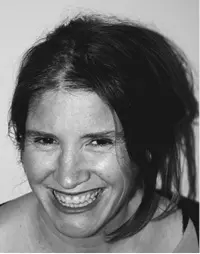 Nova Weetman lives in Melbourne with her partner and two children. She has written for film and TV, including Neighbours and the children’s series H20 and Pixel Pinkie. Nova has written two middle-grade books in the Choose Your Own Ever After series, and three young adult novels, including Everything Is Changed, a 2017 CBCA Notable Book. Her middle-grade novel The Secrets We Keep was shortlisted for the Readings Children’s Book Prize, the Speech Pathology of Australia Book of the Year Awards and the ABIA Awards, and was a 2017 CBCA Notable Book.
Also by Nova Weetman
Also by Nova Weetman
Middle Reader
The Secrets We Keep
A Hot Cold Summer
Play the Game
Young Adult
Everything Is Changed
Frankie and Joely
The Haunting of Lily Frost
Title Page
Dedication
For Dad.
Where would I, and my apostrophes,
be without you?
Chapter 1
There’s a tree in the gardens where Dad works. It’s called the Separation Tree. When I first discovered it, I didn’t know it had a name or any kind of historical significance. I just thought it was an old river red gum that someone had vandalised, now with a protective wrapper around its middle like a giant skin-coloured bandaid. Maybe that’s why I’m drawn to the tree. Not because of its age or how defiantly it stands, but because it’s injured. Because somewhere inside something is wrong, but nobody knows how bad it is because its tough outer layer stops us from seeing in. Only now that layer is injured, too.
Seems crazy to think a tree needs wrapping, that it can’t just regenerate itself. But this one has been hacked twice now, and its bark is all but gone in a ring around its trunk.
Dad is still hopeful his work can save it, but he’s forever hopeful about trees and plants rejuvenating. He thinks they can withstand enormous sadness and recover. Sometimes he’s right. After the fire wiped out our house, Dad and I would visit our garden and delight as tiny buds began to appear on singed plants, a shot of colour among the blackness. But this tree, this watcher of history, has been hurt so badly nobody is sure it will heal. Only my dad believes it has a chance.
Today I’m sitting near its base. I can’t lean against the trunk because it’s roped off, but I’m close to it. I wonder if it minds being called the Separation Tree, or if it’d prefer its proper name: Eucalyptus camaldulensis. Dad would be able to tell me the Latin origins of that name, but I’ve never asked. I have, however, finally read the plaque that explains why it’s called the Separation Tree, and I now know that Victorians met under this tree to celebrate their separation from New South Wales back in 1851.
But the history of the tree goes back much fur-ther than that. It’s far older than white settlement, and I like to imagine a time when it stood together with its family, just one of a number of impressive tall trees. When it meant something very different to the Indigenous people who lived beneath it.
You’ve probably figured out by now that I love this tree. I love it because it’s no longer beautiful, no longer an attraction that would stop a tourist. And I love it because it reminds me of my mum.
I think that’s why Dad wants to save the tree, too: it reminds him of Mum – of her brokenness. He hasn’t actually told me that, though. Even though we talk pretty openly with each other these days, saying that about Mum would take honesty to a whole other level. But I just know that’s how he feels because he’s always appreciated broken things: the chipped cup, the grass-stained jeans, the book with other people’s bent pages. He likes imperfections.
Our house, the one that burnt down, was full of broken things Dad had found in hard rubbish. At night, after the neighbours had put out stuff for the collectors, he’d walk around our streets and take anything that still had life left. He’d bring it home and use it somehow. That’s where my first bike came from. And the double hammock, which hung between the thick trunks of two gum trees by our back fence. And my netball ring in the front yard, where I practised shooting goals with my best friend, Bridge. Once, he even made a lamp out of salvaged bits and pieces: the base of a music stand, the wooden leg of a spinning wheel, and a rainbow-coloured glass mixing bowl, which he used for the lightshade.
In the fire, all his found things burnt down into little blackened piles. He didn’t mind that. He said it gave him an excuse to start again.
I remember once asking him why we couldn’t just buy things from shops like other people. He laughed and told me that he liked things that had a life before. Stuff in a shop didn’t have history. Stuff that had belonged somewhere else had character. I get it. That’s why I sit near the Separation Tree when I finish work, not down near the lake where the tourists go. This tree has character. That’s what makes it so special.
I’m currently waiting for Dad to finish work, too, which is why I’m sitting on the dirt rather than still weeding. I have four calluses on one hand and three on the other, from pulling at the wild, wiry grasses that grow in some of the garden beds. They need to be removed carefully so their stems don’t snap off and leave roots in the ground or else they will just start growing all over again.
If I clench my hands tight, the skin stretches across my knuckles, reminding me of the work. I sort of like the feeling; it’s similar to how my muscles ache after competing in a running event. The last time I sprinted the 100 metre at the State Championships, my hamstrings throbbed for an hour afterwards. And I didn’t even win.
I also really like that I’ve earned some money today. I started working with Dad last school holidays when it was harder for him to pay for things. Now that the insurance money is through, Dad said I could stop if I wanted to. But I’ve kept the job over summer and have actually saved most of the money I’ve earned. Just in case.
There’s a toot, and I look up to see a little motored buggy heading my way. As the buggy gets closer, I can see Dad’s smile and the white zinc stripe across his nose and cheeks. He putters straight for me, slower than if he were walking, and then cuts the engine just before the bumper hits my legs. I can see from his cheesy grin that he finds this hilarious.
‘Bought you an icypole,’ he says.
‘Finally.’
He jumps out of the buggy and tosses me the packet. It bends and squishes in my fingers. I open one corner carefully, and a sticky stream of green syrup runs out and onto the ground. I hold the wrapper up to my mouth and drink the rest of the rapidly dissolving ice.
‘Melted?’
‘Yeah. But delicious,’ I say.
He sits down beside me and picks up a handful of dried leaves, crunching them through his fingers and letting the fragments scatter. ‘Long day, Clem?’
I shrug. It’s only just after four so there are still hours of sunshine left.
‘Bet you’re hungry.’
‘Dreaming of a pizza. Or three.’
Pizza is officially our favourite meal.
‘We can grab one on the way home, if you like.’
‘One? That’s not going to cut it, Dad.’
He laughs.
‘I’d really like to go for a swim,’ I say.
‘Thought you might. Well, I can do one better than that,’ he says and smiles, checking his watch.
‘Yeah? Now?’
‘Patience, Clem.’
‘Hah. Not one of my better qualities as you well know.’
‘You look pretty patient to me right now,’ he says teasingly.
‘I like it here.’ I look up, wondering if this tree’s canopy filled the sky when it was still green and full.
‘Your mum loves this tree, too.’
‘Really? How come?’
‘Ancient history,’ he says, and I’m not sure if he’s referring to Mum’s history or the tree’s.
‘Well, I guess we are related then,’ I say, enjoying the fact that Mum and I share something other than freckles.
It’s been a slow process letting Mum back into my life. For ages I blamed her for the fire that burnt our house down and believed she deliberately lit it. But she didn’t. It was an accident. She’d been asleep when her candle lit the curtains, and after the fire had woken her, she’d run away. Maybe we share that trait, too. Running when things get a bit much. Mum went to hospital for a while last year, to be treated for depression, but it’s been weird since she came out. At the moment she lives with her sister Annie, on a small farm about an hour’s drive away on the freeway. I like visiting her there. She’s always busy with the animals, milking cows and riding horses.
‘Actually, I need to talk to you, Clem,’ Dad says quietly, and I know something’s coming.
‘Yeah?’
‘It’s your mum,’ he says, turning to look at me, his eyes serious. I try to breathe. He reaches out awkwardly to grab my right hand, but I’m still holding the icypole wrapper so he settles for my left.
‘She’s coming to live with us.’ His voice is light, like he’s telling me I can have a pony for Christmas and thinks I should leap into the air and celebrate. But then I realise he’s gripping my hand so tight that his wedding ring is pushing into my skin. His voice is the only light thing about him.
‘In the flat?’
‘Yeah. It’s going to be great, Clem. We’ll be together again.’
Usually my dad’s positivity is infectious, but right now it’s just irritating.
‘But I thought …’ I can’t even finish the sentence. I thought Mum wasn’t coming back until our new house was built. I never imagined she’d come home, now, to the tiny one-bedroom flat Dad and I have been living in for the past ten months. We weren’t supposed to be staying in it long. It was a rushed, temporary move, but now it looks as if we’ll be there a while longer. I don’t mind that. But Mum arriving changes everything.
‘You thought what?’
I watch an ant crawl up my Converse and come to a stop on my leg. It seems to be waiting for a sign to tell it where to go next.
‘Clem? You going to say anything?’
I feel the fidget start in my legs. This is what happens when we talk about Mum. My body wants to run. Living with Mum has always been complicated. Before the fire (or BTF as I say), she vanished into herself, like a ghost, and every time I tried to talk to her it was as if she couldn’t hear me. What if that happens again?
‘Honey, the house will be finished really soon. We won’t be crammed in the flat together for long.’
‘I just didn’t think it would happen yet.’ And it’s true. It’s not that I don’t want Mum around. I do. But I’m not ready for everything else that comes with it.
‘Clem?’ he says, releasing my hand.
I see the red mark his ring has made on my finger. I see how much he wants me to want this, too. And so I pull out an old smile, one I’ve used before, and pretend. ‘Yeah. It’ll be good.’
‘It really will.’ Dad leans in and half hugs me, like it’s all sorted. But inside I ache. Since our house burnt down, I’ve had so many changes. I had to move to a new flat and to a new primary school. And now that I’m about to start high school, I just want all the changes to stop. I want to rewind to a couple of years ago when the biggest thing in my life was buying a new pair of sneakers.
‘Okay, kiddo, ready for your swim?’
I try to change gears as fast as he has. ‘Thought you’d never ask,’ I say, caught between relief that we’ve finished the ‘Mum’ topic and terror that it’s been decided so quickly.
He stands and holds out his hand to pull me up. This time, when I take his hand, I feel the row of calluses on his skin. But they’re older and tougher than mine.
‘Under that bandage it looks like a giant has taken a bite out of the trunk,’ he says, looking over my shoulder at the Separation Tree. ‘Poor old thing.’ He reaches out to rub the edge of its scar.
‘It’s flowering. That’s a good sign, isn’t it?’ I say, looking up at the tiny spots of colour blooming among the leaves.
‘Yeah. I reckon,’ Dad says, but his eyes have lost their twinkle.
Suddenly, a whirring sound starts behind us and a whip of water flicks over our legs, sharp and cold. It takes me a second to realise what it is, but Dad is already off, racing across the lawn to where the sprinkler is sending streams of water into the air.
As I run after him, my thoughts of Mum fade. He’s playing a game, letting the sprinkler catch him with spray, before taking off again. I have a different method. I run straight for the centre of the stream, letting it hit me hard in the face before I dive to one side and leap over the next jet of water. When I was little, I’d visit Dad’s work in the afternoon and I’d always run back and forth in front of the sprinklers until my clothes were so wet they stuck to me like a layer of soggy cotton skin. Eventually Dad started keeping a spare change of clothes for me so I could go home dry.
‘Better than the pool?’ he yells from his side of the grass.
I grin back. No answer is necessary.
Chapter 2
I wish I could say it was the birds chirping happily through my window that woke me up this morning, but that would be a lie. Instead, a galloping fear snapped me from sleep and left me gasping in my bed before it was even light. If I’d forced myself up and wandered out to the lounge where Dad was on his second cup of tea, he might have reassured me with a hug and a smile. But I can’t tell him what I’m afraid of. It would upset him too much.
Since Dad told me that Mum was coming to live here, I’ve watched him scrub every tile, vacuum every corner, and fill the kitchen with flowers. I don’t know why he’s bothering because nothing he does makes the space look any better; it’s still just a faded, tiny, temporary home.
‘Honey, I left some money on the bench,’ he says, leaning into my bedroom.
‘Thanks.’
‘You getting up?’
‘Yeah,’ I tell him, while snuggling further down under my sheets.
He walks in, sits on the edge of the bed, picks up a teddy from the floor (one Bridge gave me), and tucks it in beside me. After the fire (or ATF as I call it), Bridge was forever bringing me presents, pretending she suddenly had no need for her favourite things anymore. I know it was just her way of making sure I had things, too.
‘You okay, Clem?’
‘Yeah,’ I say quietly. I was hoping to avoid this conversation.
‘About tonight?’
‘Yep. Aren’t you going to be late for work?’ I glance over at my clock, trying to give him the hint.
‘Thanks. I really enjoyed our little chat the other day,’ he says with a smile.
‘Me too.’
He leans over and kisses the top of my head. He doesn’t smell of earth and dirt like he usually does, and the stains have gone from his work shirt. I hope Mum notices – not like before when no matter how helpful we were, she never acknowledged our efforts.
‘What time’s Bridget coming?’
‘After lunch.’ Normally the thought of Bridge coming over would make me very happy, but today it’s not enough to improve my dark mood.
‘Are you okay on your own until then?’
I resist rolling my eyes. ‘Yeah, Dad.’
‘I’ve left you a croissant in the oven,’ he says as he stands and starts towards the door. Just when it looks as if I’ve dodged the ‘Mum’ chat, he pauses, turns, and his face softens. I know what’s coming. I try to breathe, but my chest strains.
‘Honey, I know it’s going to be weird having her home, so you can talk to me if you need to. Anytime.’
‘Okay.’
‘One other thing. I decided against having the spag bol tonight. I’m going to do roast chicken instead. Is that alright?’
I want to shout, No! That’s not alright! Roast chicken is mine. It’s the special meal Dad cooks for me on my birthday. But of course I can’t say this to him. And he should just know anyway.
Instead, I nod. ‘Yeah. I reckon it sounds perfect.’
Dad taps his knuckles on the door twice as he leaves, like everything’s been decided. I am happy he’s happy. I just wish I were too.
As I hear the front door click shut, I lie back in my bed. My room might be nearly as small as I am, but it’s mine. After Mum comes home, I’ll probably hide out here a lot. It’s not like I don’t want her to come home; it’s just I’m not sure how I feel about everything, about her. And I’d rather work it out before we have to coexist in this tiny flat. I haven’t lived with Mum for eleven months now, and I’m used to Dad and me sharing a space and navigating our way through life together. Mum will complicate everything again.
I can smell buttery croissant pastry and decide it isn’t worth the risk of burning it just so I can lie in bed for longer. As I walk into the kitchen, I see the money Dad’s left. There’s a note telling me to buy stationery, not earrings, with a big smiley face at the end, suggesting he doesn’t actually mind what I spend the money on. I pull the croissant out of the oven and stick my fingers into the hot middle, trying to pull it apart without wrecking it completely. It’s the perfect temperature to make the butter melt and the jam go all sticky.
Later today Bridge and I are going shopping together to buy everything on our year-seven school list. Things like pens, pencils, rulers and notebooks. I know I should be excited about starting high school, particularly because I’m back with Bridge again, but every time I look at the list I shudder.
I’m not the only one who appreciates sameness. My black guppy does, too. The guppy was a Christmas present from my neighbour Maggie, who lives upstairs in a flat just like ours. Only her flat is colourful and light, and she has hundreds of darting multicoloured fish in a big long tank, which she watches just like a television. My guppy is currently swimming his all-too-familiar box dance and seems pretty happy that his surroundings are unchanged. I haven’t named him yet. I can’t settle on the right word to describe him. He might be a she, of course, but something about my guppy reminds me of my dad, so I’ve decided it’s a boy. I think it’s the way he stops and looks at me, like he’s waiting for an answer. He moves with the same purpose as Dad, and seems content swimming in his small square of glass, just like Dad when he’s cooking in our tiny kitchen.
I drop a pinch of fish flakes into the tank and watch as he nips towards the surface, swallowing pieces in one gulp. I wonder what Mum will make of my guppy. There’s been talk of getting a dog when we move into our new home. But I overheard Dad telling my aunty Annie that he thought that if Mum had a dog to walk, she’d have a reason to leave the house every day and I realised, then, that the dog wouldn’t be mine. Not like my guppy.
I’d never had much to do with fish until I met Maggie and became her official fish-sitter whenever she went away. Now I love them. Maggie has taught me to notice the differences in their scales and fins. She’s shown me how they hide behind rocks and grasses, and how to get to know the personality of each fish, even when they all seem, at first, to be exactly the same. And she’s explained how, if you watch them long enough, they hypnotise you, drag you from your frustrated thoughts and force you to relax. That’s why she gave me the guppy. She thought it might help. And it does. Some days I can lose myself just watching him, but today I need to talk.
I actually have a key to Maggie’s, but I never use it unless she’s away and I’m feeding the fish. So, today I knock.
‘Clem!’ The door flings open and Maggie stands there in a halo of electric-blue material. Her dresses are always bright, but this one is luminous. Her feet are bare and her toenails are painted bright orange, like shiny scales. Everything about Maggie is theatrical and colourful. She’s like a human version of a goldfish: busy, inquisitive and surprising.
‘We were just talking about you,’ she says with a huge smile.
‘We?’
The Story Continues on BooksBarbecue!
Enjoyed this preview? ❤️ Do not stop here!
Read the complete book free online → 🔗
Continue reading now on BooksBarbecue and discover every page!
Love reading? Bookmark BooksBarbecue.com for more amazing books!
Happy Reading!