The Intruder
Chapters (32)
By the Same Author
Also available by Charles Beaumont
The Hunger and Other Stories
A Touch of the Creature
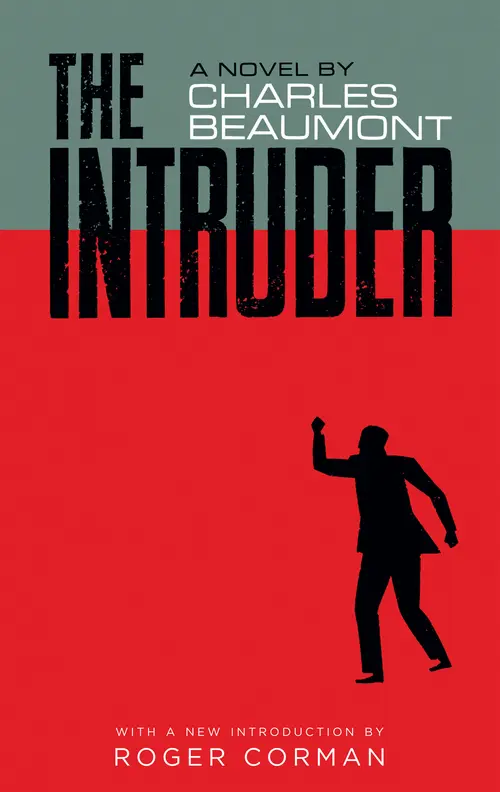
THE INTRUDER
CHARLES BEAUMONT
with a new introduction by
ROGER CORMAN
VALANCOURT BOOKS
First published by G. P. Putnam’s Sons in 1959
First Valancourt Books edition 2015
Copyright © 1959 by Charles Beaumont, renewed 1987
Introduction copyright © 2015 by Roger Corman
Published by Valancourt Books, Richmond, Virginia
All rights reserved. In accordance with the U.S. Copyright Act of 1976, the copying, scanning, uploading, and/or electronic sharing of any part of this book without the permission of the publisher constitutes unlawful piracy and theft of the author’s intellectual property. If you would like to use material from the book (other than for review purposes), prior written permission must be obtained by contacting the publisher.
Cover by Ronald Clyne
Introduction by Roger Corman
INTRODUCTION
Long before The Intruder I was aware of Charles Beaumont as a unique writing talent. I had read with interest and delight his short stories and profiles in Playboy magazine, and, soon after, hired him to write several screenplays for me. The films were based on classic works by Edgar Allan Poe and Chuck captured the tone of each story beautifully. We developed an excellent working relationship and I was pleased when he gave me a copy of what he considered to be his first serious novel. I knew that Chuck’s interests covered a wide and varied spectrum; he knew about art and music, he read voraciously, he raced cars in his spare time. He always seemed to pack twice the amount of living into his days as anyone I knew. And then he would sit down and put it all into his stories, and especially into his characters.
When I read The Intruder, I saw that Chuck had done something remarkable. He had written a socially conscious, “political” story, but he had managed to write it in such a way that it avoided the usual pitfalls that accompany these types of stories. Many socially oriented novels slip easily out of “story” and into “lecture;” that’s usually when most readers surrender to a yawn and close the cover, never to return. But Chuck had created characters that pulled you in and compelled you to live the story through them.