The Hungry Grass
Cover
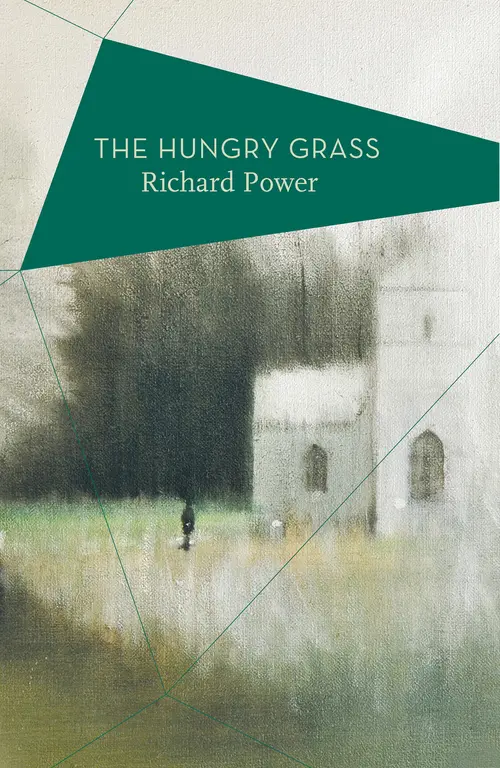
THE HUNGRY GRASS
Richard Power
Start Reading
About this Book
About the Author
Table of Contents
About The Hungry Grass
At the funeral, several priests remarked how appropriate it was that Father Conroy should have returned on his last day to Rosnagree, the parish in which he was born.
Father Tom Conroy – a spiky, difficult man – dies at a reunion of his seminary colleagues. As this masterly novel unfolds, we learn about the life that formed this troublesome priest, who knew his life had been a failure. This is a sharply witty and moving novel of a world on the cusp of change.
Epigraph
We are not Angels from Heaven that speak to you, but men, whom grace, and grace alone, has made to differ from you.
—CARDINAL NEWMAN
Contents
Cover
Welcome Page
About The Hungry Grass
Epigraph
Introduction
Prologue
Chapter 1
Chapter 2
Chapter 3
Chapter 4
Chapter 5
Chapter 6
Chapter 7
Chapter 8
Chapter 9
Chapter 10
Chapter 11
Chapter 12
Chapter 13
Chapter 14
Chapter 15
About Richard Power
Endpapers
About the cover and endpapers
More from Apollo
About Apollo
Copyright
Introduction
Everyone’s life is a ruin among whose debris an artist may be able to deduce what that person might have been. That injunction pressed heavily on Irish people in the aftermath of the Great Hunger of the 1840s. According to folk tradition, whoever walks on the grass where a Famine victim fell dead risks a similar affliction: hence the ‘hungry grass’ of the book’s title. Perhaps it is a fear of seeming famished which causes Father Tom Conroy to refuse offers of food at various moments. But the novel also engages with a wider sense of emotional and cultural starvation: of the tragedy that is underdevelopment and of the underdevelopment that is tragedy. Every so often the celibate Father Conroy imagines scenes of conjugal love, not as a grand passion, but in terms of the kind of warm fire which seems to be missing from his own life. Of course, he curbs these reveries for the sake of his vocation. The hungry grass could never be ploughed by farmers, who feared infection from it; and the parish priest of Kilbride confronts a related problem, in that he is expected to supply the spiritual nourishment that his flock needs, but there is nobody to nourish him.
The book was published in 1969. It was acclaimed for breaking free of saccharine depictions of the Irish priest, that ‘soggarth aroon’ beloved of nineteenth-century novelists and twentieth-century Hollywood movies. Its central character is sardonic, even to the point of being caustic, about those trendy clerics of the 1960s who call for a revival of rural Ireland. In his world (just before the changes unleashed by the Second Vatican Council) the mass is still said in Latin, a language whose aphorisms are often quoted with urbane approval by Tom Conroy. His Catholicism is as much rule-bound as it is visionary. For example, he suffers from ‘scruples’ not just about wet dreams, but about being late with his daily reading of the Holy Office.
His initial vocation seems to have been dutiful rather than Damascene. He simply took the place of his brother who had suddenly abandoned the seminary, as if he were a volunteer soldier substituting for one who had deserted an army. Never sure as to exactly why he joined, he lives an inner life too deep ever to risk vulgar self-definition. He is the sort of man who would have understood the Ulster poet John Hewitt’s answer to the question ‘What is the religion of all sensible men?’ – ‘They are far too sensible to define it’.
Father Conroy outrages colleagues who realize that he has not troubled to compose a last will and testament, as if such things were a matter of the sordid letter rather than the inner spirit. Yet his negligence also bespeaks the crisis of a rural Ireland with little sense of its own future. More than once in the narrative, as his powers wane, he finds himself expected to deliver a homily for which he has not prepared, as if in his ideal church, the altar would take strong precedence over the pulpit. He is shrewd enough to intuit that the moral and religious impulses are very different things and may even destroy one another in the end. Hence his indifference to his curate’s social programmes and to his uncle’s partisan campaigns, for as a man of God he must seek the spiritual, rather than political, kingdom.
The disinclination to write a will suggests an inner suspicion that the Catholic Church will not be central to shaping the Irish future. Ten years after The Hungry Grass was published, Pope John Paul II visited Ireland, the first pontiff ever to do so. On the surface, that visit seemed an example of the Church Triumphant, with more than a million people attending each mass he celebrated; but deeper down, his coming registered an immense crisis. Ever since 1967 there had been a sharp decline in vocations to the priesthood, and the official teaching on contraception was widely disregarded. An urbanizing laity was more likely to practice à la carte Catholicism, or none at all.
Read against this wider perspective, The Hungry Grass might be taken as an elegy for a doomed way of life and for a priesthood that did little or nothing to arrest its decline. As a young priest during the war of national liberation, Tom Conroy acquires a reputation for favouring socialism and is transferred by a nervous bishop to a poor, out-of-the-way parish. Even after this punishment, which he humbly accepts, Father Conroy continues to harbour sympathy for dissidents, silently endorsing the actions of a poor boy who stole the silver of another priest in order to give himself a start in life. He notes with dry asperity the emergence of a new kind of party hack in politics after independence: a coalition of large farmers, publicans and ward heelers sailing, like new recruits to a pirate ship, under a flag of convenient pietistic nationalism. Landless labourers, once welcomed without stint at the food table of families for whom they worked, are now made to eat at a separate bench, as members of a lower order, and the cost of that food is deducted from their wages. Father Conroy is not, in the end, a social radical, but all around him he notes the hidden injuries of snobbery and respectability destroying the new state.
The old Latin rituals persist and the priest says mass at an altar facing a crucifix, but already – before the shift in furniture ordained by the Vatican Council – Tom Conroy has a tendency to confront that final puzzle: his own congregation. Its members may take him for granted, as he may sometimes take them. ‘What do ye want a church at all for?’ is a question that may trouble him even as he puts it to his people. He is alert to the absurdities of a subsistence economy, which calls men in their forties and fifties ‘boys’ simply because they are still waiting to inherit their families’ land. He can mock the obsessive-compulsive religiosity of elderly men, while recognizing that many old men he encounters may be versions of himself as he prepares to die. His inadequate speeches are increasingly followed by a clued-in, turbo-charged alternative, tossed off with fluent insincerity by one of the men of the new order. In that ambiguous context there is a certain nobility to be found in his refusal to pontificate or to state what he doesn’t truly feel. This priest is too honest for self-assertion.
The rising cadre of switched-on priests speak in the same language as that of soap advertisers on television; however, Tom Conroy is something of a latitudinarian on postmodern culture and, while not deigning to purchase a TV set, he likes occasionally to eavesdrop on the absurdities of some of its programmes. He seems to sense, however, that most of the Father Trendies will not be long in the priesthood. And he can sense the deadlock in a society where most of the youth were compelled to emigrate to a life of hard labour in Britain, while large farmers tighten their hold on the land. Between the year of independence in 1922 and 1969, one in every two people born in the country left it. That missing middle generation, which might have refereed the conflict between tradition and modernity, thus achieving an intelligent balance, has gone forever. As Antonio Gramsci remarked of the rural communities in southern Italy – also devastated by emigration – the haemorrhage of a middle generation caused the old to elaborate fantasies of a reactionary conservatism, and the young to submit to a heedless, depthless consumerism.
A certain kind of priest might once have filled the vacuum left by that lost generation with an alternative kind of leadership, but Father Conroy cannot do so. He ministers in the years after ordination to the migrant community in England, fretting ever afterward about the fate of his brother Owen, who died in his twenties leaving two young sons whose names the man of God never knows.
That deficit of knowledge hints at a certain coldness in his character, perhaps even some incapacity for primary experience in the living stream of persons. ‘A true priest is never loved’, wrote Georges Bernanos. However, the quality of this priest’s solitude, though at times almost chilling, can bring out a loving tenderness in others. His loneliness is so deep and invincible as to cause many people to offer him bank notes that he neither needs nor desires. He stores the money up over a lifetime, intending to give it to some worthy recipient but never quite managing to do so. It is as if, like an over-ripe potato, it is forever sprouting pointless and uncontrollable shoots.
If bank notes represent a form of human labour that has never been materialized, they may be a fair image of their owner’s condition: alienated from his original home at Rosnagree, to which he hopes one day to return. He is haunted by letters sent decades earlier by another priest of the family from a mission to South America. If such writing is a metaphor for going into exile, then exile is the condition of much of Richard Power’s writing, which in Úll I mBarr an Ghéagáin (Apple on the Treetop, 1959) and The Land of Youth (1964) had taken estrangement for theme. Even the language in which the characters achieve expression in this book seems like an estranged form of Irish (‘and she munching slowly as she read’) of a people still half-thinking in Irish while using English words. The dialogues which drive this novel are rich and flavourful, the Synge-song of a kind which – like the community itself – is still hanging onto old ways, but near to the moment of its erasure. The younger priests do not speak in such phrases, although the narrative itself often does, as if in tacit endorsement of jeopardized tradition. The lines of farewell in which the ‘last of the bards’, Aogán Ó Rathaille, spoke about going into the clay which held his pre-Christian ancestors, seem to spread like a dye across the final pages.
The novel begins with Father Conroy’s death and the revelation that neither his brother nor sister managed to attend his funeral. This foreknowledge adds a poignancy to accounts of his fumbling encounters with members of his family in the ensuing narrative, while also raising a question as to whether some emotional blockage was a strong element of the family inheritance. There is something rather withheld about Tom Conroy’s very presence in the most central of the novel’s scenes. However, against that must be set his capacity for unexpected moments of passing grace: ‘he’d see a pain inside you’. This is what makes him a vessel of God, yet that very empathy is disabled by a self-protective wit that deflects deep feeling at just those moments when it may become both lucid and intolerable. The loneliness endured by Father Conroy is that of a man who knows more than it is decent to know about the lives of his community. That community finds him essential to its self-definition, but displays remarkably little interest in his priesthood: he is simply part of the givenness of things. He must embody a holiness that ordinary parishioners cannot afford to admit in themselves, but also a clarity of vision found more often in artists.
Richard Power’s portrait is of a good man blocked by the very culture that makes him possible, and disabled by that very sensitivity which makes him such an honest minister. James Joyce had once written of the priesthood, whose vague acts pleased his protagonist, Stephen Daedalus, by reason of their semblance of reality and, at the same time, their distance from it. If Joyce anticipated John McGahern in offering compelling portraits of the artist as frustrated priest, Power has offered something that is even more unusual – a depiction of the priest as the ‘removed’ artist.
The money saved and never used becomes a symbol of a life lived at a remove from the well-springs of emotion, a life often fearful of committing itself to the here and now. For the Famine had not only destroyed people’s trust in nature, but it had also left them fearful of living with full relish in the present moment. Such an incapacity for primary experience was frequently notable in people of high intelligence, who might have what Flann O’Brien once mordantly called ‘a memory and no experience to account for it’. The fear of submitting to the sacrament of the present moment became also a fear of the future, causing terrible, shoddy compromises (such as panicky marriages based on convenience rather than on true feeling). To people of Power’s generation, the whole of life could seem like a preparation for something that never finally happened. For stay-at-home peasants, the saving of money in a stocking was one way of evading experience in the here-and-now; for richer people, that might involve the adoption of a profession which proofed them against real adventure. And the priesthood, as George Bernard Shaw said more than once, was like all professions: ‘a conspiracy against the laity’.
It took its harshest toll not on that laity but, as Power shows, upon the priests themselves. Tom Conroy remains at all times stoic and unsentimental: unlike the sugary padres of preceding popular novels, he knows it would be sentimental to invest his own life or world with more significance than God would give them. Some readers have found the novel’s diminuendo a little less compelling than the passages at its centre, but that, surely, is exactly as it should be: the kind of denouement in which people are dismayed not only by fate, but saddened by the fact that they are saddened so little. For this really is a story of emotional underdevelopment, in which the worst must ultimately return to laughter. There is no other position possible for those who believe in God than to find the antics of mankind hilariously funny and touching, ‘as if bubbles of pure laughter were trying to break through’.
Patrick Kavanagh once said that tragedy is underdeveloped comedy, comedy not fully born. Behind its somber moments and chilly witticisms, The Hungry Grass is a supremely divine comedy: God’s laughter at the shattering of a world. In the end that world proves too strong for one mortal man to sustain, and so he must feel himself set free of life rather than deprived of it.
Richard Power died in his early forties in 1970, not long after the acclamation of this book as a masterpiece.
Declan Kiberd, 2016
Prologue
At the funeral, several priests remarked how appropriate it was that Father Conroy should have returned on his last day to Rosnagree, the parish in which he was born. They had been touched by his return, by the way he had limped in expectantly among them, like an emigrant returning to seek nourishment at his roots. They had never thought of Conroy having roots before.
One or two – Father Mahon, for instance – saw no cause for sympathy. Conroy’s return, to them, seemed a final example of the man’s genius for causing trouble and inconvenience. That he should have timed his death during the dinner at the parochial house in Rosnagree was more than upsetting; it was deliberately destructive, for that annual dinner – which Conroy had never bothered to attend before – would never be the same again.
It meant a lot to all of them, that dinner. It was the one occasion of the year which reunited them, the fifteen priests who had been ordained together for the diocese of Kilcloyne.
Arriving every year in Rosnagree always gave them a feeling of holiday. Just as one becomes suddenly aware of the onset of spring, so they noticed everything at once – the hedgerows opening out to distant blue hills, the Scotch pines behind the steeple, the rooks that sailed across the front of the parochial house. On the road below the gate, the car roofs of some firstcomers gleamed in the sunlight, and on the top step – his saluting base, they called it – Father O’Hara, the parish priest of Rosnagree, waited to welcome them once more.
His hostliness beamed down the length of the tiled path between the rows of newly staked dahlias. It made each of them feel he was being welcomed individually, that his failings as a guest would be overlooked and that any little graces he might have would get full appreciation. The strange thing about Father O’Hara’s dinners was that these promises were fulfilled. They always left, looking back as happily as they had looked forward in anticipation.
Dinner was late, for Elsie, the housekeeper, was not to be hurried. Anyway, nobody minded the delay; it seemed only to lengthen the day pleasurably in their anticipation. They were all of an age when a good time must be taken slowly and with a minimum of waste.
While Father O’Hara moved among them with the decanter, they stood chatting and sipping their sherry, conscious of the aroma of roast lamb from beyond the green baize door down the hall. They were waiting until it was time to move into the dining room. Elsie never had to sound the gong on the hall table, for they knew by some kind of sixth sense when their number was complete. And this year, although none of them knew that Father Conroy was coming, they were waiting for him.
Two of them had slipped out for a stroll in the garden. The sun was shining. A cool, resinous breeze idled up the valley, stirring the leaves. Hands in their pockets, feet crunching the gravel, they strolled around the side of the house. Bat Cullen, who had seven dogs of his own, went on up to the yard to cast an eye over Father O’Hara’s setter, which was suffering from some distemper. Father Mahon preferred to turn away onto the path that led under the apple trees.
He was a professor in St. Declan’s, the diocesan seminary down in the town of Castlemore. Being the only one present who had never been out in a parish, he always felt at a loss during the initial exchanges when his colleagues met – not that he had a lot to say when the conversation became general. He had long ago resigned himself to being rather a “dry stick” to his students and friends.
An old man was scything the long grass beneath the trees, his head down and his back bent so that the wide-brimmed hat seemed like a fulcrum for the arms that swung the scythe. Father Mahon called hello, but the slow, rhythmical strokes continued without a pause. The air smelled of new-mown grass, and the first bees buzzed in the blossoms overhead. Soon it would be summer.
He walked on, head tilted back to watch the blossoms pass like clouds across the blue sky. The scything ceased behind him and, next moment, the air was rent with the scraping of stone on steel. Irritably, he turned to look back, but the man’s head was still hidden. All that he could see were the two bent arms moving around the circle of the hat.
The Story Continues on BooksBarbecue!
Enjoyed this preview? ❤️ Do not stop here!
Read the complete book free online → 🔗
Continue reading now on BooksBarbecue and discover every page!
Love reading? Bookmark BooksBarbecue.com for more amazing books!
Happy Reading!