The Golden Age
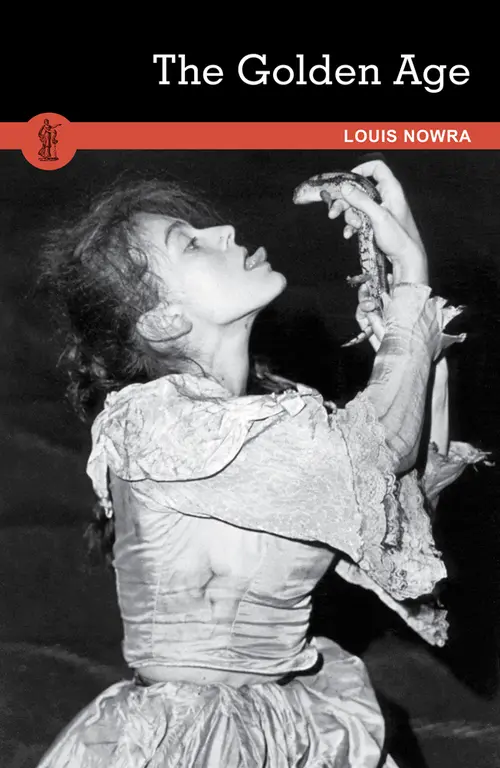
Title Page
Copyright Page
CURRENCY PLAYS
Reprinted 1988, 1992, 1995, 1998, 2000, 2004, 2006
Revised edition published 1989
Copyright © Louis Nowra, 1985.
First electronic edition published in 2012 by Currency Press Pty Ltd.
Copying for Educational Purposes
The Australian Copyright Act 1968 (Act) allows a maximum of one chapter or 10% of this book, whichever is the greater, to be reproduced and/or communicated by any educational institution for its educational purposes provided that educational institution (or the body that administers it) has given a remuneration notice to Copyright Agency Limited (CAL) under the Act. For details of the CAL licence for educational institutions contact CAL, Level 15, 233 Castlereagh Street, Sydney NSW, 2000. Tel: (02) 9394 7600; email: [email protected]
Copying for Other Purposes
Except as permitted under the Act, for example a fair dealing for the purposes of study, research, criticism or review, all rights are reserved. This publication (or any part of it) may not be reproduced or transmitted, copied, stored, distributed or otherwise made available by any person or entity (including Google, Amazon or similar organisations), in any form (electronic, digital, optical, mechanical) or by any means (photocopying, recording, scanning or otherwise) without prior written permission from the publisher.
Performing Rights
Any performance or public reading of The Golden Age is forbidden unless a licence has been received from the author or the author’s agent. The purchase of this book in no way gives the purchaser the right to perform the play in public, whether by means of a staged production or a reading. All applications for public performance should be addressed to the playwright c/- HLA Management, PO Box 1536, Strawberry Hills NSW 2012, email [email protected] ; ph: +612 9549 3000
Printed book ISBN: 9780868192345
ePub ISBN: 9781921429590
Set by Renwick Pride Pty Ltd. Cover design by Katy Wall, for Currency Press
Playwright’s Biography
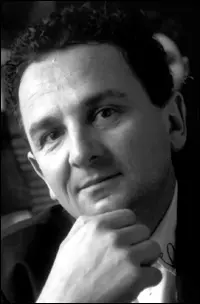
LOUIS NOWRA was born in Melbourne. His plays include Page 8 (with David Page), The Woman With Dog’s Eyes, The Marvellous Boy, The Emperor of Sydney, Inner Voices, Visions, Inside the Island, The Precious Woman, Sunrise, The Golden Age, Capricornia, Byzantine Flowers, The Watchtower, Summer of the Aliens, Così, Radiance, The Temple, Crow, Miss Bosnia, The Incorruptible, The Jungle and The Language of the Gods. He has translated The Prince of Homburg, Cyrano de Bergerac and Lulu for the stage. He has also written the libretti for Whitsunday and Love Burns. For television he has written Displaced Persons, Hunger and The Lizard King and for film Map of the Human Heart, Così, Heaven’s Burning, Radiance, K-19: The Widowmaker and Black and White. His radio plays include Albert Names Edward, The Song Room, The Widows, Sydney and The Divine Hammer. Other writings include nonfiction works: The Cheated, Warne’s World and Walkabout (in Currency’s Australian Screen Classics series); five novels: The Misery of Beauty, Palu, Red Nights, Abaza and Ice, which was shortlisted for the 2009 Miles Franklin Award; and two memoirs: The Twelfth of Never and Shooting the Moon. Nowra has won multiple awards and prizes. He lives in Sydney.
FIRST PRODUCTION
The Golden Age was first performed by the Playbox Theatre Company at the Studio Theatre of the Victorian Arts Centre on 8 February 1985 with the following cast:
WILLIAM / MELORNE Robin Cumming
ELIZABETH / ANGEL / DR SIMON Marilynne Hanigan
STEF / CORRIS Terry O’Brien
AYRE / MRS WITCOMBE Maggie Blinco
MAC / ROSS / JAMES / GERMAN MAN Mark Minchinton
PETER Andrew Sharp
FRANCIS Robert Morgan
BETSHEB Melita Jurisic
Directed by Rex Cramphorn
Designed by Shaun Gurton
Lighting Designer, John Beckett
Original music by Sarah de Jong
CHARACTERS
WILLIAM ARCHER, a doctor
ELIZABETH ARCHER, William’s wife
FRANCIS MORRIS, a young engineer
PETER ARCHER, a young geologist
BETSHEB, a young woman
STEF, an ‘autistic’ child
AYRE, an old woman
MELORNE, an old man
ANGEL, a woman in her 20s
MAC, a young man
GEORGE ROSS, M.P., Federal Minister for Health
MRS WITCOMBE, a working-class woman in her 50s
DR SIMON, psychiatrist at the asylum
JAMES, a patient at the asylum
PRIVATE CORRIS, an Australian soldier
A GERMAN MAN, a man on the run
MARY, a maid
A SERVANT
SETTING
The play is set during the wartime years 1939-45, and the action moves from locations in Hobart and South-West Tasmania to Berlin in the last days of the War.
In memory of Marvin Gaye.
‘There are moments when speech is but a mouth pressed lightly and humbly against the angel’s hand.’
James Merrill
ACT ONE
SCENE ONE
Hobart, 1939. A garden. It is a hot Australian night full of the sounds of cicadas and crickets. ELIZABETH ARCHER, a middle-aged woman, stands in front of a small, crumbling Greek temple. She wears a copy of an ancient Greek dress. For a moment it seems we are in ancient Greece, but she is playing Iphigenia from Iphigenia in Tauris.
ELIZABETH: ‘I dreamed I had escaped from this island and lived at home in Argos. There I was asleep when suddenly the earth shook and tore apart. I ran outdoors and helplessly watched the whole house crumble into the earth. Out of this ruin, which was my father’s house, one column stood. Brown hair grew from its head and it spoke in a human voice. Weeping, I performed for it this murderous ritual for strangers, sprinkling water, as on one destined to die. I interpret this dream thus: it was my brother Orestes I prepared for death and he has died. For what are pillars of a house but its sons. And those whose heads I touch with purifying water die. So now I want to pour libations for my brother.’
WILLIAM, about the same age as his wife, enters as Orestes. He is handcuffed, wears glasses and a dinner jacket. He stands before Iphigenia.
‘Do you know where you are?’
WILLIAM: ‘Tauris, my High Priestess.’
ELIZABETH: ‘And what is it known for?’
WILLIAM: ‘Any Greek who lands on its shores is put to death.’
ELIZABETH: ‘And yet, mysterious stranger, you are Greek and you dare to step on our island. You should have left when you had the chance.’
WILLIAM: ‘I was shipwrecked.’
ELIZABETH: ‘I do not believe your story. Do you see the dark stain on the altar? It is the blood of previous sacrifices. Your blood will mingle with that blood to delight the goddess Artemis.’
WILLIAM: ‘I would not care to die if my sister were here to prepare me for my burial.’
ELIZABETH: ‘A hopeless wish for a lost soul. Your sister would never be in this savage country. I gather you were captured with another man.’
WILLIAM: ‘My friend Pylades. He is rich, his house is pure and untainted while I live nowhere and everywhere. I am an outcast, hated by the gods.’
ELIZABETH: ‘I too am far from home and live only to perform these dark rites which are so savage as not to be sung. Last night I dreamed my brother, whom I have not seen since we were children, was dead. Killed. His house in ruins. I now have nothing left to lose. Cruelty has overtaken me, possessed me. You are the first to sail here in a long time but you will never return home. You will die in pain and lie in an unmarked grave.’
SCENE TWO
The same place, next morning. A SERVANT sets up outdoor tables and chairs. Off, in the distance, FRANCIS and PETER play tennis. While the SERVANT sets up, MR TURNER enters. He is blind and confused. The SERVANT doesn’t see him and heads off, humming, to get another chair. MR TURNER hears.
MR TURNER: Am I in the garden?
The SERVANT doesn’t respond.
Excuse me, am I in the garden?
Silence. He goes a little further and finds himself on the steps of the temple. This confuses him further.
Hello, is anybody here?
He enters the temple and disappears.
[Off] Mrs Archer?
The SERVANT re-enters with another chair, followed by WILLIAM.
WILLIAM: I admire the boy’s stamina playing in this heat.
ELIZABETH: [entering behind him] His driver said he dropped him at the front door and now he’s disappeared. Vanished!
She exits again. The boys appear. PETER looks very English in his whites. FRANCIS wears tennis shoes with football socks, a T-shirt and black football shorts.
WILLIAM: Who won?
PETER: Francis, by a whisker.
FRANCIS: By a mile.
They laugh. PETER pours lemonade for his friend and himself.
WILLIAM: [to FRANCIS] You know what you two are about to do is quite dangerous.
PETER: Don’t nag, Father.
WILLIAM: Francis, didn’t Mary lay out some tennis whites for you?
FRANCIS is embarrassed.
PETER: She did, but Francis didn’t know they were for him.
ELIZABETH enters.
ELIZABETH: I can’t find him anywhere.
WILLIAM: He’ll turn up.
ELIZABETH: I want to personally give him his cheque. I think the School for the Blind should be quite pleased at how much was given last night. [Glancing at FRANCIS’ clothes] Francis, didn’t Mary—?
WILLIAM: [interrupting] We’ve been through that.
ELIZABETH: [sitting] The weather is exquisite! Have you been to Tasmania before, Francis?
FRANCIS: First time. Thank you for letting me stay here—
ELIZABETH: [waving this away] Our pleasure. Half the time we think we’re a separate country from the rest of Australia.
The boys finish their lemonade.
PETER: We’ll go and clean up.
ELIZABETH: Make it snappy. I’d like you to meet Mr Turner.
The boys exit.
Did you speak to them about their trip?
WILLIAM: They’re determined.
ELIZABETH: They should consider something less hazardous.
WILLIAM: It’s part of the attraction.
MR TURNER emerges from the temple behind them, lost and confused.
ELIZABETH: That Francis, he’s a strange boy. I watched him playing tennis from the balcony. He plays with such ferocity.
WILLIAM: It’s why I like him, he’s had to fight so hard to get where he is.
MR TURNER: Hello?
ELIZABETH turns around.
ELIZABETH: Mr Turner! [Rushing to his aid] Stay where you are.
MR TURNER: Where am I?
ELIZABETH: On the steps of the temple.
MR TURNER: Temple?
ELIZABETH grabs him and escorts him to the chairs.
ELIZABETH: I’ve been looking everywhere for you.
MR TURNER: [still confused] I thought I was in the garden, and then…
ELIZABETH: Sit down… Some lemonade? [Pouring it without waiting for an answer] You seem flustered.
WILLIAM: How are you, Mr Turner?
MR TURNER: Is that you, Mr Archer?
WILLIAM: Yes.
ELIZABETH: [putting the glass in his hand] There you are. You certainly won’t be going home empty-handed, Mr Turner. The Greek tragedy wrought a financial miracle.
MR TURNER: I was lost.
ELIZABETH: Excuse me?
MR TURNER: I thought I was in the garden. I smelt roses. Flowers. And then I stepped into another world. I felt like Alice in Wonderland. I said ‘Hello’ and it echoed all about me. I was lost. I thought I was dead.
The Archers have no idea what he is talking about.
SCENE THREE
The wilds of south-west Tasmania, evening. Two lanterns sit on the ground. FRANCIS, tired and dirty, rests against his knapsack looking at a map in the frail light cast by the lantern. He eats some biscuits.
FRANCIS: [to himself] Jesus…
Silence.
[Calling] Are you alright?
No answer.
Peter?
PETER: [off] Coming!
FRANCIS returns to his map.
FRANCIS: Could be anywhere… anywhere.
A noise comes from the bush behind him. FRANCIS looks.
Peter?
Silence.
Is that you, Peter?
Silence. There is nothing. FRANCIS returns to his map. PETER enters from another direction, exhausted and dirty.
PETER: Got bloody caught up in the Bauera.
FRANCIS: The what?
PETER: That wild rose we saw this morning. It grows around everything and once it’s entangled all living things, it grows back on itself to form a wall. A bit like my mother. [He sits down and takes a stone from his pocket.] I found this: it was glinting in the moonlight. [Taking a closer look at it under the lantern] I’ll have a better look at it in the morning. Once you conquered this region I’m sure you’d find huge mineral deposits.
FRANCIS: I’d be happy if we could conquer this map. We should go back the way we came, otherwise we’ll get well and truly lost. Not that we’re not anyway.
PETER: [unconcerned] We’ll be fine. Do you know that this part of Tasmania is one of the most unexplored regions on earth, like the Amazon or the highlands of New Guinea? [Standing] It’s like another world, isn’t it?
FRANCIS: [looking up at the night sky] Can’t even see the stars.
PETER: An underworld. [Jumping up and down] See how the ground springs?
FRANCIS: Soggy.
PETER: You know we’re about ten foot off the ground?
FRANCIS laughs.
True. We’re on the burial ground of nature. Rotten vegetable residue of centuries, ancient and petrified trees. So here we are, suspended ten foot above the true floor.
FRANCIS: That’s what I love about nature; it’s so treacherous.
PETER: You look at nature and your eyes glaze over.
FRANCIS: I always feel that I’m looking at a postcard. [Smiling] My mother says that nature is God’s Bible.
PETER: You know, you’ve never introduced me to her.
FRANCIS: Things that humans make: cars, gasworks, factories: now that’s something. The conquering of chaos.
PETER: You’re serious?
FRANCIS: A painter does a painting and people think it’s a miracle. It is more wonderful to see a blueprint of a building or bridge and watch it transformed into reality. The Sydney Harbour Bridge has not only conquered nature but is also beautiful. It is imagination made concrete. Mind has become matter.
PETER laughs.
What are you laughing at?
PETER: [slightly bewildered] Nothing.
FRANCIS: Take your father; he’s an artist, he heals the sick. That’s more important than painting. He saves lives.
FRANCIS notices something.
PETER: In a way.
FRANCIS: Did you see that?
PETER: Probably some animal.
PETER goes through his knapsack.
FRANCIS: I heard something over there before.
PETER: Sorry to put you through the ordeal of meeting my parents.
FRANCIS: It was interesting.
PETER laughs.
PETER: They have developed certain eccentricities.
FRANCIS: I heard you arguing with your dad before we left.
PETER: He doesn’t want me to go to Europe; he thinks the political climate is ‘unsuitable’. Since he became president of the Medical Board he’s taken an unnatural interest in politics. Like you. At the moment he’s trying to get the medical profession to protest against the deregistration of Jewish doctors in Germany. I say to him, ‘Why bother? Australians don’t give a damn.’
FRANCIS: [sarcastically] Perhaps the English will.
PETER: Who cares, anyway? I want to enjoy myself over there; get to know my mother’s relatives, Esther’s family—
FRANCIS: [interrupting] Esther’s family?
PETER: She’s partly why I’m going.
FRANCIS: You’re not marrying her?
PETER: When I return.
FRANCIS: I thought you said you wanted to enjoy life. Think of all the women you’ll never get to know.
PETER: You boys from the slums.
FRANCIS: I have my standards: I only go out with rich girls; I’m trying to rise above my class.
PETER: Is that why you mix with me?
FRANCIS: Of course. You’re my introductory service.
Suddenly a woman screams. Both men jump up. The scream goes on and on, anguished, passionate but almost ritualistic.
PETER: What in the hell is that?
It goes on, then abruptly stops. Silence. Both boys are scared.
That was a person, wasn’t it?
FRANCIS: No animal could sound like that.
PETER: Maybe it was an animal in pain.
They take their lanterns and go to the area from which they judge the cry came.
FRANCIS: Here.
PETER comes over and shines his lantern. It reveals the corpse of a young man, his body covered in rotten flowers.
PETER: Christ, I’m going to be sick.
He moves away. FRANCIS holds his lantern closer and examines the body.
FRANCIS: He’s been dead for some time. I wonder why no-one’s buried him. They’ve covered him in flowers; why not bury him, then?
PETER: Perhaps someone wanted him left that way.
FRANCIS: He seems quite young.
PETER: God, he stinks. How can you be so close?
FRANCIS: There’s something about his face…
PETER: It’s rotten, that’s all. Come on, Francis, let’s get going. That screaming…
FRANCIS: It’ll take us days to get back. [He spots something.] Jesus…
He holds the lantern closer.
PETER: What is it?
FRANCIS: His mouth is full of gold.
PETER comes closer. FRANCIS takes out a small piece.
See?
PETER: You’re like my father: nothing bothers you.
FRANCIS: [handing the gold piece to PETER] See?
PETER: [repulsed] No thanks, not from a dead man’s mouth.
Silence. Unnoticed, the silhouetted figure of a woman enters.
FRANCIS: Flowers… bits of gold…
PETER: Perhaps he was murdered.
FRANCIS: Why would a murderer do this to him? Anyway, you told me nobody is supposed to be living way out here.
The woman growls softly at FRANCIS and PETER. Both boys are startled. They stand up and look at her. BETSHEB is young, dirty, and dressed in a nineteenth-century dress patched in various colours as if repaired over many years. She bares her teeth at them, almost like an animal, then screams violently as if cursing them. She turns and runs away. Blackout.
SCENE FOUR
A river bank, afternoon. BETSHEB sits on the bank with STEF, a boy aged between fifteen and eighteen. It is hard to tell his exact age because his behaviour is so infantile. His limbs seem spastic. His gaze is distant. The woman wears the same dress as before. The boy wears only a filthy pair of long johns, years old. The woman chews up a piece of meat and passes it into the boy’s mouth by placing her mouth on his, like a bird feeding its chick. He is not very hungry and protests. She gets up and goes to the river where she wets a rag. As she does so she hums to herself a tune reminiscent of a Victorian ballad. While she wets the rag the boy tries to stand, but flops down and in the process tumbles over. The woman sees him and laughs. The boy finds himself flat on his back, like a beetle that cannot right itself, as his legs and arms don’t function properly. Even though he wants to get up he doesn’t call out. Eventually he rights himself. The woman comes over as the boy begins to crawl towards something of interest, like a crippled child in a Muybridge photograph. The effort is too great and he flops down. The woman wipes his face, then her own. She then blows loudly and theatrically on his face, pretending to be the wind. The boy pathetically tries to mimic her. She stands up and spins around in her beloved dress for him. He takes no notice, his eyes looking past her. Abruptly she drops to her knees and slaps him on the face. He yelps in pain. She kisses him where she has hit him and then moves away so he can see her properly. She smiles broadly and stiffly, trying to teach him. She pushes at his mouth until it turns into a smile, but when she lets go his face returns to its expressionless mask. She is frustrated. She hums. He follows suit, but his gaze is distant. She bites his leg and he yelps in pain. As he cries out she mimics him. He looks at her for a brief moment, then beyond her. The routine is over. The woman gets up and does a whirling dervish-like dance and hums loudly to herself. Suddenly she notices something and stops. Frightened, she runs to the boy and tries to drag him off, but he is angry and fights. She drops him and heads off. She exits and moments later FRANCIS hurries on, followed by PETER.
FRANCIS: [calling after her] Hey!
He runs after her. PETER walks over to STEF.
PETER: Hello!
The boy doesn’t seem to notice him. FRANCIS returns.
FRANCIS: My God, she’s quick. Lost her.
PETER waves his hand in front of the boy’s face.
Is he blind?
PETER: Maybe.
Suddenly the boy’s hand snakes out and grabs PETER’s hand. PETER is startled. The boy laughs, then bites the hand. PETER cries out in pain.
FRANCIS: What happened?
PETER: He bit it.
Silence.
FRANCIS: [to the boy] What’s your name? [Pause.] Your name, what is it?
The boy rolls over, not listening, and laughs at the sky.
PETER: What’s he laughing at?
Suddenly the boy’s mood changes. He grimaces.
[To the boy] Are you alright?
The boy groans loudly, rising to a sharply accentuated crescendo until, abruptly, he bursts into a wide grin. Then he moves on all fours, but the effort is too much and he collapses. His face goes blank and his eyes distant. FRANCIS and PETER don’t know what to make of it all.
[Laughing nervously] I wouldn’t mind not being here.
FRANCIS: We’d better pull him back or he might fall into the river.
They grab hold of the boy and drag him back from the river. The boy takes no notice of what is happening to him. BETSHEB silently enters and stands nervously nearby. PETER is the first to notice her.
PETER: [quietly] Francis.
FRANCIS turns and spots her. She is now extremely nervous. She sinks to her knees and dry-retches with fear. The two young men don’t know what to do. The woman crawls on all fours to the boy and makes sure he is alright. She slaps him hard. He laughs. She laboriously lifts him on her back. FRANCIS goes to help, but PETER holds him back.
She knows how to do it.
The boy clings to her back like a monkey. The woman goes off without looking at the two intruders. Silence.
FRANCIS: Come on.
PETER: What?
FRANCIS: Scared?
PETER: Pain in the arse.
They exit after her.
SCENE FIVE
The Story Continues on BooksBarbecue!
Enjoyed this preview? ❤️ Do not stop here!
Read the complete book free online → 🔗
Continue reading now on BooksBarbecue and discover every page!
Love reading? Bookmark BooksBarbecue.com for more amazing books!
Happy Reading!