The Doors of Eden
Chapters (51)
- Dedication
- Timeline
- Prelude: The Ediacaran Period
- PART 1
- 1.
- Interlude: The Wanderers
- 2.
- Interlude: The Philosophers
- 3.
- Interlude: The Warmongers
- 4.
- Interlude: The Posticthyans
- 5.
- PART 2
- 6.
- Interlude: The Utopians
- 7.
- Interlude: The Dead
- 8.
- Interlude: The Aeronauts
- 9.
- Interlude: The Hunters
- 10.
- Interlude: The City-Builders
- 11.
- PART 3
- 12.
- Interlude: The Hedonists
- 13.
- Interlude: The Purists
- 14.
- PART 4
- 15.
- Interlude: The Humans
- 16.
- Interlude: The Ediacaran
- 17.
- 17/1.
- 17/2.
- 17/3.
- Postscript
- I
- SPECIAL ACKNOWLEDGEMENTS
- Discover More
- extras
- meet the author
- if you enjoyed
- if you enjoyed
- CHAPTER 1
- BY ADRIAN TCHAIKOVSKY
- Praise for
Dedication
To lost chances.
Explore book giveaways, sneak peeks, deals, and more.
Tap here to learn more.

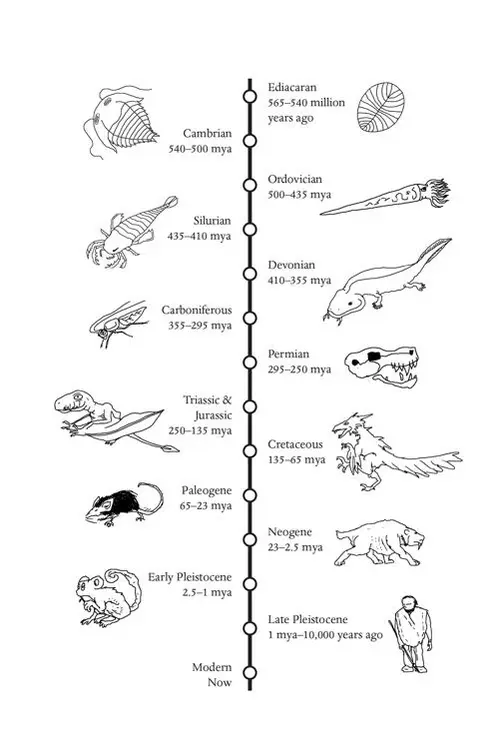
Timeline
Prelude: The Ediacaran Period
Excerpt from Other Edens: Speculative Evolution and Intelligence by Professor Ruth Emerson of the University of California
For three billion years the only life here has been microscopic. Bacteria have been leaching sustenance from strange chemicals in the bowels of the Earth or the depths of the sea. Ice comes, ice goes; the atmosphere for most of this time is a heady mix of chemicals either toxic to life or simply useless to it. There is life, though. For almost half the aeons since its formation, this world has known self-replicating organic entities. They’ve been bustling and thriving and dying and trying to outdo one another in a ferocious, invisible war for survival.
Life sometimes seems destined, to we fortunate ones who live at the far end of time’s telescope. But what were the chances of success? Hard to say, and the no man’s land between inorganic process and organic existence is a region, not a hard dividing line. We fondly believe there is no reversing that step, however, after a few very basic criteria are satisfied. Imagine life as a manual that includes instructions for replicating itself. The replication process is fallible, of course; everything is in this world. That leads to mutation and the possibility of change, and so to evolution. Here, a mutation can give one minuscule knot of organic chemistry the opportunity to replicate more efficiently than its neighbours. Its offspring faithfully copy the fortuitous error and thereby inherit it. Even without the evidence nestling in the heart of every living cell, the logic itself should be infinitely persuasive. Evolution is inevitable once you have an imperfectly self-replicating system in an environment of limited resources.
For the longest time, all the dramas of this particular world could have played out in a drop of water, life was of so small a scale. We have some evidence of a few flowerings of more complex life developing. But either the ice came back, acidity rose or oxygen levels fell—and these early signs collapsed like enlightened empires before the tides of barbarism.
Three billion years passed like motes in a god’s eye. Life expanded to fit the meagre niches the world provided. And a constantly changing cast of life forms fled from one another, devoured their fellows like miniature tigers and traded genetic material like shady black marketeers hiding contraband in their trench coats. These life forms exploited the inorganic substrate of the world. Later, they exploited the organic matrix that was the graveyard of a million billion fast-lived generations of their forebears.