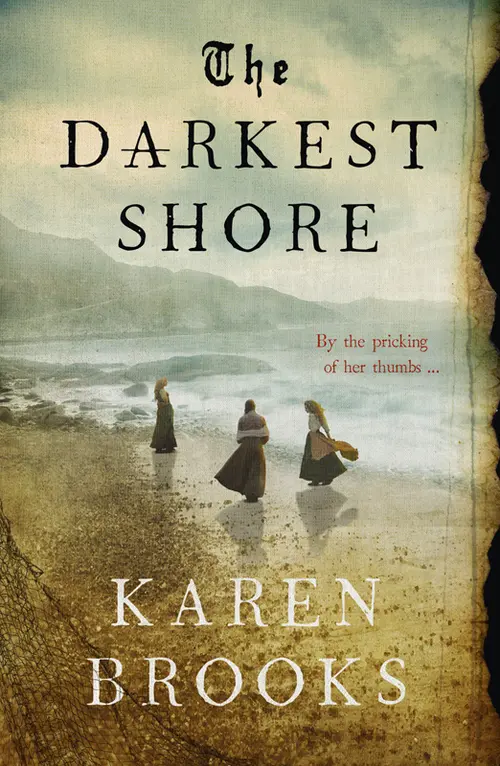
The Darkest Shore
Chapters (76)
- Cover
- About the Author
- Also by Karen Brooks
- Title Page
- Dedication
- EXPLANATORY NOTE
- PART ONE
- One
- Two
- Three
- Four
- Five
- Six
- Seven
- Eight
- Nine
- Ten
- Eleven
- Twelve
- Thirteen
- Fourteen
- Fifteen
- Sixteen
- Seventeen
- Eighteen
- Nineteen
- Twenty
- Twenty-One
- Twenty-Two
- Twenty-Three
- Twenty-Four
- Twenty-Five
- Twenty-Six
- Twenty-Seven
- Twenty-Eight
- PART TWO
- Twenty-Nine
- Thirty
- Thirty-One
- Thirty-Two
- Thirty-Three
- Thirty-Four
- Thirty-Five
- PART THREE
- Thirty-Six
- Thirty-Seven
- Thirty-Eight
- Thirty-Nine
- Forty
- Forty-One
- Forty-Two
- Forty-Three
- Forty-Four
- Forty-Five
- Forty-Six
- Forty-Seven
- Forty-Eight
- Forty-Nine
- Fifty
- Fifty-One
- Fifty-Two
- PART FOUR
- Fifty-Three
- Fifty-Four
- Fifty-Five
- Fifty-Six
- Fifty-Seven
- Fifty-Eight
- Fifty-Nine
- Sixty
- Sixty-One
- Epilogue: Autumn 1706
- AUTHOR’S NOTE
- GLOSSARY
- LIST OF CHARACTERS
- ACKNOWLEDGEMENTS
Cover
About the Author
KAREN BROOKS is the author of thirteen books, an academic of more than twenty years’ experience, a newspaper columnist and social commentator, and has appeared regularly on national TV and radio. Before turning to academia, she was an army officer for five years, and prior to that dabbled in acting.
She lives in Hobart, Tasmania, in a beautiful stone house with its own marvellous history. When she’s not writing, she’s helping her husband Stephen in his brewery and distillery, Captain Bligh’s, or cooking for family and friends, travelling, cuddling and walking her dogs, stroking her cats, or curled up with a great book and dreaming of more stories.
Also by Karen Brooks
Fiction
The Brewer’s Tale
The Locksmith’s Daughter
The Chocolate Maker’s Wife
The Curse of the Bond Riders trilogy:
Tallow
Votive
Illumination
Young Adult Fantasy
It’s Time, Cassandra Klein
The Gaze of the Gorgon
The Book of Night
The Kurs of Atlantis
Rifts Through Quentaris
Non-fiction
Consuming Innocence
Title Page
The Darkest Shore
Karen Brooks

Dedication
To all the wonderfully ‘wicked’ women in my life, especially Kerry Doyle, Caragh Brooks, Sara Warneke and Selwa Anthony.
To the good men who love their women wicked, particularly Stephen Brooks, Peter Goddard, Hugh Swingler, Jim McKay and Adam Brooks.
And a special thanks to Mr Nick (Mark Nicholson), and Bill Lark, two more good men, for giving me the gift of a story.
EXPLANATORY NOTE
In this novel, married women — many of whom are fishwives — don’t always carry their husbands’ names. This wasn’t peculiar to those in the fish-trade, but appears to have occurred in small towns and villages in Scotland where generations of the same family or others with the same name lived. To distinguish, for example, one Mrs Morag Bruce from another, she might keep her maiden name and thus remain Morag Nichols even though she is wed to Duncan Bruce. So it was with some of the women in this book — real and fictional. The real Janet (Nettie) Horseburgh was married to Thom White, Beatrix Laing to William Brown, and the fictional Sorcha McIntyre to Andy Watson, and so on.
Likewise, some characters bear the same surname, but aren’t necessarily related. I have mostly kept these out of respect for history and the real people involved in these events. As a consequence, there’s both a William Brown (Beatrix’s husband) and Thomas Brown, an old fisherman, but they aren’t kin. However, when it came to the Cooks, I added an ‘e’ to the end of the advocate’s name to distinguish him from Bailie Cook, who appears much earlier. Hopefully this alleviates any confusion. Please also note that the character Nicolas Lawson — based on a real individual — is a woman. In the Lowlands in the 1700s and 1800s, the name Nicolas (or Nicholas) was not uncommon for a girl.