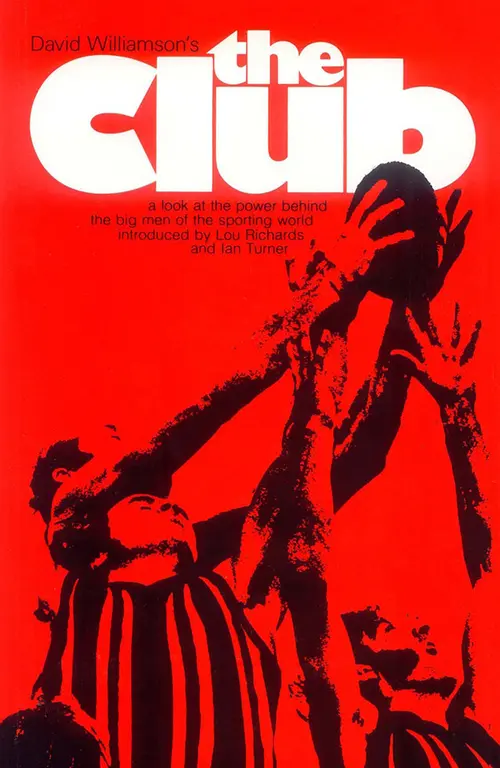
The Club

Playwright’s Biography
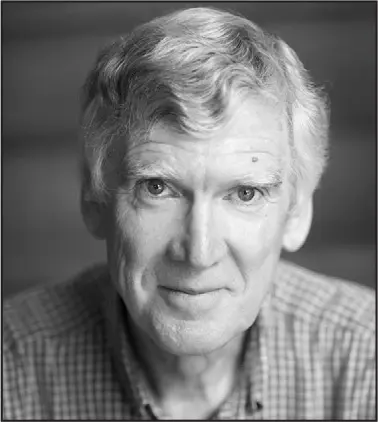
DAVID WILLIAMSON is Australia’s best known and most widely performed playwright. His first full-length play The Coming of Stork was presented at La Mama Theatre in 1970 and was followed by The Removalists and Don’s Party in 1971. His prodigious output since then includes The Department, The Club, Travelling North, The Perfectionist, Sons of Cain, Emerald City, Top Silk, Money and Friends, Brilliant Lies, Sanctuary, Dead White Males, After the Ball, Corporate Vibes, Face to Face, The Great Man, Up For Grabs, A Conversation, Charitable Intent, Soulmates, Birthrights, Amigos, Flatfoot, Operator, Influence, Lotte’s Gift, Scarlet O’Hara at the Crimson Parrot, Let the Sunshine and Rhinestone Rex and Miss Monica, Nothing Personal and Don Parties On, a sequel to Don’s Party. His latest When Dad Married Fury had its world premiere in Perth at the Metcalfe Playhouse and At Any Cost? co-written with Mohamed Khadra opened at the Ensemble Theatre in July 2012.
His plays have been translated into many languages and performed internationally, including major productions in London, Los Angeles, New York and Washington. Dead White Males completed a successful UK Production in 1999. Up For Grabs went on to a West End production starring Madonna in the lead role. In 2008 Scarlet O’Hara at the Crimson Parrot premiered at the Melbourne Theatre Company starring Caroline O’Connor and directed by Simon Phillips.
As a screenwriter, David has brought to the screen his own plays including The Removalists, Don’s Party, The Club, Travelling North and Emerald City along with his original screenplays for feature films including Libido, Petersen, Gallipoli, Phar Lap, The Year of Living Dangerously and Balibo. The adaptation of his play Face to Face, directed by Michael Rymer, won the Panavision Spirit Award for Independent Film at the Santa Barbara International Film Festival.
David was the first person outside Britain to receive the George Devine Award (for The Removalists). His many awards include twelve Australian Writers’ Guild AWGIE Awards, five Australian Film Institutes’ Awards for Best Screenplay and, in 1996 The United Nations Association of Australia Media Peace Award. In 2005 he was awarded the Richard Lane Award for services to the Australian Writers’ Guild. David has received four honorary doctorates and been made an Officer of the Order of Australia.
David has been named one of Australia’s Living National Treasures.
THE GREATEST GAME OF ALL
David Williamson must have pinched half his lines for The Club from a fly on a committee room wall. His mastery of ocker footy lingo is so word perfect you’d swear he was given Ron Barassi’s old athletic support for his first birthday and had board and lodging at Jack Dyer’s place.
There is more sting in some of the lines here than in all the backstabbing at a social club bar on a Saturday night.
As you will see when you read on, he has put it all together beautifully and come up with a cutting play about the real business of the modern Aussie Rules back-room boys—dirty business. It is a simple plot about a once-successful footy club that hasn’t won a premiership in nineteen years. Run by a wheeler-dealer, meat-pie manufacturing megalomaniac of a president who has never pulled on a boot and who interferes with the selection committee, the Club is having trouble with its expensive, imported star; trying to get rid of its loyal, longtime coach and facing a strike from the rest of the team.
David Williamson may not see it—he says he is writing a play about organisational power—but if you can’t recognise among the people you know the characters and situations in The Club, then you’ve either spent the last few years in a Tibetan monastery or you’re a New South Welshman. In fact, that’s why it’s such a pleasure to write this introduction. Footy and its followers have been my life. I spent many of the happiest years of my life playing for Collingwood and with Collingwood people. I must admit I’ve never known a footballer who became a lover to his mother and his ‘legless sister’, as Jock so subtly puts it; but each of Williamson’s six characters is spot-on. It won’t take much to recognise the guys who run your club, no matter what team you follow.
Take Gerry, the ruthless, new-breed career administrator. Every club has at least one—the sort of guy who makes the bullets for all the other bunnies to fire. And there are plenty of footy führers like the blustering president, Ted—frustrated footballers who have followed their side every Saturday arvo since they were six. They might mean well, as Ted does, but they carry on like petty little dictators, sticking their noses where they ain’t wanted. And what about Geoff, the fabulous, flashy import, who doesn’t give a continental about the Club and its proud traditions or the photos of past greats hanging on the walls? Can’t you just see him in a fancy pair of white footy boots?
Probably the truest part in the play, though, is that of Laurie—the poor old coach who, as is customary it seems when a team is down, finds his head the first one for the chopping block. And talk about nostalgia. Tears come to my eyes when I think of Danny, the skipper and long-time club champion who is about to get the axe after years of selfless service. It’s just like it was 1955 all over again and I’m about to get the old heave-ho as captain of my beloved Maggies. But best of all I like Jock, the conniving, interfering ex-president, former champion and jealous holder of the Club’s longest player record. When I saw the play he was played impeccably by my old mate Frank Wilson. It was a perfect character—a sure thing for an award from the Sacked Coaches Association. So there it is. I felt like I knew each of the six. I’m sure you do too—that’s half the fun of the play. The Club is about the hangers-on, the end of loyalty, the coming of professionalism, big business and massive transfer fees. It’s about each and every club in the Victorian Football League and about rugby, soccer and baseball too.
But for me it’s mainly about Aussie Rules football—the greatest game in the world. Good move, David Williamson!
Lou Richards
WINNERS AND LOSERS
What is The Club about? I suppose you could say that it’s about Melbourne—because Melbourne is about football, and the club is a football club. Melbourne, someone once said, is a city that has no summer; instead, it has a hibernation between football seasons. Every Saturday afternoon, from April to September, more of the people of Melbourne (a city of some two and a half millions) go to the football than attend the soccer in any one week in the United Kingdom. (Note that ‘football’ in Melbourne means Australian Rules—soccer and rugby and gridiron are something else again.)
You can, if you want to—and many do—watch or listen to football previews on television and radio on Thursday and Friday night and Saturday morning; go to the game on Saturday afternoon, listening while you watch to the broadcast reports of other games; and come home to replays and inquests on Saturday night, Sunday, and Monday evening. (The daily and weekly newspapers fill in the gaps left by the electronic media.)
An amateur sociologist once calculated that the opening gambit—after the conventional exchange of ‘How do you do?’ or, ‘Hi’—in 83.5 per cent of Melbourne conversations was ‘Which team do you follow?’ In Melbourne, team-identification is more important than religion, profession or social class. Football is Melbourne’s Saturday afternoon corrida: dying fans have asked that their bodies be buried between the goal-posts or their ashes scattered over the hallowed ground.
So in one sense The Club is about Melbourne, an otherwise dour and inward-turning city, which has this one grand public passion. For all I know, it may be about Liverpool and Milan and Notre Dame as well. ‘The game of the people for the people’ is the official motto of Melbourne football. The clubs exist to serve the football followers—that’s the theory. The Club explores the quality of the service, and the motives of those who supply it.
Modern football is part of the popular entertainment industry. It has its performers, its managers, its promoters and plenty of hype. There isn’t as much money in the game (at least in Australia) as there is in, say, pop music or the movies. But the rewards—money, fame, prestige, power and the fringe benefits which go with them—are big enough to make them worth fighting for. Football is about all those things, but there is more to it than that. It is also about loyalty to people, to an institution and a tradition, and about pride in craftsmanship. And, like all games, it is about winning and losing. British (and Australian) ‘sportsmanship’ is not an ethic of indifference to the result of the game; it is a code of conduct which regulates the competition. Melbourne football coaches demand of their players that they ‘contest fiercely’; there is a tribunal to ensure that they contest within the rules.
The entertainment industry has its own internal contradictions—if we wanted to be pretentious, we could call them structural polarities. Suppliers and consumers do not necessarily agree about what constitutes good entertainment; hype reinforces rather than creates the response. Buying and selling performers, in an endeavour to maximise the chance of winning, cuts across established patterns of identification and loyalty. Managers and promoters have their own idea of what constitutes success, and their own axes to grind; they often tramp heavy-footed over the professional pride of the performers whom they seek to manipulate. The Club is about those contradictions; with the necessary changes in detail, it could probably be taken out of the club’s committee room and dropped into the back rooms of Hollywood, Wardour Street or Tin Pan Alley.
Football is, in formal terms, a game—a rule-governed contest. But the players/performers are not ‘playing’; the game is far too serious for that. Football is no fun for the big league footballers. For them, it may be about social mobility and financial gain, and whatever kicks a charismatic hero gets out of dominating his audience. But there is almost always in it, for the players, the craftsman’s satisfaction in a job well done. The Club is about that too.
So The Club is a play for many seasons—but above all a play for one season: Melbourne, in the long winter months.
‘Tiger-territory’
Melbourne, 1977
Ian Turner
THE PLAY IN THE THEATRE
Having now directed the premier performance of David Williamson’s last three plays—The Department, A Handful of Friends and The Club, I feel confident in saying that Williamson has two great talents, over and above his singular ear for dialogue and his sharp instinct for dramatic structure. They are firstly his adherence to that old adage, much quoted, not always observed: “Write about what you know.” Secondly, that since there is little exotica or eccentricity in Williamson’s background as a country bank officer’s son studying engineering, his adept selection and juxtaposition of what he knows is such that what at first may seem banal or trivial can suddenly be profound.
Williamson is, in fact, a playwright enjoying total rapport with his audience. So readily do Wiliamson’s words strike gold at the box office and so spontaneous is the audience response that it is easy to underestimate his craft, to suspect some trick or sleight of hand. It has sometimes been the case for Williamson to be isolated, even dismissed, as some sort of nine-day wonder whose knack for serving up what the audience wants is bloody amazing, but whose writing is of only passing worth. It is my experience that Williamson enlarges and illuminates his audience’s perception of itself and explores intricate sub-texts where it has been assumed that no such sub-texts exist.
It is as well to remember too that Williamson plays in subsidised theatres to the genuine general public. He is the only Australian playwright to repeatedly do this. With a few notable exceptions, most new Australian plays are courageously endured by regular theatre subscribers in the hope of a double helping to follow of sequin-studded Shakespeare or, heaven help us, Sheridan. Williamson enjoys a continuing success story with all major subsidised theatre companies and brings his own following with him. In the case of the Melbourne Theatre Company, which has presented the majority of his plays, the subscribers have made it clear that Williamson is not their particular brand of Twinings’ tea and stay away, while the non-theatregoers of Melbourne pack the usually off-limits Russell Street Theatre to capacity each evening at eight-fifteen for every Williamson performance.
Williamson’s ability to connect with his audience—and let me add that his audience is remarkably diverse in age, education and social status—is largely due to his respect for it. He does not pander to it, patronise it or necessarily agree with it; but he respects it. In the same way, he respects the people he creates on stage. He does not caricature them or unnecessarily embellish them. He respects them. This is basically what the magic of Williamson’s name on the billboard is all about: Williamson’s modest expectation is that the audience will know what he is talking about and the audience’s expectation is that Williamson will generously reward them with the pain and laughter of self-recognition and a greater awareness of the world they live in. They are rarely disappointed. In my own case, Williamson has significantly altered my perception of my fellow Australians. I am sure I am not the only one.
It is no mean feat. We are a complex and self-conscious lot in Australia. Our traditional sense of inferiority manifests itself under various guises that range from diffidence to boozy aggression but seldom include soul-searching confrontation or the flash of self-criticism. So Williamson has fossicked out of his experience those areas of life where circumstance or obsession allows a group of people to behave in a manner untypical of themselves—moments when they feel liberated to express themselves undercover, as it were, from real life. In early plays—Don’s Party and Jugglers Three in particular—excessive alcohol was the circumstance or catalyst. Most recently, the obsessional worlds of the department head estranged from his wife, who gives his life to his job and the ambitious film director who yearns to equate commercial success with creative prowess, have provided circumstances for the sort of public unbuttoning which is both characteristically Australian and quint-essentially Williamson.
In The Club, which I would class as Williamson’s most technically assured piece of work to date, he takes on the fanatical world of sport and concentrates on those who are obsessed by it. In Melbourne, Australian Rules Football has as fixed a place in the hearts and minds of the population as the Melbourne Cup or complaining about the weather. It is a public pastime which consumes thousands of newspaper column inches each year and to which radio and television devote most of the weekend and a good part of the rest of the week as well. Any institution so monolithic has detractors as well as admirers and Aussie Rules is always ripe for caricature, albeit difficult as anyone who sampled the television series And The Big Men Fly will know.
But Williamson is not a caricaturist. He has disturbed a subculture in which the world of private lives and wives has taken a back seat to a preoccupation long since grown to obsessional proportions. In The Club, Jock, Ted and Laurie are locked in mortal combat; Gerry manipulates them; Danny and Geoff are incensed by the process but must live with it. Thus, it is not only a truthful tale about football but a dissertation on politics and a microcosm of the world outside. Moreover, because football is ‘only a game’—and ‘tradition’ and ‘honour’, ‘record books’ and a ‘multi-million dollar turnover’ are involved—the characters are freed from the laconic, diffident, mainly silent image reserved for their family and wives; and throw themselves, boots and all, into self-revelation and aggressive confrontation.
Pre-publicity for The Club when it was about to premiere in Melbourne inevitably emphasized the ‘90,000 dollar recruit’. Consequently, the delayed appearance onstage of Geoff Hayward tended to whet the audience’s appetite—conditioned no doubt by And The Big Men Fly—for a joke: a naïve, hulking yobbo or something of the sort. Williamson, however, spares us any such excess. He gives instead a finely wrought combination of arrogance, uncertainty and appeal, a character who ultimately must make a decision which wins for him the respect of the audience. It is a decision which David Williamson has long since made for himself: that however much you may disagree with a system, however proficient you are at exposing or deflating it, you must—whatever the cost to your pride—join it before you can begin to change it.
Rodney Fisher
Brisbane, 1977
FIRST PRODUCTION
The Club was first performed by the Melbourne Theatre Company at the Russell Street Theatre, Melbourne, on 24 May 1977 with the following cast:
| GERRY | Gerard Maguire |
| TED | Frank Gallacher |
| LAURIE | Terence Donovan |
| DANNY | Harold Hopkins |
| JOCK | Frank Wilson |
| GEOFF | John Walton |
Setting design, Shaun Gurton
Director, Rodney Fisher
CHARACTERS:
GERRY COOPER
TED PARKER
LAURIE HOLDEN
DANNY ROWE
JOCK RILEY
GEOFF HAYWARD
SETTING:
The action of the play takes place in the committee room of a top professional football club. A formal committee table surrounded by chairs is seen towards the back of the stage. Lounge chairs and a coffee table dominate the downstage area. It is in this area that most of the action takes place. Large, framed head-shots of former club champions adorn the walls. A door on the left leads to the general and recreational areas of the club building, while to the right a door leads to a private bar used by committee members.
ACT ONE
GERRY COOPER, lean, alert, in his middle thirties, sits on the table smoking, a folder in one hand. TED PARKER enters from left. He is small, pudgy, manic, nervous, in his early forties.
TED: Good.
GERRY: Good what?
TED: Good that you’re early.
GERRY: Always early.
TED: Going to be tough.
GERRY: What?
TED: (more clearly) Going to be tough.
GERRY: Who? Laurie?
TED: No. The whole business. Going to be awkward. It’ll have to be handled carefully. My first impulse is to blast hell out of him. Really blast hell out of him. He’s hurt me, Gerry, and I’m angry. Really angry, but I think it’s much better if I stay cool. Don’t you think so? Better to stay cool?
GERRY: If you stay as cool as you are now we’re all in trouble. Calm down.
TED: Sometimes it takes more courage to hand out the olive branch than to jump in boots and all. I’m not going to smile and pretend that it didn’t happen mind you, but I’m going to stay cool.
GERRY: Calm down.
TED: I could use a drink.
GERRY: Grab a bottle of Scotch from next door.
TED nods and goes out, right.
TED: (off) How’s June?
GERRY: Sick.
TED: (off) That’s great. Sick?
GERRY: Mmm.
TED re-enters with a bottle of Scotch and two glasses.
TED: What’s she got?
GERRY: ’Flu.
TED: There’s going to be a new ’flu strain in the next ten years that’s going to wipe out nine tenths of the world population.
GERRY: Yeah?
TED: I read it in the Sunday papers.
GERRY: That’ll test Medibank.
TED pours them each a whisky. The left door opens and LAURIE HOLDEN comes in. LAURIE is a tall well-built man in his middle forties. There is an awkward silence. TED inclines the whisky bottle towards LAURIE. LAURIE declines.
TED: I’m sorry it’s come to this, Laurie.
LAURIE: So am I.
There is another awkward pause.
June better yet, Gerry?
GERRY: Improving, thanks, Laurie.
LAURIE: Give her my love.
GERRY: Will do.
TED: Thanks for coming, Laurie. The Committee thought it might be better if we tried to thrash this out privately before tonight’s meeting.
LAURIE: Fine.
TED: The Committee wants to see if you and I can settle our differences, Laurie. They don’t want to accept your resignation.
GERRY: I thought I’d come along to see if I can act as an impartial sounding board for you both. Jock was going to come along and lend a hand too, but as usual he’s late.
LAURIE: Jock? Lend a hand?
GERRY: His idea, not ours, but once he gets an idea in his head he’s a little hard to discourage. We’ll go if you two get to a point when you’d rather talk things through yourselves.
TED: The Committee’s unanimously of the opinion that they don’t want to lose you, Laurie. You’re one of the best coaches we’ve ever had and you’ve given the Club great service.
GERRY: We’d find it very hard to replace you, Laurie.
There is another pause.
TED: The Club’s going through a slump but nobody blames you.
LAURIE: I should bloody well hope not.
The Story Continues on BooksBarbecue!
Enjoyed this preview? ❤️ Do not stop here!
Read the complete book free online → 🔗
Continue reading now on BooksBarbecue and discover every page!
Love reading? Bookmark BooksBarbecue.com for more amazing books!
Happy Reading!