The Blooding
Chapters (30)
JAMES McGEE
The Blooding

Dedication
This one is for my cousin, Mark.
Flying free …
O:nen Ontiaten:ro
Map
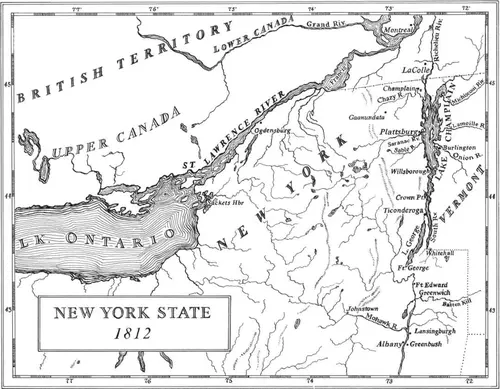
MOHAWK NAMES
The Mohawk at the time the novel is set had no written language. Iroquois vocabulary was originally transcribed by Jesuit missionaries and therefore, even today, there are discrepancies in the origins, spelling and meaning of certain words. I’m indebted to Thomas Deer of the Kanien’kehá:ka Onkwawén:na Raotitióhkwa Language & Cultural Center in Kahnawá:ke, Montreal, for his guidance.
Rotinonshón:ni: “People of the Longhouse” – the Six Nations – Iroquois Confederacy
Kanien’kehá:ka: “People of the Place of the Flint” – the Mohawk
Kaion’kehá:ka: “People of the Marsh” – the Cayuga
Oneniote’á:ka: “People of the Standing Stone” – the Oneida
Ononta’kehá:ka: “People of the Hills” – the Onondaga
Shotinontowane’á:ka: “People of the Great Mountain” – the Seneca
Tehatiskaró:ros: “People of the Shirt” – the Tuscarora
Kaianere’kó:wa: “The Great Law of Peace” – the Constitution of the Six Nations
Oyata’ge’ronóñ: “People of the Cave Country” – the Cherokee
Wendat: “People of the Island” – the Huron
Ahkwesáhsne: “Where the partridge drums” – Mohawk village near St Regis
Kahnawá:ke: “On the rapids” – Mohawk village near Montreal
Kanièn:keh: “Land of the Flint” – Traditional homeland of the Mohawk
Kenhtè:ke: “Place of the Bay” – Mohawk village on the Bay of Quinte, Canada
Anówarakowa Kawennote: “Great Turtle Island” – North America
Atirú:taks: Adirondacks
Kaniatarowanénhne: “Big Waterway” – the St Lawrence River
Ne-ah-ga: Niagara
Oiqué: Hudson River
Senhahlone: Plattsburg
Tanasi: Tennessee
Epigraph
If they are to fight, they are too few;
If they are to be killed, they are too many.
Theyanoguin
Wolf Clan, Kanien’kehá:ka
Warrior, sachem, diplomat, orator
Table of Contents
Table of Contents
Cover
Title Page
Dedication
Map
Mohawk Names
Epigraph
Prologue
Chapter 1
Chapter 2
Chapter 3
Chapter 4
Chapter 5
Chapter 6
Chapter 7
Chapter 8
Chapter 9
Chapter 10
Chapter 11
Chapter 12
Chapter 13
Chapter 14
Chapter 15
Chapter 16
Chapter 17
Epilogue
Historical Note
About the Author
Also by James McGee
Copyright
About the Publisher
PROLOGUE
Mohawk Valley, New York State, May 1780
Reaching the edge of the forest, Lieutenant Gil Wyatt halted and dropped to one knee. Cradling his rifle, he gazed down at the scene spread below him, his expression calm and watchful.
From his elevated position the ground sloped away gently, gradually widening out into a swathe of rich green meadow-grass speckled with blue violets, through which ran a shallow stream bordered by stands of scarlet oak and white willow. Tree stumps dotted the incline, evidence of the labour that had gone into converting the land and raising the single-storey, timber-built cabin that nestled in the centre of the clearing.