The Black Abbot
Cover

Copyright & Information
The Black Abbot
First published in 1926
© David William Shorey as Executor of Mrs Margaret Penelope June Halcrow (otherwise Penelope Wallace); House of Stratus 1926-2010
All rights reserved. No part of this publication may be reproduced, stored in a retrieval system, or transmitted, in any form, or by any means (electronic, mechanical, photocopying, recording, or otherwise), without the prior permission of the publisher. Any person who does any unauthorised act in relation to this publication may be liable to criminal prosecution and civil claims for damages.
The right of Edgar Wallace to be identified as the author of this work has been asserted.
This edition published in 2010 by House of Stratus, an imprint of
Stratus Books Ltd., Lisandra House, Fore St., Looe,
Cornwall, PL13 1AD, UK.
Typeset by House of Stratus.
A catalogue record for this book is available from the British Library and the Library of Congress.
| EAN | ISBN | Edition | ||||
| 1842326627 | 9781842326626 | |||||
| 075511471X | 9780755114719 | Print (Alt) | ||||
| 0755121252 | 9780755121250 | |||||
| 0755114019 | 9780755114016 | Mobi | ||||
| 0755122267 | 9780755122264 | Epub |
This is a fictional work and all characters are drawn from the author’s imagination.
Any resemblance or similarities to persons either living or dead are entirely coincidental.
We would like to thank the Edgar Wallace Society for all the support they have given House of Stratus. Enquiries on how to join the Edgar Wallace Society should be addressed to: Email: [email protected] Web: http://www.edgarwallace.org/

About the Author
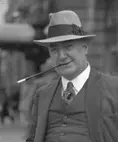
Edgar (Richard Horatio) Wallace was born illegitimately in 1875 in Greenwich, London, to Polly Wallace, a minor actress who although married conceived Wallace through a liaison with a fellow player, Richard Horatio Edgar. He was initially fostered to George Freeman, a porter at Billingsgate fish market and later adopted by him.
At eleven, Wallace sold newspapers at Ludgate Circus and upon leaving school aged twelve took a job with a printer. Many other jobs followed until at nineteen he enlisted in the Royal West Kent Regiment, later transferring to the Medical Staff Corps and was sent to South Africa. Whilst in the army he started writing, short poetry at first, but quickly graduated to journalism by contributing articles to the Cape Colony press and was able to supplement his army pay. The army disapproved and after the publication of a short book of poetry, The Mission That Failed, he left the service in 1899 to became a correspondent for Reuters followed by an appointment as South African war correspondent for The Daily Mail. This came to an end when the Commander-in-Chief, Lord Kitchener, revoked Wallace’s press credentials after he scooped the story of the final peace treaty, which brought the Boer War to an end, and the Daily Mail was able to publish twenty four hours ahead of the official announcement. His various articles were later published as ‘Unofficial Dispatches’.
Whilst in South Africa, Wallace married Ivy Caldecott, the daughter of a Wesleyan minister. Their first child died from meningitis in 1903, but a son, Bryan, was born the following year.
After a brief spell with the Rand Daily Mail, which ended after an argument with the proprietor, Wallace returned to London and resumed his association with the Daily Mail, as a day-today reporter. By this time Wallace was heavily in debt after gambling on the South African Stock Market and also starting to lead the extravagant lifestyle to which it was clear he wished to become accustomed. Money troubles led him to commence work on his first full novel; The Four Just Men.
However, instead of proceeding conventionally, Wallace decided to embark upon a scheme which he believed would earn him a lot more. In 1905 he founded the Tallis Press, his own publishing company and decided upon a grandiose marketing and publicity campaign. Central to this was a competition he ran which invited readers to guess the solution to a conundrum – namely how the ‘Foreign Secretary’ had been murdered by ‘anarchists’ in the storyline. Extravagant prizes were offered by Wallace, to whom it never occurred that more than one person might win. He also underestimated production and publicity costs. Sinking even deeper into debt, he was bailed out by a large loan from Alfred Harmworth, the proprietor of the Daily Mail, who was concerned the bad publicity surrounding the events would harm the newspaper.
There then followed two libel actions involving the Mail in which Wallace was concerned – one of his own making after he had made up part of a story, and one involving a campaign Harmsworth was running against the soap manufacturers, Lever Bros. In the event, he was dismissed from the paper in 1907 and his standing in Fleet Street was so low no paper would employ him. By this time Ivy had given birth to a second surviving child, a daughter, and Wallace was effectively bankrupt, albeit not declared as such.
In 1909 he hit upon the idea of using some of his knowledge from reporting for the Mail in the Belgian Congo was as a basis for a series of short stories for a penny magazine. The initial batch, which were full of adventures of empire, a little patronising of native Africans, and contained strong characters, were a huge success and were eventually published in 1911 as Sanders of the River, the first of eleven such volumes.
Journalistic employment once again followed and Wallace also indulged in one of his great passions; horse racing. He both gambled and wrote about the subject and became tipster for various papers prior to starting two of his own. Another child was born to Ivy in 1916, but their marriage was failing and they were divorced in 1919. Shortly afterwards, Wallace married the daughter of a financier, Violet King, who had previously been one of his secretaries. They had a child, Penelope, in 1923. During the first World War Wallace had also served as a Special Constable at Lincoln’s Inn and as a special interrogator for the War Office.
Further writing success followed after Sanders and for the first time Wallace began to earn substantial advances for his work and royalties on a sliding scale. He wrote mostly thrillers, although there was a generous sprinkling of light comedy, romantic novels and science fiction, along with some non-fiction (such as ten volume history of the War) and it was once said that by 1928 one in four books read in England at the time were by him. His output was extraordinary and he would finish a standard length novel in less than a week. Many of his stories were filmed and he even became involved in directing.
His flamboyant lifestyle continued, however, and he was to be seen arriving at race meetings in a yellow Rolls Royce and to be heavily involved in gambling. Nonetheless, and possible because of a knowledge of his own failings, as chairman of the Press Club he thought about others when inaugurating a fund for impoverished journalists. In 1931, he stood for the Liberal party at the general election, opposed to the National Government, but the electors of the Blackpool constituency were not convinced and he was heavily defeated. Undeterred, he turned his sights towards America and accepted a job as a screenwriter with RKO Studios in Hollywood.
However, for some time his health had been causing him concern and the following year he was diagnosed with diabetes. Within days of this he died suddenly from double pneumonia brought about by the disease. At the time, he had been working on the film King Kong. His body was repatriated and he buried near to his home in Bourne End, Buckinghamshire.
One further surprise awaited relatives as it transpired Wallace’s estate was in fact heavily in debt – in death as in life - but continuing royalty payments eventually enabled this to be cleared and his daughter Penelope thereafter ran a successful enterprise based upon the literary estate.
Wallace completed 175 novels, over 20 plays and numerous short stories, in addition to some non-fiction and countless journalistic articles. Literally hundreds of films and TV shows have been made of his work (more than any other twentieth century writer) and he continues to be very popular with new generations of readers.
Dedication
to
THE REV. A V C HORDERN
of Market Drayton
A Friend of Soldiers
1
“Thomas!”
“Yes, m’lord.”
Thomas the footman waited, a look of concentrated interest on his unprepossessing face, whilst the pale man behind the big library desk sorted out a small pile of Treasury notes.
The battered steel box from which they were taken was full to the brim with Bank and Treasury notes of all denominations in hopeless confusion.
“Thomas!” absently.
“Yes, m’lord.”
“Put this money in that envelope – not that one, you fool, the grey one. Is it addressed?”
“Yes, m’lord. ‘Herr Lubitz, Frankforterstrasse 35, Leipsic,’ m’lord.”
“Lick it down, take it to the post office and register it. Is Mr Richard in his study?”
“No, m’lord, he went out an hour ago.”
Harry Alford, 18th Earl of Chelford, sighed. He was on the right side of thirty, thin of face and pale as students are, his jet-black hair emphasising the pallor of his skin. The library in which he worked was a high-roofed building, the walls bisected by a gallery that ran round three sides of the room and was reached by a circular iron staircase in one corner of the apartment. From the roof to the floor every inch of wall space was covered with bookshelves, with this notable exception. Over the great stone fireplace was a full-length painting of a beautiful woman. None who had seen his lordship could make any mistake as to the relationship which existed between himself and that wild-eyed beauty. It was his mother; she had the same delicate features, the same raven hair and dark, fathomless eyes. Lady Chelford had been the most famous debutante of her time, and her tragic end had been the sensation of the early ’nineties. There was no other picture in the room.
His eyes strayed to the portrait now. To Harry Alford, Fossaway Manor, for all its beauty and charm, was a poor casket for such a jewel.
The footman in his sober black livery, his hair powdered white, lingered.
“Is that all, m’lord?”
“That is all,” said his lordship gravely. Yet when the man had moved noiselessly to the door – “Thomas!”
“Yes, m’lord.”
“I heard something by accident as you passed my window this morning with Filling the groom – er – ?”
“He was telling me about the Black Abbot, m’lord.” The pale face twitched spasmodically. Even in broad daylight, with the sun streaming through the stained windows and marking the parquet with arabesques of crimson and blue and amethyst, the very mention of the Black Abbot set his heart beating faster.
“Any man in my employ who discusses the Black Abbot will be instantly dismissed. Will you tell your fellow-servants that, Thomas? A ghost! Great God! Are you all mad?”
His face was red now, little veins swelled at his temples, and under the stream of anger his dark eyes seemed to recede into his head.
“Not a word! You understand? It is a lie! A mischievous wicked lie to say that Fossaway is haunted! It is a trick played by some of the louts about the place. That will do!”
He waved the bowing man from his presence and resumed his study of the black-lettered book that had arrived from Germany that morning.
Once outside the library door, Thomas could afford to twist his sallow features to a grin. Only for a second, and then he became serious again. There must be nearly a thousand pounds in that cash-box, and Thomas had once served a three-year sentence for a tenth of that sum. Even Mr Richard Alford, who knew most things, was unaware of this interesting fact.
Thomas had a letter to write, for he maintained a lucrative correspondence with one who had an especial interest in Fossaway Manor, but first he had to report the gist of the conversation to Mr Glover, the butler.
“I don’t care what his lordship says (and why he should tell a footman and not me, I don’t know); there’s a ghost, and all sorts of people have seen it! I wouldn’t walk down Elm Drive alone at night for fifty million pounds!” This portly man shook a head that the years had silvered.
“And his lordship believes it too. I wish he was married, that’s what I wish. He’ll be more sensible then!”
“And we’d get rid of Mr Blooming Alford – eh, Mr Glover.”
The butler sniffed.
“There’s them that likes him and them that don’t,” said the oracle. “We’ve never had a cross word, Thomas – there’s somebody at the door.”
Thomas hurried to the hall entrance and opened the big door. A girl was standing under the portico. She was pretty in a bold way, red of lips and bright of eye and dressed expensively.
Thomas gave her a grin of recognition.
“Good morning, Miss Wenner – this is a bit of a surprise!”
“Is his lordship in, Thomas?”
The footman pursed his lips dubiously.
“He is in, miss, but I’m afraid I can’t take you in to him. Don’t blame me, miss, it’s Mr Alford’s orders.”
“Mr Alford!” she sneered. “Do you mean to tell me that I’ve come all the way from London and can’t see Lord Chelford?”
But Thomas kept his hand on the door. He liked the girl, who, when she had been his lordship’s secretary, had never given herself airs (the unpardonable sin of the servants’ hall), and who always had a smile for the meanest of the domestic staff. He would gladly have admitted her and felt that his lordship would have been pleased to see her, but in the background somewhere hovered Dick Alford, a man of curt speech, who was not only capable of showing him the door but kicking him through it.
“I’m very sorry, miss; but orders is orders, as you know.”
“I see!” she nodded ominously. “I’m to be turned away from what might have been my own door, Thomas.”
He tried to look his sympathy and succeeded in assuming an expression of imbecility. She smiled at him, shook hands with him graciously and turned away from the portico.
“Miss Wenner,” reported Thomas, “her that Alford fired because he thought his lordship was getting sweet on her–”
The library bell rang at that moment and Thomas hastened to answer the call.
“Who was that lady – I saw her through the window?”
“Miss Wenner, m’lord.”
A cloud passed over Harry Alford’s face.
“Did you – ask her to come in?”
“No, m’lord; Mr Alford gave orders–”
“Of course – yes. I had forgotten. Perhaps it is just as well. Thank you.”
He pulled down the green shade over his eyes, for even in the day he worked by artificial light, such was the gloom of the library, and resumed his study of the book.
Yet his mind was not wholly concentrated on the work. Once he rose and walked up and down the library, his hands clasped before him, his chin on his breast. He stopped before the picture of his mother, sighed and walked back to the writing-table. There was a Press paragraph which he had cut out of a London newspaper, and this he read for the third time, not ill-pleased with the unaccustomed experience of finding himself the subject of newspaper comment, and yet irritated by the subject on which the paragraph was based.
Chelfordbury, a sleepy Sussex village, is engaged in the thrilling sport of ghost-hunting. The Black Abbot of Fossaway has, after a period of quiescence, again made his appearance. The legend is that seven hundred years ago, Hubert of Redruth, Abbot of Chelfordbury, was assassinated by order of the second Earl of Chelford. Since then, from time to time, his “ghost” has been seen. During the past few years horrific stories of an Unseen Being that shrieked and howled demoniacally have been current in the county, but the noisy spook was not actually seen until last week.
Fossaway Manor has other romances besides ghosts. Four hundred years ago a great treasure of gold was, according to legend, hidden somewhere on the estate; so effectively, in fact, that it has never been discovered since, although successive Earls of Chelford have searched diligently for the ancestral hoard.
The present Earl of Chelford, who, by the way, is engaged to be married to Miss Leslie Gine, the only sister of Mr Arthur Gine, the well-known solicitor, informed our local representative that he had no doubt that the apparition of the Black Abbot was a practical joke in very doubtful taste on the part of the foolish youth of the neighbourhood.
He made as though to tear the paper, but thought better of it and put the cutting under a paper-weight.
That reference to the practical jokers of the village was reassuring and might be a comfort when the night came and he needed encouragement.
For Lord Chelford believed in the Black Abbot as religiously as he proclaimed his scepticism.
His restless hand moved to the bell-push on his table.
“Has Mr Richard returned?”
“No, m’lord.”
Lord Chelford struck the table pettishly with his palm.
“Where on earth does he get to in the mornings?” he asked querulously.
Thomas, very wisely, pretended not to hear.
2
The reapers had laid low the last of the golden heads, and the sheaves stood like yellow tombstones on Racket Field. Beyond the field was Chelfordbury, where the grey old spire of the church came up from a velvety knoll of trees; beyond again, the green and white downs of Sussex, along the feet of which the railway runs.
Dick Alford sat on a stile on the top of a little hillock and could see across the weald for fifteen miles. He could turn his head and take in the home farm and the green roofs and cupolas of Fossaway Manor, with its broad lawns and its clipped yew hedges. Neither cornfield nor down, manor-house nor pleasaunce, interested him for the moment. His eyes were fixed and his mind centred upon the girl who was walking quickly up the winding path that would bring her presently to where he sat.
She was singing as she walked, the riding crop she carried whirling round and round like a drum-major’s baton. His lips twitched to the ghost of a smile. Presently she would see him, and he wondered if she would be annoyed. He had never seen Leslie Gine except in such circumstances that her face was a pleasant mask and her manner conventionally charming. She had been nicely brought up and taught that all things are permissible except one: to make your equal feel foolish.
The song ceased. She had seen him, but she did not check her pace and came quickly up the hill path, slashing at a nettle as she walked.
“Peeping Tom!” she greeted him reproachfully.
She was not so tall as the average English girl, but her slimness gave her height, and the supple movement of her hinted at greater strength than her slight figure suggested. Her face, delicately modelled, had the subtle refinement of her class. Small, beautiful hands and feet, a head finely poised, eyes of a deep grey, and a red mouth that smiled easily, Leslie Gine in rags would have been unmistakably a beautiful lady.
Dick had seen her riding; she gripped the withers with her knees, jockey fashion, and was part of the horse. He had seen her on the polished dancing floor; there was lissom grace in every line. When he danced with her, he held in his arms a fragrant something that had more substance and character than he had thought. The hand on his shoulder was definitely placed, the body which his arm encircled was firm; he could feel the tiny muscles ripple under his hand.
She stood now, her little black riding hat askew, her figure clad in neat black relieved by the lawn collar. Her neatly booted legs were planted stubbornly apart, one gloved hand holding her waist, the other swinging the crop. In her grey eyes was an imp of mischief that gleamed and danced all the merrier for the studied solemnity of every other feature.
Dick Alford, from his vantage place on the top rail of the stile, chewed a blade of toddy grass between his white teeth and surveyed her approvingly.
“Been riding, Leslie?”
“I have been riding,” she said gravely, and added: “a horse.”
He looked round innocently.
“Where is the favoured animal?” he demanded.
She looked at him suspiciously, but not a muscle of the tanned, lean face so much as twitched.
“I dismounted to pick wild flowers and the beastie ran away. You saw him!” she accused.
“I saw something that looked like a horse running towards Willow House,” he confessed calmly. “I thought he had thrown you.”
She nodded.
“For that prevarication you can go and find him – I’ll wait here,” she said, and, when he got down from the stile with a groan: “I meant you to do that, anyway. The moment I saw you I said to myself: ‘There’s a lazy man who wants exercise!’ Sisters-in-law-to-be have privileges.”
He winced a little at this. She may have noticed the cloud that came momentarily to his face, for she put out her hand and checked him.
“One of the grooms can find him, Dick. He is such a hungry pig that he is certain to make for his stable. No, I don’t mean the groom. Sit down; I want to talk to you.”
She swung up to the stile and took the place he had vacated.
“Richard Alford, I don’t think you are enjoying the prospect of my being the mistress of Fossaway House?”
“Manor,” he corrected.
“Don’t quibble – are you?”
“I count the days,” he said lightly.
“Are you?”
He took a battered silver case from his hip pocket, selected a cigarette and lit it.
“My dear Leslie–” he began, but she shook her head. She was very serious now.
“You think I will – interfere with things? With the management of the estate – I know poor Harry couldn’t manage a small holding – with – oh, with all sorts of things, but I think you are wrong.”
He blew three smoke rings into the air before he answered.
“I wish you would manage the estate,” he said quietly. “It would be a blessing to me. No, I’m not worried about that. With your money – forgive the brutality – the estate will not count. A bailiff could manage it as well as any second son!”
3
The Story Continues on BooksBarbecue!
Enjoyed this preview? ❤️ Do not stop here!
Read the complete book free online → 🔗
Continue reading now on BooksBarbecue and discover every page!
Love reading? Bookmark BooksBarbecue.com for more amazing books!
Happy Reading!