Swing
Cover Page
Title Page
Copyright Page
This is a work of fiction. All incidents and dialogue, and all characters with the exception of some well-known historical and public figures, are products of the author’s imagination and are not to be construed as real. Where real-life historical or public figures appear, the situations, incidents, and dialogues concerning those persons are entirely fictional and are not intended to depict actual events or to change the entirely fictional nature of the work. In all other respects, any resemblance to persons living or dead is entirely coincidental.
2006 Random House Trade Paperback Edition
Copyright © 2005 by Rupert Holmes
Published in the United States by Random House Trade Paperbacks, an imprint of The Random House Publishing Group, a division of Random House, Inc., New York.
RANDOM HOUSE TRADE PAPERBACKS and colophon are trademarks of Random House, Inc.
Library of Congress Cataloging-in-Publication Data
Holmes, Rupert.
Swing: a mystery / by Rupert Holmes.
p. cm.
1. Golden Gate International Exposition (1939–1940) : San
Francisco, Calif.)—Fiction. 2. San Francisco (Calif.)—Fiction.
3. Women composers—Fiction. 4. Jazz musicians—Fiction.
I. Title.
eISBN: 978-0-307-43189-9
v3.0_r1
Dedication
For Wendy Isobel Holmes (1976 – 1986)
Praise
Praise for Swing
“[A] subtle and surprising portrait of a world many of us never knew [with a] tricky and involving plot . . . But it’s the people, living and dead, who stay in the memory after the last page has been turned, the last letter-perfect description of a vanished world has touched a chord, the last note of swing music has been played.” —Dick Adler, Chicago Tribune
“Smart and impressively elaborate . . . a sophisticated foray into musical mystery-plotting, [Swing flashes] back to the big-band era in surprising, imaginative ways. Mr. Holmes can turn a phrase . . . as handily as he can encrypt clues into a tune.” —Janet Maslin, The New York Times
“Saturated in the atmosphere of noir and swing, the story moves jauntily, its set pieces staged with theatrical flair and its snappy dialogue recalling Ben Hecht’s [with] Holmes’s stylish sense of ambience and lightness of touch.” —The New Yorker
“Rupert Holmes’s clever period mystery . . . re-creates a moment when people still lived in a state of innocence, sipping sodas in Rexall’s, dancing to the big bands at the Claremont, strolling the Gayway on Treasure Island. . . . Holmes gathers them all together, the bitter and the sweet, and makes the kind of music you want to hear.” —Marilyn Stasio, The New York Times Book Review
“The vastly-talented Tony-, Emmy-, and Edgar-winning Holmes . . . has a sharp eye and a keen ear, [as well as] the rare ability to describe a person with a single line that brands the character into the brain. I urge you to swing by your local bookseller and bring a copy home.” —Otto Penzler, The New York Sun
“Swing just might be the best historical thriller of the year. Certainly it is the most creative. . . . It’s also about something far more sinister than a murder, but to name it would be give away the fun.” —Pohla Smith, Pittsburgh Post-Gazette
A SAN FRANCISCO CHRONICLE TOP TEN BEST SELLER
“There is beauty and truth in how Holmes has written the story. . . . Subtle and inviting . . . an excellent novel and an impressive tale of intrigue. We are swept along by often beautiful prose in a brilliantly structured story that is fascinating to read as it unfolds its secrets.” —John Orr, San Jose Mercury News
“Nostalgic writing at its best. It’s tough, classy and smart, like so many of its characters. . . . Compelling and atmospheric . . . If you like a good mystery and stylish period piece, you won’t regret taking Holmes’s latest novel for a Swing.” —Eric J. Blommel, Rocky Mountain News
“Rupert Holmes again proves his talent has few boundaries with his second novel. Swing scores as a historical mystery that captures the sights, flavor and sounds of the 1940s. . . . A wonderfully deceptive novel . . . Holmes makes Swing go an octave higher as he surrounds his hero with the jolt of world events. . . . A worthy addition to Holmes’s canon.” —Oline H. Cogdill, South Florida Sun-Sentinel
“You will want to read Swing. [Its plot] is as smooth as a trombone slide. . . . Swing swings.” —Margaret Cannon, The Globe and Mail
“The story pulses ahead a bit like an orchestration itself, with odd harmonies, varying tempos, witty exchanges [and] a poignant leitmotif of parental loss and guilt.” —Roderick Nordell, The Christian Science Monitor
“A delicious, wicked, and nostalgic mystery novel [that’s] a ripping good yarn intelligently told.” —L. H. Abramson, Pages
“Everything about Swing resonates. The characters are lively, the settings lifelike and the plot moves from haunting romance to thriller and back again. Outstanding read.” —Jerry Wallace, Baton Rouge Advocate
“A clever, original mystery that’s pure fun to read, listen to, look at and puzzle out . . . A tour de force of style and erudition, Holmes’s second novel will delight mystery readers of any sort.” —Publishers Weekly (starred review)
A PARADE BOOK PICK
To you, Treasure Island, farewell.
As the world has lived, your life was all too short. It seems but yesterday you lay beneath the sea.
The good and the bad have come to you and you have had gifts for all who would receive them.
But this is not Death for Treasure Island. The flowers may fade, the palaces may fall to earth, the music and laughter be stilled . . .
. . . but as God measures Time, it is but tomorrow that huge airplanes will glide down through the air which tonight is ruled by the Tower of the Sun . . . will roll across the ground where Pacific House now stands.
Let there be no sadness tonight . . . for remember, sorrow is of the past and joy is of the future. And so we salute Treasure Island . . . whose greater future starts—tonight!
Written by Glenn A. Wheaton for the closing ceremony— attended by an audience of over 85,000 and carried live on all three national radio networks—marking the end of The Golden Gate International Exposition, “The World’s Fair of the West,” September 29, 1940, Treasure Island, California.
Chapter 1
1
The Band Bus
We’d had a miserable drive down from Portland that day. The radio on the bus had been on the fritz since we’d left Spokane the week before, there are only so many hands of penny-ante gin rummy that seventeen men can endure without a card table or drinks, and while from time to time we might professionally be called upon to perform “Ninety-nine Bottles of Beer on the Wall,” we sure as hell weren’t about to sing it voluntarily. We were grown men. We all had stories to tell, great stories, but after a few years, we’d told and heard them all.
By the time we crossed from Oregon into California, I’d already read the first paragraph of Seven Pillars of Wisdom for several hours, my gaze wandering back and forth between the yellowed pages and the bleached green scenery outside. When you tour the country, you quickly learn that America is a pleasant view through a bus window that is then repeated eight thousand times before it yields to the dim prospect of a small brown city.
Frankie Pompano, tenor sax, first chair, made his way to my padded pew at the back of the bus. “Bored enough?” he asked. “ ’Cause I’m ready to cut my wrists with a reed trimmer.”
He sat down on my left, just as he did on the bandstand each night, and flopped back so heavily that he caused the bus’s rear door to swing open. It should have been latched and locked, but it wasn’t. I watched his face fill with childish surprise as he began to fall smoothly out of the speeding bus, headfirst.
I instantly swooped after him and grabbed his collar with my left hand, which would have made for a fine rescue if my right hand had been holding on to something other than my Seven Pillars of Wisdom.
Now we were both halfway out of the bus, and Frankie was realizing that if we completed the fall, our heads would hit the roadway at a solid fifty miles an hour. He clutched frantically at my belt, pulling me farther out, tipping the seesaw the wrong way. They didn’t teach science at the Juilliard School of Music, but I knew by the laws of physics and simple measurements that it was impossible for my right leg to stretch far enough to hook my foot under the base of the seat in front of me, or for the metatarsal bones in my foot to counterbalance the total weight of two men hanging out of the back of an eight-door Dodge bus. Fortunately for us, Isaac Newton had never factored adrenaline into any of his equations.
Suddenly I was being hoisted back into the bus by the confident arms of two trombonists, Danny Hodges and Harry Weidel, second and third chair respectively. They were well suited to the task, pulling me as if gliding their slides from seventh position to first. I held steadily onto Frankie, who looked up at me like a dangling mountaineer who was fearful I’d cut his tether. With one good yank, I had him inside again. I bolted the hatch and observed that most of the band hadn’t even noticed our small drama, except for Tommy Trego, our band boy and the one responsible for checking the bus’s back door. His complexion was pale as milk glass as he averted his eyes from mine. I made a mental note that once we got to our hotel, I would have to tell him the story about how I once made the exact same mistake myself. I would have told Tommy the story then and there but I hadn’t invented it yet.
“Jesus, you nearly killed yourself, Ray,” said Frankie, brushing the road grit from his jacket. “I guess this makes you my hero.”
I wasn’t a hero, his or anyone’s. To be honest, I didn’t even care that much about Frankie. It’s just that nearly killing yourself for a fellow saxophonist is easy when you’ve been considering doing the same thing for no one in particular.
Prior to September of 1940, I’d more than once soberly entertained committing the equivalent of what we musicians call a dal segno al coda, this being the written instruction in music that the player should abandon repeating what has gone before and leap forward to the end.
Luckily, the woman I love (who’s just in the next room as I write these words and who—God help her—has agreed to review these pages when I finish my account of the innocent intrigue that became a personally harrowing mystery that revealed itself to be a deadly puzzle) has been able to help me make a most miraculous da capo, which for those of us who play jazz means “take it again from the top.”
Chapter 2
2
The Claremont

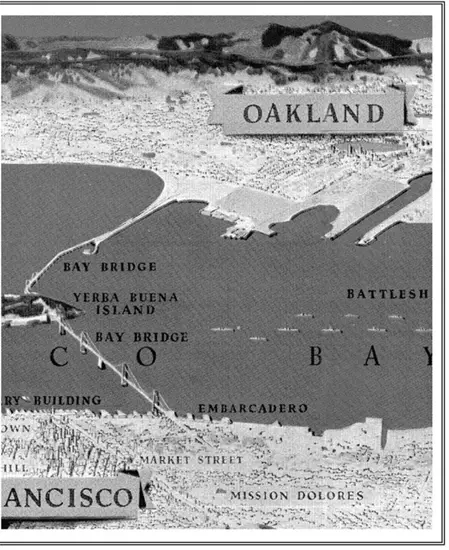
Less than an hour before we were scheduled to play, our band bus groveled its way up the wooded hillside near the border of Oakland and Berkeley, upon which is enthroned the genially aristocratic Hotel Claremont.
Usually when we had a hotel engagement, our band boy signed in for all of us, but a respectable dowager like the Claremont required each member of the band to register for himself. We hated this, as the trip had left us exhausted and we still faced a four-hour set on the bandstand that evening, entertaining a thin Monday-night crowd.
The hotel’s faultlessly tailored lobby had undergone many changes since I’d first played there in my teens, but all I was interested in was a quick washup in my room before heading to the ballroom.
“Ray Sherwood?” inquired the desk clerk, looking at my entry in the hotel’s registration ledger. He was a pleasant enough young man, although it was clear he had no close relatives who were dentists or cosmeticians.
“That’s me,” I answered, and he advanced me a key attached to a copper tag, which on one side read THE CLAREMONT, BERKELEY, CALIF., below which was my room number. On the other side were the words IF CARRIED AWAY, MAIL UNSEALED. POSTAGE GUARANTEED. I tucked the key into my billfold, under the flap where I always keep my room key until I inevitably find myself dropping it into a mailbox one city beyond the one I’ve just left.
The front desk clerk was searching some cubbyholes behind him. “Sherrrrrrrrrrrrr-wood, hold on, I believe there’s a—. Yes. A young lady left this for you late this afternoon.”
He laid down an envelope bearing my name, which I opened. A letter, written in a precise, angular hand, began:
Dear Mr. Sherwood,
I would be honored if you would meet with me to discuss a business proposal that I believe may be of interest to you. Rather than bore you with the details here, I am hoping to bore you in person tomorrow morning at nine-thirty, when I will try my utmost to weaken your resolve over a cup of excellent coffee. Since I make terrible coffee, could you meet me at the Café Lafayette at the Golden Gate Exposition on Treasure Island?
These last six words were as clear as cuneiform to me, but I figured someone at the hotel would be able to direct me to this destination—that is, if I decided to meet her at the heathen hour of nine-thirty, a jazzman’s equivalent of the crack of dawn.
“I’m performing in the Tower of the Sun at ten,” her letter continued, still bewilderingly, so if you can’t make it, it will not be a hardship for me. However, time is of the essence and it is important we meet as soon as possible. I am hoping my proposal will interest you, and if not, please know that three different underclassmen in the last month have told me that I am the cat’s meow, pajamas, and whiskers, in alphabetical order. I am sure they are just being polite, but perhaps you might want to form your own opinion. Be advised that if I don’t see you tomorrow at the Café (where I will know you by your photograph in Metronome magazine) I intend to track you down at the Claremont and lure you to your doom.
The letter was signed Gail Prentice. Beneath her signature was a phone number with a Berkeley exchange.
“You saw the girl who left this?” I asked the desk clerk.
“I did, sir, yes,” he said.
I advanced him a dollar bill. “Tell me, if this girl had asked you to have breakfast with her, would you have said yes?” I smiled as if we were both men of the world.
“No, sir, I should say not,” he answered, covering the bill with his right sleeve and sliding it off the marble counter into his waiting left hand. “I’ve been engaged for the last two years to a manicurist from Walnut Creek who works here at the Claremont. I’m sure she wouldn’t like me keeping company with an Attractive Young Woman.” He stressed the last three words and winked.
“How young?” I asked.
“Her twenties.”
“How far into them?”
He shrugged. “She might be a little young for you.”
I leaned forward. “How old do you think I am?”
He looked me over. I was disheveled from the long bus ride and could have used a shave. “Thirty-four?”
“Thirty-eight,” I enlightened him gratefully as I slipped him another bill.
I hadn’t had the pleasure of breakfasting with a woman in almost a year, and lately I’d been waking way too early (the dreams had come back). Keeping an intriguing appointment with an Attractive Young Woman sounded like a much better way of enduring tomorrow morning than sitting in my room playing cribbage for one. Gail (we were on a first-name basis now) had said she’d be honored to meet with me. How unchivalrous it would be if I were to ignore such a simple and charming request. I tucked the letter into my breast pocket, picked up my suitcase, and headed toward the stairs.
“What are you whistling about?” asked Raleigh Subbotin, who was crouched on the floor of the lobby and not at all happy about losing one of the wheels he’d strapped onto his bass fiddle case. I said I wasn’t aware I’d been whistling.
Chapter 3
3
The Terrace
On our second break that same evening, I went to the hotel’s bank of coin telephones and tried calling the number Gail Prentice had given me. I was a little surprised when I got no answer. I suppose I’d pictured her breathlessly pacing by the phone.
I wandered myself as inconspicuously as possible to the bar in the Claremont’s Terrace Lounge. Finding a narrow vacancy alongside a woman who was dressed in turquoise, which was this season’s shade of evening blue, I brushed against her indifferent back and said to the bartender, “Rum and Coke. In the bottle.”
He appraised me. “You with the band?”
“Tenor sax, second chair.” I slipped a five-dollar bill alongside a small puddle of beer on the mahogany bar and we now understood each other.
“How much?” he asked.
It was like ordering gasoline. “Two dollars’ worth,” I said.
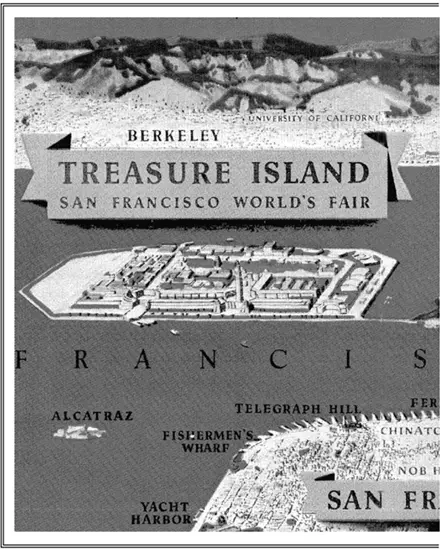
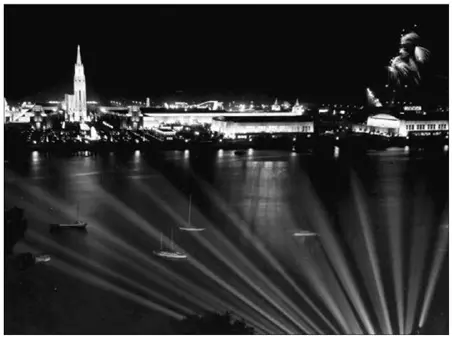
He raised a tufted eyebrow, opened a bottle of Coca-Cola, and wasted half its contents into the basin beneath him. He reached for the Bacardi (choosing the silver label from Puerto Rico, not the white label from Cuba—I was, after all, a musician) and carefully topped off the hobble-skirted Coke bottle. I took my bandstand stash with me out onto the Claremont’s fieldstone terrace and was surprised to see that the island of Atlantis—an impossible Babylonian city whose iridescent walls gleamed in pastel shades of blue and pink, ornamented in gold and dull bronze—had chosen to arise in the middle of San Francisco Bay, halfway between Telegraph Hill and the wharves of Oakland, floating nonchalantly as if it had always been there.
As I puzzled over this inexplicable apparition, which hadn’t existed when I’d last stood on this terrace over twenty years ago, I turned to see the ghostly glow of Jack Donovan’s white dinner jacket floating toward me. A second later I was relieved to see that Jack was in it. As the leader of our band, Jack always wore a white dinner jacket with black pants. We in the band had elected to wear dark brown suits, primarily because they better hid stains. We tried to go as long as possible before having to visit the local French cleaner wherever we were playing. Some of us managed to tour the country with only four suits, two for the stage and two for the civilian world.
I placed my Coca-Cola bottle on a ledge behind me. I was sure Jack knew this was how we all sneaked booze onto the stage, but he seemed content to look the other way as long as we didn’t force him to acknowledge the practice.
“Hello there, Ray,” he said as if we hadn’t just seen each other on the bandstand five minutes earlier. “Not a bad booking for us, wouldn’t you say?”
Jack, who came from Vermont, had somewhere picked up the British habit of ending many of his sentences with a question. I’d always considered this to be a veiled way of daring someone to contradict you, but it was the only thing about him I didn’t like.
I pointed toward the island of Atlantis, glimmering incandescently in the bay. “What is that, Jack? Do you know?”
“First time you’ve seen it, is it? That’s the Golden Gate International Exposition. The West Coast’s answer to the World’s Fair in New York.”
“That’s interesting,” I said. “I was thinking of meeting someone there for breakfast tomorrow.” I stared at the island’s tallest spire, which was greater in height than any structure on either side of the bay. “You know, I remember standing on this very spot when I was seventeen, and I could swear there was nothing out there. It’s twenty times the size of Alcatraz. Where the hell did it come from?”
Jack lit a cigarette. “From the Army Corps of Engineers, I believe.”
I shook my head. “No, I didn’t mean the buildings, I meant the island itself.”
He exhaled. “That’s what I meant. That’s what they built.”
Before he could enlighten me further, I heard the unmistakable and much admired voice of Jack’s wife, Vera, calling out to him. Jack Donovan and Vera Driscoll fronted our outfit. Jack played xylophone, which was a very useful instrument if you were underscoring a Mickey Mouse cartoon. The story on Jack Donovan’s talent was that, as jazz musicians go, he had a wife who sang great.
Her looks were great, too, if what you liked was a genuine blonde with eyes the color of fresh cigarette ash, the sharp nose of someone who always gets her way, and the kind of permanently pouted lips that would cause intelligent, reliable men to ruin their lives. I mean, if that’s what you liked, I guess Vera was okay. Her trademark hairstyle was a crimped pompadour angled to the right with the sides sweeping back into a chignon that made the nape of her neck as feminine as her forehead was challenging.
The fact that she was performing in the hotel allowed her to be one notch more intensely dressed than any other woman in the Terrace Lounge. But if she hadn’t been performing, she probably would have dressed that way all the same.
The Story Continues on BooksBarbecue!
Enjoyed this preview? ❤️ Do not stop here!
Read the complete book free online → 🔗
Continue reading now on BooksBarbecue and discover every page!
Love reading? Bookmark BooksBarbecue.com for more amazing books!
Happy Reading!