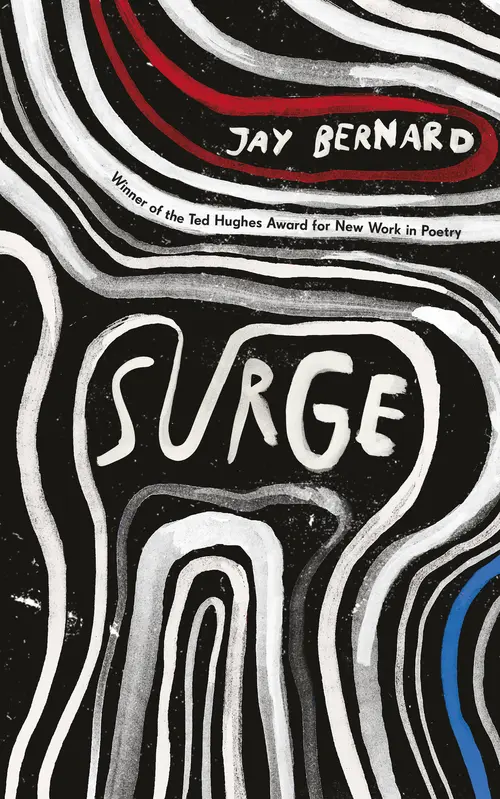
Surge
Cover

About the Author
Jay Bernard is the author of the pamphlets Your Sign is Cuckoo, Girl (Tall Lighthouse, 2008), English Breakfast (Math Paper Press, 2013) and The Red and Yellow Nothing (Ink Sweat & Tears Press, 2016), which was shortlisted for the Ted Hughes Award 2017. A film programmer at BFI Flare and an archivist at Statewatch, they also participated in ‘The Complete Works II’ project in 2014 and in which they were mentored by Kei Miller. Jay was a Foyle Young Poet of the Year in 2005 and a winner of SLAMbassadors UK spoken word championship. Their poems have been collected in Voice Recognition: 21 Poets for the 21st Century (Bloodaxe, 2009), The Salt Book of Younger Poets (Salt, 2011), Ten: The New Wave (Bloodaxe, 2014) and Out of Bounds: British Black & Asian Poets (Bloodaxe, 2014).
By the Same Author
BY THE SAME AUTHOR
Pamphlets
Your Sign is Cuckoo, Girl
English Breakfast
The Red and Yellow Nothing
Epigraph
“You’ve seen the physical. I was dealing with the opposite medium. I was in the belly of the beast … when you have to collect information and walk back into the belly of the beast to put it over, you’re on dangerous grounds.”
– alex pascall, new cross fire remembrance, albany, deptford, 2011
“For here we have not an enduring city, but we are looking for the city to come.” – hebrews 13:14
Author’s Note
In 2016, I was invited to be writer in residence at the George Padmore Institute, an archive, library and research centre dedicated to radical black history in Britain. At the back of my mind, I knew that I was interested in the New Cross Fire. It was only when I opened the boxes relating to it that I realised I had grown up as a black British Londoner with a piecemeal understanding of the event and the consequences that followed.
In the early hours of Sunday morning, on 18 January 1981, a fire broke out at 439 New Cross Road. It was Yvonne Ruddock’s sixteenth birthday, and she had arranged a party with her cousin to celebrate. The fire spread quickly, killing thirteen young people and injuring twenty-seven others.
In the immediate aftermath of the fire, dubbed the ‘New Cross Massacre’, many believed it had been a racist attack. Investigations yielded little: early reports by the police indicated that an incendiary device was found under the window. Forensics experts later said the fire had started in the middle of the room. Some of the teenagers who had been at the party gave statements that they later retracted in court, saying they had been intimidated or coerced. In response to the police investigation, a group of activists called the New Cross Massacre Action Committee conducted their own interviews – and these are largely the ones that inform this book.
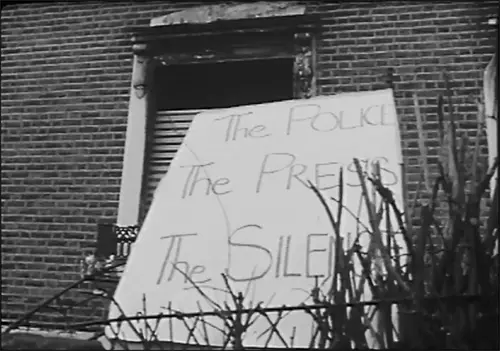
There was near silence from the government and the press. This had been the climate for many years: families being burned out of their homes, migrants attacked and murdered in the street. The police were at best indifferent and at worst party to the hostility.
On 2 March 1981, thousands of black people and their allies gathered at Fordham Park in Lewisham. It came to be known as the Black People’s Day of Action and was the largest political gathering of black people in British history at the time. Organised by underacknowledged British activists such as John La Rose, Darcus Howe, Sybil Phoenix, Alex Pascall and many others, the intended route went from Lewisham to Hyde Park. It was raining. No demonstration had crossed a bridge in London for centuries. As the demonstration approached Blackfriars, the police tried to push the crowds back. People ran. This flowed into Fleet Street, once home of the media, where journalists leaned out of the windows and spat and jeered at the march.
After a belated response to the deaths of the thirteen young people (addressed to the activists, not the families), a police initiative began in retaliation to the Black People’s Day of Action, and ostensibly to curb crime in South London. The hated SUS laws gave licence to SWAMP 81, an operation in which close to a thousand black and ethnic minority people were stopped and searched in South London in five days. The name of the operation was seen as an insensitive reference to Thatcher’s 1978 speech in which she said, “People are really rather afraid, that this country might be rather swamped by people with a different culture … people are going to react and be rather hostile to those coming in.”
During the tense time of SWAMP 81, the attempted arrest of a man who had been stabbed prompted the Brixton uprising in April 1981, also known as the Brixton riots. Since the blame for this lay firmly at the door of the police, an investigation was commissioned producing the Scarman Report, ‘The Brixton Disorders 10–12 April 1981’; it found the police guilty of causing the riots due to its refusal to listen to the community it was supposed to serve. This triggered a new era in race relations in the UK, in conjunction with the ongoing activism and resistance of the black, Asian and ethnic minority organising groups.
My residency began just after the Brexit vote. As I read through the interviews, looked at the photos, listened to the audio, watched the footage, it struck me that the events of the present were eerily similar to the events up to and after the New Cross Fire. Then in June 2017, Grenfell happened. Institutional indifference to working class lives had left nearly eighty people dead. The Windrush scandal was reminiscent of right-wing calls for black repatriation. The archive became, for me, a mirror of the present, a much-needed instruction manual to navigate what felt like the repetition of history. The most chilling aspect of this was the lack of closure, the lack of responsibility and the lack of accountability at the centre of both the New Cross Fire and Grenfell. And the more I read and discussed, the more vexed the relationship between public narration and private truths appeared. I realised I was one of many who had visited the archives and come to a similar conclusion about the tragic and ill-concluded nature of the case. Many questions emerged not only about memory and history, but about my place in Britain as a queer black person. This opened out into a final sense of coherence: I am from here, I am specific to this place, I am haunted by this history but I also haunt it back.
Arrival
remember we were brought here from the clear waters of our dreams
that we might be named, numbered and forgotten
that we were made visible that we might be looked on with contempt
that they gave us their first and last names that we might be called wogs
and to their minds made flesh that it might be stripped from our backs
kept hungry that we might cry in our children’s sleep
close our smoky mouths around their dreams
swallow them as they gaze upon us
never to be full –
snap, crackle
amen
Ark
Now shall we consult the life of a stranger?
Now shall we see what can and cannot be kept?
I take this morning from its box, see how the years have warped its edges, its middle pages conjoined at the text.
I remove the rusted paper clip, dry-sponge its brittle red remains, unfold a liver-spotted note in copper ink,
date it by the flaking Letraset and amber glue,
press each part to the flatbed scanner,
wonder which words to file
the damp smoke and young bones under.
*
I sometimes recognise a face from a Hi8 film,
am introduced to she-who-squatted-in-the-seventies, who-made-that-speech, who remembers '81
when a crowd black as my hand gathered one morning, came over Blackfriars Bridge, were heckled by the press.
The year was still fresh,
still screaming with its eyes closed,
Mi brudda dead, mi brudda dead, mi brudda dead-o
Mi sista dead, mi sista dead, mi sista dead-o
A white-sleeved hack hung from that ledge to better spit at some kid who recalls it by their cup of archive wine.
*
I take this January morning in my hands and wonder
if it should go under London, England, Britain, British, Black-British –
where to put the burning house, the child made ash, the brick in the back of the neck, the shit in the letter box and piss up the side of it?
I file it under fire, corpus, body, house.
Patois
I heard a sound on New Cross Road that took me back: the first clause of a cuss sprayed from a custom Golf M2, three Asian boys near the Five Bells pub spoke
as if we had grown up side-by-side,
sudden cousins,
taking turns to lick each other with
bloodclart! when someone took your ludi piece,
raatid! like there was no money this month,
awoh! when someone suffered in a way we could enjoy.
Like the t in wa’er, the absent farver, like pouring bear,
South London kids
would part suspend
their mother tongue
sobbing after someone cussed their mum,
and come to sound exactly
like my mother
screaming yu rass at a shocked white face –
They don’t understand what I’m saying, she said.
Which is why she said it, knowing they felt every word.
They watched us, pursed and spat as we do.
Now ginger kids yam dumplins, hijabis snub the man dem –
This century dubbed by migrants from the last.
We do not speak with one voice about one thing
below the yellow, black and green flag of England.
Harbour
my voice
it was so weak, so sickened,
so grieved,
my voice it was so weak
and it broke in the heat, so sickened,
so sad, my voice it was broke, so low
was the hope, that it sickened,
I choked,
it closed in my throat,
my voice it was weak,
so sickened, so grieved –
my voice became glass
breaking in heat
I called
and no-one seemed to call with me
no-one seemed to know or see
what I had seen –
I was so sickened and so grieved
and I said to the child I knew
harboured in the fire – jump
Yvonne, jump Paul, jump –
and I said to my god I knew
harboured in the fire – jump
Yvonne, jump Paul, jump –
I said, I called – jump
Yvonne, jump Paul, jump –
my voice it was so weak
– Paul, jump –
so sickened and so grieved.
Songbook
Me seh ah one step fahwahd an ah two step back
Me seh ah tree step fahwahd an ah six step back
Me seh ah four step fahwahd an ah one step back
Me seh ah one half fahwahd an ah one half back
Me seh ah left side fahwahd an me right side back
Bust up left side right side haffi change tack
Me seh half de revalushun deh pun de attack
Only half a salushun to de tings dem we lack
Me seh gyal love reggae an gyal love move
Bwoy love reggae an im love up im groove
Di two ah dem rub up an starting to move
Crowd gone quiet, people stop nyam dem food
An dem watch and dem see this wicked emcee
This beautiful gyal all dress up in green
Nails done nice, hair cris, wha yuh mean
Di baddest likkle gyal dem evah did see
Me seh ah one step fahwahd an ah two step back
Me seh ah tree step fahwahd an ah six step back
Me seh ah four step fahwahd an ah one step back
Me seh ah one half fahwahd an ah one half back
Me seh di heat ah di night ah come up thru di floor
Black smoke ah rise tho dem nevah did know
Di music ah jam an di young man ah chat
Word fly from him lip like vampire bat
An di gyal dem ah dance an di man dem ah rock
Drink six rum an black an di beat dem ah drop
Darkness descend and di room gone black
Voices ah call seh dem haffi get out
Voices ah call seh dem haffi get out
Screamin begin an di people ah shout
Me seh screamin begin an di people ah shout
Dem ah covah dem head an ah covah dem mouth
Me seh ah two step fahwahd an ah two step back
Me seh ah tree step fahwahd an ah six step back
Me seh ah four step fahwahd an ah one step back
Me seh ah one half fahwahd an ah one half back
Down pun di street yuh see body face down
Pickney fly thru di air an mash up pun di ground
Flames dem ah fly an ah furious red
Bwoy fall from di window an yuh know seh him dead
Gyal fall back inside an we no see her no more
No bright green dress up pon di third floor
Police man come an fireman too
Dem startle dem scared an no know wha fi do
Mudda she ah cry an she nah have no shoes
Man dem ah look but to help dem refuse
Fren dem shock by di scale ah di loss
Black smoke ah billow down there in New Cross
Me seh black smoke ah billow at di house in New Cross
Me seh black smoke ah billow at di house in New Cross
Me seh blood ah goh run for di pain of di loss
Me seh black smoke ah billow at di house in New Cross
Me seh ah left side fahwahd an me right side back
Bust up left side right side haffi change tack
Me seh half de revalushun deh pun de attack
Only half a salushun to de tings dem we lack
Me seh ah two step fahwahd an ah two step back
Me seh ah tree step fahwahd an ah six step back
Me seh ah four step fahwahd an ah one step back
Me seh ah one half fahwahd an ah one half back
Clearing
He takes my head and places it in a plastic bag
downstairs, two officers stamp their feet
blow into their hands
the windows are cups of water filled with winter
he holds the bag open, searching
for a gaze to meet
cold
thirsts at the bones
he doesn’t see me standing there
he doesn’t hear me speak
an officer circles the front yard leaning
back to see the smoke
or is it steam
is it fire or water that can bring a child back
elide that which is heavy in his hand
and that which watches from the corner of the room
this house is a gas lamp
soot frosts its glasswhite gut
the officer closes his eyes
two blank pennies in a fount
from the bag I watch his face turn away
from the corner his body bending towards mine
+
the officer said – oh, it’s very common for culprits to go missing – I said my son isn’t a culprit, and how dare he imply it – and one of the officers stood up by the window and looked out – he didn’t want to look us full in the eye – he made it clear, he made it clear – from the moment he set foot in the house – the moment he set foot – what he thought of us – and when they come back a few days later – I think the Tuesday, I think the Tuesday – they said what were you wearing on the night of the fire? – I said probably – probably – your new trousers – and he said was you wearing a yellow shirt? – I said yes – Brown shoes? – I said yes – and he took out the items from a plastic bag – he took your things from a plastic bag – and he says does this look like it? Does this look like it belongs to you? – I says yes – and he says do you recognise this key? – I said why don’t we try it – and we struggled – and it fit – I’m sorry, I’m so sorry, I’m so sorry – so I said what are you sorry for? I want to see my son – stammer, stammer, they say they don’t think it is a good idea – I said, I am your father – I said, I said, I am your father – your father – I want to see you –
– they led us down to a room – and on the table there you was – no face, nothing to speak of – I said – I said – this is the body where you found the clothes? – nod, nod – So I said, it must be you – this must be my son
–
You came, dad –
– I had been lying there all night – and I couldn’t move. I opened my eyes and I was in the house and everything was black, dad – I had been at the party a few hours and I didn’t know anything about what happened, dad – and I felt someone touch me, but I was stiff, dad – I never been so stiff before – I tried to say it’s me, it’s me – but they were looking at me so strangely, dad – like he couldn’t stand to look at me – couldn’t stand the sight of me – Police always looked at me like that – and he turned me over – and he took the shirt from under me, and they wrapped me in a blanket and drove me here – and I was lying there waiting for you, dad – across the table, there were bodies, dad – Twisted, dad – no heads –like screaming branches of a tree, dad – loads of them, loads of them, I swear – and I heard them say – they were saying –
And then you came and I was calling out to you, dad – and I know you heard me because here we are, dad – come back – don’t bury me – I can’t stand it – I can barely stand it when the lights go off – and I’m here – and spend the whole night listening for you dad – I want to crawl between mum and you – in your bed, in your sheets, dad– that’s the only kind of burying I want –
Kitchen
I went back to my mother’s kitchen:
peas were soaking on the stove
and a lettuce was uncurling on
the counter. A plastic bag
filled with fish was deflating.
One of the eyes was pressed
against the side. seemed to be
the only thing that heard me.
this kitchen:
the crack in the window; the spice
rack with a hundred grubby bottles;
outside, my brother’s underwear
on the line, a postcard from
aunty in Antigua, a small shelf
peopled by Erna Brodber, Gus John.
the door to the bathroom:
I know that the floor is coldest
by the door, I know what it’s like to come
in here on a dark morning
and turn the taps and feel
the whole house warming up –
the gradual breath it takes through
the wallpaper, the carpet, the kettle,
the dutch pot, the kippers sparking in oil –
I have crept down through the dark,
listened to the house open
one red eye and spin it round,
then snort, then fall back to sleep;
I have held this house
in my arms and let it sob
on the bathroom floor, heard it in
the background of a call,
heard it speak a kind of love –
I have watched the street lights shudder
through this bathroom window,
shake themselves to black
and lick the daylight in their fur.
The first ray unencumbered
by the clouds spreads
its rose palm against the window –
I will be that for my brother and mother:
the light touching their faces as she
guts the fish, drains the peas.
Proof
I came here when I was six –
I was dark-skinned in a thin dress and I loved my grandmother –
she was my mother – and she raised me with my three sisters who still stand waving me goodbye –
I was the first to come to England, and when I arrived, I knew –
I knew – something had happened to me – I knew that what I saw in the mirror had been darkened, differently arranged –
when I looked at myself in my new coat and boots I saw – I saw – something like a net that catches death –
I was the child of two strangers with my last name – who bathed me – scrubbed me with the seawater at the bottom of their lives –
two ghosts rubbing soap on my shoulders –
two dead people in their house clothes telling me to wash my neck –
I feel – I feel like I have to hold on – and say – and say –
I don’t want to die in this country – let me die with my grandmother –
I want to be rotted by the sun –
and I want her shadow to fall along my body –
and I want to be shaded by her grief –
and I want the dogs to hanker for my bones –
I want to be eaten by worms and become an ackee tree –
lord, I said – I said it in such a whisper
I could have put the ground to sleep –
don’t let me die in England I said to the pavement –
to the sea-black rain –
and never tell my grandmother why I never called –
never called to say that I thought of her daily –
that I suffered with the weight of what she had freely given –
many nights before this one I wondered what she thought of that –
what she thought of her youngest grandchild who couldn’t say that many nights before this one I tried to forget that I loved her –
turned the pain of her remembrance to the bitter lie that she could not have loved one such as me and the proof was in the distance –
Window
When I could no longer see a window to jump from
I remembered the boy, 19, bound so he could not see the other two.
When we realised it was only we who remained
he called to us in Creole, “You do not know how to die. See how to die.”
As though I had seen the charred yellow soles of his feet myself, as though I had walked him to the stake myself.
By a great effort he twisted his body in his bonds, sat down,
and placing his feet in the flames, let them burn without uttering a groan.
I remembered him for the rest of my life
which is to say I followed him through the smoke as though someone had untied his wrists,
The Story Continues on BooksBarbecue!
Enjoyed this preview? ❤️ Do not stop here!
Read the complete book free online → 🔗
Continue reading now on BooksBarbecue and discover every page!
Love reading? Bookmark BooksBarbecue.com for more amazing books!
Happy Reading!