Sisters of Gold
Cover
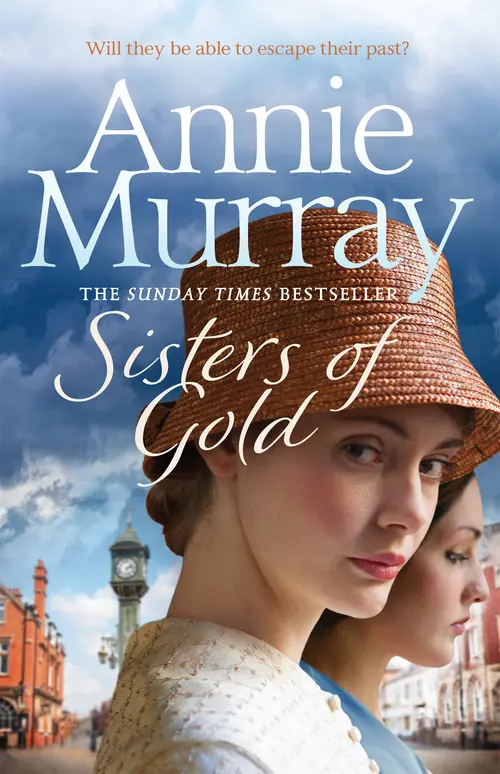
Title page
ANNIE MURRAY
Sisters of Gold
MACMILLAN
Dedication page
For my sister, Julia
A Week’s Work in Birmingham
A Week’s Work in Birmingham
A week’s work in Birmingham in its aggregate results is something wonderful. It comprises the fabrication of fourteen millions of pens, six thousand bedsteads, seven thousand guns, three hundred million of cut nails, one hundred million of buttons, one thousand saddles, five millions of copper or bronze coins, twenty thousand pairs of spectacles, six tons of papier-mâché ware, £30,000 worth of jewellery, four thousand miles of iron and steel wire, two tons of pins, five tons of hairpins, hooks and eyes and eyelets, one hundred and thirty thousand gross of wood screws, five hundred tons of nuts, screw bolts, spikes and rivets, fifty tons of wrought-iron hinges, three hundred and fifty miles length of wax for vestas, forty tons of refined metal, forty tons of German silver, one thousand dozen offenders, three thousand five hundred bellows, a thousand roasting jacks, one hundred and fifty sewing machines, eight hundred tons of brass and copper wares, besides an almost endless multitude of miscellaneous articles of which no statistics can be given, but which, like those enumerated, find employment for hundreds and thousands of busy hands, and are destined to supply the manifold wants of humanity from China to Peru.
Birmingham Weekly Post, 9 July 1892
‘All that is needed for a workman to start as a master is a peculiarly shaped bench (known as a Peg) and a leather apron, one or two pounds’ worth of tools (including a blow-pipe) and for material, a few sovereigns and some ounces of copper and zinc. His shop may be the top room of his house, or a small building over the wash house at a rent of 2s or 2s 6d a week and the indispensable gas jet . . .’
J. S. Wright, 1866, member of the Local Industries Committee of the British Association at Birmingham
‘The pursuit of technique for itself leads to mere mechanism, but being tempered by an artistic idea, it is humanized and becomes beautiful.’
R. Catterson-Smith, 1901, Headmaster of the Birmingham School of Jewellery and Silversmithing, 84 Vittoria Street
I
I
One
One
Birmingham, 1904
Jack Sidwell arranged himself beneath a Bovril advertisement on the platform at Snow Hill station and waited, fidgeting and fretting about his hat.
On a dandyish whim brought on by the sweltering August weather, he had treated himself to a second-hand straw boater. The speckled mirror in the wardrobe dealer’s cramped room, where he tried it on, had flattered his boyish features into looking their full twenty-six years. Even with his neat blond moustache, Jack never looked his age. He paid his one and six and set off along the street with a swagger.
Now that he had agreed to come and meet these two young women off the train, he was beginning to long for the familiarity of his old cloth cap. Bet I look a proper Charlie, and other demoralizing thoughts, started to pester at him, along with the heaviness of his jacket in the heat, the moistness of his back and armpits. He might be a young man with a business all his own – he even employed another lad now – but still, he just felt like a sweaty chump in a silly hat.
Several trains arrived and departed. Sidelong beams of sunlight lit the smoke and steam as it unfurled towards the iron roof beams. There was a feverish feel to the afternoon. The stenches of horse muck and industry blooming in the heat, light glancing off the tracks in the distance, the talk all around of the hanging this morning at the gaol over in Winson Green. He shuddered. Made you feel queer, thinking about that. Jack tugged nervously at his collar and drew in a hot, smut-laced breath.
What were these two women doing, anyway, coming to Birmingham? He’d picked up rumours in the house – some trouble, them needing a bolt hole. But he hadn’t dared ask Mr Watts. It all seemed a bit rum and he was curious to see what these wenches would look like. Not that they were ‘wenches’ exactly, not by the sound of it.
The Bristol train came steaming in, pulled by a magnificent, thudding beast of an engine. By the time the air had cleared and the bulk of passengers began to disperse, halfway along the platform he saw two young women in plain grey clothes and straw bonnets standing, uncertainly, close together. They had to be the ones. In outline, he saw that the taller of the two had a stately bearing, her dark hair fixed in a sober style and fastened low on her neck. The other was smaller, almost elfish in appearance.
Jack, while theoretically intensely interested in women, found that few of these real, alarming creatures seemed to cross his path. His heart began to pound like one of the pistons turning the engine wheels.
‘Here goes, m’lad.’ Pulling his shoulders back, he strode towards them.
Four eyes fixed upon him: two of them wide with some emotion which, oversensitive, he mistook for snootiness. The face of this taller girl was grey-eyed and sternly beautiful, though even Jack could recognize that at this moment it looked hollowed out by exhaustion. The smaller girl’s eyes were set in a heart-shaped little face with strong cheekbones, slender but definite brows, and brown hair hauled back under her hat. These greenish eyes blazed at him with an expression of burning defiance which he found most intimidating. That look she was giving – it was fit to blow you over. She wasn’t pretty exactly, not in a pin-up way – but my goodness, what a girl!
Heart palpitating, he managed to raise the hat with self-conscious aplomb.
‘The Misses Hanson? Mr Ebenezer Watts sent me to meet you.’ Pompously he added, ‘He found himself unable to leave the works this afternoon.’ As an afterthought he held his hand out to the elder, less intimidating sister. ‘I’m Jack Sidwell. I, er . . .’ It seemed a lame finish. ‘I work upstairs.’
The two women nodded. Neither of them spoke, which was even more disconcerting. They seemed completely bewildered. Jack wanted to stare at the fascinating younger one, but didn’t dare.
‘We’ve got to take the tram,’ he said, trying to keep up his courage. ‘Let me carry those.’
He took their old leather grip bags, one in each hand, and led them out of the station. One thing had become immediately clear to him: they both had a lot on their minds, and whatever it was, they were not thinking about him or his hat.
Each time the tram slowed, even a fraction, Margaret tried to look out between the swaying bodies in the packed carriage, to see this great city which was to take them in.
‘It won’t be yet.’ Annie, her younger sister, nudged her painfully in the ribs. Everything about Annie was sharp – her pointed chin, her elbows, her temper. ‘Stop fretting. He’ll tell us when to get off.’
She nodded towards the rear of the carriage, where they could just see their round-faced guide, Mr Sidwell, who had become separated from them.
Margaret did not have the energy to reply that she was just trying to see the place. What she could make out, however, was overwhelming. All those buildings – all the traffic and people! As the tram crawled along, she stopped trying to look out. The high collar of her blouse, her cuffs, her corset, all made her feel imprisoned. In the stifling heat, a sick panic rose in her. If only she could get out. She was shut in here, in this strange place with the hot stench of all these people.
‘Anyway,’ Annie went on, seeming unaffected by the heat and having, as ever, to be right, ‘Birmingham’s a big place.’
‘Oh, do just be quiet, Annie, please.’
Closing her eyes, she clung to one of the leather straps, pressing a handkerchief over her nose and mouth. I need thee every hour, most gracious Lord . . . She kept praying the words of one of her favourite hymns to give herself strength. But the tune brought back Sunday mornings at home in their father’s church, the swell of organ and cello, the things she had always known, that she had never expected to leave – not like this. Tears threatened to overwhelm her and she forced the thoughts away. Be strong in the Lord . . . Pray without ceasing. She must find courage.
There was enough to sicken the stomach: the stale stink of garments imbued with grime and chemical smells of industry, of sour breath, decaying teeth, cigarette smoke. She was used to the poor – as a minister’s dutiful daughter, much more accustomed than most of her class. For many of her nineteen years, she had visited villagers in their dank cottages, tending to their sickly children and elders. Nor did she look down on any of her fellow children of God.
But this was different – the city with its looming, soot-blackened buildings, streets going off in every direction which somehow seemed dark, even at this time of day, the rush of people, some now pressed tightly up against her, the pallid faces, clothes patched with sweat and dirt. And the noise! Even walking to the tram, amid the clanging bells, the press of people, the clatter and thump of the place, she had been almost overcome. All this, added to her distress, seemed about to tilt her back into illness again.
It felt like weeks since they had left the village, though it was only this morning, the bus chugging between fields where lapwings settled on the dewy grass. Already, she had been sick with fear and shame. The events of the past days had propelled them out of all that was dear and familiar – into this huge, unknown place. The fact that it was the city of her mother’s birth did not, at this moment, bring much comfort.
As she fought a rising sensation of nausea, beside her a thin man with a drooping moustache spoke to his neighbour in a grim, gloating tone.
‘So – they done another’un this morning.’
‘D’yer go over there, then? The nick?’
‘Nah. Would’ve if I ’adn’t been on early today. See the bastard hang.’
‘You don’t see nowt these days. It’s all done inside.’
The first speaker made a sound of annoyance. ‘Well, as good as. I’d’ve gone all the same.’ There was a pause before he went on. ‘They’ve got a condemned cell there now. I know a bloke ’elped put it in. That’s where they spend their last night, like. Last meal, before they tek ’em out in the morning, get the rope around their neck . . .’
Margaret pressed her hand to her mouth, screwing her eyes tightly shut. Perspiration was soaking through her clothes. She tried to block out the man’s whining voice but it pierced through all her other thoughts.
Hanged by the neck until you are dead . . . Dear God, dear sweet Jesus, stupid, stupid Annie. What might have happened . . . Annie in a cell, Annie being taken out early one morning . . .
The heat rose in sickening waves, overwhelming her. A few seconds later, she was overcome by blackness.
There were voices, the faintest breeze tickling her face. Margaret could feel the hard ground beneath her, but from behind someone was supporting the upper half of her body.
‘I think she’s coming to,’ a woman’s voice said. The gentle sound of it brought back her mother and filled her with longing.
She felt queasy. Smells came to her – smoky, putrid . . . And sweat . . . The sweat of someone very close . . . A man’s arms holding on to her!
Her eyes snapped open and she tried to leap to her feet.
‘Maggs – don’t!’ Annie was squatting beside her, fanning her with a newspaper. Someone else was pressing her down by the shoulders.
‘Don’t rush it, bab,’ the comforting woman said. ‘You’ve had a bit of a turn. Just get up slow, like, or you might pass out again.’ To someone else, she added, ‘Poor thing – ’er looks ever so washed out.’
Margaret struggled to sit up, breathing deeply to force away the nausea. A ring of faces surrounded her, interested in the spectacle.
‘Those two ain’t from round ’ere,’ a man’s voice said. ‘Couple of lookers though, ain’t they?’
For a moment Margaret could see only strangers. Where was she? she thought, panicking again. A street, a horse and dray going by, crowds of people surging past . . . Then her sister’s face again, swimming into view. Annie was squatting beside her now, careless of her skirt hem in all the muck.
‘You fainted on the tram,’ she said. ‘Lucky we were nearly there, and Jack – Mr Sidwell – and I managed to get you off. Other people helped.’
Annie, being Annie, sounded quite excited about this turn of events. Margaret shrivelled inside. She wanted to pass out again with the shame. The humiliation of finding herself collapsed on the filthy brick pavement of a Birmingham street, surrounded by a crowd of interested strangers, only added to the burden of all her other emotions. She could not say a word.
‘You’ll be all right now, bab,’ the kindly lady said. Margaret realized that it had been Jack Sidwell holding her up and that he had now retreated. She saw his dull black shoes planted beside her.
‘Thank you all,’ she managed, as hands helped her to her feet. ‘I’m sorry . . .’
‘Oh, there’s nowt to be sorry about,’ the woman said, squeezing her arm. Her thin, prematurely aged face smiled at Margaret. ‘Could happen to anyone in this heat. And you look new around here.’
‘That’s what a visit to Brum does for yer!’ someone offered, which provoked laughter.
‘Where’ve you got to get to?’ the woman asked Jack Sidwell.
‘Only Chain Street.’ But he sounded flustered. Picking up the bags, he said to Annie, ‘Can you help her?’ He gave a helpless look as if to say, what can I do?
Annie took Margaret’s arm. Jack led the way and Margaret saw him straighten his shoulders. She found something faintly ridiculous about him. Was it that hat?
‘Come on,’ he said. ‘Nearly there.’
Two
Two
Annie, supporting Margaret by the arm, looked about her with eager interest. Jack Sidwell walked ahead of them, carrying a bag in each hand.
Annie’s lips turned up for a second at the sight of Jack as they wove along the busy pavement. There was a rash creeping up his neck and every time he looked at her, he blushed furiously. It was like Adam Blake all over again, she thought contemptuously. Adam, a lad in the village, was forever gawping at her yet couldn’t manage to get a coherent word out of his mouth. She seemed to have this effect on boys, but from her point of view they (and men in general) were all rather ridiculous.
Annie, aged seventeen, had a grand view of her life and how it was going to proceed, and this towering vision did not particularly involve the presence of males. Especially not if their father or most of the other men she knew were anything to go by.
They were walking along the busiest streets she had ever seen: narrow, cobbled, the blue brick pavements teeming with people. On each side rose buildings, elegant under their coating of soot, some ornately patterned with carvings, and in various colours of brick. Some were obviously large manufactories from which issued metallic clangs and crashes. You could feel the vibrations of thumping and banging through the pavement. Some of the warrens of terraces could have been mistaken for dwellings alone, had it not been for all the signs and plaques announcing that they contained a host of businesses. And everywhere, on each floor and in every available space, were windows, long and light-welcoming, elegantly shaped, some arched, some decorative. Every now and then she caught a glimpse of someone bent over a bench behind one of the ground-floor windows and here and there glowed a bright finger of flame. Smoke poured from chimneys, adding to the stenches of the fetid summer air.
Annie looked about her, finding it all most exciting. She had always wanted to get out and see more of the world, and now this was a chance to begin. All the same, she was concerned about Margaret, who was much frailer than she was. Her sister did seem to be reviving though, now that they were out walking in the air – even this balmy air, thick with smoke and grit, so different from the freshness of their village home.
All around was an astonishing commotion of people, some talking, others silent and hurrying down the street. The girls had to keep alert to make sure they did not collide with anyone. Annie found herself twisting this way and that. A barefoot boy forcing a barrow bigger than himself along the pavement passed so close to her that he brushed her skirt; people scurried in and out of buildings; carts clattered past, horses leaving piles of their doings on the road, clouds of flies shifting about them. That, at least, was a smell that was familiar.
‘Are you feeling better?’ Annie asked, squeezing Margaret’s arm.
Margaret nodded bravely, though she was still pale. ‘Those people were kind,’ she murmured. ‘Like mother used to say.’
Margaret and Annie’s Birmingham-born mother had died six years ago and they longed for her every day. As children, they had asked her for stories about when she was growing up, in the city, before she met their father.
‘There’re plenty of good people in Birmingham,’ she used to say. ‘Don’t let anyone tell you different. Some of them may be rough and ready, but most of them’ve got hearts of gold.’
In a few moments, they reached their destination, another road of high terraces and smut-coated bricks.
‘So, this is it,’ Jack Sidwell said, stopping outside numbers twenty-four and twenty-six Chain Street.
Margaret looked up at the buildings, a pair of adjoining three-storey houses, their front doors side by side. At number twenty-four, to the left, the flat sash windows were flush with the building, but at number twenty-six, these had been replaced by wide bays dustily reflecting the sky.
Screwed to the side of this front door was a brass plaque which read ‘Ebenezer Watts & Son, Goldsmith & Jeweller’. Below it were two very small ones advertising ‘J. Sidwell, Enamelling’ and ‘Sidney R. Cole, Gem Setting’. At number twenty-four, the largest sign read ‘P. Tallis, Silversmith, Engraver’ and below, almost too small to read, was ‘C. Turner – Die Sinker’.
‘Mrs Watts?’ Jack called out as he led them into number twenty-six. ‘I’ve got ’em!’ Realizing too late that this made them sound like parcels, he tried again, pompously. ‘Your nieces are here!’ Margaret glanced at Annie and saw her smirking at his clumsiness.
‘Oh, girls, at last!’
In the brown light of the hall, they heard Aunt Harriet before she appeared from the first door to their right. Margaret felt the tension inside her ease in relief and pleasure at the sight of their aunt. She had met her only once as a small child and then not again until their mother’s funeral in ’98, which felt like a long time ago. Now she was meeting a woman with the loveliest, kindest face she thought she had ever seen.
Harriet Watts was a small, comfortably rounded woman with vivacious brown eyes and dark chestnut hair twisted back in a soft, becoming style. There was something exotic about Aunt Harriet which appealed immediately to Margaret. She was wearing a dress of dark crimson with a white collar, and in the gloom, points of golden light glittered from her ears and from a brooch at her throat as she hurried to greet them.
‘Margaret – oh, look at you!’ Aunt Harriet stood on tiptoes in her elegant little shoes, to kiss her cheek. ‘Well, I never – you’re taller than me now!’
Margaret felt the tears come at this warm welcome, even though she did not mean to cry.
‘And little Annie – oh, my word. You’re – seventeen, is it – already?’ Annie was kissed and pressed for a moment against Aunt Hatt’s sturdy, lavender-scented form. Their aunt stood back and gazed at both of them again. The gold earrings glistened as she moved her head.
‘Both so lovely. Oh, Eb’ll be delighted to see you. He’ll be through in a little while – he’s got a bit of a rush on today. Come through to the back . . . Oh, Jack!’ He was still lurking in the hall, holding his hat. ‘You can go now, thank you.’
‘I, er . . . Oh . . . Right.’ He disappeared up the staircase in front of them, the straw hat pressed to his chest.
‘Thank you, Mr Sidwell!’ Margaret called after him timidly, feeling that he had not been given quite enough credit for his efforts.
‘He’s a good lad,’ Aunt Harriet said, rolling her eyes comically. ‘Now, the front room here is the office.’ She put her head round the door for a moment. ‘Girls – these are my nieces, Margaret and Annie. I’m just going to settle them in.’
Margaret saw two young women, not much older than themselves: one, handsome and dark-haired, seated at a small desk; the other, a plump girl with round cheeks and spectacles, standing at a bench which ran under the window.
‘These are my right-hand women,’ Aunt Hatt said. ‘This is Susan –’ she indicated the seated woman, who bowed her head solemnly – ‘and Bridget.’
She looks nice, Margaret thought, as Bridget said hello and smiled at them. The room was very crowded, crammed full of desks heaped with papers and shelves full of ledgers. On the bench was a pair of weighing scales.
‘Now, this is our room.’ Their aunt led them along the passage. In a recess in the wall to the left were pegs, on which hung coats and hats. ‘I try to keep it nice. So much of the house is given over to the business, but – anyway, we’ll soon have our new house, away from here! Did you know we are moving out – we’re building a house! I’ll take you up to your room presently – but I expect you’d like a cup of tea?’
The Story Continues on BooksBarbecue!
Enjoyed this preview? ❤️ Do not stop here!
Read the complete book free online → 🔗
Continue reading now on BooksBarbecue and discover every page!
Love reading? Bookmark BooksBarbecue.com for more amazing books!
Happy Reading!