Chapters (8)
I sometimes wondered whether the tribes of the desert had become what they were by having been in the hand of the Prophet for twelve hundred years, or whether his Creed has taken such deep roots in them because from the very beginning they were of one blood with him. I imagined that just as the erotic aloofness of the founder of Christianity has left his disciples in a kind of void, or of chronic uneasiness and remorse, within this province of life, so has the formidable, indomitable potency of the Prophet pervaded his followers and made mighty latent forces in them fetch headway. Eroticism runs through the entire existence of the great wanderers. Horses and camels are desirable and exquisite possessions in a man’s life, and well worth that he should risk it for their sake. But they cannot compete or compare with women. To the hearts of the ascetic, hardened, ruthless tribes it is the number and the quality of the wives which decides a man’s success and happiness in life, and his own worth.
When, on the farm, I was called upon to give judgment in matters between my Mohammedan people, I looked up rules and regulations in the manual of Mohammedan law, Minhaj et Talibin. It is a thick and heavy, highly imposing book to have carried about with you, a surprising work as well to a North European mind in its taboos and recommendations, enlightening as to the Mohammedan view of life, infinitely detailed in its regulations on legal purity, prayer, fasting and distribution of alms and particularly upon woman and her position in the community of the Orthodox. ‘The law,’ the classic states, ‘forbids a man to clothe himself in silk. But a woman may wear clothes of silk and should do so whenever this be in all decency possible to her.’ The Somali whom I knew did, however, wear silk, but Farah explained to me that they would do so only when outside their own
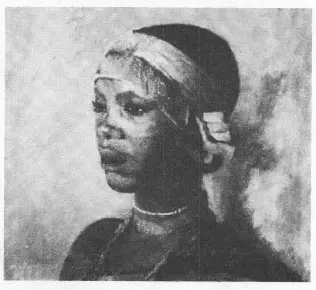
Kikuyu Ndito from the Ngong farm
country and in the service of other people – and surely my old valued friend Ali bin Salim of Mombasa, or the old Indian high priest who came to see me on the farm, wore but the finest and most delicate wools. The book also lays down as law that a husband shall supply his wife not only with the necessary nourishment, lodgings and clothes, but that he shall also give her such and such luxuries within his means, which are truly worthy of her and will make her truly value her husband. ‘In the case, however,’ it adds, ‘of a woman of remarkable beauty, jurists may find themselves not entirely in accordance and will have to weigh the matter between them.’ The very grave and somewhat pedantic book thus registers woman’s beauty as an indisputable, juridical asset in existence.