Saudade
Cover
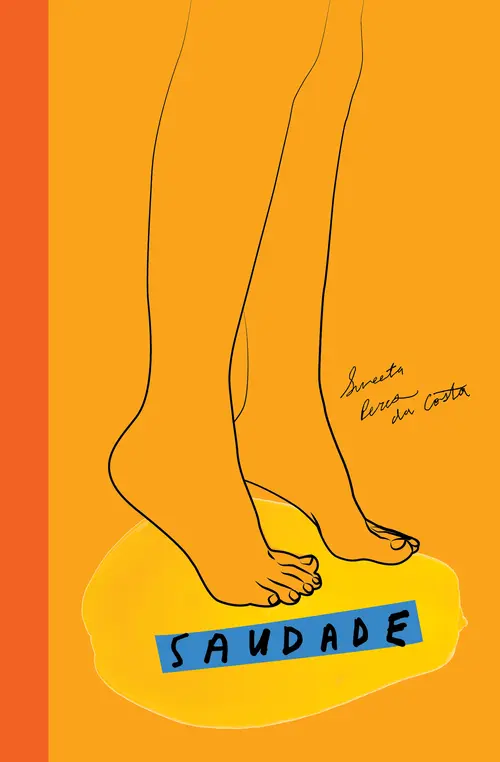
SAUDADE
Title Page
SAUDADE
Suneeta Peres da Costa

Dedication
For Mridula Nath Chakraborty
The imagination is always united with a desire, that is to say a value. Only desire without an object is empty of imagination. There is the real presence of God in everything which imagination does not veil. The beautiful takes our desire captive and empties it of its object, giving it an object which is present and thus forbidding it to fly off towards the future.
—Simone Weil, Gravity and Grace
SAUDADE
Chapter 1
1
MY MOTHER TOLD ME that the dead walk backward; she said, they try to walk forward but can only walk backward. When she told me that, I was sitting on the step that led from the kitchen to the compound, my hand cupped on her kneecap. A draught of shadows from the pink guava tree splayed on the concrete when the sunlight pierced the clouds overhead. That was our first house, the one in which I was born in Benguela, and I can still see it in my mind’s eye, close and shimmering like a still life, although it probably has like so much else now gone…She had asked Caetano to fetch a papaya for our breakfast and while we waited for him we watched the guinea cock that my father had brought home as a gift from a client in Uíge: it did not crow, did not make a sound, only silently circled the compound, opening and shutting the tiny aperture of its beak, pecking uselessly for seed. When I clapped my hands, it did not scamper in fright, only bristled its red comb and lifted its tired wings. My mother said that if I dreamt of someone with their feet about-facing I should be sure to shout to wake myself up, because the nearer they seemed, the further they would have led me to their world, the world of the dead. I turned to face her: it was just then my favourite occupation simply to watch her. Her beautiful eyes, outlined with kohl, grew large and small, accentuating by turns this part of what she said, now that. It was the middle of the dry season but each time her lips parted I found myself in an oasis in which I wanted for nothing; I had no need to look at the horizon but if I did, it would have gone on and on, a hungerlessness that might well be called paradise. The wind was blowing from the coast, a salt wind from the Atlantic which I would feel against me as a phantom presence even when it was not there any more. The sun was not shining and its not shining was neither here nor there; I was not waiting for the sun to reveal itself to me…Although I was old enough – three years old, perhaps four – I seldom spoke at this time. No one really remarked on this fact nor how I hung off every one of my mother’s words. Indeed, I could have continued in this same vein for an aeon or more, unaware of the peril of what might lie ahead. That her words could come to have a dangerous sway over me – that they might make me look this way and that, only in vain, only to be met by a darkness which was also unnameable – I could not have conceived, for I was more contented by the fact of her voice than what she had to say. At that time, there were so many things I did not know; my mind and body were like a tabula rasa on which much would be written, even if later I might want it all to be erased too…She said that bruxas, being consorts of the dead, have twisted feet. Soon Caetano returned; he was carrying the papaya under one arm and a tin of honey in his other hand; it was quite a balancing act and yet he was able to secure the papaya under his arm as though it were second nature to him. Caetano wore an old pair of my father’s shoes; they were a little too big and so it seemed he might trip over at any moment. That morning Papá had joked that if Caetano were to die we would have to bury him in these shoes. My father had made this quip in Konkani. When he was angry, or trying to be funny, Papá spoke in Konkani. I did not yet know that Konkani was a tongue that might have belonged to a people from whom I was also descended, to a place and time of which I nevertheless had no memory, and so it was neither discordant nor alluring to my ear. My mother moved fluently between Portuguese and Konkani and the tone she used with me or my father no different than that she used to speak to Ifigênia and Caetano. She took the old tin when Caetano held it out to her, winked and said, At this rate we could go into business. She turned the few honeycombs that lay at the bottom of the tin towards the light and said, What do you say, Caetano? Caetano smiled uneasily, shrugged and made to brush something away from his face. His hair in that light was a copper colour. His father was a Dane who had settled on a coffee plantation in Mozambique only to return to Copenhagen when he had grown tired of the East African plains; his mother, a native of Cabo Delgado, had died when he was small so he had been brought up in a Lourenço Marques orphanage. Now when his hair fell over his eyes, my mother said he ought to get a haircut. Yes, Mummy, Caetano answered, swatting an invisible fly before his face. It was curious to hear him call her Mummy; he was still a child when he had come to my parents, some years before I was born, and now he might have been thirteen or fourteen and full of a wary self-consciousness. When he shifted his weight from one foot to another, my mother sighed and passed the papaya into my own small arms. Its skin was green speckled black; it felt cool and heavy and I wondered what would happen if it fell, what sound it would make when it hit the ground, whether it would split or roll away…She disappeared into the kitchen and appeared again with a few hundred centavos that she dropped into Caetano’s hand. He put the change into his pocket and passed quickly through the garden. My mother followed him to the gate. On either side the road was long and empty: a woman was returning from the dyeing factory, a child slung on her back; a fisherman clutching a small bundle of leftover catch walked by. My mother led me inside again, but only a few steps on stopped to look back; she looked back, clicked her tongue and said that there was no race like the Bantu race that had to be cosseted like a child because it could not look after itself. What a tragedy, she said, to be a person who cannot take care of his own affairs, who never grows up, for that is the fate not only of the blacks of Angola but all black Africans! If it surprised me to hear her talk this way, it was not a great devastation. If her eyes and mouth were not the reassuring shapes that they had been a moment before, I did not yet have cause to identify with the confused souls of Babel. Now she set about making breakfast. She peeled the papaya and cut it into long canoes, the way I liked it. As always, she boiled the milk, removing the skin with a spoon and swallowing it before setting the glass before me. She allowed me a mouthful of the honey before bottling it and storing it in the larder. The moist, unmoving eyes of the mackerel gleamed from the marble cutting board. Ifigênia was grinding the coconut and chillies for the recheado and, as she wandered down the corridor to give her an instruction, I watched my mother’s legs: she was wearing a house dress of beige linen; she had not put on her knee-highs and so her legs were bare. Her legs were bare but they did not look vulnerable; they were as strong and dependable as the trunk of any one of the trees that rose in the small orchard beyond the compound – I could see the tips of the branches through the open door: guava, lime and papaya. Her feet appeared to blossom out of her legs, and were so pretty that I could not imagine her being dead, I could not imagine it, though the thought would not leave me and I felt I had to keep looking each few minutes from her face to her toes to confirm that they were pointing in the same direction.
Chapter 2
2
THE BRAZILIAN MUTINEERS from the Santa Maria did not get to the harbour of Luanda. Captain Galvão did not start a revolution. None of the prisoners that escaped from the São Paulo penitentiary tapped on our door, entreating us to harbour him as a fugitive. Yet in the days after the revolt at Baixa de Cassanje, there was a telex to say that a client of Papá’s, a German cotton-farm owner, had been killed in a northern reprisal. As he got ready to attend the funeral, my father spoke in a low voice about the circumstances of this man’s murder. My mother was in the kitchen, standing by the open door and I was playing just outside, turning the large, asymmetrical ears of Crio inside out, watching them flop back when he got bothered with the flies…Each time Papá said the word murder, my mother raised her eyebrows, glanced my way and then off toward the garden. I tried to picture the dead cotton-farm owner in his coffin — bound in tourniquets like the Egyptian mummies I had glimpsed in an old copy of National Geographic — in a simple robe like Jesus in the Passion. I wondered if it was because he was a stranger that it was so difficult to imagine him dead. When Papá went to the funeral I imagined what would happen if I could not recognise the cotton-farm owner when he appeared to make his fatal overture. Dona Angela paid us a visit. She had come from Madeira with her husband and they had started a business selling dry goods in the centre of Benguela. But her husband had died suddenly – a heart attack. That was only the beginning of her troubles, for soon the money evaporated and debts began to mount. She was homesick, my mother had told me, and that accounted for her nervous temperament. Homesick for what, I wondered, for where? Ifigênia had just fried some papos de anjos and my mother asked her to set them on the table. I sat by her, watching Dona Angela blowing cool air on her tea and absentmindedly devouring one after the other until the papos, slightly scorched, had vanished. When Ifigênia had left, Dona Angela lowered her voice and said she was afraid to go to sleep at night. She said, We gave education, housing and hospitals to the blacks – where would they be without us? I looked at that moment from Dona Angela’s face to my mother’s: my mother’s face was calm and serene. It was as though the sun was shining where she was; she seemed to be at once aware of what Dona Angela was saying and yet quite indifferent to it. She nodded, telling Dona Angela that she was quite right to be upset but meanwhile she was observing the plumes of smoke issuing from the bee boxes where Caetano was busy checking on the hives. I turned again to Dona Angela: her large body was cloaked in a heavy mantle of mourning; her hair was limp and thin; her brow was furrowed and a morsel of custard sat unflatteringly on her thick, lower lip. Perhaps she had been a young and pretty woman when she first came from Portugal, but now her face was ravaged – not only from the extraordinary misfortune of losing her husband but besieged by terror about an uncertain future, and all her gestures seemed colonised by this fear…Putting two fingers to her pulse, she said she felt faint and coughed to demonstrate her catarrh. My mother asked her if she had been to see her specialist and she answered that the doctors in Benguela were all charlatans and that she would not let them near her for her life. Dona Angela then began to reminisce about her son Mathias, and the loving letters he wrote her from Lisbon; she said it was her heart’s delight to receive these letters, what a boon it was to have a son, she said, for daughters were no guarantee…against what she did not say. When my eyes crossed the network of varicose veins to Dona Angela’s feet, I noticed she had no ankles to speak of. It was as though a bee had stung her, her ankles were so swollen. It must have perturbed me to look at these legs without joints which burgeoned into her feet because I remember looking away and again at her ankles. She caught me and told me I was getting shifty. She said, Sly or shy I’m not sure which but a child should speak when she is spoken to! To her surprise, and that of my mother, I then loudly enunciated that I would soon be going to school…When Dona Angela left my mother stood for some time in the front room. Daylight streamed onto the array of family portraits, distant strangers with dark skin like my own, dressed up in dresses and suits like good women and men of the Empire. My mother turned to me but as she opened her mouth it seemed she began haranguing these mute portraits. She said that Dona Angela had gall; she said everyone knew that her son Mathias was not studying accountancy at all but living a dissipated life in Lisbon and only wrote to finagle money she didn’t have. She said there was never a clearer case for a dandy and that all gays were mama’s boys…I trailed my mother through the house, at every corner imagining the dead cotton farm owner appearing on backward-facing feet, rounding on us with a scythe lodged in his breast. She told me to come nap with her but the mosquitoes, humming in the dusky air, kept me awake, so I wandered onto the front porch where it was cooler, waiting for some deathly footsteps, but only the postboy came, whistling a Cape Verdean folk song; it must have been a morna of Eugénio Tavares. When he lifted the catch to put the letters in the box he looked up, saw me and laughed. Admittedly I must have been an odd sight: my hair wet with sweat; my mouth agape. He then started to say something; I could not understand what he was saying because he spoke in Creole. I did not imagine that he was giving voice to a private thought, derisive or mocking, one that he in any case did not care to share with me; I was happy to hear him speaking, to hear this other voice with its unusual cadences…My mother appeared and, when he saw her, the postboy stopped what he was saying in mid-sentence and started down the street. When he was out of earshot, she said that she was sure the postboy was a communist and that I was not to speak to him again. I had no idea what a communist was, but I assumed that it must be something malevolent, something like the dead. The sky grew dark. The rains had ended but still it seemed there would be a downpour. Sitting on the cane chair, I could feel the mosquitoes at my legs, their tender stinging sensations at the extremities of my toes. In the distance I could hear the braking of the freight trains along the Benguela railway, the machinery of the Diamang mine, the droning of crude oil generators…One of Ifigênia’s friends, Philomena, whom she called Memu, came by; I could hear them talking in lowered voices in Kimbundu. Ifigênia had been told to speak Portuguese in my company but she often forgot and spoke Kimbundu anyway. Though I could understand only a smattering, I found Kimbundu, with its spirited rhythms, beautiful. And if it did not occur to me that they may have been talking about me, this was less because of humility than because it had not yet dawned on me that Kimbundu might be the language, as I might be the source, of some of their plaints and grievances. When this became evident I might find Kimbundu a cacophony, at the first sound of which I would reach for pliable beeswax to stop up my ears! I found my way into the compound and opened the coop. A hen had been bought to companion the cock, but one morning, finding her bloody and near-dead from his rapacious love-making, Papá had taken the cock to be destroyed. The hen had hatched chicks but bore them no love and now wobbled about with a furious and deranged look in her black eyes, her plumage of white feathers turned tawny and grey. Now when I imagined the dead man, the image I conjured was of a figure tall of stature and with a heavy step, moustachioed and precious about his appearance. Indeed, this description may have applied just as easily to my father and, in anticipating the footfall of the dead man, I was also anticipating the footfall of Papá. I was so accustomed to his footsteps coming and going, and now I wondered what would happen if we didn’t hear his approach at all? It was just then he turned into the drive. As he stepped out of the car, he was ashen-faced and I could see he was perspiring heavily under the black hat he had ceremoniously worn. He pulled me up, dusted my dress and admonished me it was not good for the servants to see me sitting in the dirt like that. Do you know whose daughter you are? he asked me with sudden ferocity. His breath, tobacco mixed with whis key, was pungent and I wriggled like a chick out of his arms. He chased the tattered hen which fled in his wake and shut her back in the coop. Caetano was smoking nearby and Papá muttered to him about leaving the coop open. Caetano had lately developed the habit of looking through Papá and now, as I followed my father inside, I felt Caetano looking through me too. That night, I could not go to sleep easily because I imagined meeting the dead in my dreams. I stayed awake for a long time, waiting for the dead cotton-farm owner’s appearance. During the night I woke my mother and she told me not to stir. She said that as long as she slept beside me nothing could happen, that if she saw me being led away by someone from the dead world she would call my name, and when she called my name I would come to her at once.
Chapter 3
3
ONE EVENING DURING THE RAINS my parents began to get ready to go to a party in Luanda. They were to stay overnight in a hotel because it would be over quite late and the roads back to Benguela would be difficult to see. It was an important party; if it turned out all right Papá would be promoted and we would be posted to Luanda. He was a labour lawyer, working for the Ministry of the Interior, preparing workers’ contracts…I was too young to have understood the liabilities he dealt with were human: that the men and women against whose sicknesses and accidents he insured Portuguese and other European pastoralists were native contract labourers. It did not occur to me then that, to protect the interests of the owner of an iron-ore mine against his labourers’ lung disease, tuberculosis and cataracts, a person may become blind after his own fashion; or that to insure a maize farmer against the hookworm suffered by his indentured workers, one might begin to feel a kind of parasite. That these workers, bought and sold as the slaves had once been, often died from exhaustion in the course of their bonded labour, is something of which I understood the implications only later; when everything shattered, I glimpsed it clearly, albeit through the shards of memory. I came to see how the past, like some ancient karma, inscribes itself on the body as much as the mind, so that what we do to others returns to haunt us in the subtlest manner. Although his body was not broken by the weight of a felled plane tree, or deafened by a harvester, Papá was in his own way sickened by so many secrets he was keeping, and we were increasingly hostage to his moods, to his silences and sudden outbursts, his sudden demonstrations of affection and withdrawal. He was in his study, his back turned – a boulder I would so many times liked to have rolled away. Behind that boulder, he might have been pouring whiskey into a glass or poring over some papers. Although I was forbidden to play there, it was a perfect temptation and when he was not home I would not be able to resist the urge to try out his rotational chair, imagining myself the important owner of his fountain pen, his Definitivos, the ivory letter opener. In the bottommost locked drawer I knew there was a carbine pistol which his boss, Senhor Mascarenhas, had given to him the previous year, on the anniversary of his employment…Now he turned to me, scowling slightly; his hair was slick with Brylcreem and as luminous as the patent leather of his brogues. In the bedroom, my mother was getting dressed, under her breath humming ‘Manhã de Carnaval’. At first they had quarrelled because she wanted to stay in Benguela, but Papá had won her over with talk of a house with a bigger garden. She now told me if I were good and obeyed Ifigênia, she would bring back a treat from Luanda. I hoped it would be a doll I had seen in a shop window in the Rua de Camões, an American doll called Annie who gurgled when a cord was pulled in her back and whose blue eyes rolled about in her celluloid head. Through the window, I could see Caetano in the garden and in the distance Crio chasing a flock of turacos. I went back to colouring the pages of my book. The book told the story of the botanist Garcia de Orta and had all sorts of tropical flowers depicted in its pages, pink lotus, as well as the simples de Orta was famous for using medicinally, their names printed in italics beneath each picture. When these books had been given to us, during my first weeks at school, we had been asked to write our names inside the cover and I wrote mine with such a flourish that the teacher had singled me out for praise, displaying my handwriting as an example to the other children…How it had pleased me to bask in that praise, to be the favourite and the envy of my peers; I did not know my exalted status would not last nor that I would find infamy just as intoxicating. Now as I coloured the leaves and flowers, my mother pulled a sari from a neatly folded stack in her wardrobe. She unfolded it across the bed – mauve with small sprays of yellow blossoms like those on the pages of my book. It was the first time I had seen her wear a sari, and the way she wound it, as if with an intimate acquaintance of its pleats, about the light-green chole, was a revelation. She was humming, ‘From the strings of my guitar, which sought only your love, arises a voice, because here comes the morning of Carnaval…’, and I noticed that her bare feet only just emerged from the hemline of the long and manifold skirt. She then moved something and, as if from nowhere, found a bindu. She sifted briskly through her jewellery box. I knew this box was a wedding gift from her best friend Meeta’s family in Goa. It was made of a carved timber; the carving was so artful as to make the two elephants that were on the lid appear to be braying in relief. My mother now pointed them out to me; she said these elephants were Indian elephants, not African ones, because the Indian elephant had smaller ears, she did not know why, most likely they had had a common ancestor, but some-where in their ancient genealogy they had developed differently…As she fastened a pair of gold earrings to her lobes, I again took the opportunity to compare the reflection of her feet in the bureau mirror to her actual feet and, although I knew it was only a trick of the glass, I wondered what would happen if a dead person entered my dreams wearing a sari so long that I could not tell if their feet were turned backward or forward and what would happen if, having led me away, she were not there to call my name while I walked off into oblivion. ‘When she stood away from her reflection and asked if she looked pretty, I could only stare at the lacuna where her feet had been. She clicked her tongue. She pointed to the reflection of my face in the bureau mirror and said that with my darker complexion I took after Papá’s people. I knew who these were, or at least I knew they referred to the solemn faces of the portraits hanging in the living room which I had come to study, their eyes if not their feet somehow following me. When she received news from them, my mother would open the thin blue aerogrammes, skim their contents then leave them on the kitchen table for my father. When she received aerogrammes from her own family or Meeta, she would take them onto the step of the compound to savour alongside a cup of spiced tea. All of these were kept in her bureau drawer with some coins and stamps commemorating Mahatma Gandhi and other leaders of the Independence, old glass bangles, and photographs – including one of a handsome man I did not recognise in a military uniform…Now when she lifted the bottom of the sari above her knees, she removed a blood-soaked pad, being careful not to soil the fabric. When she replaced it, she looked up at me and said casually, matter-of-factly, Though in this respect you can be sure you’ll take after me. She continued with her hair; she made a canopy of it and, after sweeping it up, subdued the ponytail into a coil which she pinned at the base of her scalp. She applied kohl to her eyes and a dark red lipstick to her lips. She took up the bottle of cologne and pressed the stopper to her wrists and behind her ears. The way she admired herself, it was as though she were performing a well-choreographed dance. I could sense she was not trying to impress me with this dance, was not really seeking my approval, but I wondered whose it might be she sought…My father suddenly emerged and asked did she want to make a spectacle wearing a sari among the people who might promote him in the Administration? He shouted, Change at once! The telephone rang and he lurched down the corridor to answer. He spoke in Konkani. There was a long silence before he called my mother to the phone. She doubled over and sobbed. Her mother had fallen gravely ill. There were few details, other than that, buying fish, she had fallen in the village market in Goa and been taken to a hospital where she had developed septicaemia. She was not expected to survive the next few days. I looked down at my picture of Garcia de Orta sporting his hornrimmed spectacles and studying a blossom somewhere in the Ilha da Boa Vida; in various places, I had coloured outside the lines…Papá said he would not be able stay with us as Senhor Mascarenhas was expecting him. After all, he said, many important things depended on his going. My mother nodded stoically and I watched through the front window as he went quickly to the car. When he had gone, I followed my mother into the bedroom where she began removing her jewellery, her makeup and then slowly unwinding the sari so the costume that had just festooned the room fell away.
Chapter 4
4
WHEN WE MOVED TO THE CAPITAL my mother resolved that we should make a new impression on the world too. Papá was often away on business and so Caetano drove – and as we passed from the new district into the old district of the city, I read the street names: Rua do Senado da Câmara; Rua de Dom Joâo II; Rua de António Enes. I recited them to myself with wonder, as Galileo might have recited the relation of the earth to the sun and the planets rotating in their vast orbits: Avenida dos Combatentes da Grande Guerra; Rua do Coronel de Paiva. I did not know they were merely set out on the same grid as Lisbon, being a mirror of the colonial imaginary. And now that the names of the streets have changed, I wonder would I recognise them or be lost when moving through them again?…As I accompanied her on errands to the bank, to the hairdresser, to the market, my mother would tell me whom to greet, what to say, even how we should walk away. From the Rua de Camões we entered the Baixa and she found her way to merchants whose supplies she favoured. There was an officious Saudi who had the bags of fruit and citrus measured out exactly. We bought spices from a dealer from the Antilles; his prices were inflated, but the aroma of his cumin, peppercorns, turmeric and cloves was irresistible. We bought coffee and a particular kind of tobacco for Papá from a Guinean merchant who suffered a skin disease – my mother told me not to stare. From a garrulous old woman called Francesca who was said to have a lot of lovers we bought cassava flour and palm oil. Francesca’s African grey parrot perched on her shoulder and greeted one with good morning and trilled kisses when she said beijos. We bought chocolate and cheese – items which had been scarce in Benguela but which we now regularly enjoyed. My mother appeared to be in command of herself, but one day in the midst of proceedings, felt faint and had to sit down. We were in the middle of the fish market and the fishwives abandoned their posts to help her. She resisted, made little of this spell of giddiness. I meanwhile stared at the catches of prawns and fish and the fisherwomen themselves who were spread-eagled on their jute mats and waving flies from their wares. If I looked, and I could not help myself, I could see the dark cavities between their legs and wondered if rivers of blood flowed from them too. Soon my mother recovered, brushed her weakness off, said it must be due to the change in climate from Benguela, and continued how watermelons which came from the Congo were sweeter and more mellow than the watermelons from Angola…Her voice trailing, I soon found myself on the far side of the market amidst the old women selling sausage and salt pork. The area was rank with the stench of smoke and cat piss; litters multiplied each week and the kittens meowed and curled in between the cool stone tablets of the auction blocks. I wanted to take one home with me, but my mother had forbidden me to touch them. Now I stopped to caress one, a runt; it was fractious and leapt from my hands. When I turned back I could no longer see my mother. At first the delirious pleasure of finding myself completely free overcame me. What did it matter where my mother was? I thought I could find her if I wanted but right then had no desire to do so! How exciting to be observing all the things about me without her asides! It was nearly Carnaval and in one corner of the market a ventriloquist had set himself up on a beer crate; the puppet’s wasted legs fell over his own and, despite the slightly parted lips which betrayed the simulation, the ventriloquist’s string of dirty jokes appeared to issue directly from the puppet’s wooden orifice. I looked for a long time before plucking up the courage to approach one of the bruxas. She was counting the crumpled banknotes in her rusty tin, surrounded by small bottles whose contents seemed half-evaporated, as well as seeds and dried salt fish and plants laid out to sell as curatives. I looked at her feet, noting that they were for all intents and purposes anatomically correct, when she said, in Kimbundu, something that I could not understand. Then she clapped her hands and spoke again in Portuguese: What do you say, Cleopatra? She was chewing kola and her mouth, stained scarlet with the juices, looked like a gash. Someone admonished the ventriloquist to stop but he had the puppet repeat the threats like a game of echoes. A scuffle broke out and soon a policeman arrived to break up the crowd. Everyone was speaking at once and my temples throbbed to hear them. Near to where I was standing a woman was plaiting zimbo shells into bags much like the one that my mother carried. I made my way from one aisle to another where the mountains of dried cassava and maize cast tall shadows across my path. Each time I came to the end of a row of stalls, it was as though I was in a bad dream in which the wares displayed had been switched to disorient me. I slipped and someone laughed at my falling. At one moment I thought I saw my mother in the butchery area. The heads of lambs had been hung up for fast sale; flies swarmed about the lakes of their eyes and threads of blood stained the flagstones. I had mistaken her for a mestiça with straightened hair. I knew we were to go to the tailor to pick up a dress that had been stitched for my birthday so I made my way there by myself, crossing the street to his little shop on Rua de Sousa Coutinho, out the front of which there was a concrete bench on which I sat and watched the people going by. Soon I saw my mother coming toward me, shouting my name. When she found me, she said that I could have died crossing the street without her. Tears welled in her eyes and smudged her kohl…The tailor was a small, tubercular man, bent over a Singer machine. He had dubbed my mother Marie Antoinette and me her lady-in-waiting. He got up to greet us as soon as he saw her; and when he brought out the dress with white heart-shaped buttons down the front, I was captivated by the fabric which we had chosen at Saratoga. It was printed with a picture of a girl and boy accompanied by their mother on a picnic: in the first scene, the girl was portrayed carrying her doll by one arm to a place where her brother was playing with a dog; in the next, the mother was feeding the children iced cakes and tea; in the final tableau, the father was holding the car door open for the little boy to climb in, to go home. The girl on the fabric was wearing a dress made of the self-same fabric and this story-in-side-the-story intrigued me no end. I was so enthralled by the easy domestic enjoyment of this family that I barely caught on when, while my mother paid him, the tailor said that not every child who does not talk is demented but some turn out to be. From the corner of my eye I looked at the tailor: I now decided that he had a smile that I did not like. When he smiled I could see how few teeth he had left in his mouth and that they were all rotten. Then I looked at my mother: she too was smiling and still very beautiful. She put the change in her purse, thanked the tailor and took my hand. We had not gone far though when she suddenly broke step with me. She said that the tailor was right and that people took me for a deaf-mute. She said that the problem was that she had cosseted me far too long. All these things she said with a look of such disappointment that she seemed an utter stranger…That I was not the cause of her disappointment was suddenly apparent to me, but when I turned my head back to see where it may have begun, it was indistinct, there was no clear picture of it. And when I strained ahead to see where it might also end, I could see far out across the sea and to the petrels gliding on the crests of the waves and I could even see the horizon, but I could not see where her unhappiness might end…On the Avenida de Álvaro Ferreira she asked Caetano to stop at a café where we could have cool drinks. We were being seated, when we suddenly saw Papá at another table across the floor, deep in conversation with Senhor Mascarenhas. My father was supposed to be out of town and seemed startled when he caught sight of us. He approached our table, greeting us with a formality by which even Senhor Mascarenhas seemed embarrassed. Senhor Mascarenhas insisted on paying for our drinks and then he and Papá accompanied us to the car. I looked behind me, I looked in front of me and then looked sidelong at my mother. Her head was held high but she had begun to weep; the kohl ran down with her tears, staining her face. And although I thought she was still beautiful, it was as a stranger seen in passing, a person who makes quite an impression in the moment but whom you have forgotten only seconds after they have gone.
The Story Continues on BooksBarbecue!
Enjoyed this preview? ❤️ Do not stop here!
Read the complete book free online → 🔗
Continue reading now on BooksBarbecue and discover every page!
Love reading? Bookmark BooksBarbecue.com for more amazing books!
Happy Reading!