Chapters (13)
On top of all this, the family had pumpkin pie for dinner.
“Not again!” protested Beezus. The family had eaten pumpkin pie and pumpkin custard since the night the cat ate part of the jack-o’-lantern. Beezus had once told Ramona that she thought her mother had tried to hide pumpkin in the meat loaf, but she wasn’t sure because everything was all ground up together.
“I’m sorry, but there aren’t many pumpkin recipes. I can’t bear to waste good food,” said Mrs. Quimby. “But I do remember seeing a recipe for pumpkin soup someplace—”
“No!” Her family was unanimous.
Ramona was so disappointed because her father had ignored all her little signs that she did not feel much like eating, and especially not pumpkin pie for what seemed like the hundredth time. She eyed her triangle of pie and knew she could not make it go down. She was sick of pumpkin. “Are you sure you cut off all the parts with cat spit on them?” she asked her mother.
“Ramona!” Mr. Quimby, who had been stirring his coffee, dropped his spoon. “Please! We are eating.”
They had been eating, but after Ramona’s remark no one ate a bite of pie.
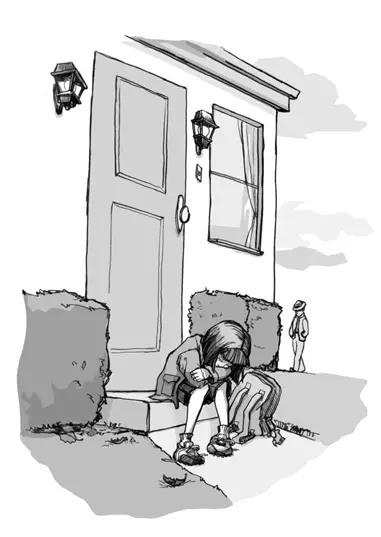
Mr. Quimby continued to smoke, and Ramona continued to worry. Then one afternoon, when Ramona came home from school, she found the back door locked. When she pounded on it with her fist, no one answered. She went to the front door, rang the doorbell, and waited. Silence. Lonely silence. She tried the door even though she knew it was locked. More silence. Nothing like this had ever happened to Ramona before. Someone was always waiting when she came home from school.
Ramona was frightened. Tears filled her eyes as she sat down on the cold concrete steps to think. Where could her father be? She thought of her friends at school, Davy and Sharon, who did not have fathers. Where had their fathers gone? Everybody had a father sometime. Where could they go?
Ramona’s insides tightened with fear. Maybe her father was angry with her. Maybe he had gone away because she tried to make him stop smoking. She thought she was saving his life, but maybe she was being mean to him. Her mother said she must not annoy her father, because he was worried about being out of work. Maybe she had made him so angry he did not love her anymore. Maybe he had gone away because he did not love her. She thought of all the scary things she had seen on television—houses that had fallen down in earthquakes, people shooting people, big hairy men on motor-cycles—and knew she needed her father to keep her safe.