Railroad of Death

RAILROAD OF DEATH
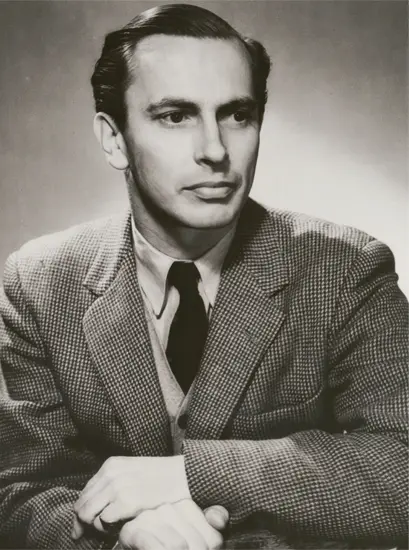
The author, six years after his liberation.
‘I feel that if you’ve lived in Siamese forest, built your own huts from bamboo you’ve felled yourself, survived malaria, eaten food that the local people could have thrown away, well, that country can hold no further terrors for you, and, whether you like it or not, you become part of it.’
John Coast
FOREWORD
by Dr Karl Hack
John Coast’s, Railroad of Death was informed by a memoir written and lost in captivity and first published in 1946. It was one of the earliest of a swelling stream of ‘captivity narratives’ about being prisoners of the Japanese in wartime Southeast Asia. Other classics in this line range from Russell Braddon’s Naked Island of 1951, through to Eric Lomax’s The Railway Man of 1995.
This new edition would be welcome even if its aim was merely to bring an old classic to new readers, but it does much more than that. It surrounds John Coast’s original book with a new introduction and appendices that address the bigger issues of reality and mythmaking over the Burma-Thailand railway, the trauma of war, the dilemmas confronting the Prisoner of War, and possibilities both of retribution and forgiveness. Readers may be aware of how Eric Lomax’s book describes an arc from his vicious beating by Japanese guards and post-war trauma, through to meeting his tormentor in 1993 – the Japanese officer and interpreter Takashi Nagase – and forgiving him. The elderly Eric Lomax is played by Colin Firth in the 2013 film version of the book. But what few people may realise is that Coast met Takashi more than two decades before Lomax, when he anchored the 1969 BBC documentary Return to the River Kwai. That documentary was in turn inspired by an earlier muddling of fact and fiction about the railway in Pierre Boulle’s novel, The Bridge on the River Kwai and the 1957 David Lean film version of the same.
This edition includes the script of the 1969 documentary, in which Coast confronts Takashi and two other Japanese about conditions on the railway, and also Boulle about the way his book had fictionalised real events, and so cast a shadow over FEPOWs (Far East Prisoners of War). Boulle’s semi-fictional ‘Colonel Nicholson’ – who determines to build a better bridge than the Japanese can to keep his men’s discipline – was in fact a twisted version of the much respected Lt Colonel Toosey. Far from being regarded by his men as ‘Jap-happy’, the latter was regarded as a competent officer, who achieved low death rates by carefully calibrating relations with their captors. FEPOW groups – which in the 1950s met regularly, often performing skits of the Japanese ‘tenko’ or roll-call – felt slighted by the insinuation that they had worked willingly. Men such as Coast feared that the wider public might fail to understand both the extreme brutality and danger of torture and death, and also the variety of humanity and inhumanity amongst guards. Hence, for instance, some of the appendices show Coast and other ex-FEPOWs writing character references in favour of select Japanese who faced War Crimes Trials, while in the documentary he probes the Japanese on their threat to machine gun British officers, should they have refused to work alongside their men.
So this is a re-release of a classic and nuanced captivity story, framed by materials that help us to understand battles over the memory of the railway. In addition, the extra materials give the reader enough of a glimpse of the original author to begin to understand this as one of a number of transformational life stories. Unlike Lomax – for whom the railway’s legacy was decades of nightmares and dangerously embedded anger before final resolution – Coast’s war was the launch pad for an entirely new life. Joining the Army had been his escape route from a stultifying job in banking, and on the railway he combined a love for music with Asian cultures, first discovering Javanese dance and gamelan orchestras. After the war, he would quickly return to Asia, leaving the Foreign Office to help to supply propaganda for Sukarno’s anti-Dutch struggle in Indonesia. He subsequently mounted a tour of Balinese dancers to London and New York, before writing more books, managing well-known performers and making contacts in theatre and television. Hence his ability, in 1969, to persuade the BBC to make a documentary about the railway.
In short, here is a simply told story about captivity. One of many stories about Singapore’s Fall, Changi POW camp, and the 61,809 Allied troops who laboured building the ‘Death Railway’ from Thailand to Burma, with its death rate of twenty per cent. But here too is a rich collection of materials that together provide a window onto the ‘Death Railway’, the experience of brutality and humanity in captivity, and of a personal journey from bank clerk to theatrical agent.
Karl Hack
RAILROAD OF DEATH
An Introduction
A Japanese mortar bomb landing in my platoon truck in Singapore helped determine the whole course of my life. Some weeks after we had been rounded up at Changi, we were allowed back to the battlefield to bury our dead. It was during this macabre visit [that] I found my gutted platoon truck and learned that my last pair of glasses had been burnt. I found one blackened lens, but even if I’d managed to clean it there was no way of keeping it in my eye. I lacked the necessary beetle brow. So I had to resign myself to remaining a short-sighted prisoner – a dangerous condition – for we had to salute every Japanese we saw, and if we failed to recognise them we were beaten up as a matter of course . . . [After the railway had been completed] . . . the Japanese relaxed a little . . . we were allowed to build a camp theatre . . . [which] I suppose, was my first remote step towards the discovery of Pavarotti (Coast, 1988: Crazy Ideas. Unpublished memoirs).
Writing Railroad of Death
Following his capture during the fall of Singapore in February 1942, Lieutenant John Alan Coast (30 October 1916 – 23 July 1989) survived three and a half years in Japanese prisoner of war camps along the route of the notorious Thai-Burma Railway. He was incarcerated variously at the camps of Changi, Chungkai, Wun Lue, Tamarkan, and Kanchanaburi. John’s story reflects the bravery, tenacity and loyalty of many FEPOWs [Far East Prisoners of War], but it is exceptional for its eloquence and prompt publication. Not only did he tolerate the impairment of his eyesight and many unpleasant and painful tropical diseases, but he also managed to keep a secret diary – strictly prohibited by the Japanese – throughout his internment. From this diary John produced the manuscript of Railroad of Death, which was published by Hyperion Press in July 1946, less than a year after his return to Britain. It was also translated into Thai in 1947.
John was almost caught writing in his ‘dim, half-seen world’ (Dancing out of Bali, 20-21) several times during the three and a half years he spent in the Japanese prison camps. At one point he had to convince a Japanese guard, who walked in on him while he was ‘revising some early chapters . . . [and] trying to decipher my own writing,’ that his diary was actually ‘just an ordinary book’ (Railroad Chapter 11). John then proceeded to engage him in a discussion of the greats of English literature. Along with his close friend ‘Gibby’ (Gilbert Inglefield) John managed to barter for the guard’s silence—as well as an unexpected commission of a packet of sugar, some toilet paper and two fishhooks—in return for a nice fountain pen and some further exploration of the works of Shakespeare and Byron. Gilbert Inglefield, was a talented musician who was later to become Mayor of the City of London. Gilbert later described John as a ‘Bolshie subaltern made good’ in a letter congratulating him on the publication of the book and on the tour of Javanese dancers he went on to produce in 1947.
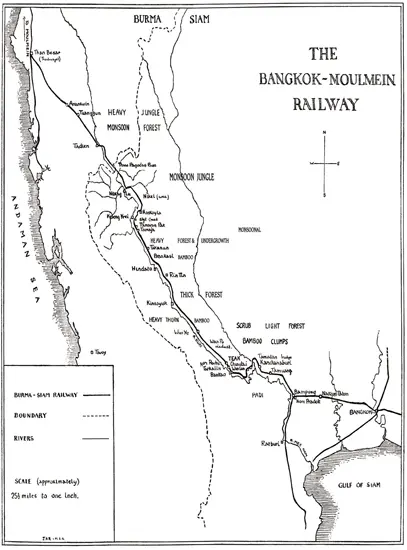
More than just a personal memoir, John had intended this diary to be published both for posterity and to tell the world about the appalling conditions that the POWs had endured; he had been editing and refining it from early on. But recording life inside the camps was always a risky business. On 18 January 1945, word went round the camp that a Japanese search of all POW kit was imminent. All writing materials and text discovered by the guards were confiscated and never returned. John’s manuscript, written in his small, intense hand, was buried under ‘an atap shack beneath a huge tree’ (Railroad of Death) in Chungkai before the Allied officers were to march back to Kamburi (Kanchanaburi) via Tamarkan. It was hidden, along with the diary of his enduring friend ‘Jim Dixon’ (James Richardson), to be retrieved after the war. Jim Richardson, an eminent government geologist in Malaya, was a ‘vast strong fellow of Cornish and possibly a little Spanish extraction . . . [whose] granite-looking physique was relieved by his ability to use his well-formed hands in a delicate and Gallic way, and also an oddly quiet and mild voice’ (Railroad Chapter 11). The map of the Bangkok-Moulmein railway reproduced in the first pages of this book was carefully hand-drawn by Jim for Railroad.
Other items buried by friends of John’s included evidence gathered during the life-saving work of Dr Hugh de Wardener (‘Ginger de Huguenot’ in Railroad), which would form the basis of two classic medical papers that were later published in The Lancet: ‘Cholera epidemic among prisoners-of-war in Siam’ (1946) and “Cerebral beriberi (Wernicke’s encephalopathy): review of 52 cases in a Singapore prisoner-of-war hospital” (1947).1
But while John found and returned Richardson’s diary after the Japanese capitulation in August 1945, his own had disappeared.2
Jim Richardson’s unpublished and unedited diary, against which many of the events mentioned in Railroad of Death can be compared, can be found in the Imperial War Museum manuscripts collection. On page 89 of the diary Richardson makes the following comments about the burial of his and John’s diary and John’s failure to retrieve John’s own manuscript:
‘We had warning of a massive Nip search of all kit (everything) imminent. On 18th January 1945 I buried the diary in a tin can beneath a large tree in Chungkai. John buried the MS. of his book “The Railroad of Death” similarly after capitulation of the I.J.A. [Imperial Japanese Army] John Coast recovered my diary in August, 1945 and returned it to me in Rangoon. His MS. had disappeared (Why?)’ (Documents 1705, Private Papers of Lieutenant J.R. Richardson).
John later described the tree under which his and Richardson’s diaries were buried as that ‘old enemy of mine’ (1952: 4) and in an article about his 1947 return visit to Siam he writes: ‘I paid my respects to the confounded tree under which I buried my original book and whence it disappeared’ (The Singapore Free Press, 3 February 1948: 4).
Undeterred by the loss of his diary, John proceeded to rewrite the manuscript on the voyage from Rangoon to Southampton:
‘During the voyage I had but one occupation and that was to complete the manuscript of my book on our prisoner experiences, a task which I had imperfectly achieved in seventeen days, seated in the crowded Officers’ Lounge with my friends, scribbling away rapidly among the debris of beer mugs and rejected mepacrine pills [a treatment for malaria and certain other tropical infections]’ (1952: 13).
John readied Railroad for publication while recuperating at his sister Daphne’s home in London. John and his sister were immediately aware of the popular potential of what he was writing, as can also be seen from this excerpt from an article in The Straits Times in 1947: ‘My sister already had a publisher waiting for me when I reached home’ (The Straits Times, 2 April 1947: 5). According to the same source, ‘Mr Coast reached Southampton on 7 Oct. 1945. The first edition of his book had sold out by Christmas.’ Christmas is likely to mean Christmas 1946, as the first edition of the book was not published until that year.
As a chronicler of the human cost of the notorious ‘death railway’, John was a pioneer among former POWs. His account was not only the first off the press, but it is still widely considered to be one of the most accurate and detailed. Railroad is, in John’s words, ‘a very nearly completely true book’ (Introduction to the 1946 edition of Railroad of Death). John chose to give pseudonyms to the Allied prisoners and ‘sometimes rolled a few of them together and typified them as one man’ (ibid). All the Japanese were called by their real names, often in addition to the nicknames given to them by the prisoners—for example, Medical Sergeant Nobasawa was nicknamed the ‘Horse Doctor’ (Railroad, Chapter 6). In the process of researching this new edition of Railroad of Death, we have been able to identify over fifty of the Allied FEPOWs who feature in John’s narrative, as well as some of the more elusive Eurasian prisoners: the list of real names can be found in Appendix Nine. As these have been identified, it becomes clear that this book is not only a great read, but also an invaluable historical resource.
Several of these men, particularly those in John’s kongsi, mentioned in the dedication of the book, remained close after the war. Jim Richardson, Gilbert Inglefield, George Sully, Hugh de Wardener as well as Joop Nittel, all wrote to congratulate him on the publication of this book and continued to correspond throughout their lives.
His memoir is vivid in its detail, raw and compelling in its narrative style. However, it also displays the calm and even-handed perspective and intellectual curiosity that was typical of his character and which shaped the remarkable trajectory of the rest of his life. John chronicled the physical, mental and emotional challenges faced daily by the POWs and described the various ingenious and creative ways in which these challenges were overcome.
The culture and reality of the camps
The appalling conditions of forced labour, inadequate nutrition and callous neglect of prisoners’ health are well-documented, both in this book and in the others that followed. However, Railroad highlights how an ad hoc but vibrant cultural life in several of the camps helped to save sanity and lives. The prompt establishment of camp ‘universities’ and ‘bamboo theatres’ did much to keep the POWs’ spirits up and alleviate the crushing boredom that punctuated the work and inevitable periods of sickness. The universities of Changi and Chungkai are the best known, but similar efforts were made in other camps. As Brian MacArthur notes, musical or theatrical events were staged in at least twenty-four camps and some sort of cultural activity was organised by POWs in most of the camps along the line. Although the first concert party took place in Changi as early as March 1942, the bar was set by the performances staged at Chungkai, the biggest camp in Thailand, which was commanded by the theatre-loving Owtram, the ‘Singing Colonel’.
POWs gave lectures on a wide range of subjects related to their pre-war interests and expertise, which collectively amounted to an extraordinary depth and breadth of knowledge. The men learned new languages and studied history to compensate for the lack of newspapers, books and radio. They were desperate to focus their minds and keep their memories sharp when the spoken word was the only freely available form of communication or record-keeping; detailed reminiscences and explorations served this purpose. John and the kongsi were active in the universities, but also kept their group very tight. Their friendships were based on mutual respect and trust, but the group was really cemented by their intense intellectual and linguistic study. When the day’s physical work was done, they retreated to their dark bamboo huts to debate philosophical, religious and political ideas late into the night. And a few of them also retreated into their diaries, their private documentation of camp life.
That John was an effective chronicler of the physical, mental and social aspects of camp life can be seen by comparing the details of John’s descriptions of events and relationships with the surviving diary of one of his companions, Jim Richardson, and to the ideas of fellow prisoner Ian Watt (‘Ian White’), who was later to become a professor of English at Stanford University.
Richardson writes in a matter-of-fact style that mixes information about events, the people he met and the Japanese that, with editing, would not seem out of place in Railroad:
‘Sun 1st: [August 1943, Tarsao Camp] Heavy rain all morning. Late breakfast due to no bamboo for fire. Swine of a Nip cook wouldn’t allow food to be cooked until all of day’s firewood was in. All fit men turned out 0800 to collect bamboo etc. George and I collected wood for our fire; rain put it out. Not a hope of keeping it alight. George and I walked up to 207 km Camp of the main Takanun to see Officer’s Working Party. Only 26 now working out of original 104. Sickness rate very high. They get fairly good rations including 7-8 oz meat per day. Have been worked very hard and beaten up by a bloody set of Nips. About 300 deaths out of 1500 troops; cholera, fever, dysentery etc. Met Smith, Sam Taylor, Bill Richardson of Malay Regt, Jackson of 11th Div, Robert Woods of 122 Field R.A., Sailor Clare, Eric Roger, Tom Williams, Dicky Bond and many others. Heard all their news and told them mine. They rather expect to go down river later. Saw “Kechil” Carr, Doug Weir, Col Young, Jack Masefield in another section of Camp. Nips had rush job unloading barges in evening. I detailed to take troops down so I called off, thank the Lord (i.e. got out of the unloading). Had dinner 2145; Bloody people!’ (Richardson IWM, Documents. 1705: 62).
Jim Richardson did in fact spend some evenings helping John to edit Railroad.
John’s ability to note the kinds of comings and goings described above by Richardson, but in a way tailored to help the understanding of the general reader, is clear to anyone who reads Railroad of Death.
Ian Watt, in his article ‘The Humanities on the River Kwai’ almost perfectly captures how the interest in language and other intellectual pursuits described in Railroad, Richardson’s diary and many other writings from or related to the FEPOW experience were formed, with references to the use of ‘loanwords’ or words shared between the different national groups in the camps. Some of these were developed for comic effect or to emphasise the solidarity of different groups in the camps; at other times they were cleverly designed to hide the true meaning of certain activities from the Japanese (Watt 2002: 230).
For example, in Chapter 8 of Railroad John gives a long definition of the origins, according to his knowledge, of the term ‘Jap-Happy’, which shows how words could mutate, change and attach themselves to new objects and meanings, just as they do in today’s street slang: ‘
‘At Wun Lun there had been a man who worked for the Japanese, and he was known as “Jap-Happy”. The word Jap-Happy was capable of various meanings and came about like this, the troops who did regular work for the Nips in the Nip huts or cookhouses used to receive from them various privileges, such as extra food and clothing, and never working on the railway. A job in a Japanese cookhouse meant a very much better chance of survival for that man than for another man just doing the ordinary work. The first clothing of any sort issued to our troops by the Nips were cheap pairs of rubber boots, given to their batmen when they had worn their own leather ones out. These boots became known as Jap-Happys, and then gradually the meaning changed so that the word became an adjective meaning pro-Jap; or it meant, alternatively, that a Jap-Happy person would always try to propitiate the Nips even to British detriment. Ultimately there were three clear meanings – Jap-Happy, the adjective, meant pro-Nip to some degree or other; Jap Happies the plural noun, meant Jap rubber boots; and a Jap-Happy was a “G” string as issued and worn by the Nips. This latter Jap-Happy was a rectangular piece of cheap cloth with a tape at one end . . . But the adjectival use of the word was the ultimate insult, and all those in administrative jobs could expect to be called “Jap-Happy Bastards” if they slipped into the only too easy way of dealing with disputes between the Nips and ourselves of “trying to see the Nip point of view.”’
John’s record of the nicknames given to the guards, and particularly some of the most notorious war criminals, is also important. In the case of ‘Nattering Norman’, a guard at Takanun camp, we can see how the nickname came about:
The Story Continues on BooksBarbecue!
Enjoyed this preview? ❤️ Do not stop here!
Read the complete book free online → 🔗
Continue reading now on BooksBarbecue and discover every page!
Love reading? Bookmark BooksBarbecue.com for more amazing books!
Happy Reading!