Paris: The Novel
Chapters (34)
- Title Page
- Dedication
- Family Tree
- Chapter One
- Chapter Two
- Chapter Three
- Chapter Four
- Chapter Five
- Chapter Six
- Chapter Seven
- Chapter Eight
- Chapter Nine
- Chapter Ten
- Chapter Eleven
- Chapter Twelve
- Chapter Thirteen
- Chapter Fourteen
- Chapter Fifteen
- Chapter Sixteen
- Chapter Seventeen
- Chapter Eighteen
- Chapter nineteen
- Chapter Twenty
- Chapter Twenty-one
- Chapter Twenty-two
- Chapter Twenty-three
- Chapter Twenty-four
- Chapter Twenty-five
- Chapter Twenty-six
- Epilogue
- Acknowledgments
- About the Author
- Other Books by This Author
- Copyright
Title Page

Dedication
This book is dedicated to
the memory of my cousin,
Jean Louis Brizard,
pediatrician at the Beaujon Hospital,
the British Hospital, and the American Hospital in Paris
Family Tree
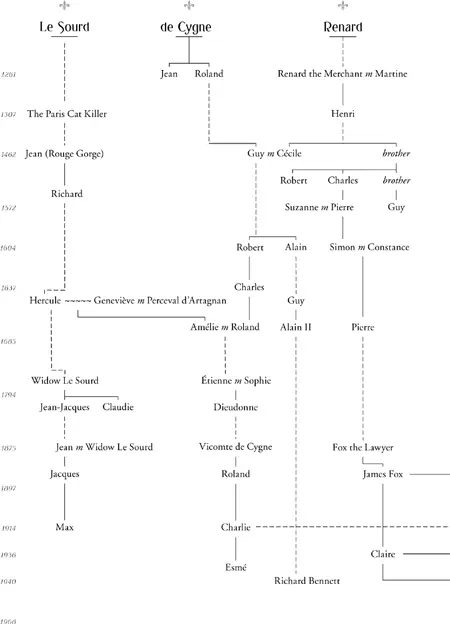
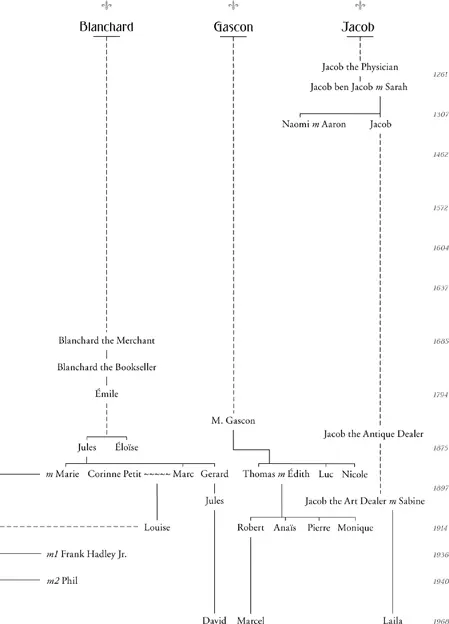
For a larger version of the family tree, click here.
Chapter One
• 1875 •
Paris. City of love. City of dreams. City of splendor. City of saints and scholars. City of gaiety.
Sink of iniquity.
In two thousand years, Paris had seen it all.

It was Julius Caesar who had first seen the possibilities of the place where the modest Parisii tribe made their home. The Mediterranean lands of southern Gaul had already been Roman provinces for generations at that time; but when Caesar decided to bring the troublesome Celtic tribes of northern Gaul into the empire as well, it hadn’t taken him long.
The Romans had quickly seen that this was a logical place for a town. A collecting point for the produce of the huge fertile plains of northern Gaul, the Parisian territory lay on the navigable River Seine. From its headwaters farther south, there was an easy portage to the huge River Rhône, which ran down to the busy ports of the Mediterranean. Northward, the Seine led to the narrow sea across which the island of Britannia lay. This was the great river system through which the southern and northern worlds were joined. Greek and Phoenician traders had been using it even before the birth of Rome. The site was perfect. The Parisian heartland lay in a wide, shallow valley through which the Seine made a series of graceful loops. In the center of the valley, on a handsome east-west bend, the river widened and several big mudflats and islands lay, like so many huge barges at anchor, in the stream. On the northern bank, meadows and marshes stretched far and wide until they came to the lip of low, enclosing ridges, from which several small hills and promontories jutted out, some of them covered with vineyards.
But it was on the southern bank—the left bank as one went downstream—that the ground near the river swelled gently into a low, flat hillock, like a table overlooking the water. And it was here that the Romans had laid out their town, a large forum and the main temple covering the top of the table with an amphitheater nearby, a grid of streets all around, and a north-south road running straight through the center, across the water to the largest island, which was now a suburb with a fine temple to Jupiter, and over a farther bridge to the northern bank. They had originally called the town Lutetia. But it was also known, more grandly, as the city of the Parisii.