New York
Chapters (35)
- Maps
- Preface
- New Amsterdam
- New York
- The Boston Girl
- The Philadelphia Girl
- Montayne’s Tavern
- London
- Abigail
- The Loyalist
- The Patriot
- Vanessa
- War
- Fire
- Love
- The Capital
- Niagara
- Past Five Points
- Crystal Palace
- Lincoln
- The Draft
- Moonlight Sonata
- Snow
- Old England
- Ellis Island
- Empire State
- Brooklyn
- Verrazano Narrows
- After Dark
- Giving Birth
- Millennium
- The Board Game
- The Towers
- Epilogue
- Acknowledgments
ALSO BY EDWARD RUTHERFURD
Sarum
Russka
London
The Forest
Dublin
Ireland Awakening
This book is dedicated, with a lifetime of thanks,
to Eleanor Janet Wintle
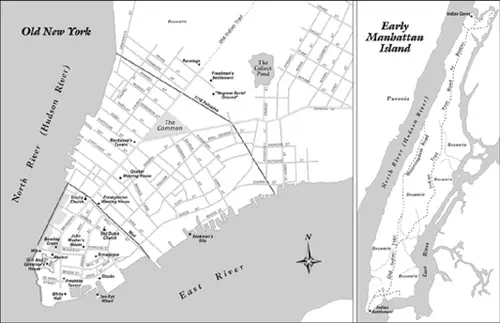
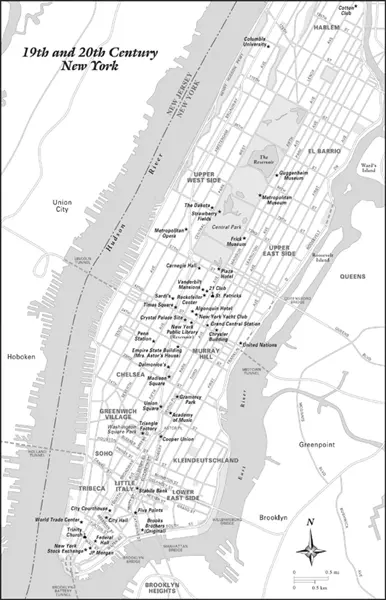
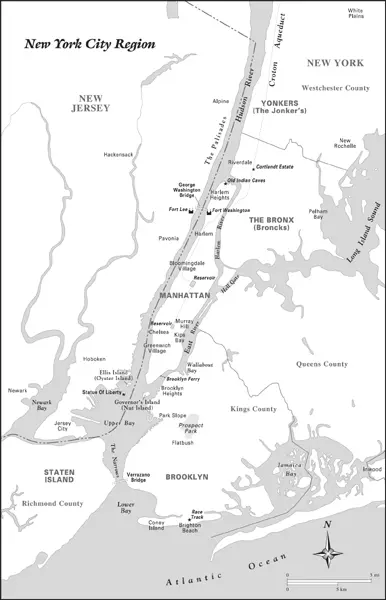
Maps
Preface
NEW YORK IS, first and foremost, a novel. All the families whose fortunes the story follows are fictional, as are their parts in the historical events described. But in following the stories of these imaginary families down the centuries, I have tried to set them among people and events that either did exist, or might have done.
The names of the principal families in this book have been chosen to represent the traditions from which they come. Van Dyck is a common and easily remembered Dutch name. Master is a fairly common English name, though I confess that while considering the family’s destiny as merchants and Wall Street men, the phrase “Master of the Universe” sprang naturally into my mind. White is another typical English name. Keller is the fiftieth most popular German name, meaning a “Cellar Man.” O’Donnell is a well-known Irish name, Caruso a famous Southern Italian name, and Adler, meaning “Eagle” in German, is found all over Middle Europe. In the case of characters who make brief appearances, the Rivers family are invented; the family of Albion appeared in my book The Forest. My choice of the name Juan Campos was inspired by the famous Puerto Rican composer Juan Morel Campos. The name Humblay does not, so far as I am aware, exist, but is an old spelling of “humbly” to be found in sixteenth-century prayer books. For the origins of the names Vorpal and Bandersnatch, readers are directed to Lewis Carroll’s poem: Jabberwocky.
It has been necessary to invent very little in terms of historical event during the course of this narrative. Here and there, to maintain the narrative flow, there are a few simplifications of complex historical sequence or detail, but none, I believe, that misrepresent the general historical record. A few words, however, are needed as to historical interpretation.