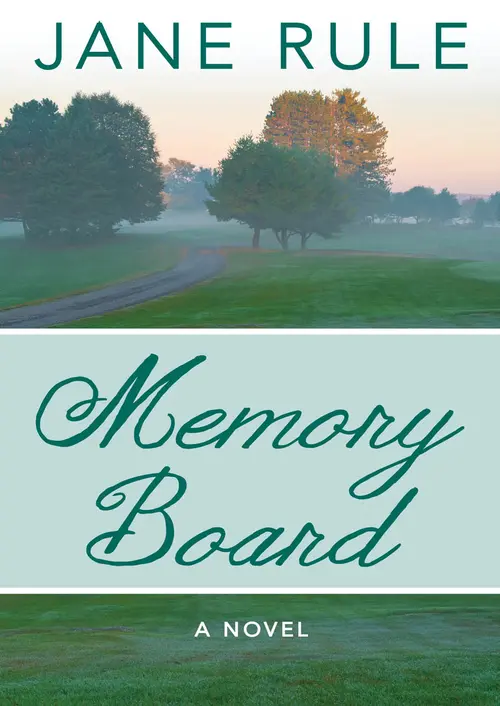
Memory Board
Cover

EARLY BIRD BOOKS
FRESH EBOOK DEALS, DELIVERED DAILY
LOVE TO READ?
LOVE GREAT SALES?
GET FANTASTIC DEALS ON BESTSELLING EBOOKS
DELIVERED TO YOUR INBOX EVERY DAY!


Dedication
for Eileen and John
— 1 —
‘OUR FATHER DIED IN childbirth,’ wrote David Crown, bearer of bad news (retired), as he sat with his hearing aid turned off at his desk in what had been the ironing room in the basement of his own house. It was an old line, one Diana, his twin, had found melodramatic and inaccurate rather than funny. Their father had been killed in a car accident on his way to hospital where their mother was already in labour. David used it again just the same, uncertain about whether he was writing it down for himself or Diana. Might she be able to hear it differently now, as a kind of cosmic joke on them both? But cosmic jokes had never been on them both. Throughout their childhood, years after they were a pair of bundled babies their mother didn’t always dress in pink and blue, people asked if they were identical twins, a stupidity which enraged David because for Diana it was a joke on him without offence to herself.
It was David who had developed an obsession about being a twin. He read that in nearly every culture twins were bad omens. In some cultures certain foods were proscribed for pregnant women to avoid multiple birth; David used to know which kinds just as he knew the curses twins had brought down and the tribes in which they were routinely killed at birth, one or both of them.
‘Well, they would have killed me,’ Diana said. ‘Why worry about it?’
Because for the first twelve years their birthday was also for their mother the anniversary of her young husband’s death, there was always something morbid about the fuss. After that, when she married again and had two more sons, it became a kind of apology to the twins, the unfortunates she didn’t know how to bring out of the shadow of her old grief into the light of her new life. It was a day for propitiating rituals and burnt offerings, against floods, earthquakes and fires their neglected adolescence might otherwise bring down on the new little family.
Appalled at being deposed by a stepfather, David clung to that mythic sense of himself as twin. But what he wanted of that sense was not identification but proof of absolute difference, to have a negative, a shadow self, a perfect inferior, available to him at all times when comparison was to his advantage, otherwise invisible. Later, contrite, he offered that description of himself to his sister.
‘Oh, D, you were never that bad. No five-year-old is that fully developed a male chauvinist pig.’
But such desires didn’t ‘develop’, or didn’t in David. He could remember waking up with them, as one does with the symptoms of disease, headache, sore throat, fever, and it seemed to him they crippled him into his adolescence much as polio might have. He could still sometimes feel the vestigial limp.
Until they went to school, David and Diana were two halves of an harmonious nature. Oh, they quarrelled occasionally, but their griefs were far more often mutual and sympathetic, a wonderful defence against their instinctively gentle mother, whose discipline was guilty and sporadic and easily deflected by their indignant howling.
Acutely aware that they lacked a father, their mother was particularly careful to supply David with the masculine toys he might have chosen (or might not), soldiers, pop guns, cowboy hats, a doctor’s kit. But he and Diana played with all their toys interchangeably. If David was the father and Diana the mother for her dolls, David bathed and changed and pretended to read to them in imitation of the only parent they had. They also spent hours designing battle fields for the soldiers, digging trenches, establishing look-out posts, arranging the troops in companies and scouting parties. At the end of the day, there was never a battle. They might occasionally pelt the soldiers with ripe plums from the overburdened tree in the garden, but it was more like breaking up building blocks for the next project than an act of destructive violence.
Out in the world, they held hands, David to protect Diana from cars, she to protect him from dogs. In bed at night, they sang through their crib slats to each other, giggled and were suddenly both deeply asleep when their mother came in to silence them.
It never occurred to either of them to tattle on the other. Their criminalities were shared. Even in the attention twins always attract, they didn’t compete but closed ranks to be sure they weren’t fussed over too intimately or deprived of treats adequate for them both.
‘Thank you, and one for D,’ each learned to say. They had the same name for each other, which even their mother couldn’t use since it didn’t distinguish them from each other. For themselves they didn’t need to distinguish. Differences didn’t matter.
Yet in a single day David learned not only to drop Diana’s hand but to call her all the new names of the kindergarten playground, chief of which was ‘girl’, the generic insult from which all others stemmed, Diana was a girl among the other girls, the untouchables.
Some of the other boys were also cursed with sisters, but they were older or younger, not humiliatingly in the same class. Diana expected to sit next to David, to roll out her nap rug next to his, to share juice and cookies.
‘You’re a girl,’ he said to her, frantic with this new information which didn’t seem to mean anything new to her at all.
What took David only a few hours to learn didn’t change her view of herself until months later, and then only imperfectly. Some of her confusion might have come from David’s own inconsistent behaviour, for, when they were at home alone together, they often played as contentedly as they had before, though now only with David’s toys, and he tried to make her feel it was a privilege.
‘Girls don’t usually play with soldiers,’ he said.
But he flatly refused to be bathed with her.
‘Girls are dirty.’
His mother gave in to him. He had only to say, ‘Boys don’t do that.’ Except for such obviously masculine chores as emptying the garbage, he got away with it.
Diana was never as easily impressed as her mother, but she saw David daily in his less certain command among his peers whose recklessness and cruelty often terrified him. There were boys who withdrew, but they had to suffer such taunts and bullying from the others that they were made to feel even beneath the girls, a humiliation David couldn’t have endured, for he would have to suffer it with Diana looking on. She was there, always there, watching.
‘See Dick run. …’
Little girls are not impressed with little boys. Only other little boys are. For them David tore his clothes and broke his bones. For them he caught the cat to be hanged from the school flag pole and stole light bulbs to be smashed in people’s driveways. Their approval could not change his sister’s growing disgust or their mother’s dismay. They couldn’t understand what David didn’t either.
‘I have to,’ David said.
Diana had no such compulsions.
‘Why don’t you have some of your own little friends over?’ their mother asked Diana when David excluded her from the pitched battles that now went on in their once basically scenic back garden.
‘They’re silly,’ she said, a judgment she wouldn’t apply to herself.
When David occasionally condescended to play on a boring Sunday afternoon, Diana more often than not wouldn’t on the excuse that she didn’t like the game or wanted to listen to some stupid radio programme.
‘You play with me if I say so,’ David demanded.
But he could never get her to do anything he wanted her to, but cry.
Nobody could, not their mother, not the teachers. How docilely David accepted the teacher’s judgement that being left-handed was babyish! No such shaming touched Diana. If she couldn’t use her left hand, she wouldn’t draw or write.
‘Baby D won’t,’ David crowed to their mother.
‘Why not?’ their mother asked.
‘This is my own hand,’ Diana answered, offering it.
How did she know that? Why hadn’t David, who had been clumsily ambidextrous all his life?
The twins were separated in the third grade, to give them emotional distance from the other. At the time, David was convinced that Diana had been sent to be among the slower and sillier children, and there may have been some truth in that, for Diana’s stubbornness made her an uneven student. She not only refused to use her right hand but refused to read aloud any story she didn’t like, and, since most stories reflected David’s view of the world rather than her own, she was often silent.
David missed her with what he later recognized as that mixture of emotions which overcomes people trying not to fall in love. He dreaded seeing her in the halls or on the playground and looked for her everywhere. His pack of friends, somehow sensing that tension, would at the sight of her begin to chant, ‘There’s your stupid sister. There’s your stupid sister.’ If she looked at David, he made a face. If she didn’t, something as sour and heavy as tears lodged in his throat.
At home he couldn’t leave her alone. He stole her pencil box, hid her shoes, tied up the dolls she now neglected, put dog turds on her pillow, worms in her milk. Sometimes she ignored him. Sometimes, if what he had done was really terrible, she’d hide or break a favourite toy of his, but more often she simply cried.
Their mother never spanked either of them. Their punishment was to be sent to their now separate rooms where David read his big-little books or listened to the radio, trying to pretend he liked being alone. Diana often exiled herself, preferring her own company, but David would choose anyone, even his sister, to avoid being by himself.
From the moment David realized he was supposed to be superior, he was terrified he wasn’t really. It was a cruel trick being played on him rather than on Diana. If you were a girl, you didn’t have to be somebody; you could be yourself. Nobody cared, or cared as much. Yet he wouldn’t have dreamed of trading places with her.
It took their mother as long as two years to decide to marry again because David got along so badly with Hugh Bacon, the man she wanted to marry. Hugh wasn’t in those early days unkind to David, or at least not often and then under such provocation that even David had to acknowledge it. He didn’t like to have fun when Hugh Bacon was around.
‘How about a game of catch?’ Hugh would suggest.
‘That’s okay.’ David would shrug to let Hugh know that he didn’t have to put himself out on David’s account. David was willing just to hang around the house keeping an eye on Hugh.
‘Why don’t we go out for ice cream?’
‘There’s already some in the fridge’
But David learned to sense when he’d pushed Hugh’s good humour to its limit, and David was afraid of him. Hugh was a large, strong, grown man. David was an underweight, bespectacled ten-year-old.
Diana wasn’t as blatant in her dislike of Hugh Bacon. Her practice of staying out of David’s way was useful to her in staying out of Hugh’s. Neither did she share David’s fantasy that they had power enough to prevent Hugh from taking a permanent place in their lives. Also, when Hugh was around, David was too busy laying traps for him to pay much negative attention to his sister.
In that way, Hugh seemed something of a relief to her.
Their mother never paid as much attention to Diana as she did to David, though David didn’t feel certainly her favourite. Diana didn’t demand attention simply for its own sake. Though David could squirm under his mother’s pleading little lectures about trying to be kinder to his sister, kinder to Hugh Bacon (whose first name David pronounced as if it were a bad smell, whose last name inspired David to grunt and squeal), any attention was better than none.
What small tenderness David allowed in his ten-year-old heart was reserved for his mother. She seemed to understand that, though gestures of affection were taboo in front of other people, David could be petted like a cat before he went to sleep at night. He hated the thought that anyone but he could bring that look of bright pleasure to her face when he surrendered a treasured stone or wild flower to her. David had no notion that he could protect and care for her because he didn’t see her need—a grown woman, his mother, whose role in life was to protect and care for him … and his sister. Even when she married Hugh, David understood it as a quite unreasonable punishment for his own worst misdeeds.
What shocked David even more than Hugh’s presence in his mother’s bed was her sharing of Hugh’s name, that awful name, when she had before been so nobly called, like her children, Crown, a gift from their mythically careless father. Hugh, the pig man, was turning her into a pig woman, disenfranchising her royal children. David’s two-year-long rebellion turned into stunned mourning, a mood Hugh could misinterpret for a while as something more positive and civilized than defeat. His mother knew, but David turned away from the apology in her eyes.
Hugh would, David supposed, have adopted both children if they had been at all receptive to the idea. They weren’t. Having had two years to hope the marriage wouldn’t take place, they were, at twelve, too old, too used to being fatherless, to risk the experience. If Diana wasn’t as shocked and threatened by the marriage as David, neither was she enthusiastic. It might, other things being equal, have drawn the two of them together again in the nearly forgotten mutuality which had worked so well for their benefit when they were little children.
But suddenly other things weren’t equal. Did David notice, even at the wedding, that Diana was visibly taller than he? Within a year, she was six inches taller than David, two inches taller than their mother! Not only did David have this awful man towering over him but his own sister as well, and she was developing breasts. David’s mainly scornful attachment to her changed to pure hatred. He teased her brutally, as if both her height and body were grotesque. ‘Giant boobs! Giant boobs!’ he taunted in his piping, as yet not even cracking child’s voice.
Diana was slow to realize her physical advantage, perhaps because David had succeeded in making her feel as mortified by it as he was. But finally one evening just before Hugh Bacon came through the front door, Diana gave David a mighty shove which toppled him over a chair. Then she fell on her brother, her hands at his throat, and he struggled helplessly under her intimate, astonishing weight.
Hugh pulled her off, saving David’s life, but then he thrashed David to within an inch of it while David howled, ‘It’s D’s fault. She pushed me.’ Hugh didn’t care if she had started it, he said, and then he gave David a brief lecture on what his behaviour with his sister would be henceforth, all protective gallantry, which was the only decent manifestation of his natural superiority over her.
‘But she’s bigger than I am,’ David whined.
‘Not for long,’ Hugh said, ‘and that’s beside the point. She’s a girl.’
At dinner Hugh decided they had too informal a household. From now on, he would hold their mother’s chair, and David would hold Diana’s. When she looked around mistrustfully, Hugh reprimanded her, telling her that a lady commands trust. This rotten new rule meant that David couldn’t pull the chair out from under her unless she was looking.
Later that evening, a remarkable thing happened. Hugh went to David’s room to apologize.
‘Your mother has pointed out to me that I set you a poor example by using physical force, and I agree with her. I also trust that in future I won’t have any reason to use it.’
After his own two sons were born, he thrashed them without reserve, but he never touched David again. Perhaps Hugh had been newly enough in love with David’s mother to listen to her. Perhaps the memory of David’s dead father also helped to stay his hand, but David gave his mother full credit for that small victory. If it cost Hugh anything, it cost David a great deal more.
To be a gentleman, he not only could not hit girls but had to somehow prevent them from attacking him. And he had to be trusted.
‘Oh, David darling,’ his mother pleaded, ‘do try to be a better boy.’
That’s all he was, after all. If he had to have a new role model, why could it not be someone his own age and size instead of that great pig bully? And if he had to be kind and polite to a girl, why couldn’t she be his own size as well instead of someone capable of killing him if he didn’t fall in line?
Hugh would have taken David to hockey games and taught him how to fish and hunt if David had let him. But David’s policy was to be indifferent to anything that interested Hugh. Hugh was no great reader. David took up books with a passion. Hugh thought music was simply a form of noise. David listened to it while he was reading to block out all domestic sound. He loved the walking base of boogie, the slow drag of the blues. He confessed to his mother that he’d like to try piano lessons.
Hugh might have been more generous about David’s interests if he hadn’t perceived them for what they were, mainly ways of annoying Hugh. If he had bought instead of renting a piano, David might have quit in the first six months. By the time Hugh grudgingly gave in and bought it, David was too hooked for such revenge. There was so much more power in filling the house with his own sound than in simply turning up the volume of the radio, which could be unplugged and removed. And his mother actually liked it.
But his mother was pregnant. David had a fantasy that the pig man blew into her a bit more every night until she was so huge she was in danger of exploding. Now her size, too, was repellent. All bodies began to disgust David.
His only relief, aside from playing the piano, was being disgusting with his pack, whose excremental sexuality suited his own. They stank up rooms with their farts and foul language, giggling more hysterically than girls over how dirty it all was, how revolting. They retched and rolled with laughter.
‘You’ll like having a baby sister or brother,’ their mother said.
‘Oh, I guess a brother would be okay,’ David answered, a momentary vision of someone who would be smaller than he, who would have to mind him, for a change.
David could not have imagined a creature so really tiny, helpless and commanding as Carl when he arrived. His fragility terrified David. It would be far too easy to kill such an enemy who nevertheless had the power to silence David as even Hugh couldn’t.
‘Not while the baby’s sleeping,’ his mother cautioned as David sat down at the piano. The little creep slept most of the time.
It was his crying which irritated Diana. ‘It doesn’t sound human,’ she said once, almost under her breath.
‘Girls are supposed to like babies,’ David said, not with rancour so much as surprise that she could dislike Carl as much as David did.
‘Girls are supposed to be a lot of things they aren’t.’
She was looking David directly in the eye. They were the same height.
‘Do you want to get out of here and go to a movie?’ David asked.
They couldn’t hold hands any longer, but David could walk on the outside. They were fourteen that winter of their peacemaking, and nothing was ever quite so hard for David again. His sister was the first real friend he ever made.
David looked down at the only line he had written and shrugged.
Even with his hearing aid turned off, David could hear the thumping of footsteps and the slamming of doors above his head, the hostile rumbling of his son-in-law, the outraged high notes of his younger daughter, Mary. If any violence occurred, it would be one-sided, Mary hurling yet another piece of family china at her husband’s head.
From the time Mary was a baby, it was like living with a faulty smoke detector. You could usually locate the cause of her tantrums, but her outrage was out of all proportion to it. Her parents’ bewilderment and increasing lack of sympathy inadvertently encouraged Mary to develop a generalizing self-righteousness to bolster her fury. If her older sister, Laura, was on the phone when she wanted to use it, Laura was always on the phone, always borrowing Mary’s favourite blouse without asking, was forever trying to boss Mary around. Laura, mild and self-possessed from the cradle, avoided Mary’s temper when she could and otherwise ignored it.
Mary’s husband, Ted, showed some forbearance, but Mary, as an adult, had improved her aim and was sometimes able to hit a source of guilt the victim generalized for himself. For Ted it was usually money. Though he made a decent amount of it, he was apt to hand it out indiscriminately like a latter day apostle.
The Story Continues on BooksBarbecue!
Enjoyed this preview? ❤️ Do not stop here!
Read the complete book free online → 🔗
Continue reading now on BooksBarbecue and discover every page!
Love reading? Bookmark BooksBarbecue.com for more amazing books!
Happy Reading!