Instead of the Thorn
Chapters (33)
- Chapter One
- Chapter Two
- Chapter Three
- Chapter Four
- Chapter Five
- Chapter Six
- Chapter Seven
- Chapter Eight
- Chapter Nine
- Chapter Ten
- Chapter Eleven
- Chapter Twelve
- Chapter Thirteen
- Chapter Fourteen
- Chapter Fifteen
- Chapter Sixteen
- Chapter Seventeen
- Chapter Eighteen
- Chapter Nineteen
- Chapter Twenty
- Chapter Twenty-One
- Chapter Twenty-Two
- Chapter Twenty-Three
- Chapter Twenty-Four
- Chapter Twenty-Five
- Chapter Twenty-Six
- Chapter Twenty-Seven
- Chapter Twenty-Eight
- Chapter Twenty-Nine
- Chapter Thirty
- Chapter Thirty-One
- Chapter Thirty-Two
- Chapter Thirty-Three
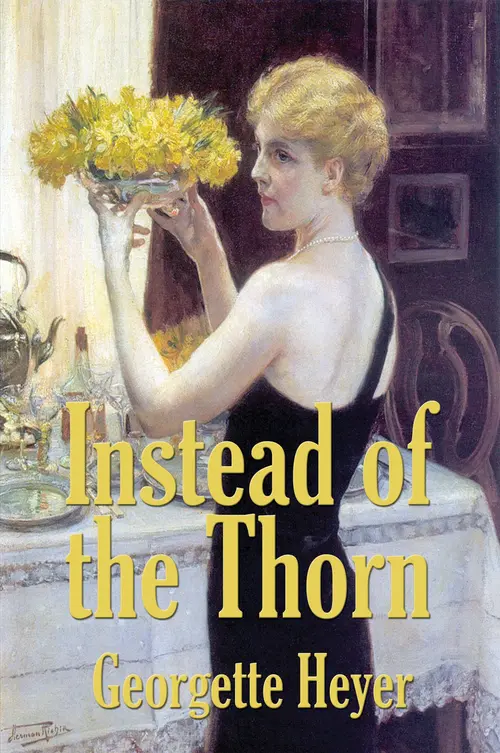
Instead of the Thorn
by Georgette Heyer
To Joanna Cannan
My dear Joanna,
There was once a Sealyham whom you named Elizabeth. The rest you know, and why I dedicate this book to you who so strangely inspired it.
But there are other reasons for my dedication which I think your humility will not let you see. You and I have discussed the fortunes of Elizabeth Arden not once but many times, and good counsel have you given me, and sympathy in moments of depression. Step by step you have followed the book’s growth until at last I put it into your hands, all in cold type, and you read it, and gave me a criticism that was careful, and shrewd, and very kind.
So because of these things, and because of the pleasant hours I have spent in your garden, and the delight I have felt in reading your work, I send you my book, such as it is, in admiration of your pen-craft, and with my love.
“Instead of the thorn shall come up the fir-tree. . .”
Isaiah; 55, 13
Chapter One
When she was seven Elizabeth asked Mr. Hengist to come and play with her in her bath, and Miss Arden, who was Elizabeth’s aunt, said:
“That’ll do, Elizabeth.”
Elizabeth knew by the way Miss Arden kept her eyes on her crochet that she ought not to have asked Mr. Hengist to come and see her in her bath, and quite suddenly, and for no tangible reason she felt that she had been naughty, and was ashamed. Only Mr. Hengist, who was Father’s friend, did not seem to think that she ought not to have said it. He smiled in a friendly, comfortable way, and said that he was much honoured. Only he did not come to the bathroom after all. Elizabeth thought that he would have come if Aunt Anne had not looked so forbidding.
Later on, when she was older, Elizabeth discovered that a great many of the things one did, like cutting one’s toe-nails and wearing a thicker vest in winter, must never be mentioned, except to Aunt Anne. Elizabeth could not understand this, and it seemed that Aunt Anne was unable to explain. She only said that you must not ask questions, and that nice little girls did not want to talk about underclothes and things like that. Elizabeth tried to tell her that she didn’t exactly want to talk about them, they were not interesting, but they were so ordinary and they formed such a large part of your life that it seemed strange not to be able to speak of them if the conversation turned that way. Aunt Anne just said that she hoped the conversation never would turn that way, and that Elizabeth had better run along and play with her doll.