Freedom
Cover
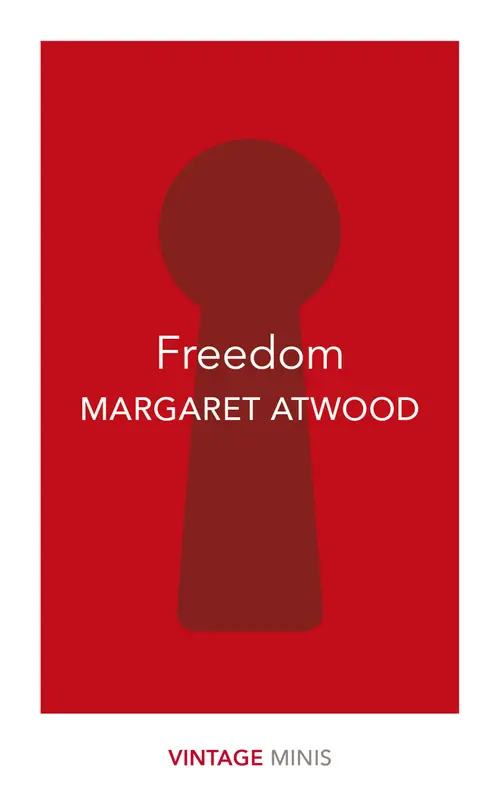
About the Book
‘There is more than one kind of freedom’
Can we ever be wholly free? In this book of breathtaking imaginary leaps that conjure dystopias and magical islands, Margaret Atwood holds a mirror up to our own world. The reflection we are faced with, of men and women in prisons literal and metaphorical, is frightening, but it is also a call to arms to speak and to act to preserve our freedom while we still can. And in that, there is hope.
This ebook contains selections from The Handmaid’s Tale and Hag-Seed by Margaret Atwood.
About the Author
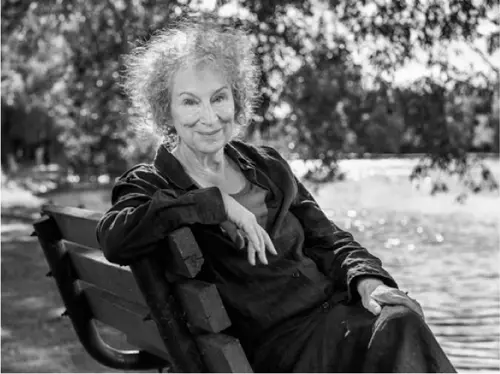
MARGARET ATWOOD is one of the world’s most celebrated writers and critics. Born in Canada in 1939, she has written over 70 books, among them prize-winning novels The Blind Assassin, Cat’s Eye, Alias Grace and The Heart Goes Last, acclaimed poetry, short stories and non-fiction, books for children and a graphic novel.
She addresses the theme of humanity’s freedom, or lack thereof, throughout her work, most notably in the internationally bestselling The Handmaid’s Tale. First published in 1985, the novel saw a marked resurgence upon the election of Donald Trump as US President in 2016. It was adapted into an Emmy Award-winning TV series of the same name in 2017. About its origins, Atwood has said: ‘One of my rules was that I would not put any events into the book that had not already happened in what James Joyce called the “nightmare” of history, nor any technology not already available. No imaginary gizmos, no imaginary laws, no imaginary atrocities. God is in the details, they say. So is the devil.’
Margaret Atwood was the first contributor to the Future Library with her book Scribbler Moon. The manuscript lies buried in a Norwegian forest and will be published in 2115. She is an outspoken activist for human rights and environmental causes and she and her partner, the writer Graeme Gibson, are Joint Honorary Presidents of the Rare Bird Society.
Recommended Books by Margaret Atwood
Hag-Seed
Alias Grace
The Heart Goes Last
We Are Double-Plus Unfree
‘A ROBIN REDBREAST in a cage, Puts all Heaven in a Rage,’ wrote William Blake. ‘Sufficient to have stood, though free to fall,’ wrote John Milton, channelling God’s musings about mankind and free will in the third book of Paradise Lost. ‘Freedom, high-day, high-day, freedom …!’ chants Caliban in The Tempest. Mind you, he is drunk at the time, and overly optimistic: the choice he is making is not freedom, but subjection to a tyrant.
We’re always talking about it, this ‘freedom’. But what do we mean by it? ‘There is more than one kind of freedom,’ Aunt Lydia lectures the captive Handmaids in my 1985 novel, The Handmaid’s Tale. ‘Freedom to and freedom from. In the days of anarchy, it was freedom to. Now you are being given freedom from. Don’t underrate it.’
The robin redbreast is safer in the cage: it won’t get eaten by cats or smash into windows. It will have lots to eat. But it will also not be able to fly wherever it likes. Presumably this is what troubles the inhabitants of heaven: they object to the restriction placed on the flight options of a fellow winged being. The robin should live in nature, where it belongs: it should have ‘freedom to’, the active mode, rather than ‘freedom from’, the passive mode.
That’s all very well for robins. Hooray for Blake, we say! But what about us? Should we choose ‘freedom from’ or ‘freedom to’? The safe cage or the dangerous wild? Comfort, inertia and boredom, or activity, risk and peril? Being human and therefore of mixed motives, we want both; though, as a rule, alternately. Sometimes the desire for risk leads to boundary-crossing and criminal activity, and sometimes the craving for safety leads to self-imprisonment.
Governments know our desire for safety all too well, and like to play on our fears. How often have we been told that this or that new rule or law or snooping activity on the part of officialdom is to keep us ‘safe’? We aren’t safe, anyway: many of us die in weather events – tornados, floods, blizzards – but governments, in those cases, limit their roles to finger-pointing, blame-dodging, expressions of sympathy or a dribble of emergency aid. Many more of us die in car accidents or from slipping in the bathtub than are likely to be done in by enemy agents, but those kinds of deaths are not easy to leverage into panic. Cars and bathtubs are so recent in evolutionary terms that we’ve developed no deep mythology about them. When coupled with human beings of ill intent they can be scary – being rammed in your car by a maniac or shot in your car by a mafioso carry a certain weight, and being slaughtered in the tub goes back to Agamemnon’s fate in Homer, with a shower-murder update courtesy of Alfred Hitchcock in his film Psycho. But cars and tubs minus enraged wives or maniacs just sit there blankly.
It’s the sudden, violent, unpredictable event we truly fear: the equivalent of an attack by a hungry tiger. Yesterday’s frightful tigerish threat was communists: in the 1950s, one lurked in every shrub, ran the message. Today, it’s terrorists. To protect us from these, all sorts of precautions must, we are told, be taken. Nor is this view without merit: such threats are real, up to a point. Nonetheless we find ourselves asking whether the extreme remedies outweigh the disease. How much of our own freedom must we sacrifice in order to defend ourselves against the desire of others to limit that freedom by subjugating or killing us, one by one?
And is that sacrifice an effective defence? Minus our freedom, we may find ourselves no safer; indeed we may be double-plus unfree, having handed the keys to those who promised to be our defenders but who have become, perforce, our jailers. A prison might be defined as any place you’ve been put into against your will and can’t get out of, and where you are entirely at the mercy of the authorities, whoever they may be. Are we turning our entire society into a prison? If so, who are the inmates and who are the guards? And who decides?
WE HUMAN BEINGS have been exploring the border between freedom and unfreedom for a very long time. Long ago, the alternative to freedom was not imprisonment but death. In the millennia we spent as hunter-gatherers, we had neither passwords nor prisons. Everyone in your small group knew and accepted you, though strangers were suspect. No one got put in jail, because there were no buildings to serve that purpose. If a person became a threat to the group – for instance, if he became psychotic and expressed a desire to eat people – it would be the duty of the group to kill him, whereas nowadays it would be the duty of the group to lock him up, in order to keep others from harm. A justice system with an incarceration option depends on permanent architecture: you can’t throw someone into a dungeon unless you have one.
After the advent of agriculture, the alternative to freedom became not death but slavery. It was now more desirable to enslave the threats to your group than to kill them. That way, they could be set to work tilling your soil, thus creating a surplus for you and making you rich. Sampson isn’t tossed off a cliff, as were the captured male Trojans in the Homeric epics. Instead he is blinded and set to work grinding grain like a donkey.
Of course, once the profitability of slaves had been recognised, the rule of supply and demand created a thriving market for slaves. You could find yourself enslaved not only by being on the losing end of a war, but by being in the wrong place at the wrong time: in the path of a slave-raiding party, for instance.
In the medieval period, everyone in the upper percentages wanted a castle, and every castle had a dungeon: dark, dismal, cold, hopeless and rat-infested, or such is their filmic image. Dungeons were status symbols: everyone who was anyone had one. They had multiple uses: you could keep witches in them until it was time to burn them; you could shackle criminals in them, though it was often more economical to just hang them; and you could put rivals to the throne in them until you could fabricate enough evidence to proclaim them traitors and chop off their heads. And dungeons could be valuable wealth-creators, since holding foreign nobles for ransom could be lucrative. The trade was simple: you, the dungeon-possessor, got a lump sum of cash, and your prisoner got his freedom. In the reverse version, you paid a foreign dungeon-owner to sequester the political enemy of your choice.
And so it went, for hundreds of years, up to the modern age. In the 19th century, freedom and unfreedom began to assume their present-day forms. ‘Freedom’ had become reified by the 18th-century Enlightenment: it was what the embattled farmers of the American revolution were supposed to have been fighting for, though in practical terms they were fighting for the freedom of not paying taxes to Britain. The French revolutionaries started out with liberty, equality and fraternity, a noble ideal which included freedom from the aristocrats, though in the short term it ended in tears, thousands of severed heads and Napoleon.
But once Byron got hold of freedom, there was no turning back: freedom as an idea was here to stay. His The Prisoner of Chillon was romantic because he didn’t have freedom; that dubious character, Fletcher Christian, mutinied against Captain Bligh – in Byron’s version – as a gesture against tyranny and a bid for freedom. And Byron himself lost his life while fighting, more or less, for the Greeks in their attempt to regain their own political freedom. Not ‘Dieu et mon droit’ but ‘Freedom’ was engraved on the banner waved by many a 19th- and 20th-century revolutionary: slaves’ freedom from slavery in the American south, South Americans’ freedom from Spain, Russians’ freedom from the tsar, workers’ freedom from capitalist exploitation, women’s freedom from patriarchal systems in which they had the rights of children but the responsibilities of adults. And, eventually, freedom from Nazism and Iron Curtain Communism.
Freedom to write, freedom to publish, freedom of speech: all are still being fought for in many countries in the world. Their martyrs are numerous.
With so many so willing to die in its name, why have citizens in many western countries been willing to surrender their hard-won freedoms with barely more than a squeak? Usually it’s fear. And fear can come in many forms: sometimes it comes down to the fear of not having a paycheque. As long as the trains run on time and you yourself are employed, why make a fuss if a few people here and there are being strung up by their thumbs?
And by the time the thumb-stringing really gets going, fear of another kind sets in. You can protect your thumbs only by staying below the surface of the frog pond: don’t stick your head up or croak too loudly, and, you are assured, as long as you don’t do anything ‘wrong’ – a shifting category – nothing bad will happen to you.
Until it does.
And since the free press will already have been suppressed, and since any independent judiciary will already have been dismantled, and since any independent writers, singers and artists will already have been squashed, there will be no one left to defend you. If there’s one thing we ought to know by now, it’s that absolutist systems with no accountability and no checks and balances generate monstrous abuses of power. That seems to be an infallible rule.
BUT ALL OF that may seem a little old-fashioned. It harks back to the mid-20th century, with its brutalism, its strutting dictators, its mass military spectacles, its crude in-your-face uniforms. The citizen-control methods of modern western governments are much more low-profile: less jackboot than gumboot. Our leaders are applying the methods of agribusiness cattle-raising to us: ear-tag, barcode, number, sort, record. And cull, of course.
That’s where the prison system comes in: shorn of its short-lived idealism – no longer a reformatory where criminals are to be reformed, no longer a penitentiary where they are to repent – it has become a warehouse where people are stashed. In its for-profit mode, it has also become a gizmo for creating more criminals, all the better to fill its available slots and extract money from taxpayers to foot the bill for it.
In the US, young black men are disproportionately represented in the prison population; in Canada, it’s young First Nations men. Are we incapable of thinking up anything more effective, and at the same time less costly, such as better education and better job creation? But maybe it serves the powers that be to foster the conditions that create scary people and have them running around, so we ourselves will see the logic of paying to lock them up.
Digital technology has made it easier than ever to treat people like domesticated animals farmed for profit. You can no longer rent a car or a hotel room or buy much of anything without a credit card, which leaves a digital trail wherever it goes. You’re told you need a social security card, a health card, a driver’s licence, a bank card, a bunch of passwords. You need an ‘identity’, and that identity is digital. All your numbers and passwords – all the data that identifies you – is supposed to be private, but as we know by now, the digital world leaks like a sieve, and security on the internet is only as good as the next mastermind hacker or inside-job data thief. The Kremlin has gone back to using typewriters for a good reason: it’s a lot easier to smuggle a memory stick out of a secure area than it is to make off with a big stack of papers.
So, what to do? In William Gibson’s Neuromancer trilogy, most of the citizens are ear-tagged just like us, but some are able to exist under the radar by virtue of having no official record. Either they’ve wiped it or altered it, or they’ve avoided having one in the first place. But it would take a lot of agility and possibly a reservoir of basic survival skills for anyone to live without the required identity. Under a bridge, maybe; in a house, not.
The majority of us are double-plus unfree: our ‘freedom to’ is limited to approved and supervised activities, and our ‘freedom from’ doesn’t keep us free from a great many things that can end up killing us, with our bathtubs being just the beginning. Freedom from toxic chemicals in the air and water? Freedom from floods, droughts and famines? Freedom from defective automobiles? Freedom from the badly prescribed drugs that are killing hundreds of thousands of people a year? Don’t hold your breath.
It’s not all bad, however. All technology is a double-edged tool, and the very internet that has too many data-leaking holes in it also allows words to travel quickly. It’s easier to reveal abuses of power than it once was; it’s easier to sign petitions and to protest. Though even that freedom is double-edged: the petition you sign may be used by your own government in evidence against you.
One of Aesop’s fables concerns the frogs. They told the gods they wanted a king, and the gods threw down a log to be their ruler. It floated here and there and didn’t do anything, and for a while they were content. But then they began complaining, because they wanted a more active king. The gods, annoyed, sent them a stork, which ate them up.
Our problem is that our western governments, increasingly, are an unpleasant combination of both the Log King and the Stork King. They’re good at asserting their own freedom to spy and control, though bad at allowing their citizens as much freedom as they formerly enjoyed. Good at devising spy laws, bad at protecting us from the consequences of them, including false positives. Who says you are who you are? Whoever can alter your data.
Though our digital technologies have made life super-convenient for us – just tap and it’s yours, whatever it is – maybe it’s time for us to recapture some of the territory we’ve ceded. Time to pull the blinds, exclude the snoops, recapture the notion of privacy. Go offline.
Any volunteers? Right. I thought not. It won’t be easy.
From The Handmaid’s Tale
OFFRED IS A Handmaid in the Republic of Gilead. Her only function is to breed, to bear the child of her Commander on behalf of his wife. If she deviates from her duty, she will, like dissenters, be hanged at the wall or sent out to die slowly of radiation sickness. She chose this life – though the other option was exile to the Colonies. That has been one of her few freedoms in this repressive state where, separated from her husband and daughter, she can trust no one.
One
DOUBLED, I WALK the street. Though we are no longer in the Commanders’ compound, there are large houses here also. In front of one of them a Guardian is mowing the lawn. The lawns are tidy, the façades are gracious, in good repair; they’re like the beautiful pictures they used to print in the magazines about homes and gardens and interior decoration. There is the same absence of people, the same air of being asleep. The street is almost like a museum, or a street in a model town constructed to show the way people used to live. As in those pictures, those museums, those model towns, there are no children.
This is the heart of Gilead, where the war cannot intrude except on television. Where the edges are we aren’t sure, they vary, according to the attacks and counterattacks; but this is the centre, where nothing moves. The Republic of Gilead, said Aunt Lydia, knows no bounds. Gilead is within you.
Doctors lived here once, lawyers, university professors. There are no lawyers any more, and the university is closed.
Luke and I used to walk together, sometimes, along these streets. We used to talk about buying a house like one of these, an old big house, fixing it up. We would have a garden, swings for the children. We would have children. Although we knew it wasn’t too likely we could ever afford it, it was something to talk about, a game for Sundays. Such freedom now seems almost weightless.
WE TURN THE corner onto a main street, where there’s more traffic. Cars go by, black most of them, some grey and brown. There are other women with baskets, some in red, some in the dull green of the Marthas, some in the striped dresses, red and blue and green and cheap and skimpy, that mark the women of the poorer men. Econowives, they’re called. These women are not divided into functions. They have to do everything; if they can. Sometimes there is a woman all in black, a widow. There used to be more of them, but they seem to be diminishing.
You don’t see the Commanders’ Wives on the sidewalks. Only in cars.
The sidewalks here are cement. Like a child, I avoid stepping on the cracks. I’m remembering my feet on these sidewalks, in the time before, and what I used to wear on them. Sometimes it was shoes for running, with cushioned soles and breathing holes, and stars of fluorescent fabric that reflected light in the darkness. Though I never ran at night; and in the daytime, only beside well-frequented roads.
Women were not protected then.
I remember the rules, rules that were never spelled out but that every woman knew: don’t open your door to a stranger, even if he says he is the police. Make him slide his ID under the door. Don’t stop on the road to help a motorist pretending to be in trouble. Keep the locks on and keep going. If anyone whistles, don’t turn to look. Don’t go into a laundromat, by yourself, at night.
I think about laundromats. What I wore to them: shorts, jeans, jogging pants. What I put into them: my own clothes, my own soap, my own money, money I had earned myself. I think about having such control.
Now we walk along the same street, in red pairs, and no man shouts obscenities at us, speaks to us, touches us. No one whistles.
There is more than one kind of freedom, said Aunt Lydia. Freedom to and freedom from. In the days of anarchy, it was freedom to. Now you are being given freedom from. Don’t underrate it.
IN FRONT OF us, to the right, is the store where we order dresses. Some people call them habits, a good word for them. Habits are hard to break. The store has a huge wooden sign outside it, in the shape of a golden lily; Lilies of the Field, it’s called. You can see the place, under the lily, where the lettering was painted out, when they decided that even the names of shops were too much temptation for us. Now places are known by their signs alone.
The Story Continues on BooksBarbecue!
Enjoyed this preview? ❤️ Do not stop here!
Read the complete book free online → 🔗
Continue reading now on BooksBarbecue and discover every page!
Love reading? Bookmark BooksBarbecue.com for more amazing books!
Happy Reading!