Chapters (77)
- Title Page
- Contents
- Dedication
- Book 1
- Part 1
- Chapter 1
- Chapter 2
- Chapter 3
- Chapter 4
- Chapter 5
- Chapter 6
- Chapter 7
- Chapter 8
- Part 2
- Chapter 9
- Chapter 10
- Chapter 11
- Part 3
- Chapter 12
- Chapter 13
- Chapter 14
- Chapter 15
- Chapter 16
- Part 4
- Chapter 17
- Chapter 18
- Chapter 19
- Chapter 20
- Chapter 21
- Chapter 22
- Chapter 23
- Chapter 24
- Part 5
- Chapter 25
- Chapter 26
- Chapter 27
- Chapter 28
- Chapter 29
- Chapter 30
- Chapter 31
- Chapter 32
- Part 6
- Chapter 33
- Chapter 34
- Chapter 35
- Chapter 36
- Chapter 37
- Chapter 38
- Chapter 39
- Chapter 40
- Chapter 41
- Part 7
- Chapter 42
- Book 2
- Part 8
- Chapter 43
- Chapter 44
- Part 9
- Chapter 45
- Chapter 46
- Chapter 47
- Part 10
- Chapter 48
- Chapter 49
- Part 11
- Chapter 50
- Chapter 51
- Chapter 52
- Chapter 53
- Chapter 54
- Chapter 55
- Chapter 56
- Map of The Land
- Acknowledgments
- About The Author
- Also By Neal Stephenson
- Copyright
When he looked down into the forest he heard a sound that was like the chaos and feared for a moment that all he had built was unraveling. But descending through the forest to investigate he found the veins in the land carrying away the melted snow. At first it ran straight and hissed at him. Sensing that this was wrong, he attended to it for a time, and made it whirl, course, and leap like the wind that had carried away the leaves, but more visible, and louder. But after he had improved it, its loudness was not the stupid hiss of the chaos but a pleasing rush and burble.
The ground was all black adamant, as if the memory of green had faded, but presently returned to its correct color as the tiny leaves reconstituted themselves. Bigger leaves appeared on the trees’ branches, red at first until he sensed that this was a mistake and that they ought to be green in the beginning. So the time of the white and the black was replaced by a time when nearly everything was green. He looked into the sky one day when things seemed uncommonly bright and saw a brilliant thing shining down from it, and later noticed that it was moving across the sky in a steady arc. He knew somehow that this was correct and later discovered “sun” in his memory. In due course “moon” followed.
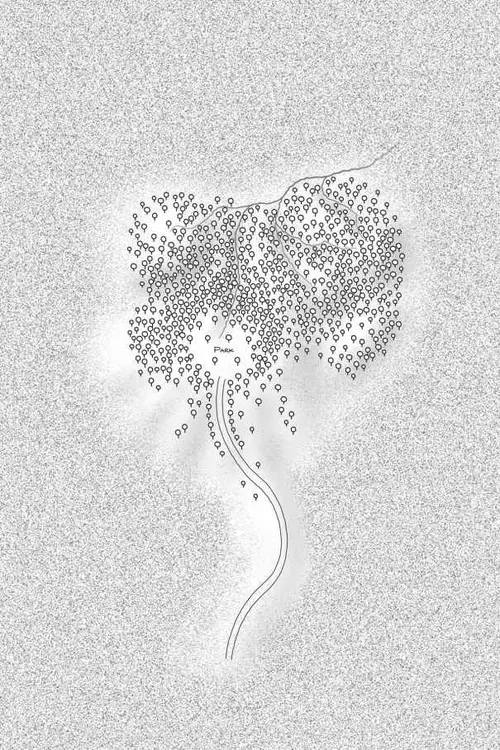
The green time led to a changing of the leaves’ colors, so that one day with a feeling of satisfaction and even triumph he was able to gaze down the length of the street from the park and see the whole place just as he had first seen it at the beginning, save that everything about it was much more perfectly rendered than at first. “Seasons” were these gradual changes in the color and the shape of the place, and he knew that, having gone round through one cycle, it would happen again without the need for him to work it all out and fix problems. Just to satisfy himself of that, he looked on with much less problem-fixing as the leaves fell again and made the red lake, and turned brown, and scuttled about in the wind, and were replaced by the snow and then the green. The seasons were four, and they made up a year.
He let several years cycle, inspecting and improving matters as he went along. All of the seasons were beautiful and pleasing in different ways and all of the changes more or less interesting, but the part of the year that most troubled him—in the sense of a thing that pulled at his mind in some manner he could not satisfy—was the scuttling of the dry leaves at the beginning of the winter.