Empty Words
Chapters (12)
Cover
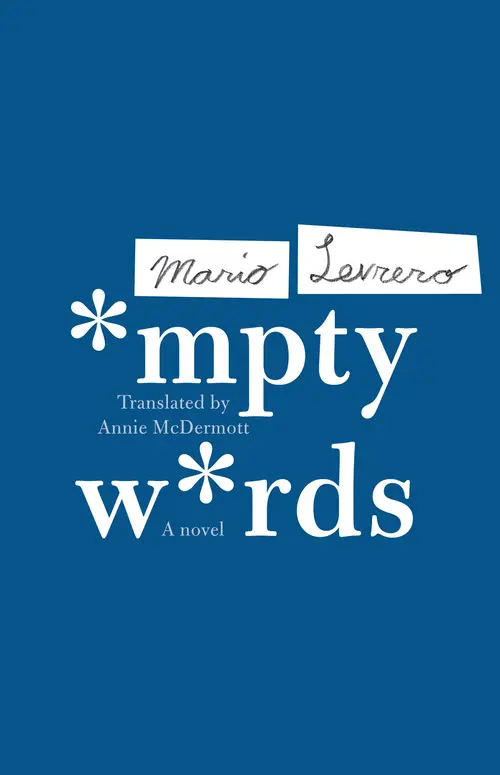
Empty Words
Title Page
Empty Words
Mario Levrero
Translated by Annie McDermott

Minneapolis
2019
Dedication
This book and its contents exist in relation to my wife, Alicia, and her world. Although it goes without saying, I should emphasize that this novel is dedicated to Alicia, Juan Ignacio, and Pongo the dog—in other words, to my family.
M. L., MONTEVIDEO, OCTOBER 1996
Translator’s Note
Translator’s Note
When asked by one interviewer to name his influences, Mario Levrero listed Mandrake the Magician, a comic-strip hero who hypnotized his enemies, along with Lewis Carroll, tango music from the 1940s, detective novels, the Beatles, and the early days of Tía Vicenta, a satirical Argentinian current affairs magazine. “It’s a mistake to expect literature to come only from literary sources,” he said, “like expecting a cheesemaker to eat nothing but cheese.” The Levrero archive in Uruguay’s University of the Republic is similarly heterogeneous, containing records of homeopathic treatment, a guide to yoga exercises, graphs showing how much time he spent on the computer each day, drawings of the students in his creative writing workshops, and a personal set of homemade tarot cards.
In Latin America, it’s said that Chile produces poets, Argentina produces short story writers, Mexico produces novelists, and Uruguay produces “los raros”—the strange ones. Levrero was a raro of the highest order, though he rejected the label, complaining that it meant journalists and critics were forever wanting him to do new strange things. “It would be far more interesting for them if, instead of writing, I committed a murder,” he grumbled in a famous “imaginary interview” he conducted with himself. Still, it’s hard to think of a more fitting category for this uncategorizable writer who refused to be bound by rules or conventions and for whom the “only thing that matters in literature is writing with as much freedom as you possibly can.”