Diwata
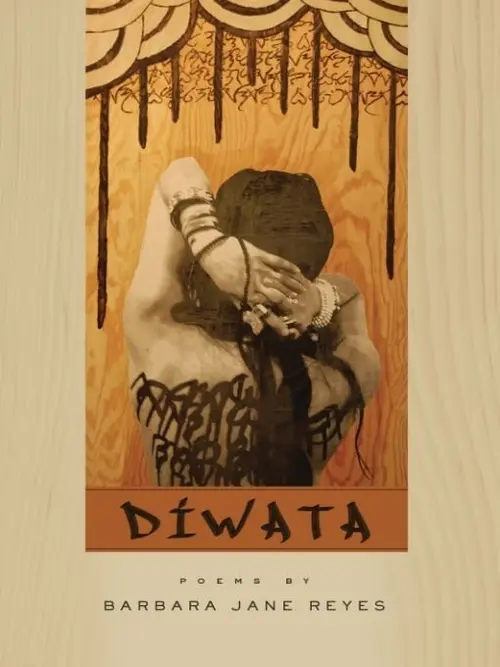
Title Page
Dedication
For Tita Alice Pulmano
1939–2006
Storyteller, Spirit
For Eustaquio Garcia Pulmano, MD
1912–2007
Monument, My Papa
“Pic, pic, pic, tic, tic, tic, Look thou god of the air and lord of the birds. With only a peck of thy strong beak thou wilt give us freedom. Thou wilt be joyful at seeing us, and we shall thank thee with all our hearts.”
The sound came from the bamboo reed—persuasive and distinct. “Should I peck on the reed?” the cautious Manaul hesitated. At that very moment, the bird thought he saw a lizard scamper up the reed. Suddenly, as a reflex action, he jumped and pecked hard.
The bamboo cracked and slowly split open. Lo and behold, the first man and the first woman sprang from inside the hollow space of the bamboo node!
Sicalác, the male, was strong and handsome and was named Malakás, meaning strong. Sicabáy, the female, was beautiful and lovely and was named Magandá, meaning beautiful. Since then, men were called si Lalác or lalake, and women were called si Babay or babae.
—Penélope V. Flores, “Malakás at Magandá”

And the Lord God caused a deep sleep to fall upon Adam, and he slept: and he took one of his ribs, and closed up the flesh instead thereof;
And the rib, which the Lord God had taken from man, made he a woman, and brought her unto the man.
And Adam said, this is now bone of my bones, and flesh of my flesh: she shall be called Woman, because she was taken out of Man.
Therefore shall a man leave his father and his mother, and shall cleave unto his wife: and they shall be one flesh.
—Genesis 2:21–24
A GENESIS OF WE, CLEAVED
A GENESIS OF WE, CLEAVED
In the beginning, a man of dust and fire became bone, and viscera, and flesh. The deity of the wind blessed his lips, and he came to take his first breath. Within this strange vessel, I opened my eyes, and within this, your darkness, I learned to weave song. Do you remember me fluttering inside your chest, tickled by the cool air newly filling your lungs? Do you remember exhaling song on this first day?
On the second day, the unseen hand from above cleaved you in two, exacting penance for our joy as you awakened from the deepest, most delicious dreaming. On the second day, my love, I was torn from the haven of your blood, the cradle of your flesh and tendons. A smarting wound strewn across our garden’s sweet grasses, I lay raw and aching. On this second day, my hands and feet learned how relentless the cold.
On the third day, I found river, and plunged the wisp of my body into its current. As I learned to breathe without you, as I mimicked the river’s lullaby, you appeared upon its banks, your body so fissured, your eyes the ravaged jewels of an umber earth. There were no words for the sorrow bolting through me then, as I watched your hands touch the scarring place where I began. On this third day, my mirror, we learned lamentation, and shadow.
On the fourth day, I sang a dirge, the river my harmony. From afar, you watched me, as the unseen hand from above offered you reparations for your brokenness. More than anything, I thirsted to embrace you in our ocean, for its saltwater to heal us both. But my mirror, the memory of your darkness welled up inside me every time I drew near. On this fourth day, I learned to weep. On this fourth day, the scars hardened over your heart.
On the fifth day, I dreamed such fire, the birth of suns and thunder. I dreamed this garden, reduced to ash. I dreamed that from loss, we began again, a we that knew only of being whole, of sharing heart, and breath, and salt. A feast of we, luminous as the secret of fruit and seed. A we impervious to cleaving, to fracture. On this fifth day, I opened my eyes and I came to know of hope.
On the sixth day, I came to you, and told you of this dream. I touched your scars. You whispered a prayer. I gave you my secrets. You gave me your words. I asked for your breath. You gave me your seed. And as our bodies folded into each other, we dreamed the same honeyed light. Upon awakening, you named me for the morning. But on this sixth day, the unseen hand from above wrested you from me, cleaved us in two once again, and weighted the heaviest sorrow upon me. Never once did he show himself.
On the seventh day, my love, I surrendered.
THE BAMBOO’S INSOMNIA
THE BAMBOO’S INSOMNIA
I can’t sleep. There is a poet stuck between the love lines of my palms. And I would tell her to get out if I could, but there is a poet stuck inside the cradle of my bones and tendons.
DIWATA
1.
There once lived a strange deity who was only strange because few strove to know her. ¡Bárbara! ¡Que barbaridad! taunted her eldest brother, who was lightning. Her own light was confined to a glass vial. She knew stars an ascension of pearls hung by Gigante on the highest tree boughs. When he danced, earth descended beneath his feet. There below, a vain woman, earthbound. She knew tongues of many men, those who brought boats and steel, those who brought silks and jade, those who brought the cross.
But this story lacks proper symmetry.
A woman’s hands make fine threads dance. With needles of carabao horn, of bamboo, she embroiders names into silk—serpent ulap scale luna fire lihim gem azul eye liwanag river mariposa light talà—when she weaves these words into the fabric of sky, a charm against forgetting. With ink and thread she draws her own hands pero siempre estas manos desaparecen; she weaves enkanto contra palabras vaporosas, poemas contra vacía alma. And when her face begins to resemble the porcelain virgin’s face, for this firelight causes much to appear, still she sings: o diwata, your words are our breath! O diwata, our words are our offering to you!
2.
Some say thunder, child of the earth, calls to lightning, child of the sky, because they are twins, split in two by their spirit father. As the mortal woman ascended with her lover, the path through clouds to sun burned. Her flesh also burned. The child below the villagers wished to keep, so that the spirit father would always return to them.
Yes, he cleaved his son in two. And from these halves, the one skybound grew a new self just as the butiki who’s lost his tail. The one below would have perished had not the spirit father descended and breathed his breath into the lifeless half body. This one, how his voice booms when his twin brother streaks across heaven.
And their sister, the strange diwata whose light remains contained. Witness she is, and weaver. If she would only speak, then she would tell you—these stories I give you, I swear they are the truth.
3.
Before this time, sky was high as a tent. Children poked clouds with bamboo sticks. Some could jump high enough to touch it with their fingertips. When headhunters danced around the bonfire, keeping vigil, their blades pierced the skins of the gods.
…Yes, hija, we were headhunters once, our people…
There, the battlefield between forest and river’s edge, littered with headless bodies. The heads they took to their own village for they believed the soul resided there. Beyond the distant lowlands, a deity whose winged head our god buried with the remains of the serpent who ruled the clouds. The orphan spirit, whose body our god set afire. This is how he invited his enemy’s soul to be his spirit guardian.
Some also say, this was how the first coconut tree came to grow.
4.
Once a diwata stole fire. He brought it to the riverbanks where the earthdiver shivered, unclothed. This was her fate for peering through the hole in the clouds while her father hunted the red deer and the wild boar. She had grown tired of animal bones scattered, a house of musk and taut skins. How she’d wince as her father’s sharpened teeth pierced his prey’s liver.
There is no secret in fire, the diwata told her years later, after they had wed, after the ocean floor’s black mud bubbled to the surface, birthing islands. Others say the maya bird taunted sky, and ocean revealed its hidden contents in epic warfare. But the earthdiver remembers it this way: mighty Lawin dropped her upon the back of the eldest tortoise. Masqueraded as dove, Lawin cooed, Paloma, paloma, dalagang paloma! Amorcita paloma, minamahal kita, paloma! He took her there, he gave her child. She fled deep into the glowing darkness of salt caves, where the virgin draped in sky wept silver tears. She taught young village girls to guard its entrance and wail. O diwata, kaawaan po ninyo ako! But he pursued, captured her. Dalaga, dalaga, dadagitin kita, dalaga! A tent of skins and tools carved of animal bones, these were her dowry.
5.
He took me, from my hole in the clouds. He took me, gripped between his talons. I feared that if I tried to escape, I would fall into the deepest, the bluest ocean. I knew for sure I would drown, for I had lived my entire life in my father’s realm and had never before touched water. When mighty Lawin came with his sugared words, I leaned farther over the edge than I should have. But so pretty, his words. Upon the shell-mound of kind Pawikan, there, Lawin took me and took me, and Pawikan could do nothing. I knew my brothers too would do nothing. There, he tore me in two.
My child, your father’s eyes. My child, one day you will fly.
6.
The child tore at his mother’s breast for he was born with talons and a tendency towards treetops. When he grew old enough to climb, he built a nest in the knotted, ancient tree and refused to descend despite his mother’s calls, despite her tears.
She brought the child rice wrapped in banana leaves. She whispered, tabitabi po, to the air around her. She bowed as she approached the tree’s giant roots which forced up earth and made caves. Ants and the anito lived in these. Everyday she did this. She feared he would starve, but the spirits of the tree taught him to lure and snare bee-eaters, flame-breasted doves. Kalapati, kalapati! Kalapati, kalapati! He’d sing and coo; he’d cradle sunbirds in his claws and then crush their fine bones.
A season ago, hunters’ arrows felled mighty Lawin. After this, she lived alone. She dreamed his plumage adorned elders’ headdresses by firelight. How they’d bare their blackened teeth. How these with the blackest teeth were most beautiful. How she never returned to her father’s realm.
7.
On the darkest nights, some say a tree spirit takes off her wings to bathe in the forest lake, and her wings the hunter hides in the heart of mangrove thickets. No ancient forest spirit he is, but a man. In the wet earth, tracks like no other, and no scent. Because he is a hunter, he lures her to his village home. Because she is diwata, she feigns capture. For his every kill, the elders have marked his skin with glyphs resembling reptile scales, owls’ eyes, thunderbolts. Sunbursts and daggers along his arms’ sinews. And one day, perhaps today, to be inscribed where the rib cage opens, a circle broken, pointing upwards to its own center. Hanging from his earlobes, this same symbol, carved of carabao horn, washed in the animal’s blood.
The old ones say when he hides her wings, she sits upon a rock and weeps. He clothes her in a gown of tree bark. He warms her body with his own. He teaches her to weave dancing women, leaf storms, rice terraces into midnight colored cloth. The old ones say she uses human hair to bind mother of pearl shells to boars’ teeth, and human skulls to doorposts.
…Yes, hija, our people, once headhunters…
8.
I am the tree, and thinking me naked, he blankets me in a dress of my own skin. Upon my head, a wreath he’s weaved from the leaves and branches of my own crown. This death shroud for the living, though he believes himself to be kind-hearted in this gesture. His arms are sturdy from hewing down many of my kin, and his body smells of the animals whose lives he takes. I could flay him, and fashion a musky death shroud of his skin. But when he comes to me, mute, clothed in the scent of the dying, and seeking passage through my thickets—tell me, would you not also allow him entrance?
POLYGLOT INCANTATION
POLYGLOT INCANTATION
Siya ay nakatayo sa balikat ng bundok
She stands upon the mountain’s shoulders
Langit ay kulay ng ginto at dugo
Sky’s the color of gold and blood
Sumisigaw siya ¡Mira! ¡El sol!
See how the sun weeps
Tingnan mo! Umiiyak ang araw!
How this mountain slope burns
Nag-aapoy siya rin
Sky’s the color of black pearls
Iyan lagi ang sa aking panaginip
This have I prophesied
Ang mukha ng araw ay umiiyak
And what are these glyphs
Wikang matemátiká
Some human machinery
Símbólo, enkantada, o gayuma
Maker of souls and tongues
Anong pisi o balat ng ahas
What twine or serpent skin binds
Silangan at kanluran
Pearl of the Orient
Este punto del embarco
Fractured archipelago
Ang mga anak mo ay nakakalat
Your children have scattered
Cielo el color de perlas negras
Do not forget that they have names
May sariling pangalan ang aming diwata
HUMMINGBIRD DIWATA
HUMMINGBIRD DIWATA
Today the sun throws on his cloak of aquamarine plume, polishes his golden crown. Today he tires of courting the moon, fickle woman with so many suitors. So much song composed to call her down, there, where hawks perch and where the falcon’s cry pierces the sleek blue gem of sky.
Today the sun descends and his aquamarine cloak becomes a field of violets, a handful of rubies. There are so many sweet flowers to soothe the hurt of the moon’s constant thwarting. Even the sun tires of the chase. There are so many sweet flowers, and they open themselves like trumpets to show him their light, their own little moons of nectar. He pierces these fresh moons when he kisses. From his darting wings, his flitting tongue, poems to carry upon seawind and saltwind. Today, he promises them a salve of rain.
EL MÁS SUPREMO
EL MÁS SUPREMO
In the penthouse resides El Más Supremo, and none but the servants are allowed entrance into his suite. Barefoot, jangling brass anklets, they bring him the softest cloth and silks woven by virgins to drape upon his divans. Lazing about in linen robes, he gazes up at his ceiling, a clear dome filled with night sky. There in the stars, a tattooed prince, a many-headed beast slain by his hand. There, the string of pearls given to his princess. There, she waves away malevolent spirits by mimicking the ocean.
El Más Supremo sips chilled palm wine mixed with blue liqueur and the juice of calamansi, served in hollowed-out young coconut vessels. What meat has been scraped from inside of this shell, the chefs soak in this same azure cocktail, then sprinkle with sea salts and green sili.
What a banquet for El Más Supremo’s eyes, these panorama sunsets the color of orchids, trees of the beloved orphan spirit swaying in guava-scented breezes. Processions from afar bring tithes from pearl farmers and miners of silver. Those who harvest rice fields also come to bring tribute. They do not stop to ask what he gives in return.
From above he cannot smell the salt of their bodies, nor can he see the lines carved into their brows. From above, the numerous are so very small.
MANILA MANGO
MANILA MANGO
The Manila mango drips faster than my lips can catch it; in the manner of a Gauguin Tahitian portrait. The native girl with bare breasts points her eyes to the syphilitic man stealing her soul for art. “The bitch, she is,” he could tell his shipmates, “when she refuses my advances.” Another downcast look to her father, the chieftain, who moans when he sees her. The bitch, she is, for not coming home when she was told.
The sky is never gray and can’t help but shrivel the fruit—if only there were some clouds to push out at it. But clouds would just dissolve in the ocean’s glare. At least there’s golden mango skin stretched over sweet flesh, honeying sap as it breaks.
AGAIN, SHE TELLS THE FIRST STORY
AGAIN, SHE TELLS THE FIRST STORY
Once, when there was no light, the wind danced with the sea, whose glassy surface became untamed funnels and silver-crested waves as she leapt and spun. The wind also spun and let out a mighty roar. You have heard this one before, no? How earth convulsed as if laughing. How seafloor forced her fingertips skyward. How she freed her body from the silent, murky depths.
She who was born of the rocks fell in love with the one who was born of sea spume. There upon the rocks, they spread seeds and soil, and from these the bamboo sprouted. It rooted itself in those rocks, and some say lightning, some say a bird split this bamboo open.
Others say a great serpent ruled the sea, and set upon his crown, a gleaming stone upon which the skyfolk spilled dark earth. I do not know why they tried to bury the serpent, but because of this, he hissed and lashed at them. The sea was once sweet and cool as rainwater. In the north, a medicine woman told us of her people’s prayers for salt. Hot winds brought to them fragrances of the dead. After the waters receded, the shores became the color of clear crystals and blood.
Hija, I bring the sea tobacco leaves and fruit, but still no stories come to me. I plead with her, O diwata, please accept this offering. O diwata, to hear your words is all I ask. Today as ever, she gives me but silence.
UPLAND DANCE
UPLAND DANCE
hold arm taut kastoy
flat palm down kastoy
flick wrist so kastoy
ima pagay billít angin
step gong clang step
step trance chant step
clink bronze band clink
ima pagay billít angin
step plant bend step
step dip twirl step
tap wood click tap
ima pagay billít angin
step ripe earth step
step cut swirl step
thresh husk drum thresh
ima pagay billít angin
A PARABLE
A PARABLE
The mermaid loosed her tongue against another, a twittering songbird in a fragrant tree. The mermaid loosed her tongue as if she were extending claws to swipe, as if craving warm blood. In her sleep, a vision. A tangle of thorns encircling the songbird. Doves’ rank, rotted plumage. Maggot-infested eagles, wings and beaks, clipped. Lawin’s crusty, milky eyes. Herons’ open sores, overcome with infection.
Diwata came to the mermaid, stroked her thick, night-black hair. Do not fear, for one day the songbird will trill in a palace of pearls and summer seashells. And the mermaid breathed a sigh, lulled to sleep by the song of the ocean breeze.
DUYONG 1
DUYONG 1
At midnight, the old men gather with oil lanterns aboard their fishing boats. This is when I feed. With rosaries in hand, they stab the water with machetes. Their sons say, “Do not be foolish. There are no more mermaids here. It is the crocodiles who are stealing our brothers.”
Crocodiles! Ridiculous.
Crocodiles are not slick. My dolphin skin withstands the men’s machetes. But make no mistake; the old men give me many scars.
From tangles of nets in the shallows, the old men cut me loose. They pray I may quickly find open sea. But do not think this is kindness.
As for their sons, their bodies come slipping deep into my home. Hands and feet, bound. Salvaged bodies full of soldiers’ bullets, blooming blood flowers in my water. I sing them to sleep in my garden. If the old men only knew what care I take, bedding the sleeping sons of fishermen, warming their bodies in blankets of mud.
DUYONG 2
DUYONG 2
You are the dreaming girl who walks outside of herself, into tidelands’ star jasmine vine weaving, dripping sea spray. The air pulls your tiny feet, and you wiggle bare toes in the cool sand.
You are the rosy-faced girl who walks outside of herself. Tongues of moonlight penetrate banana leaf and coconut palm canopies. Chirping above you, dragonflies buzz and flit, deep magenta fire. Golden leaf birds and fairy bluebirds call you back to your father. You are the girl who does not heed her father’s chirping messengers.
You listen to the story of branches, dipping their oversweet pink fruit into the swelling sea, touching smoothed wet stone. Wading waist-deep past the old men’s boats, you tangle your mangrove fingers in the thick black ropes of your hair. You are the girl sloughing off dampened skin, blooming jade green, wild silken tendrils.
You remember your father’s faint once upon a time. Something about danger. Something about the water who appears as a woman before you. She takes your hand, and your new skin ripens midnight violet. You are the girl whose new tail mimics a silver slicing razor.
DUYONG 3
DUYONG 3
I hear of men who love the sea cow. Pale skinned men, long delirious upon the balmy sea, they crawl ashore hungry, engorged. At the sight of them, she cries, and they think this is a siren song.
They ravish her stinking skin, her fleshy teats, with so many groping man hands and wet, open man mouths. One by one, they enter her body and spill so much seed. She cries, and with their spears, they slit her open and taste a feast of almond oil and sumptuous veal. She cries.
I am certain my song does not resemble hers.
DUYONG 4
DUYONG 4
The Story Continues on BooksBarbecue!
Enjoyed this preview? ❤️ Do not stop here!
Read the complete book free online → 🔗
Continue reading now on BooksBarbecue and discover every page!
Love reading? Bookmark BooksBarbecue.com for more amazing books!
Happy Reading!