Devotion
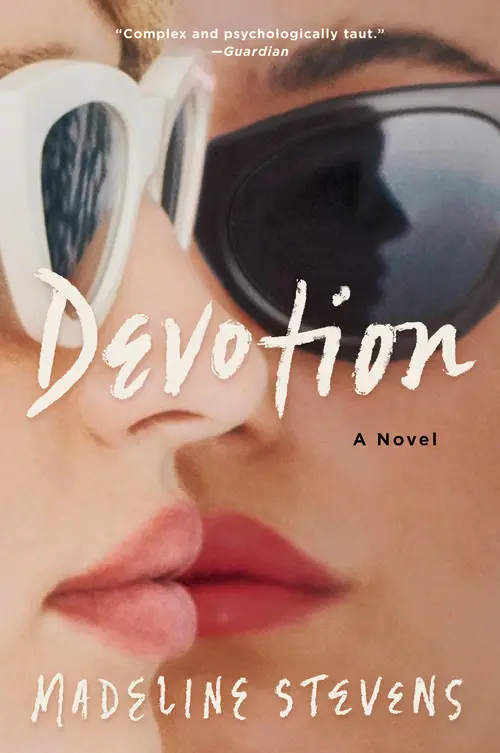
Cover
Prologue
THE FOOTSTEPS OUTSIDE MY DOOR WERE NOT THE USUAL clicking of my neighbor’s heels, but scuffling, like a rodent. I stepped quietly, heel-to-toe, from my bedroom to the hallway, wearing only a thin T-shirt and ratty underwear. The peephole on the door was old; you had to swing aside a silver-dollar-sized medallion in order to look through a little circle of semitransparent glass. The change in light was obvious from the outside so I never used it. Instead, I placed my ear against the door.
I heard my roommate Sam’s thin voice from her room hiss, “What’s happening?” but I didn’t answer. It was past midnight and someone was pacing back and forth in our hallway. The door shifted against my face a little as someone leaned against it.
The knock made me jump. I saw Sam’s little pink face peek around her doorframe at the end of the hall. The knocks started coming rapidly then.
James’s eyes were bloodshot when I opened the door, his cheeks hollow, the hair on the back of his head had grown out unevenly. I stood in the doorway, in my underwear, holding on to the brass knob, jiggling it back and forth in my palm. “What are you doing here?” I said. At first I couldn’t think how he found me in the first place, then I remembered all the times I’d given him my address so he could order cars home for me at night.
“Can I come in?” he said. I could smell alcohol on him.
I glanced at Sam, who ducked back into her bedroom. The apartment had no common space, just a galley kitchen, little bathroom, and hallway. I wavered, not yet stepping out of the way.
He opened his wallet. “We owe you money,” he said. “We never paid you for that last week. I told you not to let us get away with that.”
I didn’t say anything but moved aside to let him pass.
I watched him look into my bedroom—the first unfurnished room I’d lived in since moving to New York—the futon mattress on the floor in the corner, the ripped-up sheets, the books piled against the wall. I wondered if he’d realize how many came from his house, how many I’d taken from the walls of shelves in his wife’s office. He wiped sweat from his chin. There was nowhere to sit down.
“May I have a glass of water?” he said. The politeness of the question bothered me.
I moved to the kitchen and he walked past me and into Sam’s room without asking. “Oh,” I heard him mumble, “Sorry.”
“My roommate,” I said, handing him the water.
He took a sip and set it on the counter. “Just you two?” he said, looking around. “It’s a one-bedroom then or is there a living room?”
I just stared at him in the harsh kitchen light.
“You don’t know what happened?” he said.
“I don’t know anything.”
“Lonnie left. Disappeared.” He took a step toward me. “She didn’t drain the money, but she left me with William.”
I could smell his cedar-scented aftershave under the sweat and alcohol. I realized I hadn’t shaved my legs in days. “You’re doing well, right?” he said.
I didn’t respond. It wasn’t hard to imagine why she would leave him. I tried to remember exactly how long it had been since I saw her, since everything had gotten so messed up in the Hamptons—six months at this point. Maybe it took her that long to get up the courage.
“What do you mean disappeared?”
He didn’t answer the question. “I’m sure you found a new job?” he said instead, slurring his words, staring at my mouth. “Must be easy to find a new job.”
I don’t know if it was the news about Lonnie or this vague come-on, but something switched then. I wanted him gone.
“You’re drunk,” I said. “It’s late. You should go.”
He looked around again, his eyes turning big and glassy like those of an insulted child—surprised at any slight. I walked to the door and opened it, waiting for him to follow. He shoved a wad of money into my hand at the threshold. “I didn’t want you to come after us,” he said. “For not getting your last payment.”
I took the cash without saying anything, though we both knew I could never go after him for anything. There was no record of me. Legally, I never had anything to do with the whole lot of them. I took it because I was used to needing money or maybe because I thought he needed to give it to me. I locked the door quickly behind him, then looked down to find all I was holding were some crumpled ones, two fives, and a wad of receipts.
1
I NEVER SIGNED A CONTRACT. THE WIFE HANDED ME HOUSE keys with a flippancy I found unnerving, despite my desperation. I held them the whole way back to Brooklyn, to reassure myself I had indeed been given the job, that there had been an agreement, fingering the ridges until my sweaty palms smelled of metal. The ring had a leather strap attached featuring a monogrammed “L” that made me wonder if she’d given me her own set by accident.
I was still clutching them, the strap wrapped around my index finger, when I sat down at a bar and ordered a drink that evening. I gave the bartender my credit card, and said, “Keep it open,” thinking I might just leave when I’d finished. The card was maxed out by then; he could have it.
I’d had such a long list of jobs. All the girls I knew got the same start in the world. We were hired part-time, as hostesses or maybe retail associates. The jobs were all essentially the same: stand around, smile, look pretty, look thin, look stylish. I was told, “You are the face of this establishment,” which was given to mean I was the first person customers would see, but really meant I was nothing more than a face to them.
Those positions made the mind shrivel. Reading was not allowed, even on the slowest of days. Sitting was not allowed. I would envy the servers just for being able to walk around. Standing still was what made the ache in my feet noticeable. The clock ticked. The same songs repeated. People came; they complained or they didn’t. They left. And then, when I quit, I was left with nothing—no savings, no unemployment, no severance.
My reflection in the mirror behind the shelves of alcohol had dark circles under the eyes, thinned-out cheeks. Walking around Crown Heights had started to give me a terrifying awareness of my body. It was brittle, milky, weak. I could feel the hip bones showing through the skin. It wasn’t that I felt like a child, it was worse—I felt like a patient. My summer sundresses transformed into hospital gowns. Everyone around me looked very strong by comparison.
I’d been surviving for weeks on bodega coffee and prepackaged pastries—those little glazed things, more chemical than food, more air than bread. That afternoon, right before the interview, I’d used my pocketknife to slice open a ripe avocado because I’d read somewhere that a person could survive, however deficiently, on avocados alone. The knife had been a gift from my dad on my twelfth birthday, and it had been blunted on twigs and sharpened again and again in the woods around his house. One summer evening I made a small trap out of sticks and twine, placing food carefully inside. After dinner I found a rabbit stuck in it, its blank eyes blinking at me. I picked the animal up by its scruff and quickly snapped the neck, then slit the throat.
I was testing myself. My mom had decided to become a vegetarian, and had explained it to me this way: “I could never kill an animal, so why should it be all right to have other people do it for me?”
I hadn’t expected the blood to spurt out the way it did. I returned home covered in it and had to explain to my dad what I’d done. Though I’d felt all right walking back from the rabbit’s tiny grave, a lump formed mysteriously in my throat when I had to justify my actions to someone else. I wiped away tears, unsure if I was embarrassed by my actions or my emotions. My dad laughed at me and tossed me a kitchen rag.
When I remembered the rabbit now, I was filled with a useless regret that I hadn’t cut off the muscle and eaten it. But a beer on an empty stomach had a wonderful effect—a combination of much-needed calories and alcohol working together to numb everything. I tried to keep myself from gulping.
The bar was new. Thin wood paneling ran up the wall from the tall backs of black-cushioned booths and curved around the ceiling, like the inside of a sailing ship. The man sitting next to me was a cop, his sturdy frame filling out the navy uniform.
“This place,” he said, raising a hand to gesture at the room.
“I know, right?” I replied, excited to have someone talking to me. It had been a long time since I’d been out with anyone. It’d been a long time since I’d been out at all.
“You live around here?”
“Yeah, pretty close.”
He nodded, ran a hand over his shaved head. “I used to work in this neighborhood in the nineties,” he said. “That’s where they put the new guys. We were on Franklin on my first week, on Franklin and St. Marks. We turned the corner and some guys had these girls tied to a lamppost on the street. These guys were chucking bowling balls at them. Fucking crack cocaine. They were playing ninepins with a group of screaming girls. Stopping traffic and no one even called us. We just walked in on that scene.”
“That wasn’t very long ago,” I said.
“And now you live here,” he replied. I felt he was stopping himself short of saying “little white girl.” It was what a strange man on my block had called me that morning, accompanied by a sucking sound against his teeth. Though I felt self-righteous about this sort of treatment—I was poor, what did he know?—I tried to understand that my face alone was a threatening sign of rising rent. He didn’t want me there, but I couldn’t afford to live anywhere else.
I didn’t think anything about the story of the girls tied up on Franklin. What I did think about was getting this man to buy me dinner. I studied his body—the bulk of his shoulder muscles under his uniform, the sharp, clean-shaven line of his jaw. I guessed he was in his forties, though it was hard to tell. His dark skin was unwrinkled. I didn’t often end up with men who looked like him. I usually went home with skinny white boys no older than me. They rarely knew what to do.
“My name is Ella,” I said. “Tell me more about Crown Heights.” I cradled my chin in my palm, looking at him wistfully. “I’m from very far away.”
He gave me a side-eye in which I could see him sizing up my body as well. He took a swig of beer, and then said, “You know about the riots, Ella? Everybody knows about the riots.”
I didn’t know what he was referencing, but I nodded.
“No, let me tell you about something else.” He squinted at me. “You know about the LeRoi family?”
A bead of condensation dripped from my glass onto my leg. I felt it trickle all the way down to my ankle. I shook my head.
“They ran a church out of a brownstone around here, but it wasn’t a real church, it was more like a harem of women. The pastor was this guy Rev. LeRoi. He liked ’em young. The girls would dress up like nuns and go beg for money in the subway. They had all kinds of this guy’s kids. Nobody understood how so many kids fit in that house. There were rumors LeRoi made them keep ’em upstairs in cages. When one of the girls wanted out, she disappeared. This went on for years. They finally busted LeRoi, and found where he’d been dumping the bodies.”
“Where?”
“This land he owned up north somewhere. In a lake. He killed some nineteen girls. Thing is, his son still runs the church. Supposedly it’s squeaky clean now, but I’d stay the hell away from it.”
I looked down and found my barstool was rocking back and forth and my beer was gone, though it didn’t seem like enough time had passed for me to drink it all. It was quite a twisted story by way of introduction, but I didn’t care. I still wanted to have dinner with him. The cop turned to the bartender. “Another round?” he asked. I couldn’t stand the thought of more beer so I ordered a gin and tonic—tonic was supposed to be good for nausea, wasn’t it? I laughed, repeated the word “tonic.” It was going to restore me.
The cop looked at me out of the corner of his eye again. I put my hands on the bar, fingers splayed, my new set of keys hard and sharp against my palm.
“Do you live around here?” I asked.
“Nah, Brooklyn Heights.”
I struggled to find my straw. “You still work around here?”
“In Manhattan.”
“What are you doing out here?”
We were playing twenty questions; he was losing interest.
“Nostalgia, I guess. Or more like curiosity.”
“You just came out here to have a drink alone?”
I drew out the word “alone,” trying to make it sound sad. It’s not hard with that word.
“Could ask you the same question.”
We stared at each other. My little legs had somehow become entwined in his big ones. It just happens that way, when you’re at a bar and turn toward each other. The barstool was still rocking underneath me, but at least it was good for something.
I said, “Do you want to get out of here, get some food?”
He didn’t answer but opened his fat wallet, paid both our tabs, and drank the rest of his beer in one gulp. The bartender handed me back my card, uncharged.
Outside, twilight was gathering, but the air was still warm, the warmth swimming around me. My legs felt watery. I was so weak, I was evaporating. I wasn’t sure I could make it to the restaurant. I grabbed his arm, a gesture disguised as flirtation but really meant to steady myself.
He laughed. “You okay?”
I smiled at him, my face indolent, droopy. “I’m great. Hungry.”
“Let’s get you some food.”
As we walked I felt him reach over and pull down my skirt in the back. He did it quickly, not saying anything. I didn’t feel embarrassed; I was still holding the keys to my new job. That was the important thing.
On Nostrand Avenue we ordered roti at a counter. There were stacks of cake in clamshell containers next to the register. I asked for one and then took out my wallet, even though it was empty. He put a hand on my hand, pulled out his own again. I smiled and couldn’t stop smiling, though it made my sad, weak face hurt. I was going to eat on someone else’s dime. I commended myself. He was such a good find; cops want to take care of people. I thanked him, patted his arm, a little overeager, but what did it matter?
I realized as we sat waiting for our food, I had no reason to continue speaking to him. He’d already paid for the meal. Counter service was a good idea, rather than waiting through a whole meal to see whether he would ask to split the bill. I made a mental note as I snapped open the plastic cake container, not caring what he thought about me eating it before the other food. The frosting was the kind of sweet that made my teeth feel loose in my skull. I ate it anyway, all of it, gobbled it down. It was a good thing the roti took so long to come or I probably would’ve devoured that as well and thrown it all up in the street.
I’d never had roti before and had to watch the cop to figure out how to eat it. I followed his lead as he unwrapped the tinfoil and ripped off a bit of thin, unleavened bread, using the piece to scoop up the chicken and potatoes inside. I was delighted, when I bit into it, to find the bread was flaky and soft and the chicken tasted of butter and curry. Then my teeth bit into something hard.
“There’s bones in there,” the cop said, watching me.
I didn’t look at him; I just spit the bone into my hand, set it down on the table, and went back to eating. It was enjoyable, using my hands, fishing out the chicken bones. I didn’t give a shit what I looked like to this cop, since he’d already paid for all this good food.
“Girl’s starving,” he said, as I scooped up bite after bite.
“I’ve hardly had a minute to eat today,” I said, my mouth full.
I realized then that he hadn’t asked me a single question about myself. Didn’t he wonder why I hadn’t eaten all day? Didn’t he wonder what I did for work? Wasn’t that the question everyone always asked?
When the food was gone I was very full. I was grateful to him for providing me with this lovely full feeling. I didn’t feel I owed him for it, but I felt like repaying him anyway. He had a good face—friendly wide-set eyes and perfect white teeth. It was dark outside. I slapped a mosquito away from my leg as we stood together on the curb. The seventeen-year cicadas were supposed to hatch and outnumber the city’s population six hundred to one that summer, but they never came. The eggs had died; the newspapers said we’d filled too many vacant lots with condos. Mosquitoes were already swarming in their place. “Subway’s that way,” he said.
I pulled on his thick arm and said, “Yeah, but I live over here.”
We didn’t say anything else. He was kissing me by the time we got to the front door of my building—his lips tasted of curry and beer. I held his head between my hands, the keys pressing into his cheek, thinking it was wonderful to have a man walk me home at night. I was so obliged to him. He didn’t ask why my bedroom had no real furniture, and I was thankful for that too. He just pinned me on my futon mattress in the dark. It was good—friendly and nice, like his face. I knew I wouldn’t see him again.
THE LEROI “HOUSE OF EVIL,” AS THE NEW YORK POST CALLED IT, was down the street from my building. For a while after that night I made a habit of walking past the house, though it required circling the block to head toward the train. I liked to pass it when the morning sun streaked gold across the cream-colored brick. There were blue patio chairs out front, and potted hedges flanking the front door. An American flag hung like a curtain in one of the bay windows on the lower level. It was these everyday details that struck me.
Once a man whistled at me from an upstairs bedroom. “Come here!” he said, and I noticed that he wasn’t yelling, wasn’t even calling, but was talking just loud enough for me to hear. I didn’t stop.
It’s easy to become interested in a story like this. It only requires the same kind of curiosity about evil as watching a horror movie, but why did I continue to visit the house? That month I traced my daily routes around the city in a thick notebook—a project I’d picked up in order to prove my growing intimacy with New York. According to this hand-drawn account I walked past the LeRoi residence almost fifty times that summer, each time on my way to work for Lonnie.
2
SHE WAS YOUNG, YOUNG ENOUGH THAT EVERYONE IN THE CITY, where the rich aged slowly, called her too young. I liked to watch her when she wasn’t looking. The smooth curve of her legs above thin little ankles, flat stomach, pert round breasts. Dark hair and too much of it. “The kind you can’t do anything with!” she whined, because the effects of a flat iron or hot rollers quickly wore off in the city’s humidity, leaving rumpled silken waves instead. Eyebrows thick, manicured, usually drawn in enough to crease the skin between them, that little crease, the very beginnings of her first—her only—faint wrinkle. The nose, upturned, not a ridiculous ski jump, only slightly. Do the rich breed those upturned noses? Her eyes, heavy lidded, green, but not so radiant in color. The kind of eyes you think are plain brown because of all that brown hair, but then find no, those are flecks of jade.
The Story Continues on BooksBarbecue!
Enjoyed this preview? ❤️ Do not stop here!
Read the complete book free online → 🔗
Continue reading now on BooksBarbecue and discover every page!
Love reading? Bookmark BooksBarbecue.com for more amazing books!
Happy Reading!