Devil in the Darkness
Cover
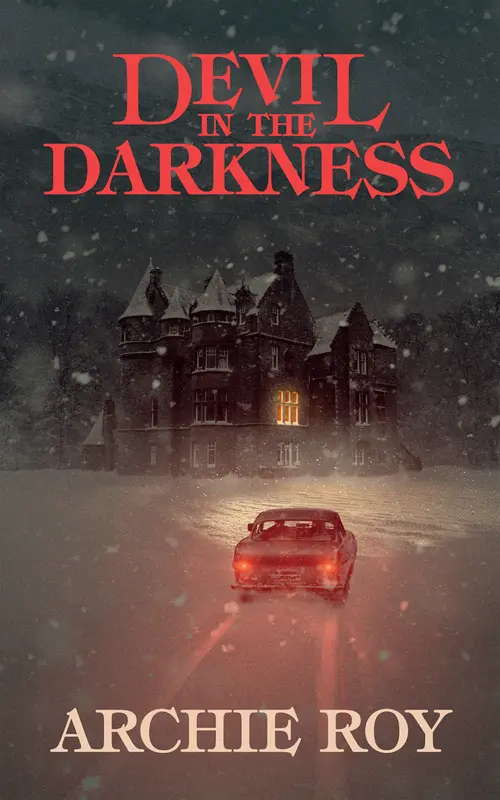
Title Page
Archie Roy
DEVIL IN THE DARKNESS
with a new introduction by
GREG GBUR
VALANCOURT BOOKS
Copyright Page
Devil in the Darkness by Archie Roy
First published by John Long, London, 1978
This edition first published 2016
Copyright © 1978 by Archie Roy
Introduction copyright © 2016 by Greg Gbur
This edition copyright © 2016 by The Estate of Archie Roy
All rights reserved. In accordance with the U.S. Copyright Act of 1976, the copying, scanning, uploading, and/or electronic sharing of any part of this book without the permission of the publisher constitutes unlawful piracy and theft of the author’s intellectual property. If you would like to use material from the book (other than for review purposes), prior written permission must be obtained by contacting the publisher.
Published by Valancourt Books, Richmond, Virginia
Front cover image of Kinlochmoidart House by Ian Roy
Introduction by Greg Gbur
Introduction
One of the challenges in writing a haunted house story – or, more generally, an ‘Old Dark House’ story whose horror may or may not be supernatural – is getting the characters into the house in the first place, and then keeping them there. Who would plausibly be willing to stay in a house where their lives or their very souls are endangered?
Looking at such fiction written over the years, three options are used quite commonly. The first of these is simply to have people take up residence in a house, not knowing that it has a supernatural threat inside. Novels such as 1977’s The Amityville Horror (originally billed as ‘a true story’) and Michael McDowell’s 1981 novel The Elementals, and movies such as 1982’s Poltergeist take this approach. Often the unhappy homeowners are even stuck in the house once they learn its nature, either by financial necessity or, in the case of Poltergeist, by having one of their family members taken. In this framing, the reader is usually kept in the dark as much as the residents of the house, allowing the terror to build slowly through the story.
The second option for getting people into a haunted house and keeping them there it to force them to, usually via weather. The obvious example here is The Shining (1977) by Stephen King, in which the Torrance family is snowed in at the Overlook Hotel for the winter as dark forces inexorably drive Jack Torrance violently insane. Another example is the original ‘Old Dark House’ story, J. B. Priestley’s 1927 novel Benighted, where Philip and Margaret Waverton are driven into a spooky mansion by a furious storm and flood. Trapping people in the house adds a nice touch of claustrophobia to what is hopefully an already tense tale.
The third option for drawing people into a haunted house is to use scientific curiosity. Paranormal researchers are natural protagonists for a ghost story: the helplessness of rational scientists in the face of the supernatural can heighten the feeling of dread. Furthermore, ghost hunters are rarely willing to leave until a haunting has reached a truly catastrophic level. The group that braves the unknown in Shirley Jackson’s The Haunting of Hill House (1959) learns this lesson too late, as the house claims one of their own. In Richard Matheson’s Hell House (1971), a physicist, his wife, and two mediums are hired to investigate the titular house, which corrupts them all with its malevolence.
In Devil in the Darkness (1978), Archie Roy ingeniously uses all three methods at once. Paul and Carol Wilson, en route to their honeymoon home in the Scottish Highlands, are sent off course by an unseasonable blizzard. They seek shelter at the only house they can find in the area: a sprawling and decrepit mansion, which has just been occupied by a curious and eclectic group. We eventually learn that the house is to be destroyed, and the new residents are a combination of demolitions experts, on hand to determine the best way to level the structure, and paranormal researchers, present to hunt for signs of the supernatural before the house is gone. Even when everyone learns of the danger in the mansion, the storm forces them to stay and face it. A haunting that begins with simple bumps in the night escalates until it become clear that none of the lodgers may survive their stay.
Scottish-born Professor Archie Roy (1924-2012) was uniquely qualified to write a story about scientific investigations of the paranormal. He was a stunningly accomplished astronomer, earning his Ph.D. at the University of Glasgow in 1954 and joining the faculty there in 1958. He was a prolific scientist, with over 70 scientific papers and multiple books on astronomical problems, including The Foundations of Astrodynamics (1965) and Orbital Motion (1978). As these titles indicate, he was a master of the motion of objects through the cosmos, both spacecraft and satellites (astrodynamics) and stars and planets (celestial mechanics). His understanding of orbital motion led NASA to seek his help calculating the trajectories of space probes in the 1960s; this work culminated in the 1969 moon landing of Apollo 11. In recognition of his achievements, Roy was made a Fellow of the Royal Society of Edinburgh, the Royal Astronomical Society, and the British Interplanetary Society. He also had an asteroid named after him: (5806) Archie Roy, discovered in 1986.
Professor Roy also had another scientific passion, however: he was an active researcher in the paranormal, and is now remembered as much for his supernatural investigations as for his astronomical ones. His interest was sparked out of a chance encounter in the 1950s: one day, he became lost in the old university library and came across a section of books on spiritualism and psychic research. In Roy’s own words (as reported in his obituary in The Guardian in 2013):
‘My first ignorant reaction was “What is this rubbish doing in a university library?” But curiosity made me open some of the books. I was surprised to recognise some of the authors of this “rubbish”, such as Sir Oliver Lodge, Professor William James, Professor Sir William Crookes, and so on. My balloon of ignorance was punctured by the needle of my scientific curiosity, and I found myself called up to a new career.’
Professor Roy pursued this new career alongside his scientific one for the rest of his life. He actively investigated hauntings, often at the request of home occupants who wanted to be rid of their supernatural tenants. He became a member of the London Society for Psychical Research, and 1987 he became the founding president of the Scottish Society for Psychical Research. He wrote a number of books on his paranormal work and the history of such research, including A Sense of Something Strange, Investigations Into the Paranormal (1990), Archives of the Mind (1996) and The Eager Dead (2008). Later in life, he became charmingly known as ‘the Glasgow ghostbuster.’
It might seem somewhat surprising today to see a very distinguished physical scientist involved with the paranormal; however, as Roy himself noted above, there is a long history of talented physicists investigating the supernatural. British physicist Oliver Lodge (1851-1940), for instance, was one of the early researchers of electromagnetic radiation and consequently one of the pioneers of radio communication, but also was president of the London Society for Psychical Research at one time and a member of a group known as ‘The Ghost Club.’ Lodge thought that the existence of invisible electromagnetic radiation could provide a mechanism by which spirits could exist undetected alongside the living. Another example of a physical scientist with interest in the supernatural is English chemist William Crookes (1832-1919), who was a pioneer in the creation of vacuum tubes, and who studied X-rays and radioactivity during his career. Many people are familiar with his name due to his invention of the Crookes radiometer, a glass bulb containing windmill-like vanes inside that turn on their own when exposed to light. Crookes was also, however, active in The Ghost Club and the London Society for Psychical Research, and performed experimental tests of the abilities of many supposed mediums.
One significant difference distinguishing Lodge and Crookes from Roy, however, is the level of rigor of their spiritual studies. Even in their own time, Lodge and Crookes were criticized as being overly credulous of psychic claims and blasted as having run shoddy experiments of such claims. Professor Roy, however, was always skeptical and ran very rigorous tests that were often reported in the Scottish media. Perhaps reassured by this rigor, it is said that Roy’s scientific colleagues enjoyed hearing his stories of haunted houses and mediums.
Roy’s serious and calculated approach to testing psychic phenomena is very evident, even delightful to see, in Devil in the Darkness. The researchers in the book are very meticulous, exploring every possible non-supernatural explanation in detail before even considering a possible spirit. For example: when it is suspected that an additional unknown person might be in the house with them, the stranded group devises a plan to search the house, from bottom to top, sealing off and isolating every cleared section as they go. In many inferior horror stories, authors require their characters to do dumb things in order for the terror to proceed; in Roy’s Devil in the Darkness, the characters are almost always making smart decisions, and horrible things happen in spite of their carefulness.
Looking at the dates of haunted house novels given at the beginning of this preface, one notes that many of them appeared in the 1970s, before Roy’s Devil in the Darkness. One can’t help but wonder if Roy read some of these contemporary works, particularly ones with paranormal researchers, and thought to himself in exasperation, ‘I can write something better than these.’
Professor Roy was well-prepared to do so, not only due to his scientific and paranormal experience but also because of his skill as a writer. Devil in the Darkness was his sixth (and, it turns out, final) novel; his first, Deadlight (1968), appeared a decade earlier. His first three books have been characterized as science-based thrillers; the latter three are considered horror. Roy uses his formidable scientific knowledge to develop intriguing and unpredictable plots.
We have mentioned that haunted house novels typically use one of a few standard strategies to get the story going. It is also true that such novels usually end in one of a couple standard ways. One conclusion may be characterized as utter defeat: the residents of the house end up fleeing for their lives, none the wiser of the nature of the haunting. The Amityville Horror, The Shining, and The Haunting of Hill House all have this sort of ending. The other conclusion is revelation: the secret of the haunting is uncovered, possibly dispelling it in the process. Hell House and Poltergeist are examples of this form. Other stories may combine both types of ending. Without saying too much, it should be said that the house in Devil in the Darkness does have a terrible secret hidden within it that will be uncovered; it is a satisfying revelation that clearly draws upon Roy’s own investigations and theories about hauntings.
So what we have in Archie Roy’s Devil in the Darkness is a truly unique novel: a haunted house tale written by a man who was simultaneously a professional physical scientist, a professional author, and a professional paranormal investigator. His skills at all three endeavors shine through in the darkness of the story, which is well-crafted, creepy, and in the end genuinely satisfying.
So what did Archie Roy himself believe about the paranormal, in particular life after death? Like any good scientist, he refused to fully commit to a belief one way or another without compelling evidence. At one point, though, he gave a slight hint of his view, and his cleverness, saying, ‘if I die and I find out I have not survived, I will be very surprised.’
Greg Gbur
September 2016
Greg Gbur is a professor of physics and optical science at the University of North Carolina at Charlotte. He writes the long-running blog ‘Skulls in the Stars’, which discusses classic horror fiction, physics, and the history of science, as well as the curious intersections between the three topics. His science writing has been featured in ‘The Best Science Writing Online 2012,’ published by Scientific American, and his horror writing has appeared in a number of volumes of the literary horror magazine Dead Reckonings. He has previously introduced several John Blackburn novels for Valancourt Books.
Epigraphs
Where are the dead – those who have loved
us and whom we have loved; and those to whom
we have done some irreparable injury? Are
they gone from us for ever, or do they return?
Lord Halifax’s Ghost Book
‘I was not, and was content. I lived and did a
little work. I am not and believe not.’
Epitaph on the tombstone of William Kingdon Clifford
Author's Note
Author’s Note
It is perhaps needless to say that all the characters and incidents portrayed in this novel are fictitious. Nevertheless the books by Dr Ian Stevenson, Jeffrey Iverson and Dr Karl Wickland which are mentioned in the text are real and may be read by anyone interested in such matters. They will be found to be, at the very least, thought-provoking.
A.E.R.
Glasgow, 1978
1
1 White Wedding
The windscreen wipers were still able to cope, refusing occupation to the heavy cotton-wool flakes invading the screen in ever-increasing numbers. Inside the car it was warm. The metronome flick-flick of the wipers and the strain of peering through the swirling snowstorm added to his sense of dissociation. He blinked, feeling his eyes hot. Beside him the girl – his wife – peered at the one-inch-to-the-mile map.
‘We turn left immediately we cross the stream.’
Her voice was soft, unworried as yet.
Outside the car daylight was fast yielding to dusk.
‘Perhaps we should have stayed the night in Fort William,’ she said. ‘The forecast was bad.’
He opened his eyes wider, glanced at her.
‘You found time on your wedding-day to watch TV?’
‘Not me. Sister Jane. She said at breakfast that snow was threatened. “How on earth,” she said, “will you while away the time if you’re both snowbound in the cottage?”’ She looked across at him, eyes wide and solemn.
‘We may well find out,’ he muttered, correcting an incipient skid. The car crossed the bridge and they were on a straight stretch. But the snow drove more fiercely at them now, borne on the wind funnelled by the unseen valley sides.
‘We could turn back now,’ he suggested. ‘There was that village ten miles back.’
She shook her head.
‘No, let’s go on. It’s barely fifteen miles now to the cottage. And everything’s waiting for us. Dad had it fully provisioned and fuelled.’ She leant across, touched his arm. ‘Let’s go on, Paul. I’d hate to begin my honeymoon in some bed-and-breakfast place.’
The little knot of anxiety tightened within him. Through the car’s steering he could feel the road surface deteriorate minute by minute. And with the verges blotted out by the heavy snowfall he also knew he’d probably put the car into a ditch if he did try to turn.
‘Wasn’t there a junction we’d to look out for?’ he remembered.
‘Two . . . I think?’ The map crackled. ‘Yes. Three miles on.’
Scenes from the day’s events flashed before him. His best man’s joking. The church. The rows of ‘friends and relatives’ of the bride and groom. The wedding march – the deliberate turn of his head to see Carol, veiled and in white, escorted up the aisle by her father. His mouth twitched. How often in the early days of their engagement she’d sworn they’d never get her into that ridiculously primitive and outmoded outfit – anyway, it’d be a register office for her; she might go so far as to exchange jeans and shirt for a suit for the occasion. He let his foot ease up on the accelerator. God! It really was bleak outside.
The reception afterwards wasn’t too bad. He couldn’t really say he’d enjoyed the meal. The speeches were the expected mixed bag. Tim had gone a bit near the knuckle and he could have censored some of the telegrams, but everyone, even the maiden aunts, had taken it in good part. The dancing; the circulation among the guests – what an army of relatives Carol had – he’d have to get her to draw up some kind of family tree for him. He found himself grinning. She can do that at the cottage if we’re snowbound and have, as sister Jane said, nothing better to do. A core of warmth formed within him and he thought: Of course she’s right for us to press on.
Slipping away from the reception to change. The send-off. Not too riotous. The strange mixture of excitement and relief by the time they had driven out of Edinburgh on to the M9 for Stirling. They’d taken it in turns to drive, had something to eat at the Fort William Mercury Motor Inn. It had been raining hard even before they crossed the Rannoch Moor. And the snow had begun as they entered the outskirts of Fort William. It was utterly ridiculous. A blizzard in April.
The windscreen wipers were beginning to fail. By now inches of snow were caked on the screen in spite of the heater’s blast of hot air; the clear wedge-shaped area was smudgy, like territory succumbing to defeat when a defence crumbles.
It was dark now. The girl had taken a torch from the glove compartment to follow the map. The headlights’ beams lit flurries of snowflakes or picked out the stark black branches of trees. The car descended a slope, engine whining in low gear. The road twisted and they were edging along an even narrower section, not much wider than the car, with a black drop on the right – to the sea? – and a streaming wet, near vertical wall of rock on the left. The car rattled across a wooden bridge.
He risked a glance at the dashboard. Surely they had come far enough? They seemed to have been journeying blindly for hours over the Ardnamurchan Peninsula. His sense of impending catastrophe strengthened when he read the mileometer. In the heady planning of this trip, Carol and he had pored over maps, measuring, estimating how far the cottage was from Edinburgh. And now the mileometer told him they had covered a distance in excess of seven miles farther than they should have from Fort William.
He drew up, slipped the gear lever into neutral.
‘I think we’re lost,’ he said. He switched on the interior light. ‘Let me see the map.’
Without a word she handed it across. He followed the road on the map, tracing its route from Lochailort along the coast before it curled round the flanks of Sgurr Dhomhuill Mor. He remembered crossing the river Moidart, a black spate-swollen flood, then coming down towards the little village of Kentra. All that he remembered. They had struck off due west at that point. But beyond that . . .
He rubbed his aching eyes. If they had been on the right road there should have been no climb up this cliff road. Where on earth could they be?
The wind howled and they felt the car cringe under its onslaught. The girl shivered in spite of the warmth.
‘We can’t turn here.’
‘I know. We go on. But be prepared to spend your wedding night in the back of this car.’
‘In a blizzard.’ She summoned a smile. He smiled back.
‘Don’t worry. There may be a house or a village at the end of this road. It can’t go on forever.’
He wondered if he sounded convincing.
He put the car in gear, let in the clutch. The wheels spun, squealing. He tried again, gingerly. The car moved forward. The road was dropping now, so fast he dare not change out of lowest gear. The car showed a tendency to weave. The easiest touch swung the steering wheel. Hunched forward, he peered ahead. The steep slope on the right melted back to be replaced by snow-laden trees; on the left the drop gave way to rising wooded ground. The blizzard was appalling now in its cold fury. Thoughts of people found frozen to death in cars came to him. He seemed to remember reading that leaving the engine running to heat the car produced death by carbon-monoxide poisoning. And if not – after the petrol ran out – what then?
Carol gripped his arm.
‘I see a light!’
‘Where?’
‘To the left!’
He saw nothing in the swirling snow but black clumps of trees. He slowed the car.
‘Do you still see it?’
‘No. It’s gone.’
‘I’ll go forward slowly. Was it ahead of us?’
‘Yes.’
The Story Continues on BooksBarbecue!
Enjoyed this preview? ❤️ Do not stop here!
Read the complete book free online → 🔗
Continue reading now on BooksBarbecue and discover every page!
Love reading? Bookmark BooksBarbecue.com for more amazing books!
Happy Reading!