Crowfall
Cover
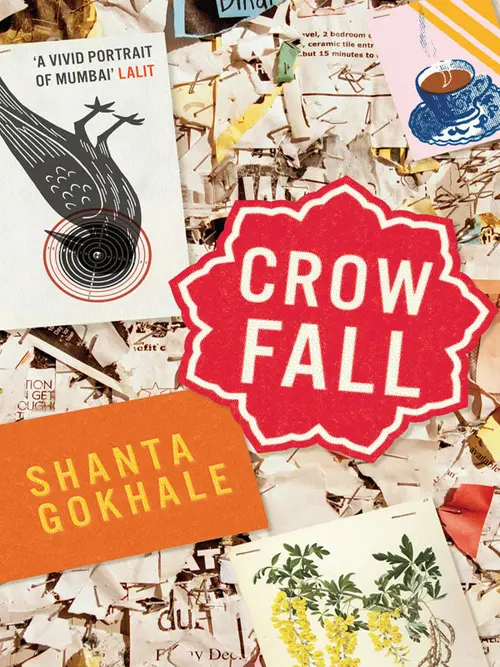


SHANTA GOKHALE
CROWFAL

Praise for the Marathi original, Tya Varshi
‘There are some incidents in this novel that touch the heart and others that demonstrate the writer's fine eye for detail. The prose is largely free of decorative devices. Yet when similes, metaphors and extended descriptions come, they hit the mark with fine precision.’
—Anuradha Potdar, Navshakti
‘While the writer's contemplative handling of issues like the creative process, violence, annihilation, loss and death add substance to the novel, her sense of irony prevents it from tipping over into sentimentality.’
—Sushama Karogal, Pratishthan
‘Tya Varshi sets the world of artists and their art in the larger world of self-serving politicians, land-grabbing builders, the media and the man in the street, creating a vivid portrait of Mumbai.’
—Anant Deshmukh, Lalit
Dedication
For Jerry
without whom this translation would not have happened

1
That day again. The day Siddharth didn’t turn up, twelve years ago. How time flies. Even when nothing else happens, time flies. She had once overheard Anna tell Ai the time for that had gone; and she had wondered where. She had also wondered how time was a girl when it went and a boy when you were getting late. Funny language, Marathi.
She smiles at the memory, looking out of the window. When she isn’t busy in the kitchen, when she isn’t reading, when she isn’t sitting in a darkened auditorium watching a play or a film, she looks out of this window, watching the light of the world fade away. That it should fade and disappear is inevitable. That Anima should watch silently feels equally inevitable.
There is a world set in her window frame. A gulmohr leans over from the left. Its brown bark is gradually turning black in the gathering shade, the rough ridges on its trunk losing definition. The few tired leaves left on its branches turn lifeless from bottom up. Beyond the tree is the rusted gate of the large, deserted maidan; and beyond that a cluster of cheery house lights. From amongst them rises the skeleton of a new twenty-storey building, growing inexorably every day. Only a few cars pass down this road. As they race by, their headlights swing into the window frame for a few brief seconds and then die out. The house lights beyond the maidan are recent company. Earlier there was only darkness.
Anima had sat here, like this, on that day too, but filled with a gnawing unease, her insides dark and dry like the trunk of the gulmohr. Versova was at peace, but the city was not. You could never be sure where trouble would flare up and why. Gangs of men roamed the streets, their chests puffed out. Hunters, impelled to blood by some primeval instinct. The quarry, alert, went about its work, moving on cat-burglar feet, hugging shadows, its eyes averted from other eyes. At such a time as this, they were out there—Arif and Siddharth. They were roaming the city, unconcerned about the hunt. The hunt wasn’t part of their life. They were on shore for this brief while. Land held no dangers for those whose fierce battles were with the sea.
The evening had stretched out long and dark while Anima's ears yearned for the sound of the key in the latch. The time was long past when she should have heard it. Anima's throat had gone dry and cracked. She had lifted herself out of her chair and had been in the kitchen with a glass of water when the bell had rung with a trill of Bhairavi, the raag of endings. Siddharth had had the bell custom made. Had he forgotten to carry his key after all? Anima had rushed to the door, the water in her glass slopping a trail behind her.
Arif, and behind him Anisa, her head bent. Arif's shirt was smeared red, his face white. Arif and Anisa had stood outside and Anima had known why. She had said, ‘Why don’t you come in?’ The crack in her voice was of the quake inside her. They had come in and with them had come a cool puff of breeze. They had sat down, silent. Anima's eyes had flitted around Arif's blank stare. Then he had spoken. Then he had stopped speaking. A cab was waiting downstairs. Arif had gone down to bring Siddharth's shredded body up with the driver's help. Anima had looked at his face, still the same, and she had died within.
Over the next twelve years, this day has returned remorselessly, with the same shapes darkening to night in the frame of this window, except for that other—the empty skeleton of the twenty-storey building in the distance. These days a naked bulb hangs from a long wire in one of its upper rooms. Anima's eyes are fixed on its light when suddenly she arrives at a decision. I must stop writing my diary from today. Today is now. This minute. I must free myself of its shackles, from the rigid self-made rule that a few lines must be written every night. Drop a day and guilt takes away sleep. The oppression of it. Tired, bored, but you must write. Write. Who for? Who is going to read that drivel? People with children write in the hope that their children will read. Family history will live and grow. But who will read the daily notes of my life? Stop fooling yourself that you’re writing for yourself. Perhaps you did, in the beginning, to vomit the grief in your stomach. It was even a way to keep the conversation with Siddharth going. But when the sharp edge of grief had dulled, why then? The ego stepped in, didn’t it? You started pontificating on the political events of the day. You started reporting conversations overheard on your commute, with sociological analyses attached. Weren’t you secretly thinking that someone would discover your diaries decades after you were gone and exult in their revelations of life in these times? Like some latter-day Smritichitre?
Get over this foolish temptation of trying to forge a link with the future. Fifty years from now attention spans will have shrunk to zero and diaries written by some ancient woman about an ancient life might make no sense at all. Anima gets up and dispels the darkness of the room with a flick of a switch. She takes four long strides to the wooden wardrobe–cum–chest of drawers that Anna had had specially made for her as a wedding present. She opens the right bottom drawer, pulls out the secret drawer built into the back and draws out the twelve notebooks, all of the same size, resting within. They chronicle her life from the January of 1993.
Anima carries the notebooks to the centre of the room. The ceiling lamp sheds maximum light here. She fetches a cane waste-paper basket and sets it down beside the heap. She sits before it on the floor, cross-legged, a pair of scissors in her hand. She picks up the topmost notebook, the first in the series. Salman Khan smiles up at her from its cover. She resists the temptation of opening it. If she begins to read it, she is lost. She tears out a thin sheaf of pages from the notebook, shreds it into ribbons and stuffs them in the cane basket. As succeeding sheaves of paper enter the jaws of the scissors and are shredded, the tearing and shredding fall into a natural rhythm. She accompanies the rhythm silently with a childhood tongue-twister about the aunt who cuts up the uncle's work papers with a pair of scissors and stuffs them into a waste-paper basket. ‘Kakune Kakanche kamache kagad katrine kapun karandit komble.’ As a child she used to have a vivid mental picture of the aunt. She sat on the floor like Anima now, but fatly. Her eyebrows clashed above her nose and her hair was pulled to the top of her head in a Narad Muni knot. In Anima's imagination, the story continued beyond the rhyme with the aunt rising and dancing ferociously on the heap of shredded paper in the basket.
Anima's work picks up speed. She has shredded six notebooks. She fetches another basket from the bedroom and varies the beat of the aunt-and-uncle rhyme, so that sometimes the scissors snap together on the first beat and sometimes on the last. After the eighth diary, she brings out the bath bucket from the bathroom. Finally, the twelfth diary goes into the bucket, Shah Rukh Khan's dimpled smile and all.
For a few moments Anima sits exhausted, looking intently at the two baskets and the bath bucket filled with mountains of paper. She takes a tentative breath, allowing it to feel her insides as it comes up. Any regret? A faint twinge of pain? No? Nothing at all? Let's test this. Let me do the dangerous thing. She plunges her hand into a basket and pulls out some random pieces of paper. Each of the shreds carries just a few legible words. She reads them. One shakes her slightly. Anna. But even that name produces only a brief shooting pain. Siddharth's none at all. It's like muscles that die in a myocardial infarction. When the infarction happens, the whole chest cavity is a single epic pain. The muscles die. Medication will not bring them to life. But those that are still alive return to work. And soon it is as if the others never existed.
When Bachchu Kaka had his myocardial infarction, he almost died. With Anna's untiring nursing, he managed to hang on.
Anima gets up. Does a few luxurious stretches, mutters, ‘Free at last’, fetches a large, old pillow cover, stuffs the contents of both baskets and the bucket into it, drags it to the door and deposits it outside for the garbage man to take away. About to close the door, she wonders. Shall I keep it in the house and give it to the garbage man when he comes in the morning? But then shuts the door resolutely, changes into her nightclothes and gets into bed.
Sediments rise. The days and nights after Siddharth's monstrous death. The distorted faces that peopled her dreams. Changing faces, always distorted. No sleep. No hunger. Get up. Pace from this end of the room to that, wide eyes blank. Sit down in a chair, wanting never to get up. Anisa's visits in the day. Sharada and Shekhar dropping in to be with her. Feroze's concerned calls. Haridas's insistence—‘Stay with me for a few days. You’ll feel better. Or let's see a film.’ But then night fell, with just her nightmares to fill the house.
One sleepless night she picked up a razor blade and walked to the bathroom. She shut her eyes, the blade at her wrist. The blade didn’t move. She shut her eyes tighter. The blade would still not move. The strength drained out of her. Her hand went limp. The blade slipped out of her fingers and fell to the floor. Anima stood rigid. Then collapsed, howling.
She sat the whole night on her bed, her knees pulled up to her chest. Am I feeble in mind? Is my will so weak? Do I not love Siddharth enough? Isn’t desiring death when your husband dies the ultimate definition of love? Why did I hold back then? Could it be that the will alone is not enough? Do you need physical courage as well? Do I not have that? Where do those girls of fifteen and sixteen who hang themselves from fans with their dupattas find it? They write farewell notes to their parents, pull up chairs to stand on. They are about to do something they’ve never done before, but they go the whole hog. What pushes them? Despair? Fear of the future? What did Yogesh fear when he put razor to wrist? People had always raved about his work. Finally there is just one answer. Some people want to die. I don’t.
So live. It was then that Anima bought her first notebook. Her entry on the first page was a description of Siddharth's death as told to her by Arif that evening, and every other evening, with growing helplessness, when she repeated her questions. ‘They came down the road. They would have let us pass if we had moved aside. But we continued to walk as before. They didn’t like that. They stopped us. They grabbed Siddharth's beard. “What are you, hanh? Hindu or Mussalman?” Siddharth said, “A human being.” They went mad. They threw him down. I flung myself on him. They picked me up and threw me aside. “We’ll attend to you later,” they said. I hit my head on something and became unconscious. When I came to, they had gone. And Siddharth . . .’ At this point Arif's wounded gaze would slide to the floor. His story would always end here. And once again the hope in Anima's eyes would die.
She wrote all this in her diary. And added: as a child, if I didn’t like the way a story ended, Anna would change it for me. He would narrate the new end with such conviction that I would believe it. It was not in Arif's hands to change the end of this story.
Cut them down they said
The Allah-hu-Akbar men
Surve's Shigwala and my Siddharth. Murderers of different religions but linked by inhumanity. Would she ever have dreamt that a poem she had read, with exclamations of aesthetic delight, would come so terrifyingly true in her own life? How could you have stood before those animals and called yourself a human being with such stupid courage, Siddharth?
Six months later Arif and Anisa packed their bags. They had found themselves a place in Jogeshwari. Anima had pleaded with them not to leave. ‘We’re all here for you.’ But Arif had shaken his head sadly. ‘There's a monster let loose amongst us. He's never going to go away. Like Bakasur, he will keep returning to devour innocents. I should have been their target, but they got my noble friend. Nobody is safe now. Not even those who have let the monster loose.’
Arif and Anisa left. The city had been torn apart. The gash of that partition now ran between Anima and Anisa's homes that had once faced each other.
Reading her diary description of Siddharth's death became Anima's solace. She would read it before facing each new day. It was now her life with her lover-husband. Over time, as she absorbed the shock of his death, its meaning expanded. Siddharth's death became the death of Jews in Germany. It became those left dead by the partition of India. The death of a mahatma on 30 January 1948. Thousands of Sikhs in Delhi in 1984. The two thousand murdered in Gujarat in 2002. Corpses were piling up. Amongst them was one Siddharth. A single droplet in an ocean of the killed. How much longer was she going to cradle his death in the palm of her hand, against her wet cheek?
2
Ashesh doesn’t quite know what has woken him up. He is in the hazy state between sleeping and waking. Was it the dream? One black tunnel leading to another and another, with him holding on to their slippery sides trying to get out? Was it a sound? Did the bed shake? Could it have been a quake?
Ashesh lies with eyes still closed, wondering; then sinks back into sleep. But the next moment his eyes fly open and he freezes. His sheet is jumping. His heart thumps. The sheet trembles, jumps. Only one part. He kicks it off. His right hand. His right hand is jumping, disconnected from the rest of his body, from his will, like something possessed. Ashesh watches it for five minutes, fifty—he isn’t sure—then grabs it with his left hand and holds it down. It grows still.
Ashesh frees the hand warily. It lies motionless by his side. He raises it, lowers it, closes and opens his fist. It's working. Ashesh's tense body relaxes. He bursts into a sweat, gets up, walks to the kitchen, legs trembling, swallows a glassful of water and walks out on to the veranda.
It's a long veranda, both corners screened by madhumalati creepers. He does not love potted plants. But he loves privacy. He lowers himself into the cane rocking chair and rocks himself gently. He tries to laugh. His lips don’t part. They’re still dry. Haridas would have laughed. ‘You really tore your arsehole there, didn’t you? Hypohypesthesia.’ One of Haridas's concocted words. It means a condition of irrational anxiety.
Whenever Ashesh wakes up in the middle of the night, he plays a game with himself. He tries to guess the time. He feels the weight of the silence and the density of the darkness to gauge it. His guess now is five minutes past three. He screws up his eyes to look at his watch. Dead right. Most times he is. No surprise there. But when he isn’t, he feels angry. He can lie in bed for hours afterwards wondering why. Anima says it's the effect of bachelorhood. ‘You’ll soon start talking to yourself, you’ll see.’
Ashesh switches on the light. At once, the canvas standing on the easel leaps at him with a blank stare. It has been wordless for days. He has looked into its depths with pleading eyes, but not a single image has surfaced. It has remained a two by one and a half feet of desert. The canvas is not at fault. He is. His imagination has deserted him. That thing called inspiration hasn’t shown up. He's like slashed and burnt earth—no shoot or sprout in sight. He stands looking at the canvas with empty eyes, his mouth set. In the old days he’d have panicked. Pack-up time, he’d have told himself. Who said you’re an artist? Get yourself an art teacher's job in the old school in Surgaon.
He doesn’t despair quite so easily now. He has come to terms with the waywardness of the creative spirit. He is willing to wait.
Haridas once had a pet dog. Not by choice. It presented itself at his door one day and Haridas fed it. Then fed it the next day. When the dog felt secure in his ownership of the man, he began to reveal interesting shades of his personality. You put a dish of food before him and said, ‘Eat.’ He turned away and gazed into the distance. You coaxed and cajoled him. He remained disinterested. Then you said to yourself go to hell and moved away. At once he pounced on the food with relish. Creative ideas are like that. You don’t plead with them to come. You pretend you can live happily without them. Then they steal upon you like thieves. Just be alert to grab them by the hair when they do.
The empty canvas has begun to oppress Ashesh. He's tired. Fed up. He must take it off the easel. Stand it down, face against the wall. Why force a relationship that isn’t happening? Take a few days off. Go to Matheran, to Feroze's bungalow. Forget you’re an artist.
Ashesh switches off the light gloomily. The canvas looks innocuous in the semi-darkness, but wait, something's happened. Two thick diagonals have appeared on its face—one across the upper left corner, one across the lower right. Ashesh looks at them and then around, surprised. It's the light of the street lamp. His window bars have blocked it, casting the shadows.
Ashesh is suddenly alert. Something is happening in the space between the shadows. He's straining to catch what it is. Something is struggling to rise in his mind. It's coming. Yes, he can almost see it. Then it's gone. Lost. His mind goes totally blank. His shoulders droop. He throws himself into a chair, but springs up in alarm. The shadows are there today. Tomorrow morning they’ll be gone. This space in which an image was trying to insinuate itself will be irretrievably lost. It must be preserved.
The Story Continues on BooksBarbecue!
Enjoyed this preview? ❤️ Do not stop here!
Read the complete book free online → 🔗
Continue reading now on BooksBarbecue and discover every page!
Love reading? Bookmark BooksBarbecue.com for more amazing books!
Happy Reading!