Chasing Shadows
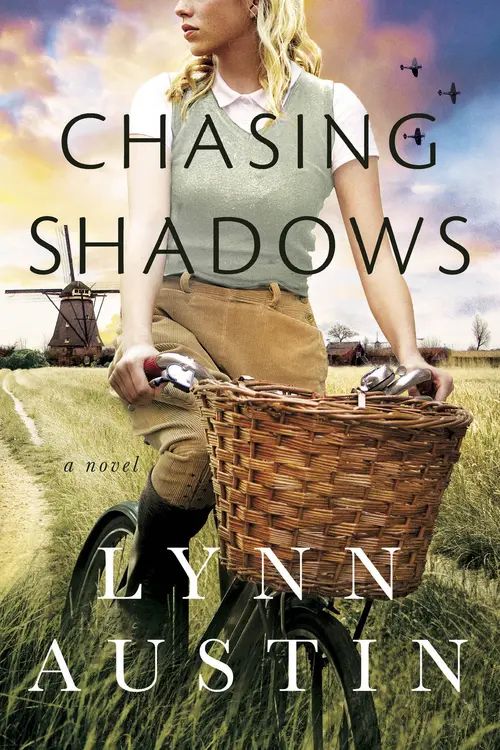
Cover
Praise for Lynn Austin
“Austin transports readers into the lives of her characters, plunking them in the middle of a brutal war and giving them a unique take on the traditional World War II tale. Readers won’t be able to turn the pages fast enough to find out how Eve and Audrey met and what could have gone so terribly wrong.”
LIBRARY JOURNAL, starred review of If I Were You
“[A] tantalizing domestic drama. . . . Its message familiar and its world nostalgic and fragile, If I Were You looks for answers in changing identities and finds that it’s priceless to remain true to oneself.”
FOREWORD REVIEWS
“Solid research . . . and detailed descriptions certainly make If I Were You a rich and enchanting historical reading experience. Fans of historical fiction and writers such as Jennifer Robson will certainly relish the wonderful story of faith and friendship.”
FRESH FICTION
“Lynn is a masterful storyteller. The characters become people you feel like you know and you truly care about. The plot has unexpected turns and keeps you riveted. All while providing encouragement in your faith as you watch the main characters’ courage during an extremely difficult time in modern history. 5 out of 5 stars.”
ECLA LIBRARIES
“A lovely story, so beautifully told, and with a really good Christian message. . . . I cannot recommend If I Were You strongly enough.”
CHRISTIAN NOVEL REVIEW
“Lynn Austin is a master at exploring the depths of human relationships. Set against the backdrop of war and its aftermath, If I Were You is a beautifully woven page-turner.”
SUSAN MEISSNER, bestselling author of Secrets of a Charmed Life and The Last Year of the War
“I have long enjoyed Lynn Austin’s novels, but If I Were You resonates above all others. Austin weaves the plot and characters together with sheer perfection, and the ending —oh, pure delight to a reader’s heart!”
TAMERA ALEXANDER, bestselling author of With This Pledge and A Note Yet Unsung
“If I Were You is a page-turning, nail-biting, heart-stopping gem of a story. Once again, Lynn Austin has done her homework. Each detail rings true, pulling us into Audrey and Eve’s differing worlds of privilege and poverty, while we watch their friendship and their faith in God struggle to survive. I loved traveling along on their journey, with all its unexpected twists and turns, and sighed with satisfaction when I reached the final page. So good.”
LIZ CURTIS HIGGS, New York Times bestselling author of Mine Is the Night
“Lynn Austin has long been one of my favorite authors. With an intriguing premise and excellent writing, If I Were You is sure to garner accolades and appeal to fans of novels like The Alice Network and The Nightingale.”
JULIE KLASSEN, author of The Bridge to Belle Island
“If I Were You is an immersive experience, not only into the dangers and deprivations of wartime England, but into the psychological complexities of characters desperate to survive. . . . With her signature attention to detail and unvarnished portrayal of the human heart, Lynn Austin weaves a tale of redemption that bears witness to Christ’s power to make all things new.”
SHARON GARLOUGH BROWN, author of the Sensible Shoes series and Shades of Light
“Lynn Austin’s If I Were You is a powerful story of heart-wrenching loss, our desperate need to be understood, to forgive and be forgiven, and the loving sacrifice found in true friendship. A compelling read, beautifully written, celebrating the strength of faith and the power of sisterhood.”
CATHY GOHLKE, Christy Award–winning author of The Medallion and Night Bird Calling
“A master at inviting readers onto a journey and sweeping them away with her elegant prose, Lynn Austin once again transports readers back in time to England. If I Were You is a beautiful story about courage, relentless love, and the transforming power of forgiveness.”
MELANIE DOBSON, award-winning author of Memories of Glass and The Curator’s Daughter
“Lynn Austin’s tradition of masterful historical fiction continues in If I Were You, an impeccably researched look into the lives of two remarkable women. Her unparalleled skill at evoking the past . . . will appeal to fans of Ariel Lawhon and Lisa Wingate. While longtime fans will appreciate this introspective tale from a writer who deeply feels the nuances of human nature, those uninitiated will immediately recognize why her talented pen has led her to near-legendary status in the realm of inspirational fiction. An unforgettable read.”
RACHEL MCMILLAN, author of The London Restoration
“Lynn Austin knows how to create conflict with her characters. Par excellence. Her latest novel is no exception. If I Were You tells the story of a Downton Abbey–like friendship between Audrey, from the nobility, and Eve, a servant at Audrey’s manor house. . . . Bold and brilliant and clever, If I Were You will delight Lynn’s multitude of fans and garner many new ones.”
ELIZABETH MUSSER, author of When I Close My Eyes
Also by Lynn Austin
If I Were You
Sightings: Discovering God’s Presence in Our Everyday Moments
Legacy of Mercy
Where We Belong
Waves of Mercy
On This Foundation
Keepers of the Covenant
Return to Me
Pilgrimage: My Journey
to a Deeper Faith in the Land Where Jesus Walked
All Things New
Wonderland Creek
While We’re Far Apart
Though Waters Roar
Until We Reach Home
A Proper Pursuit
A Woman’s Place
All She Ever Wanted
Among the Gods
Faith of My Fathers
The Strength of His Hand
Song of Redemption
Gods and Kings
Candle in the Darkness
A Light to My Path
Fire by Night
Hidden Places
Wings of Refuge
Eve’s Daughters
Fly Away
Epigraph
How could God Himself show truth and love at the same time in a world like this? By dying.
CORRIE TEN BOOM, The Hiding Place
Have mercy on me, my God,
have mercy on me, for in you I take refuge.
I will take refuge in the shadow of your wings
until the disaster has passed.PSALM 57:1
PROLOGUE
THE NETHERLANDS
MAY 1945
Every sound in the coal-black night seemed magnified as Lena lay awake in bed, waiting. She heard the quiet rustlings of the shadow people as they crept through the darkness downstairs in her farmhouse. The creak of the barn door and whisper of hay as they moved through her barn on this moonless night. The shadow people were also waiting. Did they hate it as much as she did?
The war had taught Lena de Vries to do many things. Hard, impossible things. She had learned to be courageous, propelled by fear and faith. She’d learned to face death, gripping the Savior’s hand. But waiting was the hardest lesson of all. Every minute seemed like an hour. Every hour stretched endlessly. The sun stood still in the sky during the day, then took its time dawning after each endless night —like this one. She would find herself hoping against all reason that her husband, Pieter, was alive and would come home and she could hold him in her arms. Or hoping that her daughter Ans and son, Wim, were still alive and would return. She knew that if one of them walked through her door, her joy would swallow up the long months of waiting. If they ever did return.
The past seven days had been the longest week in all of Lena’s forty-five years. Spring should be a time of rebirth and hope, but tonight her imagination partnered with fear, squeezing her heart dry, extinguishing hope. She released her breath with a sigh and rolled over in bed, whispering a quiet prayer for Pieter and Ans and Wim. And for all the shadow people who waited in the darkness with her.
Sleep was impossible. She hadn’t slept soundly since the Nazis invaded five years ago. She rose from her bed, careful not to awaken her daughters Maaike and Bep, asleep in the bed beside her where Pieter should be. Lena kept her girls close to her side these days. She pulled on a sweater over her nightgown and felt her way downstairs, familiar with every narrow step on the steep, angled stairs. She halted at the bottom. A shadow moved around her kitchen as if searching for something. Her heart leaped.
“Pieter?” she whispered.
The shadow turned. It was Wolf, her contact with the Dutch Resistance. She didn’t know his real name. It was safer that way. “Did I wake you?” he whispered. “I’m sorry. I was looking for a pencil. I wanted to leave you a note.”
“Do you have news of my husband?”
“No. But I do have good news. Allied troops are in Holland. Canadian tanks have liberated many of our cities. Here’s the latest newspaper.” He pulled the flimsy underground newssheet from his pocket and handed it to Lena. She glanced at it, then instinctively rolled it up so it would fit inside her bicycle frame. She would hide it there from the Nazis when she delivered it to her cousin in the village.
“But the Allies haven’t come this far yet?” she asked.
“Soon. I came to tell you and the others that it won’t be long. Maybe even tomorrow.”
Two more shadows slipped into the kitchen as Lena and Wolf talked. They left their hiding places only at night and disappeared before dawn. How they must long to feel the sun on their faces again.
“This isn’t another false alarm like last fall, is it?” one of the shadows whispered. Lena remembered “Mad Tuesday,” when rumors of liberation had swept the country. There had been panic among the Nazis and rejoicing among the Dutch people. Many Nazi occupiers and their collaborators had fled east. When it proved to be a false alarm, they returned. Hope withered.
“This time it’s true,” Wolf said. “I saw the Canadian tanks myself.”
Lena closed her eyes for a moment. Would the waiting truly be over?
“How will we know when it’s safe to come out?” the other shadow asked.
“They’ll ring the church bells in town. I have to go,” Wolf said, backing toward the door. “I need to tell the others.”
“Wait,” Lena said. “Are you hungry? Have you eaten?” Wolf was shadow-thin. The deep hollows on the planes of his face made him appear skeletal in the darkness. Thousands of people who were trapped in the cities were dying of starvation every day. Cities like Leiden, where Lena’s daughter Ans lived.
“You already have so many mouths to feed,” Wolf said.
“Then one more won’t make a difference.” She opened the warming oven above the stove and pulled out a baked potato, wrapped in a cloth to keep it warm, and pushed it into his hands. “I only wish I had more to offer you.” The potato was small and shriveled, one of the last few from her depleted root cellar. “Thank you for coming, Wolf. I’ll spread the news.” He had given Lena hope. And hope would make waiting harder still.
She sat down at the kitchen table with the shadow people after Wolf left, talking about the war and reading the underground newspaper to them while they each ate a potato and some boiled cabbage. She knew only their false names —Max and his wife, Ina —and that they were Jewish. Max forged false ID cards for the Resistance during the night, down in Lena’s root cellar.
When it was light enough to see, Lena helped them crawl back into their hiding place behind the piano in her front room. Pieter had boarded up the door to a closet on the other side of the wall as if it had never been there, then built a secret door in the lower panel of their upright piano. The bass keys no longer worked, but the rest of the keys did. Few people knew about the secret place, not even Lena’s two younger daughters, or that Max and Ina had lived there for more than a year.
After she’d dressed, Lena put the rest of the baked potatoes and a rind of bread she’d been saving in a basket and carried it through the door that led from the kitchen into the barn. She never knew how many shadows were hiding in her barn or how long they would stay. More hid at the very top of the old windmill that pumped water for their fields. The Resistance would position the windmill blades to signal when it was safe for the shadow people to hide on her farm. Again, it was better for Lena not to know too much. She simply cooked whatever food she had and brought it to them, asking the Lord to multiply it like the loaves and fishes.
Several men of various ages crept out of their hiding places in the barn as Lena sang the hymn that served as a signal. She read Wolf’s newspaper to them as they ate. Four of the shadows were in their late teens —her son Wim’s age. Others looked like onderduikers, ordinary husbands and fathers who’d been forced to “dive under” to avoid being sent to German slave-labor camps. Or they might be railroad workers who’d been ordered by the exiled Dutch government to go on strike to hinder the Nazis. The slender young man with wire-rimmed glasses and ebony hair was undoubtedly Jewish.
“What’s the first thing you want to do once the Allies arrive and Holland is free?” she asked.
“Go home” was their unanimous reply. The shadow men talked about things they missed and the food they were hungry for as they finished their bread and potatoes. “I heard that the Allies give out cigarettes,” one of them said. “I’d give anything for a smoke.”
At dawn, one of the shadows offered to milk Lena’s cows for her. “I grew up on a farm in Friesland,” he said. “Milking reminds me of home.” He stroked the cow’s shoulder as if greeting an old friend before straddling the milking stool. “Shall I let them out to graze when I’m finished?” he asked.
“No, they have to stay inside the barn again today. Shrapnel from a stray Nazi rocket killed three cows in a neighboring village.”
“Someone might steal them for food too,” another shadow said.
“Yes, there is that.”
Lena’s daughters drank some of the still-warm milk for breakfast. They looked thin and shadowlike too. Wim and Ans had been plump and rosy-cheeked at that age. Before the war. When life was gentle and good. When food was plentiful. “I think we’ll take the rest of the milk into town this morning,” she told the girls, “and trade it for something.”
Bep bounced with excitement at the prospect of a trip into the village. At four years old, she was full of life and energy. “May I wear a bow in my hair?” she asked.
“It isn’t Sunday,” Maaike replied.
“I know, but may I, Mama?”
“Yes, why not?” Lena brushed Bep’s long, dark hair after breakfast and tied a bright bow in it. It fell naturally into thick curls. “Do you want one, too?” she asked Maaike. She shook her head. At eleven years old she was no longer interested in girlish bows. Lena braided Maaike’s straw-blonde hair —the same color as her own —into a thick braid that fell nearly to her waist. When it was time to go, Lena fetched her broken-down bicycle from the barn. In peacetime her bicycle would be considered a piece of junk —and it was —but at least the Nazis would deem it not worth confiscating. She lifted Bep onto the handlebars, and Maaike climbed onto the board Pieter had attached to the rear fender. Lena tied the two containers of milk beneath her sweater and apron and set off on the three-mile trip into the village.
The pastures between her farm and the town looked tired and pale this morning, like an invalid who’d lain in bed too long. More fenceposts were missing, and several more trees had disappeared, chopped down for fuel this past winter. They were calling that long, endless season the Hunger Winter. With the railroad workers on strike, food had become so scarce in the cities that starving people had staggered out to Lena’s farm from Leiden and Den Haag to beg for food. Her little nation would have much rebuilding to do once the war finally ended. But Lena suspected that the hardest task would be repairing the discord and mistrust among neighbors and even within families. For the past five years, no one had known whom they could trust or who might sell their secrets to the Nazis to feed their starving children. She and Pieter knew when they agreed to hide Jews and onderduikers that if they were discovered, they’d be arrested and imprisoned.
Lena was nearly to town when she heard the glorious cacophony of church bells ringing in the distance. She slowed to a halt as joy leaped in her heart. “Listen, girls! Do you hear the bells?”
“But it isn’t Sunday, Mama,” Bep said.
“I know. It means the Netherlands is free! We’re free!” She’d spoken the words but could barely comprehend that they were true.
“Does that mean the Nazis will go away now?” Maaike asked.
“Yes, they’ll be gone for good. The Netherlands will be free again!” She couldn’t imagine it. Lena wondered if Maaike even remembered a time when Nazi soldiers on roaring motorcycles weren’t a common sight. She’d been six years old when they’d invaded the Netherlands. Little Bep had never known freedom at all.
Lena picked up her pace as she pedaled the last mile into town. The village square and the street in front of her father’s church were packed with people as if it were Easter Sunday. The church bells clamored so loudly they could probably be heard all the way out to the farm. Lena’s friends and neighbors were laughing and embracing each other, their faces streaming with tears. Her cousin Truus pushed through the crowd and hugged Lena tightly, the milk cans clanking as the women rocked in place. “Isn’t it wonderful, Lena? We’re free! The Nazis are gone at last!”
“And look at all these people who must have been hidden,” Lena said when Truus released her again. Crowded among the people she knew were strangers Lena had never seen before. Their milk-white skin and haunted faces told her they were shadow people. “I had no idea so many of them were hiding right here in the village!”
“And do you notice who isn’t here?” her cousin asked. “The filthy collaborators have all fled.”
“What a relief.” Lena wondered if they would face justice for what they’d done. They had much to account for. Lena had known these villagers all her life, had worshiped beside them in church every Sunday, and she knew that the war had brought tragedy into every life, every home. She watched them cheering and hugging each other and asking, “Is it really over? Are they finally gone?” One of the church elders burst into song, and everyone joined in singing the words to the psalm:
“O God, our help in ages past, our hope for years to come,
Our shelter from the stormy blast, and our eternal home.”
Lena gripped Bep’s hand and wiped tears as she sang. If only Pieter and Papa were here to see this. She needed to hurry home and tell her own shadow people the good news. Max and Ina could come out from behind the piano. The onderduikers could go home to their families. Maybe Pieter and Ans and Wim were on their way home right now.
She traded the milk for some cheese and a loaf of bread. “You can carry these for me on the way home,” she told her daughters. “There’s no need to hide them anymore.” Joy and hope warmed her like spring sunshine as she pedaled. The fields looked greener now than they had on the way into town.
“You can come out! It’s safe!” she called as she parked her bicycle in the barn. “The Netherlands is free!”
“You’re sure?” a voice called.
“Very sure! Quick! Run up to the windmill and tell the others.” Lena’s daughters hovered close to her as shadows emerged from every corner of the barn. Maaike and Bep would have no idea who these men were. Lena laughed at the girls’ astonished expressions and motioned for them to follow her to the kitchen, then into the front room. She bent down and rapped on the lower panel of the piano. “It’s safe to come out! The Netherlands is free! We’re free!” The girls watched, amazed, as the panel opened and Max and Ina emerged. Lena flung the front door wide for them and said, “Look! It’s a glorious day! You can go outside at last!” They moved as if in a dream as they joined the other shadow people outside in the barnyard. Like the villagers, they gazed around in wonder, laughing and rejoicing. Ina dropped to her knees, her face hidden in her hands as she wept. Across the yard, several men stood on the windmill’s upper deck, cheering and lifting their faces to the sun. Lena waved to them from her front door. Maaike stood beside her.
“Who are all these people, Mama? What are they doing here?”
“They were hiding from the Nazis. Your papa said they could stay here with us, where it’s safe. But they don’t need to hide anymore.” She looked around for Bep and saw her crouching down to peek beneath the piano.
“Look, Maaike!” Bep said. “There’s a little room inside the piano, with blankets and a bookshelf and everything. Come and see!”
The Story Continues on BooksBarbecue!
Enjoyed this preview? ❤️ Do not stop here!
Read the complete book free online → 🔗
Continue reading now on BooksBarbecue and discover every page!
Love reading? Bookmark BooksBarbecue.com for more amazing books!
Happy Reading!