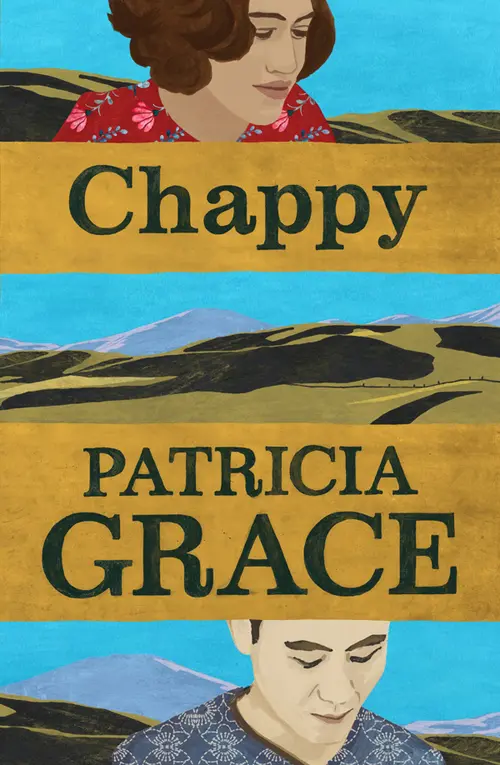
Chappy
Cover

PENGUIN BOOKS
CHAPPY
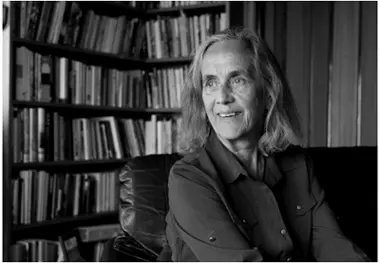
Author photo by Grant Maiden
Patricia Grace is one of New Zealand’s most celebrated writers. She is the author of six novels, seven short-story collections and several children’s books, as well as non-fiction.
Awards for her work include the Deutz Medal for fiction for the novel Tu at the Montana New Zealand Book Awards in 2005, the New Zealand Fiction award for Potiki in 1987, the Children’s Picture Book of the Year for The Kuia and the Spider in 1982 and the Hubert Church Prose Award for the Best First Book for Waiariki in 1976. She was also awarded the Literaturpreis from Frankfurt in 1994 for Potiki, which has been translated into several languages. Dogside Story was longlisted for the Booker Prize and won the Kiriyama Pacific Rim Fiction Prize in 2001.
Grace received the Prime Minister’s Award for Literary Achievement in 2006 and was the recipient of the Neustadt International Prize for Literature sponsored by the University of Oklahoma in 2008.
Grace was born in Wellington and lives in Plimmerton on ancestral land, in close proximity to her home marae at Hongoeka Bay.
ALSO BY PATRICIA GRACE
NOVELS
Mutuwhenua: The Moon Sleeps
Potiki
Cousins
Baby No-eyes
Dogside Story
Tu
SHORT STORIES
Waiariki
The Dream Sleepers and Other Stories
Electric City and Other Stories
Selected Stories
Collected Stories
The Sky People
Small Holes in the Silence
FOR CHILDREN
The Kuia and the Spider
Watercress Tuna and the Children of Champion Street
The Trolley
Areta and the Kahawai
Maraea and the Albatrosses
OTHER
Wahine Toa
Ned & Katina: A True Love Story
In Praise of Patricia Grace
‘Grace’s wonderful fiction shows us with truth, compassion and humour, the good and bad, ugliness and beauty, strength and fecklessness of contemporary Maori life.’
–Christchurch Press
‘Patricia Grace displays the kind of mastery that comes only from years of writing experience, patient observation and accumulated wisdom.’
–Sunday Star-Times
‘She not only tells a remarkable narrative, but she does so beautifully with such remarkable style.’
–Times Educational Supplement
‘Patricia Grace’s writing is as delicate as Japanese brushwork, yet as poignant and throat-aching as the loss of a loved one.’
–NZ Listener
‘Patricia Grace is an extraordinary storyteller. She writes with insight and with an intense sensitivity and spirituality that is a rare treasure.’
–Christchurch Star
Kerehi Waiariki Grace
Whakapiri ki te tini me te mano, e kore te aroha mōu e mimiti.
(Though you have gone, our love for you does not diminish.)
Prologue
I came to this country in the first place needing to piece myself together, hoping there could be attachments. By twenty-one years of age I’d lived in several countries before returning with my mother, father and sister to Switzerland, where I was born. But I didn’t think of Switzerland as my country either. Nor was it the home country of my mother or my father. It’s where my dad’s work base was, and still is – for now. It’s where some of the best ski slopes are. It’s the home of several international organisations for which my mother works as a translator. Languages are her thing.
What sort of a name is Daniel, I asked my discontented self. A name neither here nor there, pronounced this way or that depending which country you happened to find yourself in.
And what sort of a country was Switzerland anyway, I thought. So neutral. So cuckoo. So heavy with banks and the world’s money, it’s a wonder the ground didn’t crack open beneath it all.
Stones.
There are the mountains, nature’s organisation of stones and great for viewing, but there’s only so much mountain one can take, only so much skiing one can do unless you are an addict like my father or have ability like my sister. We’d shifted from place to place too many times for me to become a Winter Olympics prospect, too often for me to have made lifelong friends.
What was there to see in Rome, Madrid, Tübingen, Athens, Turin, but stones ancient and dusty, piled one on top of the other, cemented, plastered, corniced in the making of castles, cathedrals, barns, bridges, fortifications, museums, universities – or laid out to make roads. That was my state of mind while studying German literature at one of Germany’s ancient universities.
I am a stone, I thought. I am clay. Or I am dust blowing anywhere or nowhere.
Our mother was just our mother once, when we were little, who tucked us into our beds, kissed sore knees, read to us, filled the kitchen with smells of baking, had us up beside her at the benches to cut out and decorate biscuit figures for Christmas. She wrapped us and played outside with us in the snow. And while doing so her voice tinkled all about us like ice crackling, ‘Oh I always wanted to do this.’ Her pink cheeks. Her shiny eyes. ‘Make snowballs, go sledging. We had a sledge, pulled by a horse, but not snow. We had nīkau palm slides which we sat our backsides in, pulling the fronds up between our legs and whooshing down dry-grass hillsides.’ When she rocked herself back and forth and said, ‘Whoosh,’ and ‘Whee,’ I tried to imagine it all.
But having a mother to ourselves couldn’t continue in houses as grand as the ones we lived in. Not that I knew then that they were grand. However, I soon came to understand that there were too many rooms for our mother to take care of, too much fine food to be prepared for too many fine evenings for too many teethy people. There were too many dresses, too much finery to think about. Suits to be sent for cleaning day after day. Shoes. Hairdos. Our mother was already beautiful and didn’t need appointments, dresses, sparkly things to make her so.
It became necessary for other people, not our mother, to look after rooms, to cook all day long, to help us dress and take us skating, see us to bed at night, tend to pains and illnesses, watch us riding bicycles, drive us places.
Although I enjoyed our trips to the mountains, it was not so much because I liked to ski. I had no aptitude for it. But I enjoyed our mother staying with us on the slopes, learning along with Janny and me, falling and laughing and getting up again. Our father, too, would stay with us for a day before going off to find elevations more suited to his skill. God of slopes. He has skied all the skiable mountains of the world.
After a while it became inconvenient for him to take Mother, Janny and me along with him, and anyway, by the time we were eleven and twelve my sister and I were ensconced in misery boarding schools, French speaking to improve our language skills.
Though she played the part for several years, the high life didn’t suit Mother. High life was no life, she decided. She needed to work, get her teeth into something. In the same year that we went to boarding school, she began her own study of languages. Already competent in three – three I thought then, I didn’t know about the fourth, which was really her first – she was determined that she would become a licensed interpreter and translator, contracting to important world organisations. This would be her mission in life.
Why German literature? Well, I didn’t choose it. My parents did that for me because they understood that I liked to read, and nothing so far had driven me to choose a course for myself. It was true that I was always compelled to read: light works in spring and summer, heavy in the thick of winter when there’s so much dark and snow to hide from. But it was the reading of books I enjoyed – whether in English, German, French or Danish – not the study of them. Writers and their subconscious didn’t interest me, no matter how involved I became in what they wrote or how interested I became in their manner of telling.
And why the ancient university? My parents chose it for me because it was old, prestigious, focused, disciplined. Discipline was what I needed.
Stone it was, the university and the university town. I was stone, heart of stone. And alone.
One late night after leaving the city I smashed my car into a wall of stone. Fragments rained down. Metal flew and rained down. I stepped away from all that rain, unscratched and not unhappy.
Prosecution seemed like the beginning of something new, though that came to nothing. But it made me bold enough to tell my mother I was chucking it all in – the stones, the study.
‘But you can’t,’ she said. ‘Can’t throw your life away.’
I stood like stone.
‘Change courses,’ she suggested, ‘find something you like. You have to do something. The trouble with you is you’ve had it too easy. You don’t know what it’s like to have to work. To have work is the important thing in life.’
My father, over the phone, told me to settle down and see sense. But the financier didn’t sound as though he cared what I did, being involved in deals with this or that country and taken up with all his affairs. I think he was in Spain at the time.
‘You’re going to your grandmother’s,’ my mother said after the enquiries were over.
I thought at first she was talking about Bedstemoder, our father’s mother in the city of Copenhagen, where Janny and I had often stayed when neither of our parents could be home with us in the school holidays. Another city of stones. I was not averse to spending a week or two with Bedstemoder Konnie, who was funny and generous and had a wonderful library.
However, my mother was talking about Grandmother Oriwia, her own mother, on the other side of the world. We’d been to see her once when we were little. There had been a mysterious grandfather too, but he wasn’t there at the time. My sister and I knew his nationality, the name he was known by, and that was all.
There were aunts, uncles and cousins.
We played in the trees, went swimming in the ocean and skidding in the mud of the estuary.
Grandmother Oriwia sent us cards at Christmas.
Attachments.
‘Go there for six months and sort yourself out,’ my mother said. ‘You’ll soon see how the other half lives.’
‘Who was he, the grandfather?’ I asked my mother as I packed my bags.
‘Go and find out,’ she said. She too was packing, leaving for somewhere. ‘That’ll be something for you to do. And remember you’ve got to pull your weight. You have to work. Whatever they do, you do. You’ll find out what life’s all about. You’ll have to learn how to make their beds. Can’t just throw it all together, and there’s no one there with time to run round after you.’ But she didn’t sound upset, seemed to have forgiven me, excited that I was making this journey – which she had already made twice without us. ‘I wish I was coming with you,’ she said.
When I began thinking about what she’d said about finding out about my grandfather, I became interested by what I now saw ahead of me – an opportunity to piece bits of myself together.
But the story that follows is not about me. Even though I’ve been able to glean a personal history from it, it needn’t matter to anyone else who may read this, with the exception perhaps of my sister. There’s a much more interesting story than one of a spoilt brat with his own bank account who had to try and kill himself in order to draw attention to his … His what? His suffering?
Forget it.
Anyway I’m exaggerating. I didn’t want to kill myself, only wanted something to happen. I’ve never wanted to die, only to live.
When I began the interviews with Grandmother Oriwia and a doubly adopted uncle known as Aki, I didn’t intend putting them together as a book. All I wanted to do was set down family stories that I could share with my mother and sister. I thought that asking our grandmother about the man known as Chappy would be a good place to start.
‘Your grandfather?’ she said. ‘If you want to know about your grandfather there’s a lot I can tell you. Also there’s a lot I can’t tell you. My husband was always a mystery to me.’
We were sitting in the garden facing the house, which was built of wood with a low-pitched, corrugated-iron roof painted red, two windows either side of a front door, and creamy-yellow walls with green facings – all a little faded.
One of the things that had made an impression on me when landing in this country was how colourful the houses are. I like the idea that home owners can build their houses in any style they like and paint them any colour they choose. There’s freedom in that. On my first day it was the house, more than the garden, which drew my attention.
‘Anyway, the best place for you to begin would be to go and talk to Aki, your uncle by double adoption,’ my grandmother said. ‘If it wasn’t for him …’
Grandmother, armed with a chocolate cake, took me to meet this uncle, who lived about eight kilometres up a gravel road in the middle of a forest. There was an old weatherboard house there. It was without electricity and running water. He had one tank to catch rainwater, which piped into the kitchen, and another that provided water into the wash-house, an old shed at the back of the house. Cooking was done on a wood stove in the kitchen, or sometimes over a fireplace in the yard.
Aki was seventy-one, tall and thin. He hadn’t always been bony, my grandmother said, but she mentioned that he’d always been stubborn, ‘hard in the head’ was how she put it. When we arrived he made a pot of tea and cut the chocolate cake into large pieces.
He was pleased to be asked to talk about my grandfather, whom he referred to as his brother. We arranged that I would visit him later in the week, and he agreed that I could bring a tape recorder with me.
My grandmother complained about him all the way home. ‘He’s silly,’ she said. ‘He doesn’t have to live like that, stuck up in the bush all by himself, patching up his roof, chopping wood, making bread, growing corn so he can feed his pig. You have to move on in life. It’s not as though he hasn’t seen the world.’
There were things I had to do before I could begin my interviews. I needed a car and a recorder. Oriwia advised me to buy overalls, a Swanndri and gumboots. ‘It’s no use wearing good clothes up there,’ she said. It turned out to be good advice. I spent more time out of doors mucking in than I did recording.
Grandmother and I went to Wellington by train. I soon found a car that I liked and went shopping for what I needed. The reason Grandmother had insisted on coming with me was she knew I’d never driven on the left side of the road before. Also I didn’t have a New Zealand driver’s licence, which she said wouldn’t matter round the small town where she lived, but to be without it in the city could mean trouble. I took her word for it. She’d left her tearoom in charge of farmer friend, Dulcie.
Arriving at the house on the arranged day, I set up the recorder and sat down at the table opposite Uncle Aki with my notebook and pen. I had a list of questions, which I didn’t get to ask because when I pressed ‘record’, and before I’d had time to draw breath, Aki began talking.
He spoke four sentences in English – intriguing sentences they were, too – before breaking into a language that I never remembered hearing before. There were two words I recognised as he continued. He ran them together. They were ‘moon’ and ‘face’.
‘The fool,’ my grandmother said, when I told her what had happened and after I’d played a section of the recording to her. ‘Anyone would think he couldn’t speak English.’ She rattled her baking trays, swiping at them with a cloth. ‘Him and his language, what’s he trying to prove?’ She shoved the trays onto the rack above the oven. ‘All right, leave it to me, I’ll write it up for you. Tonight. In good English.’ She emphasised this last sentence. It wasn’t until she made the offer that I realised my grandmother was conversant in this other language too. ‘As though I’ve nothing better to do,’ she mumbled. ‘Next time, if there’s going to be a next time, tell him to speak English.’
I bit my tongue. There was going to be a next time. I’d already arranged this, but who was I, a twenty-one-year-old stranger, to tell such an impressive man not to speak his own language.
In what follows, the first lines were spoken in English. The rest is my grandmother’s translation from Māori into English. I think Grandmother must have worked on it throughout the night as it was all ready for me, in neat, handwritten pages, by next morning.

Chapter 1
Aki
Every night while I walk the decks of my tub,
I’m seeing a ghose.
No, no. I gotta say that again.
Every night while I walk the decks of my tub
a ghose is seeing me.
At first I thought it might be Moonface come to light, reminding me he was my companion on our journeys to see the world. Silly thing, I thought. I hadn’t forgotten him. He’s the one I talk to in the lonely hours, out of habit. As long as I am alive he will be.
But it wasn’t Moonface.
That first time it was just a glimpse I had of that ghost seeing me when some slant of light – brief torchlight perhaps, or a strip from a slit of open-and-shut door, or a roll of the ship – slipped a sliver of moon onto that dark side where I walked.
Anyway, an iris, sitting whole and lit in the outer half of an eye corner, and a section of high, luminous cheekbone is what I saw. But I kept on walking, stepping it out on the dark decks after night-watch and several hours of making steam, ourselves steaming and intoxicated on steel moving against steel, hot pipes, grease and oil enclosed in an airless, shuddering and lurching cavern.
Blood needs air, and when coming out into it, the first salt and gluttonous skulling is like throwing back highballs one after another, becoming so heady and drunken that a man could pitch to the boards with the weight of it.
It wasn’t Moonface whose eye had met with both of mine. The eye that I saw seeing me was a pleading eye, not of a ghost but a man.
What was the plea?
Was the eye asking me not to see? To forget what I had seen? Or to give help?
I walked on by.
We were three days’ journey away from my home port of Wellington, New Zealand, where I was looking forward to time with family and friends. What came to mind as I walked while being watched, was that after setting out from San Francisco, we heard that a stowaway had been dragged out of the chain locker and put to work mopping galleys and scrubbing the boards – slow on the job because he had busted ribs or something. I hadn’t seen him myself and, the next I heard, he had disappeared. A search was made and the message went out that we must report any sightings. After twenty-four hours the rumour was that the man had gone overboard when we hit rough weather.
Now, I thought, the eye must be telling me to keep walking, keep the secret – which I was more than willing to do. The owner of the eye may have known, as I did, that the way some ships’ officials dealt with stowaways was to throw them overboard before docking. In this way the masters were able to avoid all the red tape and responsibilities to do with landing a stowaway. I’d seen it happen once in my travels and had always wondered if that poor fellow made it to shore or not because the weather was so cold that morning. There were whitecaps on the waves of the harbour and it was barely daybreak.
I’d heard of stowaways being thrown to the sharks or the alligators, or dying in a fumigated hold. I’d been told others had gone mad from drinking salt water and ended up in chains with irons on their feet. I’d seen men arrested and taken away on arrival. The latter happened once in Wellington. It was difficult to tell what would happen now if this poor man was discovered. I didn’t know what kind of heart sat in the chest of the present red- and hair-faced shipmaster, so it was best to keep the secret. A secret can give you musing as you work, something to bring you forward to a clean-up, a smoke, tots and a decent feed. I walked back the way I had come, felt the eye again – the owner of which was afraid of what I might do – seeing me.
Though the man-not-a-ghost was on my mind as I turned in to my dormitory – where mates were already snoring, muttering, cracking their jaws – nothing kept my eyes from slamming themselves shut for the remaining night hours.
The Story Continues on BooksBarbecue!
Enjoyed this preview? ❤️ Do not stop here!
Read the complete book free online → 🔗
Continue reading now on BooksBarbecue and discover every page!
Love reading? Bookmark BooksBarbecue.com for more amazing books!
Happy Reading!