Caught
Chapters (5)
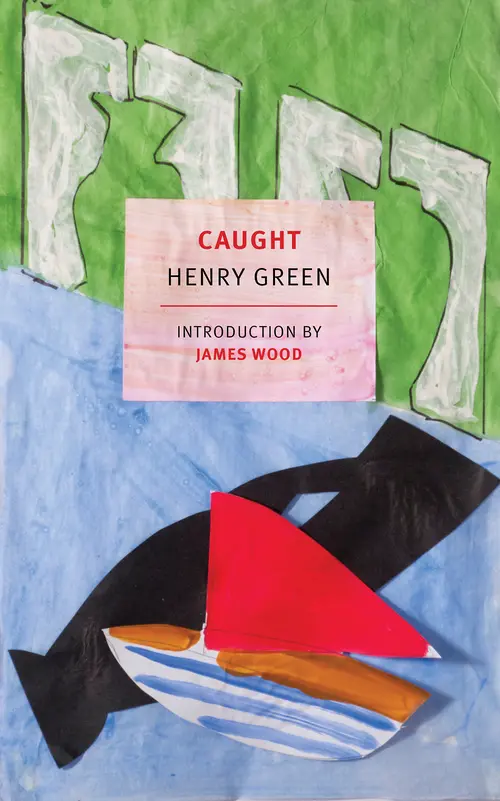
Cover
Biographical Notes
HENRY GREEN (1905–1973) was the pen name of Henry Vincent Yorke. Born near Tewkesbury in Gloucestershire, England, he was educated at Eton and Oxford and went on to become the managing director of his family’s engineering business, writing novels in his spare time. His first novel, Blindness (1926), was written while he was at Oxford. He married in 1929 and had one son, and during the Second World War served in the Auxiliary Fire Service. Between 1926 and 1952 he wrote nine novels, Blindness, Living, Party Going, Caught, Loving, Back, Concluding, Nothing, and Doting, and a memoir, Pack My Bag.
JAMES WOOD is a novelist and a staff critic at The New Yorker. He is Professor of the Practice of Literary Criticism at Harvard University.
OTHER BOOKS BY HENRY GREEN PUBLISHED BY NYRB CLASSICS
Back
Introduction by Deborah Eisenberg
Blindness*
Introduction by Daniel Mendelsohn
Doting*
Introduction by Michael Gorra
Living*
Introduction by Adam Thirlwell
Loving
Introduction by Roxana Robinson
Nothing*
Introduction by Francine Prose
Party Going*
Introduction by Amit Chaudhuri
* Forthcoming in 2017
Title Page
CAUGHT
HENRY GREEN
Introduction by
JAMES WOOD
NEW YORK REVIEW BOOKS

New York
INTRODUCTION
IN 1938, the English novelist Henry Green joined London’s Auxiliary Fire Service, which had been established in the same year, in anticipation of war with Germany. Its task was to supplement local fire brigades and protect the capital when the inevitable aerial bombardment came. As best it could—the Auxiliary Fire Service was a volunteer force, ill-equipped and hastily mobilized; London taxis often had to be converted into makeshift fire engines. And when it finally came, the German onslaught was overwhelming: the Luftwaffe bombed the capital continuously for fifty-seven nights, beginning on September 7, 1940. Nearly twenty thousand Londoners died, eight hundred of them members of the Auxiliary Fire Service.
In some respects, Henry Green (whose real name was Henry Yorke) was an unlikely recruit. He was a youngish novelist and an aristocrat, born in 1905 to great wealth and privilege, schooled at Eton and Oxford, and the heir to a beautiful stately home in Gloucestershire. As he wrote in his 1940 memoir, Pack My Bag: “I was born a mouthbreather with a silver spoon.” But whether or not Henry Yorke was a very talented fireman, the novelist Henry Green was probably an ideal observer of a close-knit, hierarchical, somewhat haphazard institution, largely staffed by ordinary Londoners. He had been studying hierarchical institutions of one kind or another since childhood; he understood that English society was undergoing great transformation and that the country was in peril; he had an intense curiosity about how ordinary working people think and about how they express themselves; and he had one of the greatest gifts for dialogue in the history of the English novel.