Away
Playwright’s Biography
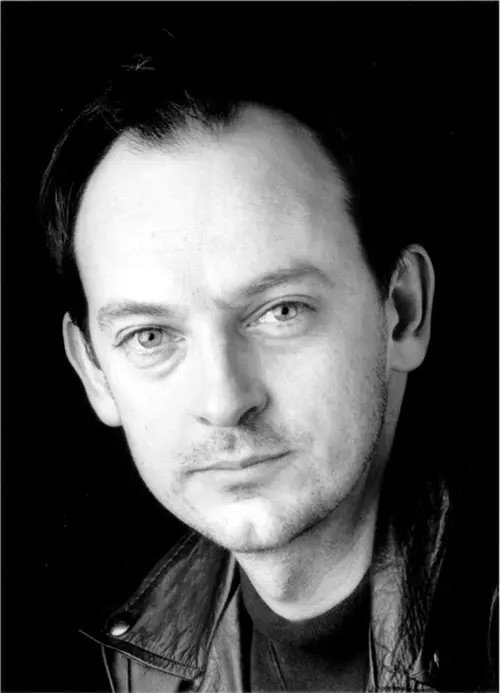
MICHAEL GOW has extensive writing credits for stage, screen and radio. His best known play is the multi-award winning Away, a modern classic of Australian Theatre and one of the most performed Australian plays. Others include Toy Symphony, The Kid, On Top of the World, Europe, 1841, The Fortunes of Richard Mahony, Live Acts on Stage and award-winners Furious and Sweet Phoebe.
For television he has written the mini-series Eden’s Lost, directed by Neil Armfield, and Art’n’Life. He also adapted his play Europe for radio and wrote The Astronaut’s Wife for ABC Radio.
His awards include two NSW Premier’s Literary Awards (for Away and Sweet Phoebe); two Sydney Theatre Critics Circle Awards (Away and Furious); the Australian Writer’s Guild Major Award for Writing and for Best Play (Away), a Green Room Award (Away) an AFI Award for best Mini-Series (Eden’s Lost). He is also a noted director, and was Artistic Director of Queensland Theatre Company for many years.
Introduction
May-Brit Akerholt
Away is set in the summer of 1967–68. Australia was a young nation in the sense that 40% of the population was under 21. By 1968 more than 8000 Australians were fighting in Vietnam and young people were becoming more politically aware. The play ends at the beginning of that year; a ‘holiday’ is over and around the world 1968 becomes a watershed. Students stage revolts in Paris, Germany and around the United States and focus attention on the bitter debates and splits in Western Society. Censorship in theatre and literature undergoes radical changes. In Australia, plays with four letter words were still banned in most states and actors risked going to jail for using obscene language. In 1966 the longest running show in Sydney was the revue A Cup of Tea, A Bex and a Good Lie Down at the Phillip Street Theatre. By the aquarian generation in 1969 Hair had taken over. The holiday was indeed over for Australia.
The portrayal of Australia in Away is as ironic as the title of Donald Horne’s The Lucky Country. Gow’s characters are imprisoned in a world in which their worth as human beings is measured in the cost of their holidays. To preserve a way of life means sending their sons to fight America’s war in Vietnam; to celebrate Christmas means hot dinners and plastic trees; the aim is to be the same as everyone else, as long as that means to be better than one’s neighbour. Gwen’s attitude to life echoes Girlie Pogson in Patrick White’s The Season at Sarsaparilla: ‘I like a hat to look different so long as it’s what the others are wearing.’ But, like all works which have an endearing quality, Gow’s play dramatises a universal world through one which is limited by time and space. And like many recent Australian plays, such as Patrick White’s Shepherd on the Rocks, David Malouf’s Blood Relations and Louis Nowra’s The Golden Age, Away is about reconciliation and the power of healing through love and compassion.
Away is historical in the sense that it places its characters and themes within a particular society and draws on the mood and spirit of a particular era to portray a larger world. It is a play about families – the young generation and their parents – and a play about the world we live in. The three families go away on their annual holidays, but their journey becomes a theatrical metaphor for a spiritual quest. As in classical Greek and Shakespearean drama, the purpose of the quest is to gain self knowledge. Thus Away is essentially about coming home, or undertaking a journey from ignorance to knowledge; from blindness to insight. At the end, the characters have a new understanding of the world around them because they have accepted the motives, ambitions, hopes and fears which determine their actions. This journey is embedded in the character of Coral, who links the school play with a Shakespearean world of distortion, the tragedy of lost hopes and the possibility of restoring order through love. She sees the darkness within Tom, the bruises of his illness and the image of death behind his vitality.
Away belongs to a growing tradition which integrates other sources into the fabric of new works. But in its very use of classic material, the play is of a classical nature. From the times of the ancient Greeks through to the Renaissance, legends and foreign literary works were introduced into local art forms and became part of an indigenous body of works. The fact that Away, as he has himself pointed out, is set at the time of Gow’s own early adolescence means that he is dealing with a period he can now see in perspective. The Shakespearean connotations provides a retrospective view in the same way that looking at events from a distance and in the same light of a wider knowledge and experience can heighten the understanding and meaning of those events. The resonances brought to the action by classic texts add a dimension to the character’s reality. The magic rites of A Midsummer Night’s Dream and the fairies’ tempest enhance the events of ordinary lives and take them beyond the realm of surface experience. We see the characters in terms of magic and poetry, as if their own lives gain new meaning through dreams and visions played out on stage. Another Australia emerges, a country which is no longer an isolated island but part of an extended world. It has the beauty and freshness of a new world and the wisdom and mythology of a very old one.
On the one hand, the scene from A Midsummer Night’s Dream which opens the play tells us that life is filled with mystery and poetry, but on the other, the scene’s execution by a group of high school students adds a measure of humour and irony to the statement. In the middle of fairy lights and tripping fantastical school-elves appears Puck, as if by magic, but he is soon revealed to be Tom, their own Chips Rafferty.
Just as Puck ‘directs’ the dance of the fairies in the school performance, so it is that Tom’s character channels the play’s action. Within the mythology of Away it is Tom who conjures up the fairies’ tempest which destroys the caravan park, as if in terrible revenge on injustice and insularity; and it is the tempest which brings the families together on a secluded, unspoilt beach. It is Tom who creates a magic play for amateur night, a play about loss and hope which restores Coral to life. At the end of the play, Tom reads the role of King Lear, bringing death into life, with the paradox that in death there is reconciliation and hope. This play about the experiences of a dying schoolboy is a celebration of life and the power to heal through gaining insight. It is a celebration of sun, sand, water and fire, the vital energies of Australia, energies which have the power both to destroy and restore.
The theme in King Lear of blindness and healing through a journey of division, pain and death, is also the theme of The Stranger on the Shore, the playlet performed by Tom and Coral on amateur night. It functions as a tragic interlude, a play-within-the-play which deals with love, sacrifice and death. In showing Coral how to walk again, it tells all the characters how to find their way home after their time away from themselves and each other. It also tells Tom’s parents not to grieve; they must suffer the loss of their son, but they have shown him ‘how to walk’ while he lived. The scene ends in an image of cleansing and purification: the red glow of a bonfire on the beach.
Tom’s playlet gives perspective to Harry’s speech in Act IV i in which the father tries to see his son’s inevitable death in the light of a much larger scheme. He points to the Chinese belief that to grieve too much when someone dies means that their life was unfinished and that they had not achieved enough to be worthy of death. Harry’s tribute to his son is to accept death: ‘in a funny way we’re happy. Even while we’re very, very sad.’
These lines also sum up the tone of the play as well as the feeling the audience retains at the sum up the tone of the play as well as the feeling the audience retains at the end; a feeling of simultaneous elation and sorrow. The characters’ self-deception is portrayed through comedy, but the humour is counterpointed both by a dark tone of longing and bitterness, of unattainable dreams and lost ambition, by a lyrical tone of magic and beauty, which in this play expresses the poetry of life. Throughout the play, comic and serious scenes are juxtaposed, and each scene contains a mixture of light and dark tones. Gow infuses the serious themes with a comic vision; he finds both the ridiculous and the tragic in ordinary people and everyday events. The character of Gwen is genuinely funny as the stereotypical nagging wife and mother, the pretentious snob whose aspiration are symbolised by a caravan with all the comforts of her suburban home. But her actions and language are like an armour hiding pain and fear as tangible as Tom’s illness.
The comedy in the amateur night scene lies partly in the send-up of typical holiday camp entertainment, partly in the way the characters respond to it. The playlet performed by Tom and Coral is also funny, and stage directions such as ‘CORAL makes ship noises on a bottle’ and ‘She swoons’ specify the comic aspects of the performance. But the comedy is gradually undermined by the tragic implications until the scene has moved from tired jokes and a rendition of Pearly Shells accompanied on the ukulele, to Coral’s line ‘I’m walking, I’m walking’ to the tune of Mendelssohn’s Nocturne.
The structure of the dialogue works in the same way as the tone, emphasising themes and action. Short, quick lines, usually duologues, in which the characters respond to each other’s words without really listening to their meaning alternate with lyrical passages which reveal the characters’ feelings and inner lives. Repetition of words and phrases emphasises the emptiness of their social language, and of the personal language they create to avoid confronting what might lie beneath the surface meaning of the words they speak.
When confrontation does take place, the characters’ worlds fall apart. But it is a necessary destruction, bringing the characters together on a ‘magical’ beach to be restored and reconciled. Coral’s escape from Roy and the glittering Gold Coast hotel leads her to the healing powers of nature and Tom. Gwen, Jim and Meg are ravaged by the forces of nature on Christmas day, by a fierce tempest brought by the fairies of the school play – and Puck/Tom. The storm destroys a whole way of life as it tears at the family’s belongings; a way of life dramatised in the chorus of campers and emphasised by Mendelssohn’s Wedding March. (Richard Wherret’s Sydney Theatre Company production brought out the central role of Gwen in this scene by having her buffeted by the wind as she clung to her possessions. The fairies also appeared battered and torn, embodiments of the characters’ inner lives as they journeyed through the storm.) In the next scene the storm is replaced by the almost dreamlike stillness of a sun-filled beach and Mendelssohn’s Midsummer Night’s Dream music.
The quest undertaken by the characters in Away brings them home to the same old world but with a renewed sense of reality. The characters have moved from the artificial lights of the school hall through the distorted landscape of Shakespeare to scenes set in nature. The more the characters reveal themselves, the closer they move to nature. We last see them under the trees in the schoolyard reading King Lear: ‘it is the power of nature, its participation in the drama’ which illuminates the ‘struggle between man and nature, as well as between man and man, and between man and himself.’ As Tom reads from the opening speech, he is setting his role in the play in perspective: ‘While we/Unburden’d crawl towards death.’
Sydney, 1988
The Play on the Stage
Richard Wherret
When I first saw the Griffin Theatre production of Away at the Stables in January 1986 I was immediately struck by three things: this was a wonderful night in the theatre; the play was deserving of being seen by more people than those who could fit into the 140-seat space in six weeks and the play had the potential to be served by production resources far more expansive than the Stables could provide. Most audiences shared my delight: the season at the Stables was packed out, and these 6,000 people were clearly only a sample of a vast audience potential. The Sydney Theatre Company season at the Drama Theatre in 1987 was seen by a further 22,320 people, and since then Away has been seen in theatre right across the country.
It is a rare work that can fit comfortably into any venue. One of the key factors in the success of a production is the suitability of the venue in which it is produced: an intimate space for a chamber work, an expansive one for an epic work. The essential qualities of Away – its lyricism, the simplicity of its staging demands, and the economy of its line and form – mean that it can very easily be realised on a small scale with minimum production attributes. On the other hand while the play begins apparently naturalistically, the ‘away’ to which the three families go for their summer break is a world where anything can happen – a dreamscape (as in A Midsummer Night’s Dream), a sanctuary (as in As You Like It), and a danger zone (as in The Tempest) – and as such provides vast scope for theatrical, magical and fantastic effects. This flexibility is a producer’s delight and the range of production scope is a director’s dream.
There is a similar range possible in the cast size of the play. While the doubling as suggested by the original production makes conceptual sense (as well as economic sense), I would love to see a production in which Leonie, Miss Latrobe, and the MC were played by additional cast members. This would provide two distinct advantages: it would accentuate the doubling of Tom/Rick which is valuable insofar as Coral sees both Tom and Rick as her lost son; and it would provide a handful more fairies to permeate the play, to wreak joy and despair on the holidaymakers in the same apparently arbitrary way that nature does in life. In particular the storm scene of III iv asks for a deluge of fairies and panoply of effects. And while, in keeping with the naïve production style, which the opening scene (from A Midsummer Night’s Dream) seems to demand, these effects can be produced by thunder sheets, wind and rain machines, wind fans, water pistols and so on (ideally all clearly visible), there is every reason why they might also be reinforced by the modern technology of sound tapes, lighting effects, ‘flying’ fairies and so on. The maximum chaos here finds its natural and deeply touching counterpoise in the tranquillity of the following scene which ends the first half of the play. A bigger cast would add reinforcements to the hotel guests, campers, and school students who people other scenes. And I was particularly taken by the idea of hinting at the possibility that the malevolent campers of III iii might also be fairies. A good-sized band of mischievous fairies has indeed a delicious if expensive appeal.
It is a rare work, too, that has within it the flexibility to be interpreted in a variety of ways. I believe a great work is one that will continue to be produced beyond its time. A criterion of this continued life is the universality of the subject matter, the capacity of the themes to speak to any place at any time, and in turn to be reinterpreted in terms of any place and any time. The central subjects of Away – regeneration, recreation, restoration, resolution and resignation – are universal ones which find some of their most profound expression in Shakespeare, from whom Gow draws his inspiration.
The recreation we seek from a holiday is the restoration of our spiritual and physical energies, our life forces. Tom, Harry and Vic are arguably the only characters who ‘don’t look forward’ (Harry, IV i). They live resolutely in the present, the only time they have as a family under the threat to Tom’s health. The remaining characters, with the exception of Meg, are either ‘holding back’. ‘keeping in’ or ‘hanging on to’ the past, which is a kind of death; just as the future, with the threat of loss and abandonment appears also to be a kind of death. The future is the unknown and to embrace it requires a letting go of whatever it is that binds us to the past. To do this is to be free. To hang on is to be asleep (‘like in a dream’: Rick III iii). To be awake is the way to face reality: it then becomes an easy thing to let go. Thus a way can become the way. In its many ways, Away is an affirmation of these basic human needs.
The structure of the play reinforces these themes and in this way coheres with content, which is I believe a measure of art. The play begins indoors, within the confines of small domestic interiors. The first scenes away open out a little – a Surfer’s Paradise hotel ballroom, a crowded ‘caravan city’, the roof top of the hotel. The end of Act III finds us at a beach, the beach of Tom, Harry and Vic, and releases us into a vast open space – endless sand, vaulted sky, a place to relish freedom. We never again retreat indoors. The final scene of the play, again set outdoors, brings us full circle as Tom and his classmates undertake their first reading of their new text King Lear. The last lines exploit dramatic irony in masterful poignancy as Tom and we the audience reel from his words, while his friends read on unwittingly.
Tom is central to these themes. Imbued with a sense of his own mortality, he is inspired despite his pain to lead others out of theirs. Puck-like, he is the play’s protagonist, mentor, engineer, lifeline, and radiance. He is the catalyst to the situation and its salvation. The play gains accordingly by being delightfully funny, distinctly resonant, and deeply moving.
Sydney, April 1988
‘What country, friends, is this?’
Twelfth Night, Act I, sc ii.
‘I have done nothing but in care of thee,
Of thee, my dear one.’
The Tempest, Act I, sc.ii.
First Production
Away was first performed by the Griffin Theatre Company on 7 January 1986 at the Stables Theatre, Sydney, with the following cast:
| TOM | Christian Hodge |
| ROY | Benjamin Franklin |
| MEG | Angela Toohey |
| GWEN | Andrea Moor |
| JIM | David Lynch |
| CORAL | Vanessa Downing |
| HARRY | Geoff Morrell |
| VIC | Julie Godfrey |
| LEONIE | Angela Toohey |
| RICK | Christian Hodge |
Campers, hotel guests, fairies etc. were played by the company.
Directed by Peter Kingston
Designed by Robert Kemp
The Story Continues on BooksBarbecue!
Enjoyed this preview? ❤️ Do not stop here!
Read the complete book free online → 🔗
Continue reading now on BooksBarbecue and discover every page!
Love reading? Bookmark BooksBarbecue.com for more amazing books!
Happy Reading!