At Dawn
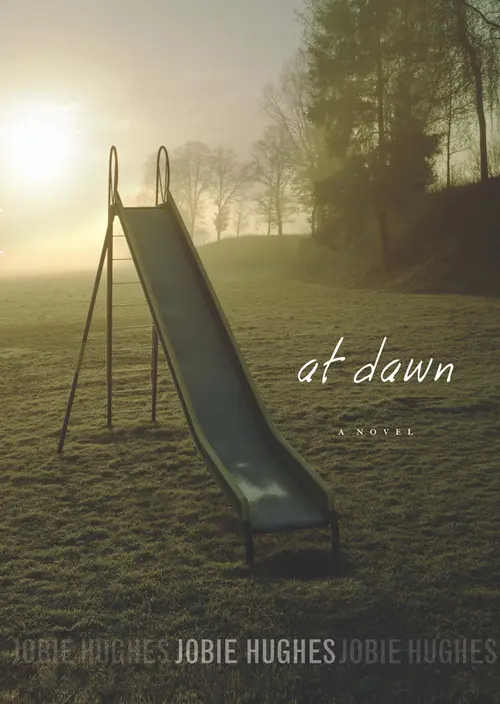
Cover
Title Page
Dedication
For my mother
prologue
1
I AM TEN THE first time we leave. The summer after fifth grade, early June, a month before my eleventh birthday. I walk in the door after the last day of school. My mother is at the dining room table with a duffel bag at her feet. She’s smoking. Her eyes are red and puffy.
“Hi, Bubby,” she says, using the nickname by which she has always called me. “How was your last day?”
“It was good,” I say.
“That’s great. Listen, you need to go pack a bag for at least a week. We’re gonna go camping.”
“Is Dad coming?”
“No. And we need to be outta here ’fore he gets home.”
I look at the clock. It’s three thirty. He’ll be home from work in a half hour.
“You need to hurry.”
I walk into my bedroom and flip the switch but the light doesn’t come on. The electricity has been off for a few days now. I empty my backpack and fill it with clothes and anything else I can think to bring. I’m nervous because my father has been back to work for only two weeks now and he sometimes comes home early. But at a quarter of four we’re out the door unnoticed. We drive for a half hour and enter a town I’ve never been to before.
“Are you leaving Dad?” I ask.
“I don’t know what I’m doin’, Stratton. I just need a break.”
I nod. “It’s okay if you are.”
She looks over and smiles, places her hand on my leg, and squeezes reassuringly. “Thanks, Bubby.”
She turns back to the road, and for the first time, I see that she has unsuccessfully tried covering a bruise on her right cheek.
“Did he hit you?” I ask.
“Yes.”
“I hate him.”
“No you don’t,” she says. “He’s yer dad.”
“Yes I do.”
A mile outside of town, we pull onto a paved road beneath an overhead sign that reads SHADY LAKE CAMPGROUND. We enter a thick forest of sylvan charm and on each side of the road there are trails entering and exiting the woods. I can see people walking and biking on them. I grow excited. It’s been a very long time since we last went camping. I enjoyed it then and know I’ll enjoy it now.
“Is there a lake here?”
“A big one,” she says.
“Can we swim in it?”
“Yep. We can rent boats, too.”
Signs lead us to the lodge. I wait in the car while she checks us in, and five minutes later she returns with papers in hand. She gives me the map, tells me the lot number, and asks me to navigate the way. There are over two hundred numbered lots but we find ours without trouble. It’s a circular clearing tucked within a thicket of trees some twenty yards off the road. A fire pit sits in the very center, and beside that stands a metal charcoal grill.
In the trunk I find a packed cooler, a four-man tent, four pillows, two sleeping bags, a grocery bag full of dry goods. I pull it all out and set it beside the flattest spot of land I’ve judged to be the best place for the tent. As I’m doing so, my mom sits on a log with her legs crossed, staring past the campground and into the far trees on the opposite side of the road. She looks as though she’s pondering the fate she’s created for us. Just the two of us, alone, sleeping in a tent because there’s no other place for us to go. I’ve come to think of my mother as a fighter, a drinker, a lover, a nurturer. She’s short and thin but has the biggest heart of any person I’ve known. But now she looks lost, and the pain in her eyes makes me wish I had something I could offer to take it away. But I have no soothing words, no money, no home in which we could hide. Nothing more than a son’s love, and even though I know she’d say that is all she wants, to me it seems terribly insufficient. I walk to her and hug her tightly. Because she’s sitting, her head only comes to my chest. When I pull away she says thank you.
Together we build the tent. It’s the domed kind with fiberglass poles that slide into polyester sleeves. When it’s up I hammer the stakes into the ground while my mother starts dinner, dumping charcoal bricks into the grill. She douses them with fluid and lets me light it with a match. Fire sweeps across the bricks with a whoosh. We grill hamburgers and eat potato salad scooped with our fingers from a grocery store container.
“I like it here,” I say.
She nods. “It sure is peaceful, isn’t it?”
2
I wake in the middle of the night, sweating, out of breath. I reach over, terrified that my mother isn’t there, but my hand brushes her shoulder. I go to the front of the tent and poke my head out. Silence, the lot numbers bathed in soft light at the front of each plot.
“What’s the matter?” she asks behind me.
What is the matter, I think? It’s too juvenile to tell her that I had dreamt my father showed up drunk and angry. That in my dream he had every intention of harming us both. That I was the only one who could prevent it, me and all my sixty pounds and what others have called buggy-whip arms.
She sits up, her tired face puffy with sleep.
“Nothing,” I say. “I have to use the bathroom.”
I exit the tent and urinate on the side of a tree twenty feet away. When I finish I tiptoe to the road and look in both directions. No cars, though in the diagonal lot, I notice the burning embers of a cigarette. An old man with a pinched, wrinkled face and gray hair. He lifts his hand. I wave back, then return to the tent. My mother is already asleep. I lie on my back staring at the top of the tent. It takes a very long time to fall back to sleep.
When I wake, my mother is gone. Judging by the heat and the light I assume that it’s close to noon. I find her sitting on the same log as the day before, drinking a cup of coffee, her dark haired pulled back. The bruise on her cheek has darkened and she’s again staring blankly at the woods across the road as though waiting for an answer. She looks my way and smiles.
“It’s going to be hot today,” she says. “I was thinking we could go swimming.”
“That’d be awesome.”
“You hungry?”
“Starving.”
I build the fire and she cooks bacon and eggs on a cast-iron skillet. Bicyclers pass and most wave while we eat in silence. A lazy wind pushes through the trees causing dapples of sunlight to dance at our feet.
“Do you want to shower?” she asks.
I shake my head. I’m camping in the middle of a forest; I have dirt beneath my fingernails; my hair is a mess. Today we’ll hike trails and swim and row a boat into the middle of a lake. I’m living a kid’s dream. The dirtier I become the better.
My mom wears a swimsuit beneath a pair of white shorts and a tube top. We walk a wide trail until it opens onto the lake, which is large; thick algae floats out fifteen feet from its muddy shore. I count five frogs. There’s a floating log where three turtles are perched, their long, extended necks soaking up the sun. The beach is a five-minute walk away, the place to rent boats and set them ashore another ten minutes beyond that. I skip rocks across the water while we walk. The rowboats have all been rented, and all that’s left is a pedal boat, which we rent for the next three hours. It’s blue and white, two seats for the pedalers, two seats for riders. There’ll be no riders except for us. My mother sets a bag of snacks and drinks in the built-in cooler and then we’re off.
It takes a half hour to reach the lake’s center and I can tell my mother’s legs are tired once we’re there. Nonetheless, we strip to our swimwear and dive in headfirst. We’re not sure if swimming is even permitted but neither of us cares. The water is cold. We swim awhile before we rest beside one another with our arms perched over the side of the boat. She pushes me off and I swim below and pull her under by her ankles.
We laugh the entire time.
When we climb back aboard we eat the sandwiches she has made, explore other areas of the lake, and return the boat when the third hour is up. We’re both exhausted. We walk to the beach and my mother falls asleep on her towel. I swim for a while, play Frisbee and volleyball with a few other kids and their fathers, then return. She’s still asleep, on her stomach, and after a while I fall asleep beside her.
3
On Saturday, our fourth day in the campground, I go for a hike along the winding trails while my mother takes a nap, which is how she’s spent a good majority of the trip. When she isn’t sleeping she walks aimlessly around the site, picking up sticks or kicking stones like a bored child. For the most part she’s quiet, and when she catches me watching her, she merely smiles politely.
The trails are crowded. I venture off them, climbing trees, chasing squirrels. The forest floor is blanketed with twigs and leaves, the leaves above a ceiling of green with the occasional stain of blue coming through. I get lost, find my way again, end up on trails I haven’t yet explored, but quickly return to the wilderness for areas left untouched. The park seems to stretch for miles. There are pines, oaks, elms. Bushes with berries, bushes with thorns. I find a branch as tall as I am and tear away its limbs and use it as a hiking stick. The only sounds are the ones I make, everything fresh and organic, like the smell a thunderstorm leaves behind. I hike beneath a perched hawk that looks down on me with fierce orange eyes. How long have I been gone? Two hours, maybe three. I end back on a trail and navigate up it until a spot of pale light shows ahead, which can only mean a clearing.
I exit the trail onto the road my mother and I had entered the campground on. I have no idea how to get back to our site from here. I look to the right. The road disappears into the trees a hundred feet away. To the left, five hundred feet from where I stand, I can see the arched sign heralding the park’s main entryway. Cars speed by. And then, just as I’m looking at it, a red truck coasts by, hits its brakes, then squeals in reverse until it’s able to make the turn. My heart sinks and blood rushes to my face. The back of my neck turns cold. I know immediately that it’s my father.
I recede into the trail and peer from behind a tree and wait for him to pass. Then I see him, his right hand on the top of the steering wheel, his left arm hanging out the door. The truck rolls by and I stare at it in awe until it disappears. Panic sweeps through me. I drop the stick and make a mad dash down the trail. Has my mother told him where we are, or has he guessed by noticing the missing sleeping bags, the tent, the cooler? It wouldn’t take much to figure it out.
I sprint as fast as my legs will carry me. Nothing looks familiar. I turn down one trail and second-guess myself and go flying down another. Out of breath, heart racing. But I keep sprinting and my pace doesn’t waver. What will I do if he beats me there, if he’s drunk and angry?
I race by others. They stare. One man tells me to slow down and I have the urge to turn around and tell him to go screw himself but instead I drop my head and run faster. I make another turn and pass through an unexpected dip that causes me to lose my balance and fall. I scrape both knees and the palm of my right hand. I rush up and carry on but stop when I reach a circular clearing. I bend over to catch my breath. A slight trickle of blood leaks from my palm. I lick it away. All I can think about is my mom sleeping in the four-man tent, not having a clue as to my father’s sudden appearance.
I’m a goddamn moron for being lost. Six trails head in opposite directions. I haven’t the slightest idea of which, if any, will lead me to my mother. Only one of them has a sign. It reads LODGE. The lodge won’t help me, so I follow the trail that leads in the opposite direction. As each minute passes I grow more certain that he’s come to hurt her. The thought terrifies me. Another fork in the path. I don’t stop to ponder it, instead pick a direction and go. It’s been at least ten minutes, maybe fifteen. I’m covered in sweat. Surely he would have spotted her car by now, parked right out in the open for anyone to see.
Up ahead I finally catch sight of another opening. My eyes now sting with sweat and my shirt is soaked. Both knees hurt. My hand throbs, still bleeding. My legs and lungs burn fiercely but I push the pain away and sprint even harder. The trail opens onto a road. There are signs pointing in the direction of certain numbered lots. Ours is 134. I follow the arrow. Finally the road looks familiar, and when I make the turn, I immediately see the back of my father’s truck.
When I reach the campsite they’re sitting on opposite logs facing one another, talking in hushed voices. My father smiles as though I should be thrilled to see him, fully expecting me to walk over and hug him, which I don’t, and instead I look at my mom, who also smiles. And in that smile I realize that she has told him where to find us. I feel betrayed. I bend over, hands on knees, trying to catch my breath.
“Hey, bud,” my father says. “How are you?”
“Good.”
“Been havin’ fun campin’?”
“Yes,” I say, then to my mother, “Are you okay?”
“Of course, Stratton,” she replies, as though the question is absurd.
“Got paid yesterday,” he tells me. It’s his first paycheck in a year and a half. “Finally got the electric turned back on,” he continues, as though this bit of news is meant to impress me. It doesn’t. Over the winter the gas was shut off and I had to take cold showers, which is one thing in the summer, but an altogether different thing on the coldest days of December. When he works he is short with both my mother and me and sometimes even hits her. He’s only ever happy when he’s able to drink late and sleep later. If a man is made by his ability to provide for his family, or his knack for discipline, or even his willingness to sacrifice, then my father is no more a man than the log on which he now sits.
“Does this mean we’re leaving?” I ask.
“Why don’t you go grab us some snacks from the lodge,” my father says. He reaches into his back pocket and pulls out a few dollar bills and holds them out to me. I don’t reach for them. I look to my mother and she nods.
“I don’t want to.”
“Well go anyway,” he says, his voice firm and adamant.
I turn around without taking his money. I stay gone for twenty minutes, slowly walking along a familiar trail to kill time. When I return, our tent has been taken down and, along with everything else, loaded into the back of my mother’s car.
one
1
I LEFT NEW YORK on a cold November day of dark skies and sideways rain, but I don’t care to say why other than the city itself had changed and I no longer felt I could sustain a living there. Gone was the New York I had idealized in the years before I finally arrived, the city of milk and honey, a place where dreams were achieved. But I’d been without a job for six months, my unemployment benefits had run dry, and work, once plentiful, had become as scarce as a street free of litter; the perpetually high rents were now higher, even in the outer reaches of Queens, Brooklyn, and Jersey, all of which once served as safe havens for the less-than-affluent; each day brought new demonstrations, sign-wielding protests and marches in the streets. The fight against inequality. Wall Street versus Main Street. Even the homeless seemed to have multiplied and, truth be told, I feared becoming one of them. Living in perpetual fear for the future. Each day more rife with anxiety than the day that had come before it.
I was headed for Chicago. I wasn’t sure I expected things to be different there, but I had to give it a try if for no other reason than to hope a little longer. Or, failing that, to at least reach the endlessly evasive mind-set in which I could stop making shitty, self-involved quips like “hope a little longer.”
I had an old friend there who said I could stay with him until I found a job and place of my own. I hadn’t seen him since high school and was hesitant since he was precisely the type of person I wanted away from—a deep family pedigree, pretentious, uptight, and, above all, successful where I had failed. But he was a familiar face when the whole world felt unfamiliar and just about the only option I had, so I took it.
I’d hoped to leave New York by plane but the cost of airfare would have left only lint in my pockets. I considered taking the train, renting a car, even hitching my way across the Midwest, but in the end I bought a bus ticket and left it at that. I didn’t care how I got out. I just knew I had to, and fast.
I boarded the bus on a Wednesday afternoon, soaking wet, out of breath, carrying a green canvas rucksack full of everything I owned. I had three hundred bucks and knew it wouldn’t last long. The bus was half full. I sat adjacent to the only halfway decent-looking girl—modestly pretty with shoulder-length dark hair, brown eyes and pale skin, the feral brows of a twelve-year-old who’d yet to discover tweezers. She wore low-rise jeans and leaned forward as I took my seat and I could see the waistband of her panties. They were black. I closed my eyes and leaned back, took a deep breath, affixed on my face the grin of a man sure of his own luck, and suddenly looked forward to the fifteen-hour trip.
2
The Story Continues on BooksBarbecue!
Enjoyed this preview? ❤️ Do not stop here!
Read the complete book free online → 🔗
Continue reading now on BooksBarbecue and discover every page!
Love reading? Bookmark BooksBarbecue.com for more amazing books!
Happy Reading!