Animal Crackers
Cover
Title Page
Copyright
This is a work of fiction. Names, characters, places, and incidents either are the product of the author’s imagination or are used fictitiously. Any resemblance to actual persons, living or dead, events, or locales is entirely coincidental.
Copyright © 2004 by Hannah Tinti
Excerpt from The Twelve Lives of Samuel Hawley copyright © 2016 by Hannah Tinti
Published in the United States by The Dial Press, an imprint of Random House, a division of Penguin Random House LLC, New York.
THE DIAL PRESS and the HOUSE colophon are registered trademarks of Penguin Random House LLC.
Originally published in hardcover in the United States by The Dial Press, an imprint of Random House, a division of Penguin Random House LLC, in 2004.
The following stories appeared in different form in the following publications:
“Animal Crackers” in Alaska Quarterly Review, “Home Sweet Home” in Epoch and Best American Mystery Stories 2003, “Reasonable Terms” in Story, “Slim’s Last Ride” in Sonora Review, “Hit Man of the Year” in Story, “Gallus, Gallus” in Story Quarterly, “How to Revitalize the Snake in Your Life” in Another Magazine.
This book contains an excerpt from the forthcoming book The Twelve Lives of Samuel Hawley by Hannah Tinti. This excerpt has been set for this edition only and may not reflect the final content of the forthcoming edition.
ISBN 978-0-385-33744-1
Ebook ISBN 978-0-307-42278-1
randomhousebooks.com
Book design by Helene Berinsky, adapted for ebook
Cover design: Belina Huey
Cover photograph: Tatsuya Sato
v3.0_r2
a
Praise
Praise for Hannah Tinti’s
animal crackers
“The animals of Tinti’s imagination are not merely symbols but phantoms. They stalk the shadows of her characters’ worlds, conveying what it feels like to have your heart broken.”
—Cleveland Plain Dealer
“[These] vignettes show off Tinti’s gift for the quick study. They also establish her theme of animals as the secret sharers of humanity, the unwitting repositories of our desires and fears.”
—New York Times Book Review
“Hannah Tinti is not just a masterly writer—though her wondrous debut certainly proves her to be that. No, what really floors you is the span, the variegation of her gifts. This book reads like a first-class greatest-hits compilation, the work of many distinct, enviable virtuosi. Animal Crackers ushers in the arrival of a giant.”
—Darin Strauss, author of Chang and Eng and The Real McCoy
“Tinti’s suburban gothic recalls Joy Williams. . . . A redeeming generosity underlies the harsher realities in these stories, and it is to Tinti’s credit that her zookeepers and pet owners, as flawed as they are, are as sympathetic as her wise giraffes and gentle bunnies.”
— Publishers Weekly (starred review)
“Hilarious . . . luminous . . . whimsical . . . an enjoyable set from a writer on the move.”
—People
“Within each story is a mystical communion between animals and human beings as they struggle for equilibrium in their lives. . . . Tinti’s stories serve up an anomalous blend of psychologically muddled and intuitive characters as sympathetic as they are flawed. These stories not only entertain, they startle, they illuminate.”
—Milwaukee Journal Sentinel
“Exhibiting a range and control unusual for a young writer, in Animal Crackers Hannah Tinti offers nearly a dozen tales: sweetly macabre, adroitly surprising. You’d be crackers yourself not to indulge.”
—Gregory Maguire, author of Wicked, Mirror Mirror, and Confessions of an Ugly Stepsister
“In this marvelously strange debut, Tinti welcomes her reader into a world in which zoo animals stage protests, rabbits fly from third-story windows wearing capes, and stuffed black bears stalk the museum muralist....Fans of Aimee Bender’s dreamy collection The Girl in the Flammable Skirt can find a new friend in Tinti.”
—Entertainment Weekly
“[Tinti’s] style recalls Flannery O’Connor; the stories embedded with incidental Gothic details . . . [and] considerable writing skill.”
— The Independent (UK)
“Almost every piece in this volume will interrupt your thoughts and invade your sleep [but] it is highly recommended.”
—Library Journal (starred review)
“Under Tinti’s pen, the seemingly mundane is disrupted by the suddenly shocking. . . . Animal Crackers is a gruesome yet surprisingly captivating read. Each bone-chilling plot pulls us in, leaving us unable to renounce the glimpse of our dark side that Tinti so expertly portrays.”
— Columbia Spectator
“These are marvelous stories. Hard-edged, big-hearted, they glitter and gleam with a rare clarity of vision. Hannah Tinti is a generous and enormously gifted writer. She will make you see the world differently.”
—Dani Shapiro, author of Family History and Slow Motion
“Ambitious and imaginative.”
—Pages magazine
“Animal Crackers’ stories are compelling and beautifully shaped on the surface, but they reward further analysis; the more complex narratives resemble fractal patterns, with neatly crafted metaphors that repeat on several levels. . . . A terrific debut that weighs down airy, high-concept thought pieces with animal flesh and human blood alike.”
—The Onion
“Hannah Tinti is who you want around a campfire or on a long road trip. The stories in Animal Crackers will make your head spin, your skin crawl, your heart jump.”
—Helen Ellis, author of Eating the Cheshire Cat
“Tinti boldly parses primal emotions in her stealthy short stories, which, like cats’ paws, conceal weapons of great precision....Tinti’s fables are dark and wily, grim yet morbidly fascinating exposures of both our animal selves and our uniquely human psychoses.”
—Booklist
Animal Crackers
animal crackers
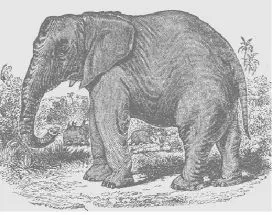
It’s time to wash the elephant. Joseph has dragged out the hoses and I’m trying to prod Marysue out the door to the place we do it. Hup, I say, and poke her with a broom. I need to be careful— there is a part of me that steps into traffic—she eased her weight onto the last keeper’s foot and the bones were crushed to pieces. I imagine my ex-wife lifting that giant ear and whispering, Step there.
When I started, the staff treated me to a beer and showed me their scars. They said it would happen sooner or later. They said watch out. Everyone who works with animals has a mark somewhere.
Joseph says big animals are like big problems. He should know, he’s had his share—eighteen years old when the army shipped him to Cambodia. He came back okay, he says, only to get his arm chomped off by a Senegalese lion in a traveling circus. He’s got a little stump coming from the end of his elbow that bends up and down. Like me, Joseph used to have a wife who isn’t in the picture anymore. She left him for a soldier who’d also been in Cambodia. Joseph says it was his fault. He doesn’t blame the lion.
It’s a warm day and I’m sweating in my coveralls. We scrub Marysue’s legs and Joseph tells me another story, this one about his friend Al he met in the service (not the one who drove off into the sunset with his wife). I listen to him describe the jungle and turn my hose on the ground to make some mud. Marysue likes to roll in it. She scoops some up, throws it across her back, and I take a long-handled brush and rub it in. She looks at me with her mouth open and I think she is saying thanks.
Joseph’s friend Al was stationed near Phnom Penh and had a pet cockatoo he’d bought off the street for a buck. It would sit on his shoulder and squawk, feathers rippling, but mostly it just looked around and moved its feet back and forth. Al taught it to shit on command. He’d make it go on his friends as a joke, or on people he didn’t like, for a different kind of joke.
One day they were at a bar with the cockatoo flying around and it suddenly landed on Al’s shoulder and let loose some of its sparkling white fruit. It had never done this before—Joseph laughed—but Al just sat and stared at it spackling down the camouflage green of his army jacket. He said, I’m going to die, and he did—somebody had booby-trapped his bike and it blew when he turned the ignition. Joseph said he saw the cockatoo flying around after that, looking for its master, and finally Joseph got so mad he knocked it out of a tree and broke its neck. He still had both his arms then.
I watch Joseph to see how he’s feeling, but he doesn’t seem angry anymore. He slides a sponge across Marysue’s feet and says that manatees have the same kind of rounded nails on their flippers. He says they’re the closest thing elephants have to a relative. I try to imagine Marysue floating in the water, suddenly free of all that weight. Elephants can swim for miles, Joseph says. Somehow they know they’re not going to sink.
Sandy runs the monkey house. She is an attractive woman if you look at her from the left. When she turns, you can see the puckered skin and the crooked white line across her cheek into her chin where a gorilla took a bite out. The scar just touches the corner of her mouth, so when she smiles, the skin stretches and it looks like something’s still holding on to her.
She studied biology and zoology in college. After graduation she got hired by one of her professors as a research assistant and headed into the African jungle. She was thinking she had the touch, and it made her do things she shouldn’t, like get too close to a newborn gorilla and have the mother come charging out of the bushes and bury her teeth in Sandy’s face until the team they were traveling with shot her down. Sandy woke up in a hospital to doctors clicking their tongues as they sewed her skin back together over the bone.
We went out on a date once. I took her to dinner and a movie and we got a drink afterward. She told me her old boyfriend used to make her keep her head turned when they made love, so he wouldn’t have to look at it. Hearing all this made me uneasy, the way people can tell you secrets about themselves too soon and make you feel responsible. I took her home after that and left as soon as I could.
Mike takes care of the sea lions, George and Martha. He has a master’s degree in poetry and has worked here, scrubbing the tank, for seven years. Each day at noon he performs a show, throwing fish from a pail to George and Martha as they bob on the surface of the water. Afterward, if the boss isn’t around, he tries to sell copies of his chapbook to the crowd.
One evening after we split a bottle of schnapps, our pants rolled up and our feet in the sea lion pool, Mike told me about how he went diving at night off the coast of Mexico with a few of his buddies. He said jumping into the ocean after dark is like stepping down into a graveyard, falling through the earth, bumping into coffins and bodies, and feeling all of the lost bits and pieces of souls that have seeped into the soil come looking for you. He said he’d never do it again.
The men brought underwater lights to look at things. They attached glow sticks to their tanks, each a different color— green, yellow, purple. They held on to their masks and regulators and fell in backward.
The group went down about eighty feet and let the current take them. Bugs swarmed their flashlights, and Mike could feel little insects wiggling against him as they got caught in his wet suit. He saw giant lobsters, jellyfish, skates, sharks, and other strange things he didn’t know the names for, creatures that only come out at night.
Mike swept the light below. Just beyond the beam was an enormous scaly movement that didn’t seem to end—part of a manta wing, or the curve of a tail. The animal churned steadily beneath him and there were things hanging—spines or leeches—bits of detritus in its wake. Mike willed himself not to panic. He turned off his light, as if caught spying on his neighbors, and paused in the stillness of the water. Then he swam as fast as he could.
He stopped at thirty feet for safety, to keep from getting the bends. He clicked on the flashlight and looked behind him. There was a tiny eel. A school of fish. Mike watched the green glow of a light stick slowly moving toward him and felt a gathering of relief. Together he and his friend treaded water, back and forth, while they waited for their buddy to join them. They could see the purple color of him in the distance.
When he didn’t come any closer, they got nervous and went after him. He wasn’t there. It was only his tanks settled on the ocean floor, the glow stick swaying like a weather vane in the direction of a bad wind. They went back to the boat, but he wasn’t there either and by then they were out of reserve. They radioed for help. Mike used a snorkel and his flashlight to keep looking, but he stayed close to the boat. They never found the body.
Mike threw the empty schnapps bottle into the pool. We were both quiet for a while. I had my fingers wrapped around the railing and I thought about all the little kids who would be pressing their faces against the glass tomorrow. We had some more quiet between us and then he waded in to fish it out.
You hear animal stories every day. How a bee stung little Johnny and he went into cardiac arrest. How a snake bit Cousin Tom and it shriveled up his toe. How a pack of dogs chased Aunt Shirley down the street until she climbed through an open car window, rolled it shut behind her, and watched the animals circling, pawing the doors, their wet noses leaving streaks on the chrome. These stories are supposed to give warning.
Joseph scrapes away at the bottom of Marysue’s foot. He touches her below the knee and she lifts her leg automatically, as if his fingers are telling her something important. I know not to make any sudden movements now. She watches me as if I might attack, because this is when another animal would come, when she is not ready to protect herself. Her eyes seem too small for such a large body. She keeps her trunk on Joseph’s back, feeling around, making sure of what is happening to her.
Joseph says that in the wild when elephants feel threatened, they put the young and the weak in the middle and form a circle around them. I wonder if Marysue has family somewhere. If they tried to save her from being tagged and shipped. I picture her searching for a tail to hold on to while the others paw the ground and get ready to charge.
Ann runs the ticket booth. Her cat, Stinky, comes to work with her every day. Ann keeps a small basket by her feet, where he sleeps. Stinky doesn’t have any fur. His skin hangs down between his legs like an old man wearing a diaper. Ann says Stinky saved her life.
She tells me about one night in September when she woke up to a blazing light in her room. Her bed was vibrating and she thought it was an earthquake until she felt her body rise and start to move toward the window. The sash flew up and the screen was ripped off. Ann says what came next was like the sting you get before frostbite, followed by a numbness that crept from her fingers and toes and moved through her thighs, her shoulders, and on toward her heart. She tried to scream, but her throat was swollen tight.
Stinky jumped onto the windowsill and started hissing. He had fur then, Ann says, orange and yellow swirled together, and it stood on end, prickling against the beam like needle points. Stinky bared his teeth and Ann says his eyes reflected the light so intensely it looked like lasers shooting out of him, and suddenly everything went dark and Ann dropped to the ground, hitting the back of her head on the bedside table. She clutched the rag rug on the floor around her and crawled underneath the mattress, where she lay stunned until morning. When daylight came and she had enough courage to come out, she found the window still open, shreds of the screen in the bushes outside and Stinky, bald and quivering, under a pile of dirty clothes in the closet.
When she isn’t collecting tickets, Ann travels around the country going to abductee conventions with her cat, holding on to his hairless body as truth. She will not go anywhere without him. I watch Stinky through the glass while he is sleeping and I think about devotion. I know Ann worries what will happen when he dies, and why shouldn’t she—she knows what it’s like to live alone—and when he’s gone and the light comes back into her room, she’ll know as she’s being pulled through the window that this time she is being taken away because there is no one who loves her enough to stop it.
I pick up a bunch of alfalfa and hold it in the air. Marysue reaches with her trunk and takes it out of my hand. As soon as the food is in, she’s back to see if I have any more. Her trunk searches my palm as if she is reading my lifeline.
Joseph says that elephants can recognize dead relatives by feeling their bones. They spend hours turning over the remains, stroking the curves of the skull. Sometimes, they will take pieces away with them and carry them for miles before letting them go.
Ike is the owner. I like him fine, as do most of the other people who work here. He’s got a story too, and he told it when he interviewed me. Ike asked if I had experience with animals and I told him that I could communicate with dogs. He had a miniature dachshund asleep at his heels and I said, Watch this, and started making groans in the back of my throat. The dog wouldn’t even raise his head to look at me. Ike said, You need the job that bad, or are you just plain crazy? I said I needed the job and he said, Okay then.
Ike’s part Eskimo. He grew up near the Bering Sea, in Unalakleet, Alaska. Many of the men would work on the oil rigs and be gone for months at a time. This gave the village an abandoned feeling, even with all the women and children around, but it also gave Ike a lot of freedom. He liked to hang with boys who were older. The Iditarod sled dog race came through each year, and when this happened, the kids would go crazy, building ramshackle sleds and hitching up their dogs, who more often than not knocked them over and escaped, dragging pieces of sheet metal behind them for the rest of the day.
To get around this problem, Ike’s friend George decided to strap his little brother onto the sled first before tying it to the family dog, a young husky with a habit of running away. The dog took off, dragging George’s little brother screaming into the distance, and the two boys had to track them down. They’d gone a mile out and were about to bridge a hill when they found a little blue hat, the kind that ties under your chin. Ike picked it up and they went over the top, and there was a polar bear ripping the guts out of George’s little brother. He’d already torn apart the dog—the snow was covered with blood—the sled overturned, the rope hanging loosely from the husky’s neck. George started screaming and the bear turned to look, its muzzle wet with red, and that was it—Ike ran.
He got about ten feet away when George passed him. George was older and his legs were flying fast. Ike got this feeling down the back of his neck between his shoulder blades and he knew the bear was coming and it was almost as if he could see the arm reach out and knock him over. Ike’s feet fell out from underneath him. He landed on his face, his lips stinging in the snow. He didn’t move. He felt the lumbering body of the bear crunching next to him through the powder and he lost it; he pissed all over himself.
The Story Continues on BooksBarbecue!
Enjoyed this preview? ❤️ Do not stop here!
Read the complete book free online → 🔗
Continue reading now on BooksBarbecue and discover every page!
Love reading? Bookmark BooksBarbecue.com for more amazing books!
Happy Reading!