American Son
Cover
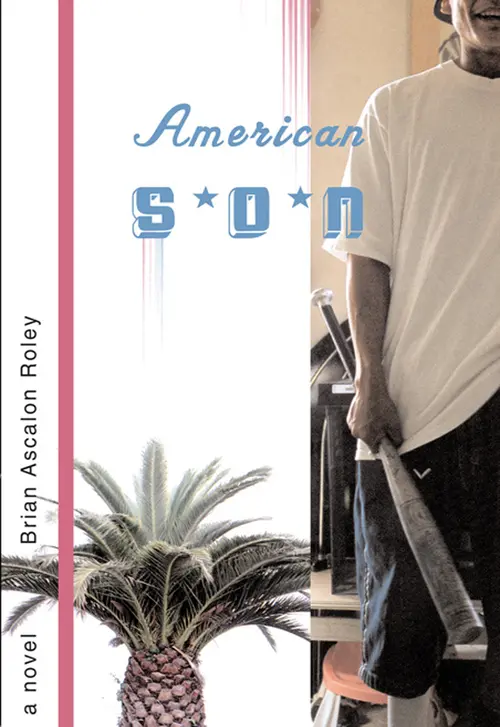
AMERICAN SON
AMERICAN SON
A Novel
Brian Ascalon Roley

W. W. Norton & Company New York • London
Dedication
To my parents,
Thomas and Azucena,
and my sister,
Carla, and Gwen
Copyright
Copyright © 2001 by Brian Ascalon Roley
For information about permisson to reproduce selections from this book, write to Permissions, W. W. Norton & Company, Inc., 500 Fifth Avenue, New York, NY 10110
Library of Congress Cataloging-in-Publication Data
Roley, Brian Ascalon.
American son: a novel / Brian Ascalon Roley.
p. cm.
ISBN: 978-0-393-32154-8
1. Filipino Americans—Fiction. 2. Mothers and sons—Fiction.
3. California—Fiction. 4. Immigrants—Fiction. 5. Young men—Fiction.
6. Gangsters—Fiction. 7. Brothers—Fiction. I. Title.
PS3568.05333 A84 2001
813'.6—dc21 00-053307
W. W. Norton & Company Ltd., 10 Coptic Street, London WC1A 1PU
Contents
Part One
Balikbayan
Chapter One
Chapter Two
Part Two
American Son
Chapter One
Chapter Two
Chapter Three
Part Three
A Dirty Penance
Chapter One
Chapter Two
Chapter Three
Chapter Four
Acknowledgements
AMERICAN SON
PART ONE
Dear Ika,
I am thankful for your letter of March 15th. We appreciate your prayers, and you and your sons will of course be included in our prayers as well. Here in Manila things have been busy. Julita will soon be graduating Ateneo, and we have been renovating the house in preparation for her graduation party. Some of our walls are for the moment no longer standing and last night a typhoon rain battered the plastic tarp the workers had put in place for protection. You can imagine my surprise when I awoke this morning to find the living room flooded! I am certain the weather must be nicer for you in Los Angeles.
It is with concern that I read of your boys’ declining studies. Perhaps Gabe’s biology grade can be dismissed as an aberration—one which must be punished, of course—yet the case of his older brother appears most serious. It came as a surprise to me that Tomas was expelled from Saint Dominic’s, particularly given that he is accused by Father Ryan of committing violent behaviors. I still recall Tomas as the quiet and handsome boy who visited us here in Manila as a child. With his American father’s blood he has the mestizo looks of an actor. No doubt if you had remained in Manila, as I had warned you to, he would have fared well and you would not now have so many worries. Here Tomas would have known what it means to be a Laurel, its responsibilities and expectations. In fact, if he had shown any delinquent propensities I would have certainly spoken severely with him myself, and made communications with his teachers. My circumstances and connections have improved since you left the Philippines, and I believe that I could have averted his expulsion.
In fact, I suspect that in writing me you may have hoped that I could communicate with his American teacher, Father Ryan, as he had formerly served as a chaplain here in Forbes Park. I will try, yet as I have no other connections in Los Angeles, I am not hopeful in this regard. I can only advise you to attempt to gain admission for Tomas into another Catholic school, a stricter one if that is possible in a place like California.
Also, you must be careful whom you let him befriend. I find it particularly puzzling that a Filipino boy such as Tomas should choose to spend his time with poor Mexican children when there certainly must be nice American and Asian children of successful people in Los Angeles.
May I suggest that you consider bringing Tomas and Gabe here to Forbes Park for a visit? I know that you do not like to take my money for plane tickets you cannot afford, but we would be most pleased if you were to change your mind.
We will be praying for you and your sons always.
Love,
Your brother Betino
Balikbayan
South Santa Monica,
California
April 1993
Chapter One
I
Tomas is the son who helps pay the mortgage by selling attack dogs to rich people and celebrities. He is the son who keeps our mother up late with worry. He is the son who causes her embarrassment by showing up at family parties with his muscles covered in gangster tattoos and his head shaved down to stubble and his eyes bloodshot from pot. He is really half white, half Filipino but dresses like a Mexican, and it troubles our mother that he does this. She cannot understand why if he wants to be something he is not he does not at least try to look white. He is also the son who says that if any girlfriend criticized our mother or treated her wrong he would knock the bitch across the house.
I am the son who is quiet and no trouble, and I help our mother with chores around the house.
The client is some man from the movie business who is coming over any minute so that Tomas can help him train the dog he bought to protect his home. This morning I have been helping my brother wash and train his dogs, which he calls “guard dogs” to the people he sells them to, but which you should really call attack dogs since we use methods he learned from cop friends he knows on the LAPD. Each time I come to the cage, they clamber against the rusted wire, throwing themselves against the links and barking for my attention. All week I have been replacing the old wood boards, rotted and nearly broken from the dogs’ thrown weight. Despite my efforts, the wood bends and threatens to buckle and snap under their weight. The door pushes outward as if the cage has inhaled a great amount of breath. I unlatch its aluminum bolt, then let it come open a few inches—and stop it with my shoe. The dogs nudge at the stopped door. My hand slips inside and meets their wet noses and warm fur and the warm wet feeling of their tongues and drool.
Cut it out, I tell them.
They do not listen to me. They are far too excited, though if I were to use a German word—one my brother uses to train them to attack—they would become instantly attentive.
Quiet.
I find the one I want, Heinrich, and grab his collar and tug him out between the other dogs. They look disappointed, and some even wail. I give Greta and Johan and Sigmund quick pets and hush them, then shut and relatch the cage. They bark at my back, though they soon realize I am not going to let them out and they settle down. It is all I can do to keep hold of Heinrich’s collar as I lead him across knee-deep grass to the training area. He ignores my shushing until I finally get impatient and tell him to quit it in German. Las das sein! He immediately quiets and stands at attention, ears perked. Though it is easier this way—and he follows me obediently now—I prefer not to use these commands since he changes from an affectionate pet to an alert and serious guard dog. He becomes all duty.
We find my brother at the shed, pulling out the burlap and plastic armor which he wraps around his arms for protection.
Tomas looks up at us. The sunlight makes his pale scalp, shaved like a Mexican gangster’s, glow through his black, three-day-old stubble.
What took you so long?
The dogs all wanted to get out.
They always want to get out.
I look down. Sorry.
He turns to the dog. Heinrich stands stiffly, pressed against my leg. His ears prick as he looks at Tomas.
Don’t look so excited to see me, Heinrich.
As Heinrich senses that Tomas does not yet need him to be alert, the dog’s muscles relax and he pulls away from me—his fur sliding gently along my jeans—and he hurries to my brother. Tomas reaches over and hugs him and scratches behind Heinrich’s ear. The tattoo on the back of my brother’s neck—a black rose whose stem is wrapped by vinelike barbed wire—emerges from beneath his stretched T-shirt collar. He always wears a sleeveless T-shirt so people can see the tattoos along his muscled arms. The tattoos are mostly gang, Spanish, and old-lady Catholic. As he leans forward, the thin fabric of his shirt moves over his Virgin of Guadalupe tattoo that covers his back from his neck down to his pants. She wears a black robe and has deep, olive eyes. Crushed beneath her feet are the Devil’s horns.
My brother is bent over, tongue-kissing Heinrich.
Good boy.
He looks up from Heinrich and regards me. You better wash him. The client’s coming soon.
I did wash him. I washed all the dogs.
He doesn’t smell like it.
You know I did, Tomas. You saw me.
Well then maybe you’d better do a better job.
I grit my jaw. You shouldn’t complain. It’s not like you pay me.
Fine, he says. Don’t help if you don’t want to. Sit inside and watch TV all day for all I care.
He turns away, letting Heinrich trot after him. I do not want to follow him, but I do not want to go back into the house either. Finally I do come alongside the house, batting aside the overgrown old trellis vines, and emerge onto the front yard. My brother sits on the porch. He is waiting for the client, the dog scrambling around on the threadbare grass before him, chasing a worn tennis ball Tomas threw onto the street. With sunlight coming through dusty overhanging branches, the street resembles an ocean bottom beneath a sunny kelp bed.
I linger at the lawn’s edge. He ignores me for a while, then calls out, Why you standing all the way over there?
I keep my mouth closed and my arms crossed.
Stop sulking.
I’m not sulking.
Sit down. If the client sees you standing there like that he’s gonna think you’re my houseboy.
This is a lie, of course, but my face goes hot, which is what he was after. I do not want to sit after what he has just said, so I stand there for a moment. But I feel foolish, so I walk past him and enter the front door, to see if our mother needs any help inside.
II
All morning our mother has been cleaning up the kitchen so she can look out the window as Tomas prepares Heinrich for the client’s arrival. I know it is hard for our mother to imagine the quiet boy he used to be. Right now Tomas is playing around with a false canvas arm. The dog leaps on it viciously, shaking it like a white shark thrashing a tenderloin on a harpoon, and on each impact she flinches. The client finally arrives around noon. He is a screenwriter or a producer or something. Mom studies this man who wears ratty black jeans meant to make him look casual, polished wing-tip shoes, and a maroon silk shirt. He nervously eyes the dog that will soon go home with him.
Who’s this man, Gabe? she says to me without turning from the window. Her finger touches the glass.
I don’t know. Some producer or something.
Hmmm, she says suspiciously. Does he own a nice mansion?
I wouldn’t know.
She wipes the countertop she has already cleaned three times, her finger still bearing her wedding ring even though my father left us a few years ago and Tomas and the relatives think she should not wear it. She touches her earlobe and sighs. Well, I don’t see why such a man needs a dog to guard his house. He’s not such a big celebrity. Who does he think he is?
Maybe he’s married to one.
Of course not. You tell your brother to come in before your aunt arrives and sees this dog attacking him.
The first time the client arrived he asked why my brother named the dog Heinrich. Tomas always gives the dogs German names and trains them with foreign words. He tells the celebrities and rich people he sells them to that they have pedigrees that go back to Germany, and that they descend from dogs the Nazis used. He likes to tell them Nazi scientists did experiments in dog breeding just as they did in genetics and rocketry. He tells them this is a Teutonic art that goes back to the Prussian war states. All this is a lie, of course. But the clients seem to like the explanation, even this movie producer who has a Jewish name. He paid six thousand dollars for the one dog and it was not even the best in the litter.
The celebrities also like that Tomas wears tattoos that tell you he belongs to the Eighteenth Street Gang. Tomas is six-three and you can see the definition of his muscles through his shirt. Sometimes he takes his shirt off. Not too many young white people have a huge tattoo of the Virgin Mary on their back and a gold crucifix dangling from a chain against their chest. He never tells his clients he is not Mexican. Sometimes he buys pit bulls in Venice or downtown where all the black people have them chained in their alleys and when you drive through the alleyways you can hear them barking for miles. The sound echoes between the buildings. He can buy them for forty dollars there and then place an ad in a West LA newspaper like the Evening Outlook and sell them for a couple hundred dollars. Sometimes he gets them from Compton or East LA, but he never lets me go with him anywhere east of Crenshaw. They are cheap nasty dogs and not even the best guard dogs, but ever since they started killing children everyone seems to want one. Selling them is an easy way to get money; Brentwood and Santa Monica people will come with cash (our neighborhood is at the poor end of Santa Monica, bordering Venice, so it does not scare them) and they do not expect the pit bulls to be trained. You do not buy one to be a nice pet, or a safe one. You chain them to a tree outside your house and dare people to attempt to get inside. A lot of young white people from West LA come because they want to be cool and think owning one is like having a tattoo or being branded on a shoulder or arm. But celebrities do not buy pit bulls. They buy American bulldogs and Rottweilers and Tervurens and Bouviers and other expensive dogs that require extensive training. Purebreds. My brother used to sell Akitas, but after Nicole Simpson’s dog failed her, people on the Westside stopped buying them.
Mainly Tomas prefers to breed American bulldogs—pedigrees—and he raises them and trains them and he pets them and sometimes he even has to feed the puppies from a bottle. The ones he keeps long enough he trains according to the Schutzhund method. Each time he sells a puppy he falls quiet and pretends he does not care about it leaving, that he will never see it again. He will not scratch its chin or pet it in front of a customer, but afterwards, he will go to the window and watch the customer carrying it down the steps. Sometimes he will stand there for a very long time.
The client—Rosenthal—stands at one end of the backyard as he waits nervously for Tomas to fasten on his protective armor. The dog sits patiently now, wagging his tail. Tomas walks twenty yards across the grass and turns and nods. The man calls out a word in German and the dog sprints across the yard, barking viciously, and leaps at my brother and grabs his arm. I know it hurts even with the armor on. Sometimes you get bruises that trace the shape of a jaw. The dog will hang there on your arm, like a pendulum, until the client calls out for it to stop in German. Sometimes the clients get so mixed up and nervous they forget the word. Tomas cannot say it because he is being attacked and the dog is trained not to listen to him. Once a dog missed my brother’s arm and caught him in the stomach, but fortunately I was there and called out Aus and the dog let go and sat down obediently, wagging its tail. It had love in its eyes again, longing for my brother’s attention. Spittle still dripped down its gums and neck.
III
After our father left us, our mother started calling up her brother—Uncle Betino, who lives in the Philippines—for advice on how to deal with me and Tomas. They soon got into a dispute, however, over some jewelry and old statues of the Virgin Mary their mother owned before she died. Our mother had long, distressed conversations on the telephone, and Tomas (still small then) would hover nearby while she was on the line. Sometimes she would sob. Other times she simply wrapped a strand of hair around her finger. Mostly she worried about an old piece of jewelry, a silver pendant which had been with the family for over a century and had come to Manila on a ship from Spain. Grandma had added her own diamonds to it, and meant for it to pass down to our mother. But Uncle Betino was in control of the estate and decided to give it to his wife Millie, who had hated Grandma and treated her badly on her deathbed. For that reason our mother didn’t want her to have it.
Tomas did not talk much then, and he would stand in the hallway most of the time so she would not know he was listening, though afterwards—after our mother calmed down—he told her not to give in to our uncle. He asked if she could get a lawyer, and she said it was the Philippines and you could not sue for something like that there from a man like our uncle. He lived there, he knew people, and anyway had more money than we did. Tomas thought there must be something she could do, but she would get so upset he would finally drop it. I knew he was mad by the way he moved around the house doing chores or building model rockets. Uncle Betino came to Los Angeles a year later and he took us out to dinner. Even though he and our mother had argued about the pendant on the phone, now they acted warm with each other, the way Filipinos have to even when they are angry, and our mother and Millie kissed cheeks in greeting. I shook our uncle’s hand. It was dark and callused and firm. He touched the side of my shoulder as though he were going to slap it, but then gripped it warmly and looked into my eyes. It was all I could do not to lower them. It was hard to imagine him making our mother cry. After he let go, he looked around to greet Tomas. But my brother wasn’t there.
Our mother found him in his bedroom, shades drawn. She made him come out but Tomas did not look into Uncle Betino’s eyes and shook his hand loosely, though after feeling how hard our uncle’s grip was, Tomas suddenly started clenching his hand harder. Uncle Betino’s face changed and he squeezed down tighter. My brother winced, though he tried to hide it. Uncle Betino was very nice to Tomas the rest of the night. He ordered him extra spare rib appetizers. He addressed him often, though he made sure not to ask him questions Tomas could refuse to answer. In this way, my brother could just sit there quietly and not be rude. He did not say anything during that dinner, but Uncle Betino did not lose face, and neither did our mother.
That night Tomas stole our uncle’s wallet but Mom found out and made him return it, and she told our uncle that Tomas had found it on the floor and was merely safeguarding it. Our uncle was not fooled, but he took it back smiling and thanked him.
The Story Continues on BooksBarbecue!
Enjoyed this preview? ❤️ Do not stop here!
Read the complete book free online → 🔗
Continue reading now on BooksBarbecue and discover every page!
Love reading? Bookmark BooksBarbecue.com for more amazing books!
Happy Reading!