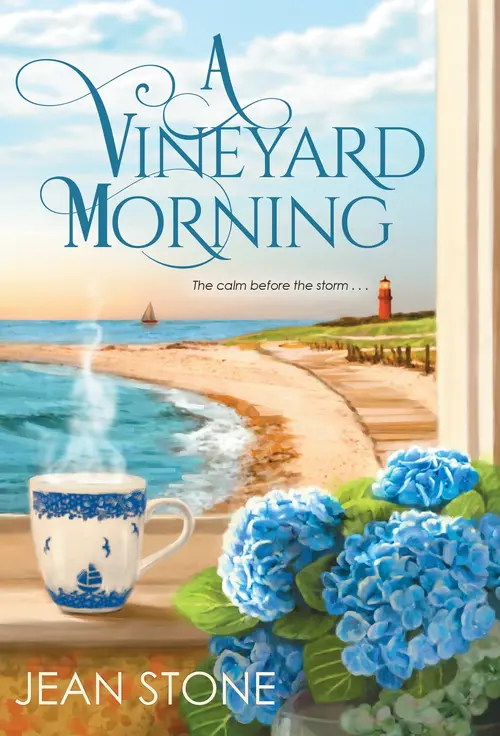
A Vineyard Morning
Praise
Praise for A Vineyard Summer
“Filled with heart, an engaging story, and themes of families in all their various forms, readers of A Vineyard Christmas (2018) will be thrilled to reconnect with familiar characters and meet new additions as they explore deeper into the world of Martha’s Vineyard. Perfect for long summer days. For fans of Debbie Macomber or Elin Hilderbrand.”
—Booklist
Praise for A Vineyard Christmas
“Annie Sutton is finally realizing her dream of living on Martha’s Vineyard, when a surprise package is left outside her cottage door . . . a baby in a basket. The diverse characters, strong setting, and clever mystery surrounding baby Bella brims with holiday cheer readers will relish.”
—Library Journal
“A successful novelist finds herself in the middle of a mystery fit for the plot of one of her books in this holiday story.... A Vineyard Christmas is charming and sincere; Stone’s fans will not be disappointed by her newest effort.”
—Booklist
MORE PRAISE FOR JEAN STONE’S PREVIOUS NOVELS
“Stone is a talented novelist whose elegant prose brings the Martha’s Vineyard setting vividly to life.... A very good read.”
—Milwaukee Journal Sentinel
“Stone’s graceful prose, vivid imagery and compassionately drawn characters make this one a standout.”
—Publishers Weekly
“A wrenching and emotionally complex story. Sometimes, if you are very lucky, you can build a bridge across all obstacles. A very touching read.”
—RT Book Reviews
“A very smart and well-written book.”
—Fresh Fiction
“[A] cheeky debut. . . . As delightfully campy as an episode of Desperate Housewives.”
—Publishers Weekly
Also by
Books by Jean Stone
A Vineyard Morning
A Vineyard Summer
A Vineyard Christmas
Vineyard Magic
Four Steps to the Altar
Three Times a Charm
Twice Upon a Wedding
Once Upon a Bride
Beach Roses
Trust Fund Babies
Off Season
The Summer House
Tides of the Heart
Birthday Girls
Places by the Sea
Ivy Secrets
First Loves
Sins of Innocence
Books writing as Abby Drake
Good Little Wives
Perfect Little Ladies
The Secrets Sisters Keep
Title Page
A VINEYARD MORNING
JEAN STONE


All copyrighted material within is Attributor Protected.
Copyright Page
This book is a work of fiction. Names, characters, businesses, organizations, places, events, and incidents either are the product of the author’s imagination or are used fictitiously. Any resemblance to actual persons, living or dead, events, or locales is entirely coincidental.
KENSINGTON BOOKS are published by
Kensington Publishing Corp.
119 West 40th Street
New York, NY 10018
Copyright © 2021 by Jean Stone
All rights reserved. No part of this book may be reproduced in any form or by any means without the prior written consent of the Publisher, excepting brief quotes used in reviews.
To the extent that the image or images on the cover of this book depict a person or persons, such person or persons are merely models, and are not intended to portray any character or characters featured in the book.
The K logo is a trademark of Kensington Publishing Corp.
ISBN-13: 978-1-4967-2884-5 (ebook)
ISBN-10: 1-4967-2884-X (ebook)
ISBN: 978-1-4967-2883-8
Dedication
To Richard and Marcia Fenn,
my wonderful Vineyard friends
who are off to write the next chapter of their lives.
With big hugs, good wishes, and buckets filled with love.
Acknowledgments
Acknowledgments
Thanks to the many people, both on island and off, who contributed their expertise that made this book come to life.
Special thanks to Edgartown Police Detective Daycee Moore and Massachusetts State Police Sergeant Jeffrey Stone, for filling in many essential details; to island hairstylist extraordinaire Patti Linn, for introducing me to people and places I otherwise would not have known; to the Trustees of Reservations, for their wonderful properties on the Vineyard and their accessible, abundant information; to my friends at the island bookstores, newspapers, and libraries who are always ready to find answers to my often ludicrous questions; to my fabulous editor, Wendy McCurdy, and my awesome agent, Loretta Fidel, for continuing to keep the faith; and to my Western Massachusetts old friends Matt and Jane Vil-lamaino, for our unexpected discovery on Chappaquiddick that, yes, made it into this story.
And, of course, biggest thanks to the two all-important, off-island tall boys for their patience and support and for continuing to bring so much good stuff to my life.
Chapter 1
Chapter 1
“The pinkletinks are back!”
Cheers erupted through the West Tisbury Grange Hall as if it were sunset on the beach at Menemsha in summer. It wasn’t summer yet, but it was finally spring, as the pinkletinks—the tiny paperclip-sized, toad-like peepers—announced every year with their long-awaited chorus.
The news was happy music to the group in the hall, who had just wrapped up plans for the upcoming season of artisan festivals. The planning, like the pinkletinks, was a sure sign that tourists would soon arrive on Martha’s Vineyard.
Annie Sutton leaned against the doorway, savoring the April sunlight that seeped through the cracks of the historic, gray-shingled building. She watched as the organizers collected posters of floor plans and booth assignments while the refreshment committee scooped up remnants of coffee and cookies. Her fellow artists were abuzz, laughing and chattering, as they trickled toward the exits.
“Check out the sunshine.”
“We deserve it.”
“Yes, we do!”
It had been a blustery winter, though they’d been spared the nasty nor’easters of the year before. But Annie didn’t mind harsh off-season weather; after all, she was a native New Englander. Which she knew was why, in part, she’d picked there and not a tropical island when she’d left Boston to start over.
She glanced at her watch: 4:00 p.m. Time to head out to the cemetery as she’d promised Lucy, who was nowhere in sight.
“Teenagers,” Annie muttered. She was, however, delighted that the girl had come with her, even though the primary incentive had been the promise of a side trip to a graveyard for Lucy’s genealogy project. Despite the fact that Annie was a full-time bestselling mystery author, part-time soap maker, and soon-to-be innkeeper, she loved spending time with Lucy, the fourteen-year-old daughter of John Lyons—the kind, generous, and massively good-looking Edgartown police sergeant whom Annie had been dating for over a year.
“Annie!” Winnie Lathrop cried out in a jolly voice. “Did you hear? The pinkletinks are back!” Winnie was a Wampanoag woman who lived up island in Aquinnah and had taught Annie how to forage for herbs and wildflowers then craft them into boutique soaps to sell at the festivals.
Plunking down her cotton tote bag, Annie stepped into her friend’s warm hug. “Earl says they’re late this year because it was too damn cold.”
Winnie laughed. “Earl Lyons knows everything about this island. I swear he welcomed Thomas Mayhew when he landed on the beach.” Earl maintained that Mayhew had brought “the first boatload of tourists” in 1642, thereby creating the Vineyard’s first English settlement. A much-beloved property caretaker on Chappaquiddick, Earl also was the father of the massively good-looking police sergeant, and, ergo, Lucy’s grandfather. “Speaking of that old crow . . .” Winnie added, “how’s the Inn? Will you open on time?”
The Inn was a new venture for Earl and Kevin, Annie’s half-brother. Earl had said they should call it The Vineyard Inn because the name was easy to remember, and would make a “perfect hashtag for Instagram.” He’d winked when he said the last part, because Annie was well aware that the seventy-five-year-old curmudgeon would not know Instagram from instant coffee. Kevin was forty-three, nine years younger than Annie. He’d come last summer for a visit and wound up staying, working alongside Earl. The venture—(or, “adventure,” as Kevin called it)—had been their harebrained idea, conceived “out of necessity” (Earl again), because at the time, Annie had little money and nowhere to live. She’d accused the men of being old-fashioned and wanting to rescue a damsel in distress. They’d all had a good laugh over that, because Annie was quite capable of taking care of herself. Though she wasn’t always sure of that, their support helped her stay positive.
“I’m trying to be optimistic,” she said to Winnie now. “Earl and Kevin insist construction is ‘coming along,’ but it’s pretty hectic. Our first guests arrive Memorial Day weekend, so . . .” She shrugged. She didn’t add that they were over budget, out of cash, and short on labor, or that suppliers were slow to deliver to Chappaquiddick, the Vineyard’s easternmost arm that was a bit out of the way.
“And the first festival is that weekend,” Winnie said.
“Right. Crazy times. But how’s your family? How are you?” Annie didn’t want to talk about the Inn: its rising problems and onrushing deadline made her stomach hurt. “Have you made lots of fabulous pottery?” Winnie was renowned for her exquisite bowls and mugs, and silver and wampum jewelry. She’d once told Annie that she made jewelry in summer when the natural sunlight helped her shape tiny details; she crafted pottery in winter when the thousand-degree kiln helped her stay warm. Winnie was as practical as she was loving to all people, all creatures, and the earth.
“The clan is well,” she replied. “Me included. And I have a healthy stash of wares ready to sell. How about you? Have you had time to cook up more soap?”
Annie sighed. “I started writing a new book, which is always a challenge. But I managed to make a few cases with the help of my assistant, who right now has disappeared.” She hoisted her bag back up on one shoulder, grateful it weighed less now that she had passed out samples of her latest soap. She reached in, dug out a bar, and handed it to Winnie.
Winnie held it to her nose, inhaling the fragrance. “Snowdrops. Light. Fresh. Nice work, Annie Sutton.”
“Thanks. It was a whim. Lucy was a big help.” Annie glanced around the hall again. “Right now, however, I suspect she’s looking for another job.”
Winnie laughed. “As I recall, her father was off in a million directions when he was a boy. Overall, he turned out okay.” Winnie’s deep brown eyes—the color of sassafras root, as John had once commented—sparkled with amusement and lit up her copper skin.
Annie smiled and hoped she wasn’t blushing. John was a native islander; his family and Winnie’s had been friends for generations. “Yes,” she said, averting her eyes from Winnie’s gaze, “you might say he’s okay.” She didn’t want to explain, even to Winnie, that though she and John had agreed they were “officially dating,” Annie wasn’t ready to get serious, and John was still reassembling his life after his divorce.
At that moment, Lucy came skittering around the corner, just in time to hear the last bit of their conversation.
“Who’s okay?” she asked as she stepped into the conversation.
“Your father,” Winnie said.
“Gross.” Lucy wrinkled her nose and dropped her iPad and a three-ring binder into Annie’s bag. “Can we go now?”
“Where are you off to?” Winnie asked.
“Christiantown,” Lucy said. “The burial ground. I’m trying to figure out if I have ancestors there.”
“Wampanoags? ”
The burial ground was one of the few known resting places for Vineyard Native Americans. But with eyes as pearl-gray as her dad’s, and skin tones nearly as fair as the spring day, Lucy hardly looked like she had Wampanoag heritage. And it didn’t help that she’d braided her hair into a long, single plait the way that Winnie did, because Lucy’s hair was caramel-colored.
“My great-grandparents are buried at the sacred ground on Chappy,” Lucy replied, though that was hardly proof, as several Caucasians also had been laid to rest there. “I used the money Annie paid me for helping her with her soaps for a DNA test. Turns out, I’m two-percent Native American. I’m hoping to find my people.”
“If they were Chappaquiddick Wampanoags, they won’t be up here in Christiantown. Those graves are only from the Aquinnah tribe.”
“I know. It’s crazy that there was more than one tribe here. But that’s how it was even before Mayhew coughed up forty measly pounds and a couple of beaver hats to buy the Vineyard.”
“And don’t forget that his princely sum included Nantucket and the Elizabeth Islands,” Winnie said with a wink.
Annie checked her watch again. Though daylight savings had begun, and the sun didn’t set until seven-o’clock-ish, she wanted to get home in time to see Kevin and John, who’d gone fishing somewhere up island and camped out overnight. John had said Kevin needed a break before the final crunch to get the Inn done, and that he needed one to help him brace for summer chaos.
“I read online that there aren’t any names on the stones at Christiantown,” Lucy was saying. “Except Mary Spencer’s. She’s been there since 1847, so who knows if she really was a Wampanoag.”
Winnie nodded. “So what’s your plan?”
“I’ll take pictures of the stones—I read that they’re just fieldstones—then I’ll look for similarities with the ones on Chappy.”
“That sounds great. But tread lightly. There’s probably a thick blanket of wet leaves keeping the earth warm. The space was designated for the Christian ‘Praying Indians,’ but if you ask me, Moshup is the one who protects them in winter.” A legendary god-like giant, Moshup had watched over the Wampanoags for centuries, but disappeared the day that the British stepped ashore. Then Winnie patted Lucy’s shoulder. “Good luck, dear. And remember that if we don’t know our past, we cannot guide our future.”
The three of them hugged good-bye and moved toward the door. Then Lucy raced ahead, her braid happily bouncing, her life too new for her to have any angst over deadlines, finances, or the impending onslaught of summer vacationers.
* * *
Winnie had been right about Moshup’s blanket: a weave of birch and oak leaves in weathered shades of terra-cotta covered the ground. Lucy announced that the site encompassed less than a single acre, was officially the “Christiantown Woods Preserve and Indian Burial Ground,” and remained under tribal ownership.
Annie parked the Jeep off the narrow dirt road, grateful that she’d traded in her Lexus for something better suited to the terrain. When she’d first moved to the island, she’d replaced her Jimmy Choos with walking boots from L.L.Bean, and her Ann Taylor suits with flannel shirts. She hoped that eventually her former life would slide so far back in time that she’d no longer feel its sour breath on her neck.
She dropped her phone into her jeans pocket—a ritual she stuck to, especially when exploring off a beaten path, or in this case, off an ancient way.
Once outside, Annie noticed the quiet. It reminded her of when she’d been young, of when her small family had vacationed on the island, and she and her dad had explored the remote Menemsha Hills. They’d hiked alone; her mother had preferred the summer sounds of crashing surf and romping kids at South Beach in Edgartown. Annie’s dad, like Annie, preferred silence. She hadn’t, however, inherited the trait from him, as the Suttons—Bob and Ellen—had adopted her.
“There’s the chapel,” Lucy whispered, pointing to a small, ramshackle building. They treaded softly toward it, as if not wanting to disturb shadows of long-dead souls. Lucy unlatched a shuttered window, and they peeked inside.
“Thomas Mayhew Jr. gave this land back to the Wampanoags in the seventeenth century,” she said. “But it was only for the ones who converted to Christianity—which is why they called them ‘Praying Indians.’” Her tone remained hushed, her eyes wide. She pressed her face against the dusty glass. “This is a replica of the original chapel that burned down; the tribe replaced it in 1829. It only has a few pews and a small altar.”
After closing the shutter, she turned and started across the road. “The cemetery is at the top of the hill. No one’s allowed up there unless he or she is a tribal member.”
Annie followed. “We should have asked Winnie to come with us.”
They came to an opening in a split-rail fence. A large boulder sat there. A metal plaque with a moss-green patina was attached; an embossed message identified the spot as the head of the path to the “burying ground.”
“Lucy? Are you sure it’s okay to go up?” Annie did not like breaking rules, let alone on consecrated land.
“Nobody’s around. Besides, I’m two-percent Native American, remember?”
In Annie’s previous life, she’d been a third-grade teacher who’d maintained control of her class. But Lucy was fourteen, not nine, and not one of Annie’s students. “Okay then, but I’ll wait here. I’ll check in with Kevin to see if he and your father survived their camping trip.”
“Whatever.” Lucy tromped up an embankment of dirt stairs that were framed by tree roots; her iPad was fixed in one hand, her three-ring binder in the other. Then she disappeared—again—this time into a stand of tall, newly budding oaks. She clearly was an island kid who knew where she was most of the time, and if she didn’t, she wasn’t afraid. After all, she hadn’t been raised in the city as Annie had.
“This is so cool!” Lucy’s voice called down from the hilltop. “Every stone has something on top!”
Annie cupped her mouth. “Like what?”
“A scallop shell. A piece of wampum. A couple have coins.”
“Take pictures!”
“I am!”
Annie smiled with appreciation for the girl’s enthusiasm. Then she leaned against the boulder and scanned the rustic forest, wondering if the trees were as old as the sacred site. She closed her eyes and listened to the stillness until her mind quieted and her shoulders relaxed, the stressors of her things-to-do list beginning to disintegrate like fine white sand beneath an outgoing tide. She stood, trance-like, for several minutes until a brisk rustle of leaves warned her she was not alone. Maybe it was someone who had passed that way before.
Yup, it’s the dead guys.
Annie’s eyes flipped open, her body jerked, she nearly buckled to the ground. Quickly righting herself, she let her gaze skim the area. Of course, there was no one. Except Murphy, her old college pal who’d died nearly two years earlier from a rare, swift-moving cancer, but whose spirit tended to show up when Annie needed sage advice or a good laugh.
“Murphy!” Annie cried, shaking a playful fist up toward the sky. “Stop scaring me!”
Poltergeist-like laughter was swiftly muffled by the ding of Annie’s phone. She checked the screen: it was Kevin.
PARTY’S OVER, her brother texted. GET YOUR BUTT BACK TO CHAPPY. WE’VE GOT AN INN TO FINISH. AND—SURPRISE!—MOM IS COMING SATURDAY. SIX DAYS FROM NOW. MINUS A FEW HOURS.
“Nooo!” Annie cried. Her birth mother was coming to the island? Donna MacNeish—the woman who’d raised Kevin but hadn’t raised her? The woman Annie had only seen three times in her life?
Yes, my friend, Murphy whispered. Her.
Annie’s things-to-do list blinked into sharp focus again—that time with an added entry: Donna. She braced herself, inhaled deeply, then sprinted up the embankment, traversing the tree roots, determined to help Lucy finish her research, while hoping that the souls of the Praying Indians would forgive her for tramping on their hallowed ground.
Chapter 2
Chapter 2
She had no business longing for it. But it sat in the window of a small secondhand shop on Newbury Street, and she passed it every morning on her way from the T to her job. There was something about it that called to her: the supple, timeworn leather, the meticulous detail, the era in which it had been fashioned. It was a classic trunk, perhaps at home in a first-class sleeping coach aboard the Orient Express—Paris to Istanbul—in the early twentieth century. It made Donna wonder about the hundreds, or thousands, of stories stored within.
If she’d listened to Aunt Elizabeth, the trunk might have been hers. “Don’t marry that man,” Elizabeth had said. “Instead, find one with money so your life will be more interesting.” She also had advised that if Donna only owned one sweater, she should make sure it was cashmere.
Years earlier, Donna had made the mistake of believing in true love, so she should have known to listen to her aunt. But though Jack was only a salesman of home cleaning products, he had proposed. At the time, he’d said he didn’t mind that Donna had once lived in a home for unwed mothers, then given up her baby for adoption. He’d said he didn’t mind, but after they were married and had a child of their own, he apparently felt otherwise. He left Donna with very little money and with Kevin, who by then was four. The pittance of child support that Jack provided trickled off after a while, though Donna didn’t let Kevin know that. She took a job as a receptionist at a radio station where the pay was low, but her boss had suggested that one day she might be made office manager.
Aside from keeping Kevin healthy, the promotion became her only wish. That, and to own the Louis Vuitton trunk, which Donna knew had been made in Paris. After all, she’d paid close attention during countless hours of browsing for antiques with Aunt Elizabeth, until Alzheimer’s had shoplifted her aunt’s mind. At the store on Newbury Street, the tag read $400, so it was doubtful the storeowner knew the trunk’s worth. Still, the price was equivalent to a month’s rent. Out of Donna’s league. Unless she found a way.
Then, on an ordinary Tuesday morning when she passed the shop, the Louis Vuitton was gone. She tried to tell herself it was just one more loss. And that, like other losses she’d endured, it must not have been meant for her.
* * *
The Story Continues on BooksBarbecue!
Enjoyed this preview? ❤️ Do not stop here!
Read the complete book free online → 🔗
Continue reading now on BooksBarbecue and discover every page!
Love reading? Bookmark BooksBarbecue.com for more amazing books!
Happy Reading!